Real estate book on Korea's housing prices: The Law of Housing Prices
In short
The Law of Housing Prices is a real estate book by Kwon Hyuk-jin, who spent 30 years working in Korean housing policy, tracking the past 20 years of Korea's housing market through time-series data. The Law of Housing Prices lays out a 'carriage theory' that compares demand, supply, finance and regulation to parts of a carriage, tests 10 major housing price measures since 2014 against the Seoul apartment sales index and the base rate, and forecasts national housing stock out to 2050. It suits readers who want to read the market with data rather than gut feeling.

Good to know
- Book title
- The Law of Housing Prices
- Author
- Kwon Hyuk-jin
- Core framework
- The 'carriage theory' of demand, supply, finance and regulation
- What it verifies
- 10 major housing price measures since 2014
- Long-term forecast
- By 2050, national housing stock of about 30 million units and a housing supply ratio above 126%
Prices as written by the tester on Sep 19, 2026 · not updated automatically
Why don't housing prices move the way government measures intend?
Why do housing prices always seem to move against our expectations? Prices seem to rise when interest rates fall, and seem to pause briefly whenever the government rolls out new regulations, yet nobody can give a clear answer to the question "should I buy a house right now?"
I've had plenty of frustrated moments myself watching real estate news, wondering "what is the real force actually driving housing prices?"
Then I came across a fascinating, hard-hitting new book written by a policy expert who spent 30 years in public service on the front lines of housing policy, living through countless booms and crashes firsthand.

This is The Law of Housing Prices by author Kwon Hyuk-jin. I read it slowly over several quiet evenings, and I'll walk through everything I learned in detail! 🚀


The four forces that move housing prices: the 'carriage theory'
"It clearly lays out, in a single framework, how the four forces of demand, supply, finance, and government regulation interact to shape housing prices."

There are countless real estate forecast books and investment guides out there, but The Law of Housing Prices isn't simply shouting "prices will rise" or "prices will fall." The author traces what happened in Korea's housing market over the past 20 years using massive time-series data, and sorts the essential forces driving prices into four categories.
Demand and supply are the two wheels of the carriage, finance is the horse pulling it, and government regulation is the coachman steering direction and speed — this 'carriage theory' metaphor genuinely made me slap my knee.

Proving with data that you can't explain housing prices by isolating any single factor made all the fragmented real estate knowledge I had scattered in my head suddenly click into order. ✨
What makes The Law of Housing Prices different from other real estate books
"It contains the kind of deep reflection and sharp data verification that only an author who lived through both failure and success on the front lines of policy — at the Blue House, the Ministry of Land, Infrastructure and Transport, and beyond — could write."


The reason The Law of Housing Prices consistently makes real estate book recommendation lists is that the person who directly made and enforced policy honestly confesses and analyzes "why did the market move differently than the government's measures intended."

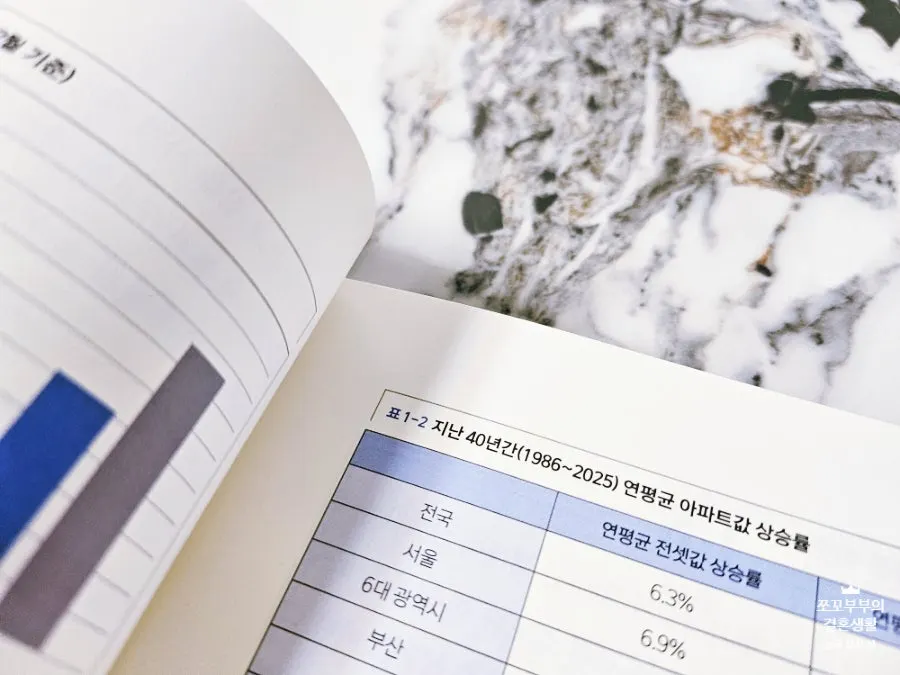
The highlight for me was the section directly verifying 10 major housing measures announced since 2014 against the time series of Seoul apartment sale price indexes and the base interest rate.

Transaction and financing regulations had a big short-term impact, but interest rates mattered even more, while stronger taxes changed long-term investment demand patterns more than they suppressed prices in the short run — reading this analysis, I really felt why you need to look at the market through facts, not gut feeling.
Best part of the book: 'housing stock' and the coming age of supply
"Moving past the age of demand and the age of finance, it clearly points to the coming 'age of supply' and regional polarization, broadening the reader's perspective for the future."
Personally, the most interesting part for me was the forecast on 'housing stock' and the 'age of supply.'

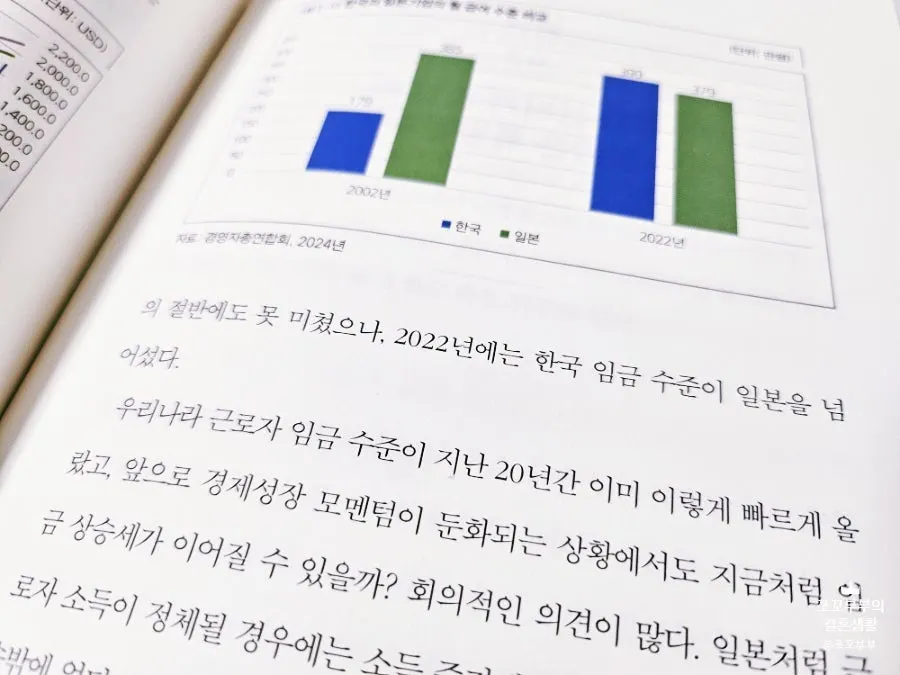
We usually react sensitively only to the volume of new supply built each year, but the author stresses that it's the accumulated housing stock that directly affects sale prices.
By 2050, national housing stock is projected to reach roughly 30 million units, with the housing supply ratio exceeding 126% — which, it turns out, means the era where every region's housing prices rise in the same direction is over.

The outer Seoul metro area and the provinces will struggle with oversupply and shrinking demand, while Seoul and the core metro area will keep concentrating demand, so real estate polarization will deepen much further — an analysis that landed pretty heavily on me. 🥹

Fact-check summary of The Law of Housing Prices

Who is The Law of Housing Prices a good fit for?
- Anyone who wants to grasp market trends accurately through objective data instead of gut feeling
- Anyone who wants to understand the causal relationship between past governments' real estate policies and how the market actually responded
- Anyone who wants to anticipate and prepare for coming changes and polarization trends in the real estate market
- Anyone who wants to build a solid framework for interpreting the market on their own, beyond simple investment tips

This book doesn't get swept up in the narrow question of "should I buy a house right now?" — it hands you a solid standard for analyzing and judging the market yourself. If you want insight into the big-picture flow of Korea's housing market, I really recommend picking this one up. 💛
Everything about Korea's housing prices, read through data! The Law of Housing Prices was an excellent real estate book that trains your own eye for reading the market.


Where to buy
- 도서 상세 페이지
- 원문에 상세 페이지 링크 안내