Time to REHABTime to REHAB 체형교정 재활센터
Mangpo Station posture correction · 1:1 rehab by booking
Time to REHAB is a posture correction and rehabilitation exercise center in Unit 608, 6F, Central Tower, 136 Yeongtong-ro, Yeongtong-gu, Suwon-si, a 12-minute walk (736 m) from Mangpo Station Exit 3. At Time to REHAB, the first-visit assessment (60 min) costs ₩100,000 and 1:1 rehabilitation exercise costs ₩124,000 per session (based on 16 sessions); Time to REHAB is open Mon, Tue and Thu 10:00–21:00 and Sat 09:00–13:00, and closed on Wednesdays and Sundays.
- Today
- Mon, Tue, Thu 10:00–21:00 · Sat 09:00–13:00
- Getting there
- Mangpo Station Exit 3 · 12-min walk (736m)
- Prices
- Assessment & Rehabilitation Exercise ₩100,000–₩124,000
- Try
- First-visit assessment (60 min) · pain cause analysis report ₩100,0001:1 rehabilitation exercise (1 session) ₩124,000


Key facts
- Address
- Unit 608, 6F, Central Tower, 136 Yeongtong-ro, Yeongtong-gu, Suwon-si, Gyeonggi-do경기 수원시 영통구 영통로 136 센트럴타워 6층 608호
- Nearest station
- Mangpo Station Exit 3 · 12-min walk (736m)
- Opening hours
- Mon, Tue, Thu10:00–21:00Sat09:00–13:00Closed Wed, Sun10/9 (Fri) closed
- Phone
- 0507-1367-5301
- Reservations
- Accepted
- Parking
- Free parking
- Amenities
- Wi-Fi · Separate men's and women's restrooms · Waiting area · Mobile payment
- Links
- Naver PlaceInstagramWebsite
Menu & prices
2 items · as listed Oct 2026About
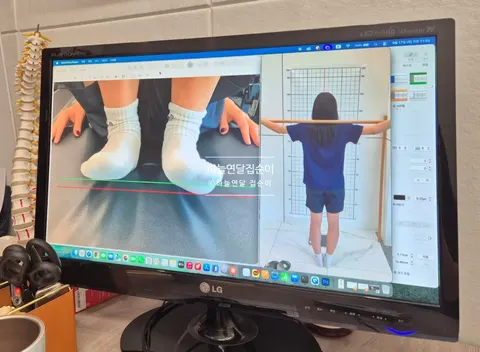
Time to REHAB is a 1:1 posture correction and rehabilitation exercise center that measures the body before any exercise and sets the rehabilitation sequence from those results. The first-visit assessment at Time to REHAB covers a full-body alignment check, gait analysis, joint range-of-motion testing, a left–right strength comparison, foot load distribution measurement and an interview (pain history, injury mechanism, lifestyle habits), and the center provides a printed pain assessment report summarizing the results and the planned rehabilitation sequence. Rehabilitation at Time to REHAB then follows the order written in the report in a dedicated rehab space, and before and after rehabilitation the client is re-measured in the same posture against the same criteria so that changes in strength, left–right symmetry and the foot's center of load can be compared in numbers.
The director of Time to REHAB is a continuing-education instructor for the Korean Physical Therapy Association and president of an academic society under one of the association's educational institutions, and personally carries out assessments and sets rehabilitation sequences. Time to REHAB covers posture correction such as straight neck and forward head posture, neck and lumbar disc problems and chronic pain, post-surgery and post-injury rehabilitation, and pain whose cause is hard to identify, such as tinnitus and headaches.
FAQ
What are Time to REHAB's opening hours?
Time to REHAB is open Mon, Tue, Thu 10:00–21:00; Sat 09:00–13:00. It is closed on Wed, Sun.
Which station is closest to Time to REHAB?
Time to REHAB is a 12-minute walk (736 m) from Mangpo Station, Exit 3. The address is Unit 608, 6F, Central Tower, 136 Yeongtong-ro, Yeongtong-gu, Suwon-si, Gyeonggi-do.
How much is the assessment & rehabilitation exercise at Time to REHAB?
Time to REHAB's 2 assessment & rehabilitation exercise items cost ₩100,000–₩124,000.
Can I book a table at Time to REHAB?
Yes, Time to REHAB takes reservations. Call 0507-1367-5301 to book.
Is there parking at Time to REHAB?
Yes, Time to REHAB has parking (Free parking).
What amenities does Time to REHAB have?
Time to REHAB offers Wi-Fi, Separate men's and women's restrooms, Waiting area, Mobile payment.
What is checked at the first-visit assessment?
Full-body alignment, gait, joint range of motion, left–right strength and foot load distribution are measured, along with an interview about pain history and lifestyle habits. Time to REHAB provides a printed pain assessment report summarizing the assessment results and the rehabilitation sequence.
How are the effects of rehabilitation checked?
The client is re-measured before and after rehabilitation in the same spot and the same posture for comparison. At Time to REHAB, changes in strength, left–right symmetry and the foot's center of load are recorded as before-and-after figures.
How many visit stories are there about Time to REHAB?
Superchart has 1 first-hand visit stories about Time to REHAB; the latest visit was on September 21, 2026.
6 visit stories about Time to REHAB
Newest first
Suwon posture rehab: back injuries traced to left ankle
“The writer, who had a herniated neck disc diagnosis and injures a lower-back muscle every year, completed an online self-check, posture tests and a 1-hour custom rehab session at Time to REHAB, and learned the problems trace back to instability in the left ankle.”
Suwon rehab PT: shoulder blade pain traced to the neck
“A first-visit assessment of about 1 hour at Time to REHAB traced that pain to the cervical spine (neck), and after the first rehab session a left-right imbalance of about 12kg dropped to around 1kg.”
Mangpo, Suwon back rehab center: posture measured first
“The writer's husband had shoulder and pelvis discomfort, so he did the Time to REHAB website self-check, then a first-session posture assessment and a second-session rehab workout; measuring his body before any exercise impressed him most.”
Mangpo, Suwon rehab PT for postpartum knee pain
“The head director assessed her with posture photos and tests of trunk rotation, ankle mobility and gait, followed by a 1-hour class of 30 minutes of rehab correction and 30 minutes of exercise correction.”
Suwon rehab center for rounded shoulders and neck pain
“Time to REHAB Posture Correction Rehab Center is a rehab exercise center on the 6th floor of Central Tower on Yeongtong-ro in Yeongtong-gu, Suwon.”
Suwon posture correction clinic: eyes-closed gait test
“The booking starts with a self-check on the Time to REHAB website, then session 1 is a consultation with the head director who reviews posture, movement and gait on video, and session 2 brings manual therapy for the left ankle, lower back and hip joint plus three rehab exercises.”