Gwanghwamun Korean restaurant: whole abalone and tteokgalbi set, Modam
In short
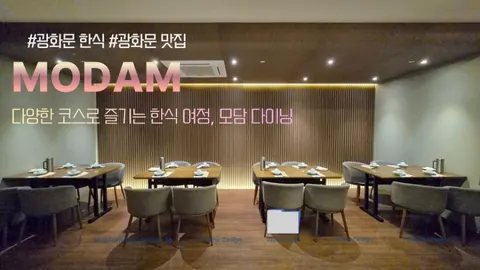
Modam Dining Gwanghwamun is a modern hanjeongsik (Korean set-course) restaurant on the B1 floor of Deoksugung The Palace near Gwanghwamun Station in Jongno, Seoul. At Modam Dining Gwanghwamun, the abalone tteokgalbi set (₩40,000 per person) arrives course by course: seasonal porridge, ceviche, perilla oil capellini, a whole abalone with the innards removed alongside tteokgalbi (grilled short rib patties), then rice, soup and plum tea. With a neat course and a calm room for ₩40,000, Modam Dining Gwanghwamun is a sensible choice for a meal with parents or a formal gathering.

Good to know
- Getting there
- Gwanghwamun Station Exit 6 · 8-min walk (store listing, Oct 1, 2026)
- Menu
- Abalone tteokgalbi (grilled short rib patty) set
- Price
- ₩40,000 per person
- Course
- Seasonal porridge, Cheongyang chili water kimchi, seasonal salad with yuzu dressing, mustard-dressed vegetables with pine-nut sauce, ceviche of seasonal raw fish and jangajji (Korean pickles), Modam fritters, perilla oil capellini, abalone and tteokgalbi, rice, soup or stew, four side dishes, dessert
- Address
- B102 and B103, B1F, Deoksugung The Palace, 10 Saemunan-ro 2-gil, Jongno-gu, Seoul
- Location
- About 549 m from Gwanghwamun Station Exit 6
- Hours
- 11:00–22:00 (break time 15:00–17:00, last order 20:10)
- Amenities
- Groups welcome, Wi-Fi, separate men's and women's restrooms, reservations accepted
- Price reference
- ₩40,000 ≈ $30 (2026-10-05)
as written by the visitor on Oct 5, 2026
What kind of Korean restaurant is Modam Dining Gwanghwamun?
Modam Dining Gwanghwamun (모담다이닝 광화문점) is a hanjeongsik (Korean set-course meal) restaurant that gives Korean food a modern touch, and its abalone tteokgalbi set can be enjoyed like a course meal. It is at B102 and B103, B1F, Deoksugung The Palace, 10 Saemunan-ro 2-gil, Jongno-gu, Seoul, 549 m from Exit 6 of Gwanghwamun Station.
- Hours: 11:00 - 22:00
- Break time: 15:00 - 17:00
- Last order: 20:10
- Amenities: groups welcome, Wi-Fi, separate men's/women's restrooms, reservations
When you eat with your parents or have a quiet get-together, the space and the table setting matter as much as the taste. You look for a calm restaurant where you can slowly try several dishes instead of a single item, and where the room doesn't get in the way of conversation. Modam Dining Gwanghwamun, which I visited this time, was exactly that kind of place.
The abalone tteokgalbi set starts with porridge and salad, passes through ceviche, fritters and perilla oil capellini, and then brings out the abalone and tteokgalbi. Rice, soup, four side dishes and dessert follow, so it's a good way to enjoy a meal slowly, in order, like a course. Below I go through the actual menu, the taste, the price and the visit information in turn.

In what order does the abalone tteokgalbi set arrive?
The Modam abalone tteokgalbi set runs in this order: seasonal porridge, Cheongyang water kimchi, a seasonal salad with yuzu dressing, pine-nut mustard salad (gyeojaechae), ceviche with seasonal raw fish and jangajji (pickled vegetables), Modam fritters, and perilla oil capellini. Then the abalone and tteokgalbi arrive as the main, and the meal closes with white rice, the day's stew or soup, four side dishes and dessert.


Starting with seasonal porridge and Cheongyang chili water kimchi
The first dish of the set is warm seasonal porridge. Finely cooked, it's soft in texture and mild, and it eases your stomach before the real dishes begin. A small sprinkle of black sesame gives it a tidy finish that suits the opening of a hanjeongsik course. The seasoning isn't strong, so it doesn't get in the way of the next dish.
The Cheongyang water kimchi centers on crunchy napa cabbage and a clear, cool broth. It has red chili and Cheongyang chili, but it's less a sharp heat than a fresh, kicky note that lingers at the end. It's good before the meat comes out, and also good for cleansing your mouth in the middle of the tteokgalbi.


Yuzu salad and pine-nut mustard vegetables: a fresh second course
The seasonal salad with yuzu dressing puts a yellow sauce over several kinds of leafy greens, so it's bright from the color alone. The sweet-tart scent of yuzu softly masks the grassiness of the vegetables and wakes up your appetite as a starter. The sauce isn't too heavy, so the greens keep their natural crunch.
The pine-nut mustard salad is a soft, nutty pine nut sauce with a light kick of mustard. Eat vegetables, mushrooms and other ingredients in one bite and you get crunch and nuttiness together. If the yuzu salad is the fresh one, the mustard salad takes the nuttier, deeper side, which keeps the opening of the course from getting boring.


Ceviche and Modam fritters for a change of pace
The ceviche of seasonal raw fish and jangajji applies a fresh cooking method to Korean ingredients. Mild fish, a tangy dressing and the saltiness of the pickles come together for an impression quite different from traditional hanjeongsik.
The Modam fritters add nuttiness and a crispy texture in the middle of the course. Since the starters lean on salad and raw fish and stay fairly light, the warm fritters shift the temperature and texture of the meal. I noticed how the dishes are arranged so that, even as many come one after another, none overlap in character. I could taste freshly fried food that stays crisp outside and tender inside.
What does the perilla oil capellini taste like?
Modam Dining's perilla oil capellini is thin noodles coiled up and served with bean sprouts, egg garnish (jidan), perilla leaves, shredded seaweed and perilla seed powder. Pairing thin Western pasta with perilla oil and Korean toppings shows the character of Modam Dining well. Mix the noodles and toppings thoroughly and the aroma of perilla oil and the nuttiness of the seeds spread all through.
The thin noodles get coated evenly, and the crunch of the bean sprouts makes the texture richer than the noodles alone. Seaweed and perilla leaf sharpen the aroma, and the egg garnish smoothly ties the overall flavor together. It's a noodle dish before the main, but the portion isn't excessive, leaving room for the abalone tteokgalbi.
How is the whole abalone and tteokgalbi main served?
The main plate of the abalone tteokgalbi set holds thick tteokgalbi, abalone grilled in its shell, thinly sliced onion and wasabi. The tteokgalbi surface is grilled appetizingly, balancing meaty flavor and a sweet seasoning. The inside is soft and moist, so it's good cut with a knife and eaten with rice.
The abalone gives a mild sea aroma and a chewy texture the more you chew. Alternate the soft tteokgalbi with the springy abalone and the contrast in texture is clear even on one plate. A little wasabi on the tteokgalbi settles the sweetness, and raw onion makes the aftertaste cleaner. The innards are removed and only the abalone meat is served, so you get a clean taste.
Two tteokgalbi and the abalone fill the plate generously and have a proper main-dish presence. Rather than being covered in a strong sauce, it preserves each ingredient's texture, so it's safe for a meal with elders. From children who like sweet meat dishes to adults who prefer seafood, it's a good menu to choose together.

Rice, soup and four side dishes for a filling finish
Rice and soup are set out together with the main. The menu lists white rice, but on this day a colorful multigrain rice was served. The soup is clear and mild and calms the mouth after the tteokgalbi seasoning. The rice and soup may vary depending on the season or operating conditions.
The side dishes were familiar Korean banchan: kimchi, shredded potato, seasoned cucumber and stir-fried anchovies. Kimchi brings the spicy, cool taste, the potato the mild one, the cucumber the fresh one, and the anchovies the salty, nutty one. After an elaborate course, ending with familiar rice and side dishes gives the reassurance of having eaten a proper meal.
At the end, cool plum tea (maesil-cha) comes out and calmly wraps up the meal's afterglow. From starters to main, rice, soup and tea, it stretches out naturally. It suits a family gathering or a formal appointment where you talk and eat at leisure.


Is Modam Dining good for dinner with parents or a family meeting before a wedding?
Modam Dining Gwanghwamun is known to have private rooms and group seating, so it's worth considering when you need a quiet setting, like a parent's birthday, a family gathering, a sangyeonrye (the formal meeting of two families before a wedding) or a work dinner. The main hall is also calm, fitting the hanjeongsik mood, but if you really need a separate space, check room availability and the time limit when you reserve.
The food doesn't push spicy and salty flavors; it arranges mildness, tartness and nuttiness in order. Familiar Korean food from porridge to rice and soup forms the base, with modern twists from the perilla oil capellini and ceviche. The balance is decent for elders who prefer traditional hanjeongsik and a younger generation who enjoy new dishes to visit together.

Is the ₩40,000 abalone tteokgalbi set worth it?
The abalone tteokgalbi set at Modam Dining Gwanghwamun is ₩40,000 per person, which at this quality is quite reasonable given today's prices. It's not a menu that stresses only one main plate; starters, noodles, rice, soup and dessert all complete a single flow of Korean course dining. The combination of soft, sweet tteokgalbi and chewy whole abalone is clear, and the Cheongyang water kimchi, raw onion and wasabi tidy up the taste along the way. Including something familiar yet new like the perilla oil capellini keeps the whole course distinctive.
It feels upscale and the flavors are natural, so it suits a day when you want atmosphere and a proper table. If you're looking for a hanjeongsik place in Gwanghwamun to take your parents, a room restaurant for a sangyeonrye or family gathering, or a neat course where you can slowly try many dishes, it's worth putting on your list. Besides that, many young couples visit on dates, so it felt like a place recognized as a good restaurant for all ages.


In short, the abalone tteokgalbi set at Modam Dining Gwanghwamun is a neat course that runs from seasonal porridge through salad, ceviche, fritters, perilla oil capellini, abalone tteokgalbi, rice and soup, to dessert. You get the softness of the tteokgalbi and the chew of the abalone at once, and the calm space and table setting suit a family meal or a formal gathering. If you're nearby, I hope you'll stop by Modam Dining, where you can comfortably eat natural, non-aggressive food in course order.
Where it is
B102 and B103, B1F, Deoksugung The Palace, 10 Saemunan-ro 2-gil, Jongno-gu, Seoul, South Korea서울특별시 종로구 새문안로2길 10 덕수궁디팰리스 지하 1층 B102호, B103호
Modam Dining: hours, menu and prices →
52 restaurants in Jongno, Seoul, by number of reviews →