Medium jokbal for two and ₩3,000 off takeout in Sunae: Wangchang
In short
Wangchang Jokbal is a Korean jokbal (braised pork trotter) restaurant on Sunae-ro in Bundang, Seongnam, near Sunae Station. Two people shared a medium original jokbal for ₩44,000, and it came with lettuce wraps, chive salad, dried radish, salted oysters, steamed egg and napa cabbage soybean sprout soup, which was more than enough food. Dine in at Wangchang Jokbal for the full spread with hot side dishes, or for a lighter meal for two, get a small to go with the ₩3,000 takeout discount.

Good to know
- Menu
- Original jokbal, medium
- Dine-in prices
- Medium ₩44,000 / Large ₩49,000
- Takeout prices
- Large ₩49,000 / Medium ₩44,000 / Small ₩38,000
- Takeout perk
- ₩3,000 off takeout orders
- Sides
- Lettuce and greens for wraps, chive salad, dried radish, salted shrimp, salted oysters, steamed egg, napa cabbage soybean sprout soup
- Spicy jokbal heat level
- Much spicier than Shin Ramyun, according to staff
- Location
- 1F Daedeok Glory Building, 11 Sunae-ro 46beon-gil, Bundang-gu, Seongnam-si, Gyeonggi-do
- Price reference
- ₩3,000 ≈ $2.2 · ₩44,000 ≈ $32.5 · ₩49,000 ≈ $36.5 (2026-10-04)
as written by the visitor on Aug 7, 2026
Sunae Station late-night eats mean Wangchang Jokbal
When picking a late-night meal near Sunae Station, jokbal (braised pork trotter) is one of the first things that comes to mind.
Delivery or takeout is convenient, but that day I wanted the full spread with all the side dishes, so I went to Wangchang Jokbal in person.

Bottom line up front: the medium original jokbal was more than enough for two people. It came with steamed egg, napa cabbage soybean sprout soup, and a variety of side dishes—far more generous than I expected.

A medium size that was plenty for two
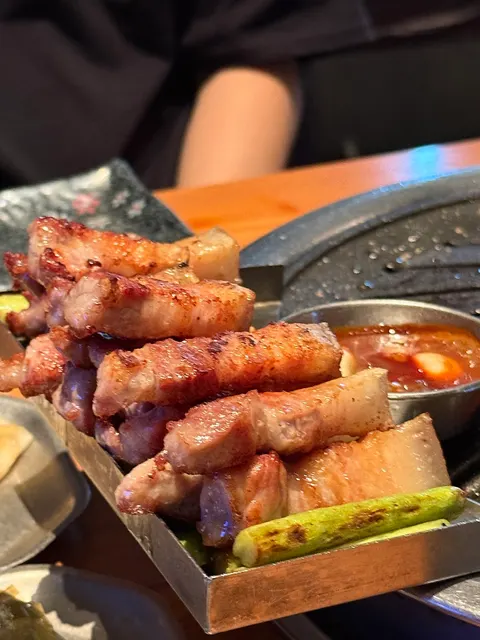
What we ordered that day at Wangchang Jokbal was the medium original jokbal.

At the time of my visit, dine-in prices were ₩44,000 for medium and ₩49,000 for large. I figured medium would be just right for two people. But once it arrived at the table, it turned out to be more than just right—it was quite generous. And it wasn't just jokbal on the table.

With lettuce wraps, chive salad, dried radish, salted oysters, steamed egg, and soup all on top of that, the actual amount felt even bigger. I don't think even two big eaters would find this lacking.

If two people are just after a light late-night bite, the medium alone could leave you quite full.

Eating in meant a different side dish lineup

Jokbal is usually something people eat via delivery or takeout, so I was curious what would be different about eating in—and Wangchang Jokbal definitely delivered on the variety of side dishes.

The chive salad and dried radish that pair so well with jokbal were there, plus a warm steamed egg and a simple napa cabbage soybean sprout soup. Eating jokbal continuously can leave a somewhat greasy taste lingering in your mouth.

That's when a spoonful of soup or a bite of chive salad was great for resetting the palate. The steamed egg was soft and worked well between bites of the salty jokbal.

It felt less like eating a single plate of jokbal and more like a full spread of rotating side dishes.
The side dish that stuck with me most: salted oysters
Among all the side dishes at Wangchang Jokbal, the salted oysters (guljeot) stood out the most. Salted shrimp is common at jokbal restaurants, but salted oysters served alongside it isn't something you see often. Salted oysters worked best not eaten on their own, but wrapped together with the jokbal.
Put a piece of jokbal on a lettuce leaf, add a bit of chive salad or dried radish, then a small amount of salted oysters. The savory, tender flavor of the jokbal combined with the salty umami of the salted oysters made the whole wrap taste much sharper.

That said, since salted oysters already carry their own seasoning, it's better to add just a little at a time rather than piling it on from the start. Whenever a few bites of jokbal started to feel greasy, reaching for salted oysters with vegetables made me want to keep eating.
Chive salad and dried radish—a pairing that still works
Chive salad and dried radish are a familiar combo with jokbal, but that familiarity is well earned.

Eating jokbal continuously can mean the soft texture stays similar bite after bite. Adding dried radish brings in a crunchy texture. The chive salad's bright aroma freshened up the savory taste of the jokbal. I tried the jokbal plain first, then alternated with salted shrimp, salted oysters, chive salad, and dried radish.

The same piece of jokbal tasted a little different depending on what I paired it with. That's what kept the generous medium portion from feeling monotonous all the way to the end. Personally, the combo of jokbal with a touch of chive salad and salted oysters stuck with me the most.

Why I chose original jokbal over spicy
Wangchang Jokbal offers spicy jokbal as well as the original. I like spicy food too and briefly considered it, but a staff member explained that the spicy jokbal is much spicier than Shin Ramyun.

Hearing that, I didn't want to push my luck and ordered only the original this time. If you usually handle spicy food well, the spicy version could be a good choice. But if you're expecting just a mild kick, it's worth checking the heat level before ordering.

Even the original jokbal had plenty of flavor variation when alternated with salted oysters, dried radish, and chive salad. In fact, the original was the better choice for appreciating the jokbal's own tender texture and savory taste.

Takeout gets you a ₩3,000 discount
The dine-in spread at Wangchang Jokbal was great, but the takeout perk also caught my eye. At the time of my visit, takeout orders came with a ₩3,000 discount.

Also, while dine-in mainly offers medium and large, takeout also lets you choose a small size. Prices were ₩49,000 for large, ₩44,000 for medium, and ₩38,000 for small.

If two people plan to eat lightly at home, being able to order a small takeout felt practical. On the other hand, if you want to enjoy the full spread with steamed egg, soup, and salted oysters, eating in suits better. It's not that one option is always better—it depends on how many people are eating and what kind of spread you want.

Dine-in or takeout—which suits you better?
The biggest advantage of eating at Wangchang Jokbal in person was definitely the side dishes.
I could enjoy hot steamed egg and napa cabbage soybean sprout soup right away, plus the fun of alternating between chive salad, dried radish, and salted oysters. If you want to eat your jokbal in various ways or enjoy hot side dishes together, dine-in is the better fit.
On the other hand, if you'd rather eat comfortably at home or are looking for a small takeout portion for two, takeout can be more practical. With the takeout discount applied, it also eases the price a bit.
A solid spot for a filling late-night meal near Sunae Station
When looking for jokbal near Sunae Station, I think the side dish lineup matters just as much as portion size and price. Even a generous portion of jokbal can get a bit monotonous toward the end if the sides are limited. Wangchang Jokbal was great because the chive salad, dried radish, salted oysters, steamed egg, and soup let you mix things up in different combinations.
The medium in particular was quite generous for two. If neither of you eats a huge amount, you might end up with leftovers, so it's worth asking in advance whether you can take the rest home. It's a fine choice if you're after takeout jokbal for a late-night snack near Sunae Station, but if you want a proper full spread with side dishes and hot soup, it's worth eating in.
Next time I visit, I think I'll order the original jokbal again and start with a wrap topped with salted oysters and chive salad.
Where it is
11 Sunae-ro 46beon-gil, Bundang-gu, Seongnam-si, Gyeonggi-do, South Korea경기도 성남시 분당구 수내로46번길 11 대덕글로리빌딩 1층
52 restaurants in Seongnam, Gyeonggi, by number of reviews →