Yangpyeong Station omakase lunch with monkfish liver: Sushi Hibi
In short
Sushi Hibi is a sushi omakase restaurant in a lane off Dangsan-ro 32-gil, near Exit 4 of Yeongdeungpo-gu Office Station in Yeongdeungpo, Seoul. The writer, a Mullae-dong local, ate the second lunch seating with her husband and tasted negi (green onion) tempura hidden inside daurade nigiri, monkfish liver in place of uni, and tamago simmered for two hours, each course explained by the chef. Because sashimi, grilled fish and soup alternated with the nigiri, the course never dragged, and the couple left planning to return with business clients.
Good to know
- Address
- 1st floor, 14-1 Dangsan-ro 32-gil, Yeongdeungpo-gu, Seoul
- Getting there
- About 168m from Exit 4 of Yeongdeungpo-gu Office Station (Subway Lines 2 and 5)
- Parking
- Dangsan public parking lot (₩400 per 5 minutes; about ₩5,000 for a meal)
- Closed
- Every Monday
- Weekday (Tue–Fri) lunch
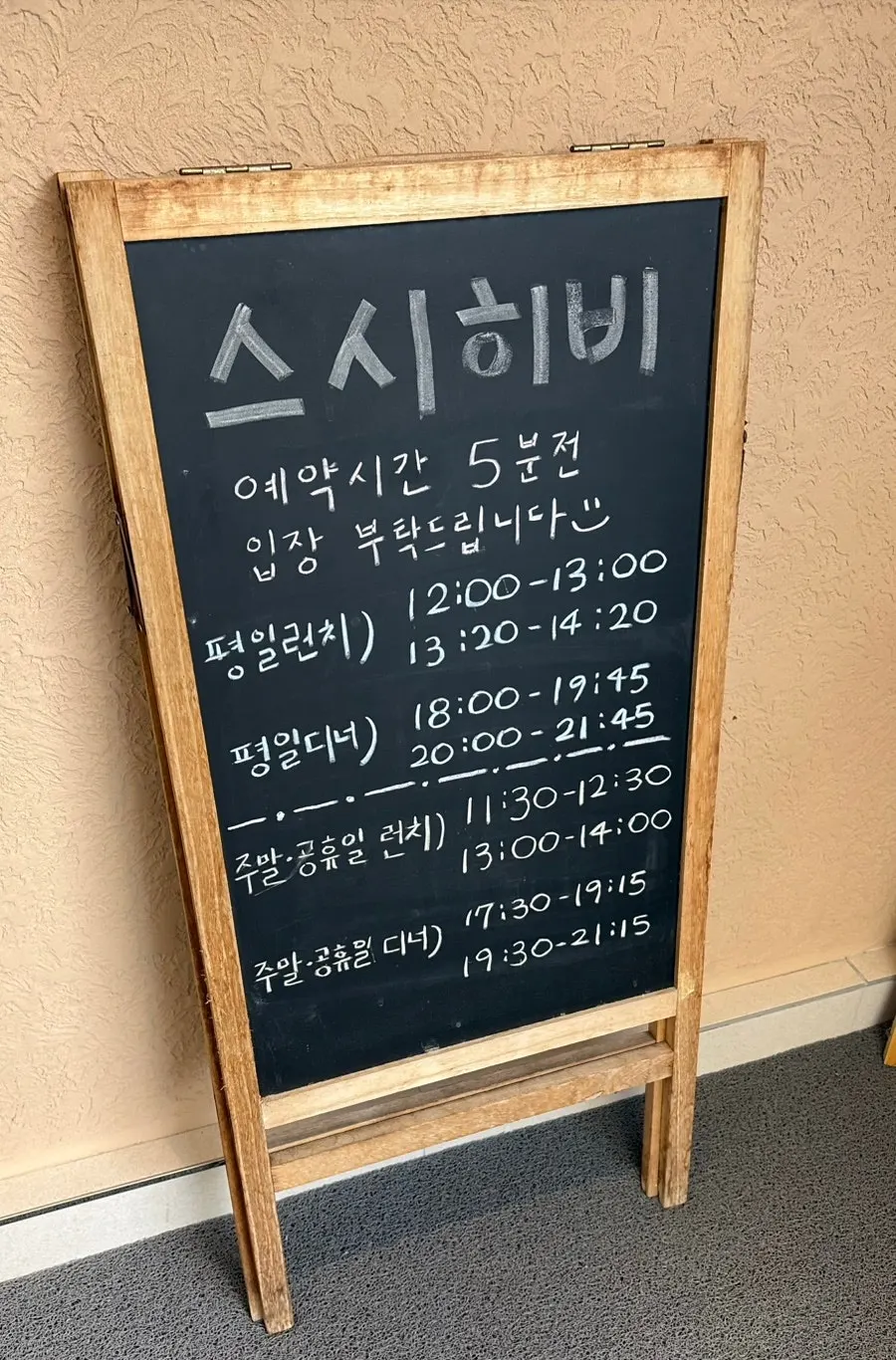
- 1st seating 12:00–13:00 / 2nd seating 13:20–14:20
- Weekday (Tue–Fri) dinner
- 1st seating 18:00–19:45 / 2nd seating 20:00–21:45
- Weekend (Sat–Sun) lunch
- 1st seating 11:30–12:30 / 2nd seating 13:00–14:00
- Weekend (Sat–Sun) dinner
- 1st seating 17:30–19:15 / 2nd seating 19:30–21:15
- Reservations
- Catch Table
- Entry
- Arrive 5 minutes before your reservation time
- Price reference
- ₩5,000 ≈ $3.7 (2026-09-15)
as written by the visitor on Sep 14, 2026
Time to put away the life of sitting at home with the AC blasting, feet up, scrolling reels ˃ᴗ˂ The weather's demanding I actually go outside. I got the chance to try a sushi omakase restaurant near my place in Mullae-dong that I'd always been curious about, so I grabbed my husband's hand and went.
This is a place where you get to enjoy a whole flow of seasonal-fish dishes and nigiri, with the chef explaining each ingredient and cooking method along the way, which made the meal feel extra special. It wasn't just about filling up — there was real fun in learning how each fish differed in taste, texture and prep.
If you're looking for a special dinner spot near Yangpyeong Station, Yeongdeungpo-gu Office Station or Mullae Station, or want to try omakase sushi in a relaxed atmosphere, I recommend Sushi Hibi! For reference, here's the real, unfiltered verdict up front: my husband, who came with me, said he wants to bring clients here for a dinner seating. Now let me give you my full, detailed write-up.
Where is Sushi Hibi, and what are its hours and booking rules?
Sushi Hibi is on the 1st floor of 14-1 Dangsan-ro 32-gil, Yeongdeungpo-gu, Seoul, about 168m from Exit 4 of Yeongdeungpo-gu Office Station (Lines 2 and 5). If you're driving, you can use the Dangsan outdoor public parking lot (₩400 per 5 minutes), and reservations are through Catch Table.
- Closed every Monday
- Weekday (Tue–Fri) lunch: 1st seating 12:00–13:00 / 2nd seating 13:20–14:20
- Weekday (Tue–Fri) dinner: 1st seating 18:00–19:45 / 2nd seating 20:00–21:45
- Weekend (Sat–Sun) lunch: 1st seating 11:30–12:30 / 2nd seating 13:00–14:00
- Weekend (Sat–Sun) dinner: 1st seating 17:30–19:15 / 2nd seating 19:30–21:15
Driving to Sushi Hibi and using the Dangsan public parking lot
Whether it's a restaurant or a café, if accessibility isn't great, I hesitate a bit both the first time and on repeat visits. But Sushi Hibi is right by Yeongdeungpo-gu Office Station and very close to a public parking lot, so it's genuinely easy to get to. We're locals, but we had somewhere else to be after the meal, so we drove and used the Dangsan outdoor public parking lot.
Parking is ₩400 per 5 minutes. Since we left right after the meal, it came to about ₩5,000.
I happened to park near the unmanned payment machine, and there was a little gap-in-the-wall-style exit right in front — this makes the restaurant even closer, so keep that in mind. (Also, the photo on the right is taken from just outside that gap looking back toward the parking lot — it's a genuinely great spot, so take note.)
Keep walking straight and you'll see an aviation school on your left — Sushi Hibi is right next to it, tucked inside what looks like a short alley.
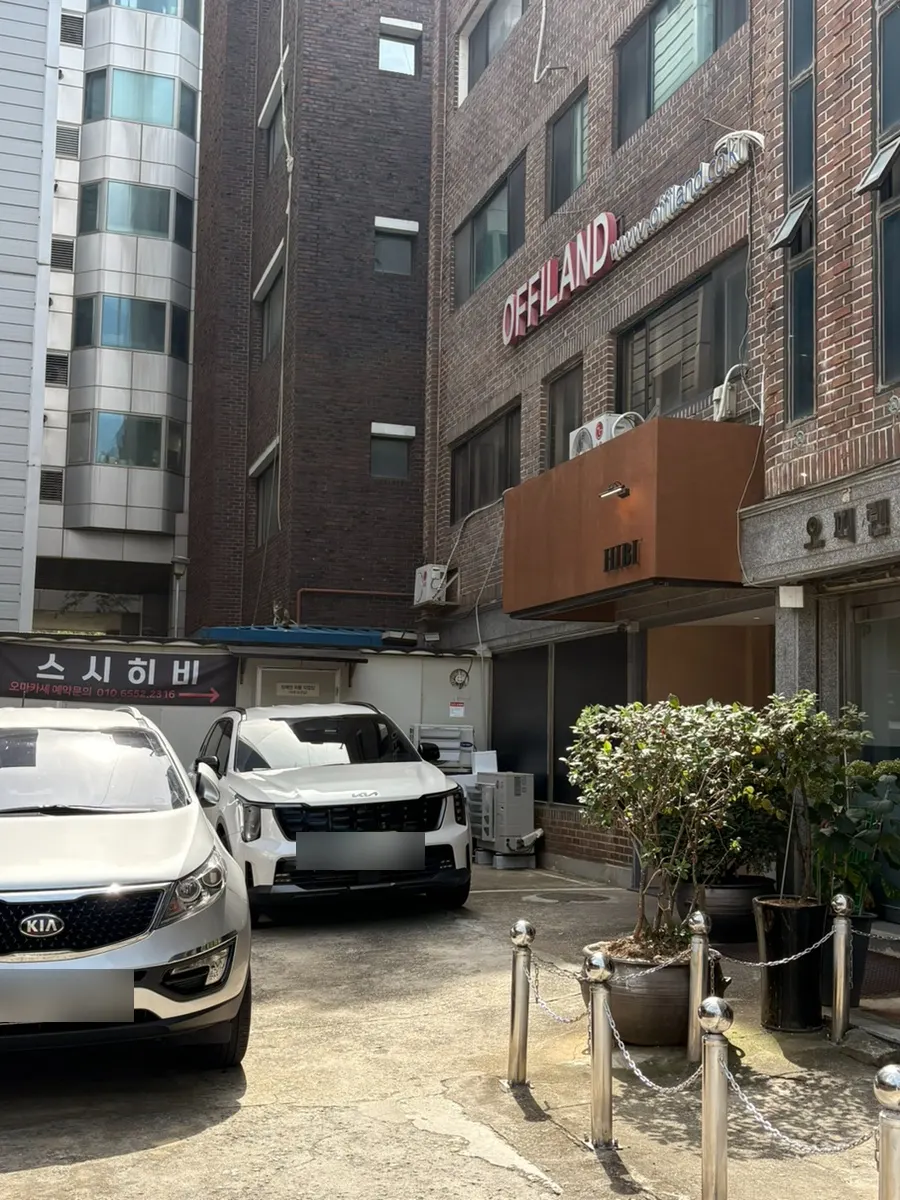
Right there, a Sushi Hibi banner kindly points the way.
What Sushi Hibi looks like inside and out
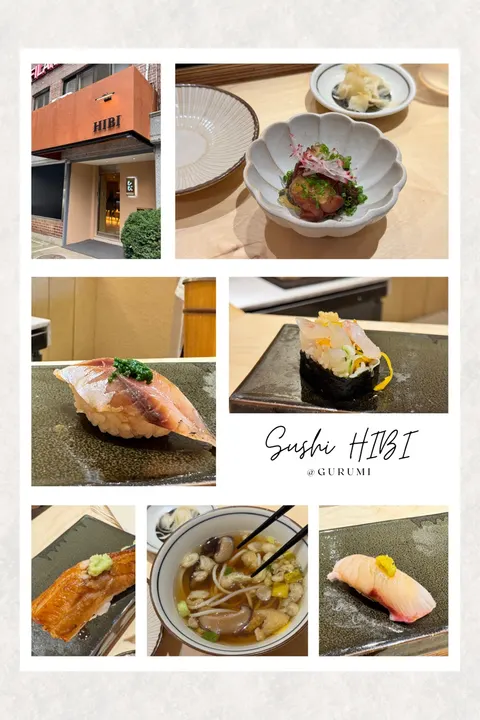
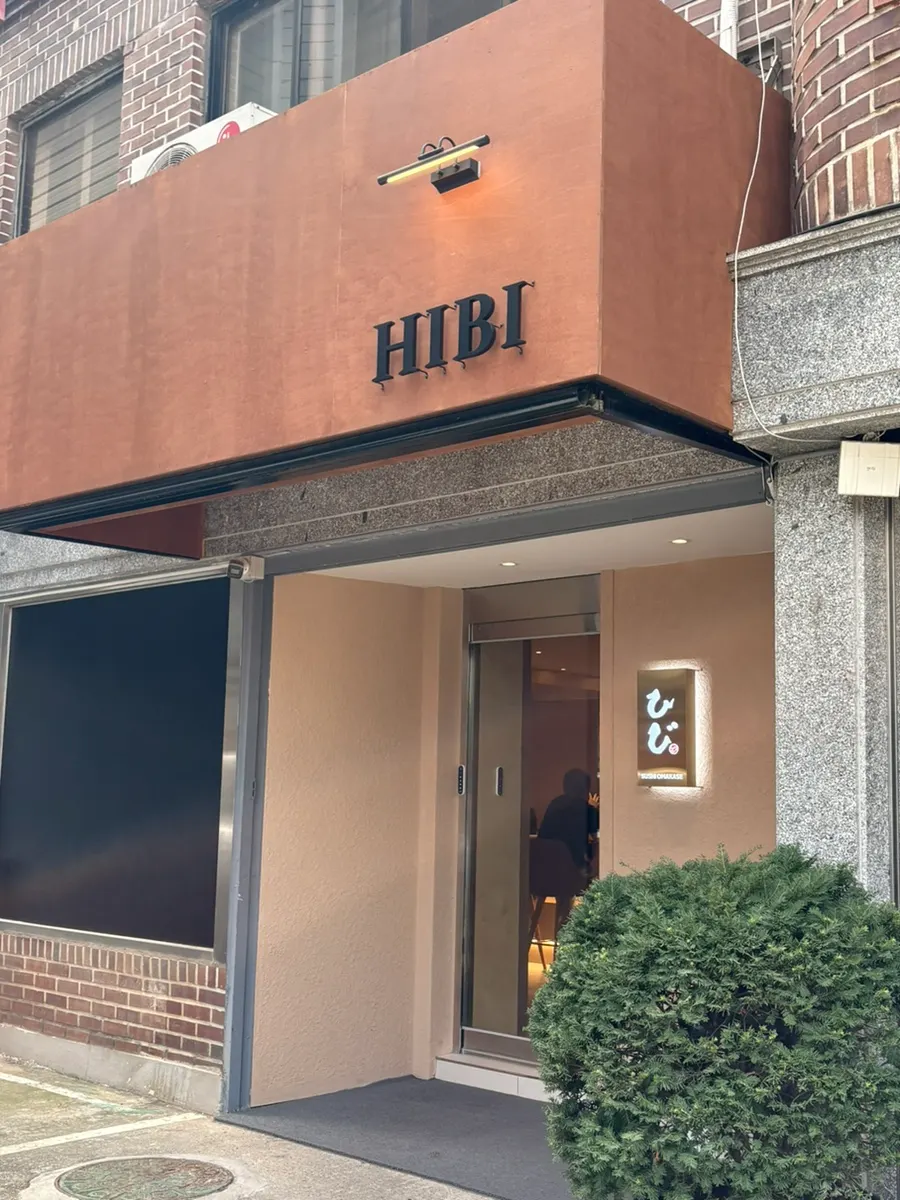
Doesn't it already have that hidden-gem look from the outside? Being tucked inside the building, it might be easy to miss.
Actually, I was a little late. Maybe about 5 minutes, embarrassingly enough — it clearly says to arrive 5 minutes before your reservation time. I'm normally not the type to be that late, I swear, but... yes, well. There were other tables of guests already there, so it was pretty mortifying.
That day there were 6 of us including me, in the lunch second seating. The moment you step inside, you immediately feel a calm atmosphere that's easy to focus on the food in.
I really love this beige-toned wood interior. Random tidbit, but the chef apparently has an interesting background and major, and was personally involved in the interior design as well as fixing the kitchen and water pipes. Between the cooking and the space, this guy clearly did it all — haha, I call people like that true talents. Go taste the delicious food from Sushi Hibi's talented chef.
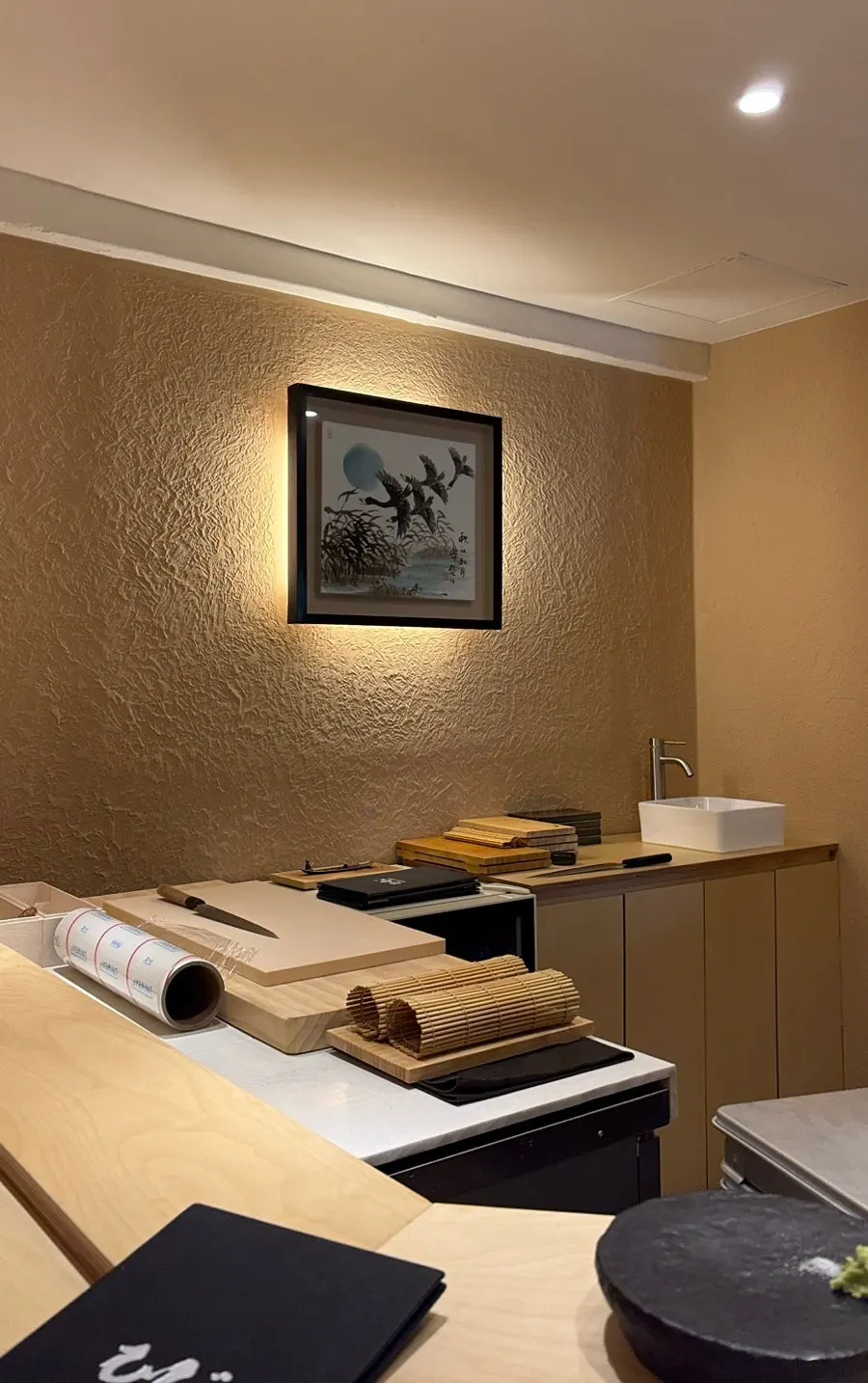
Throughout the course, the chef comfortably explains each ingredient's characteristics and the best way to enjoy it, and he's genuinely a good talker — I'm jealous. Rather than a stiff, formal omakase that makes you tense, it felt more like chatting with the chef and naturally learning the story behind each dish. I really enjoyed it. If you're trying omakase for the first time, I'd recommend this course since it's easy to enjoy without pressure.
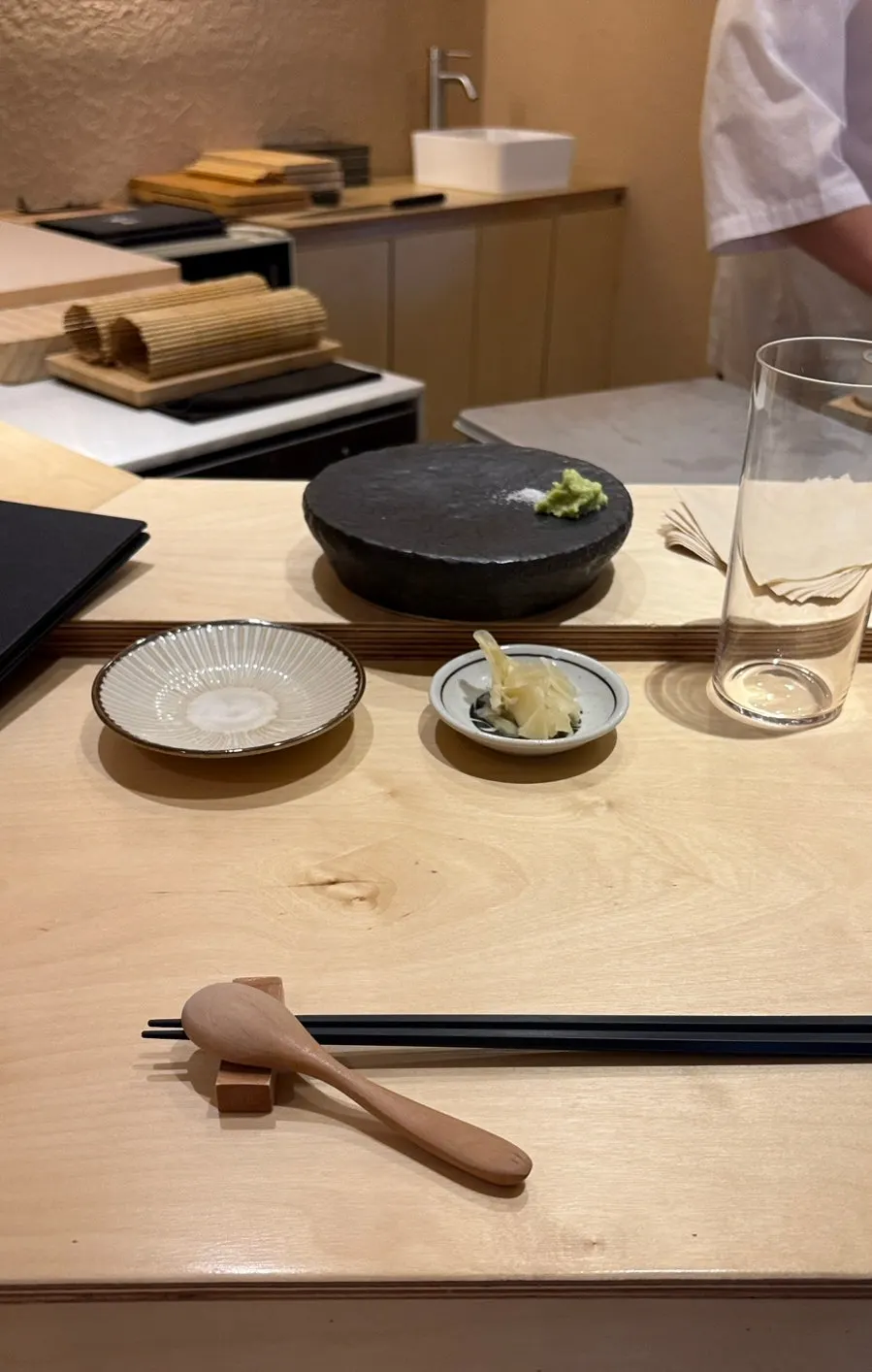
The table is shaped kind of like a hexagon. The chef's space is the stage, and I'm the audience.
Sushi Hibi drinks menu and the September sake event
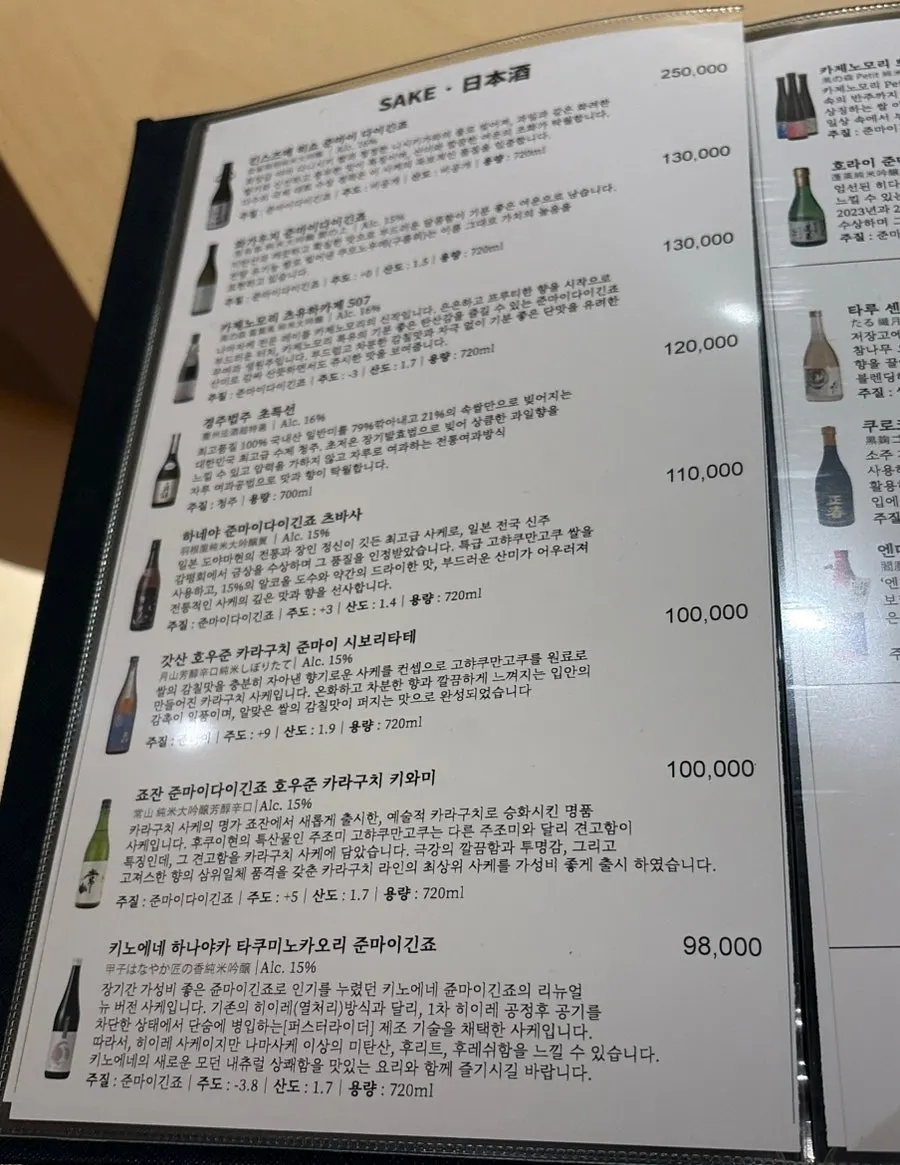
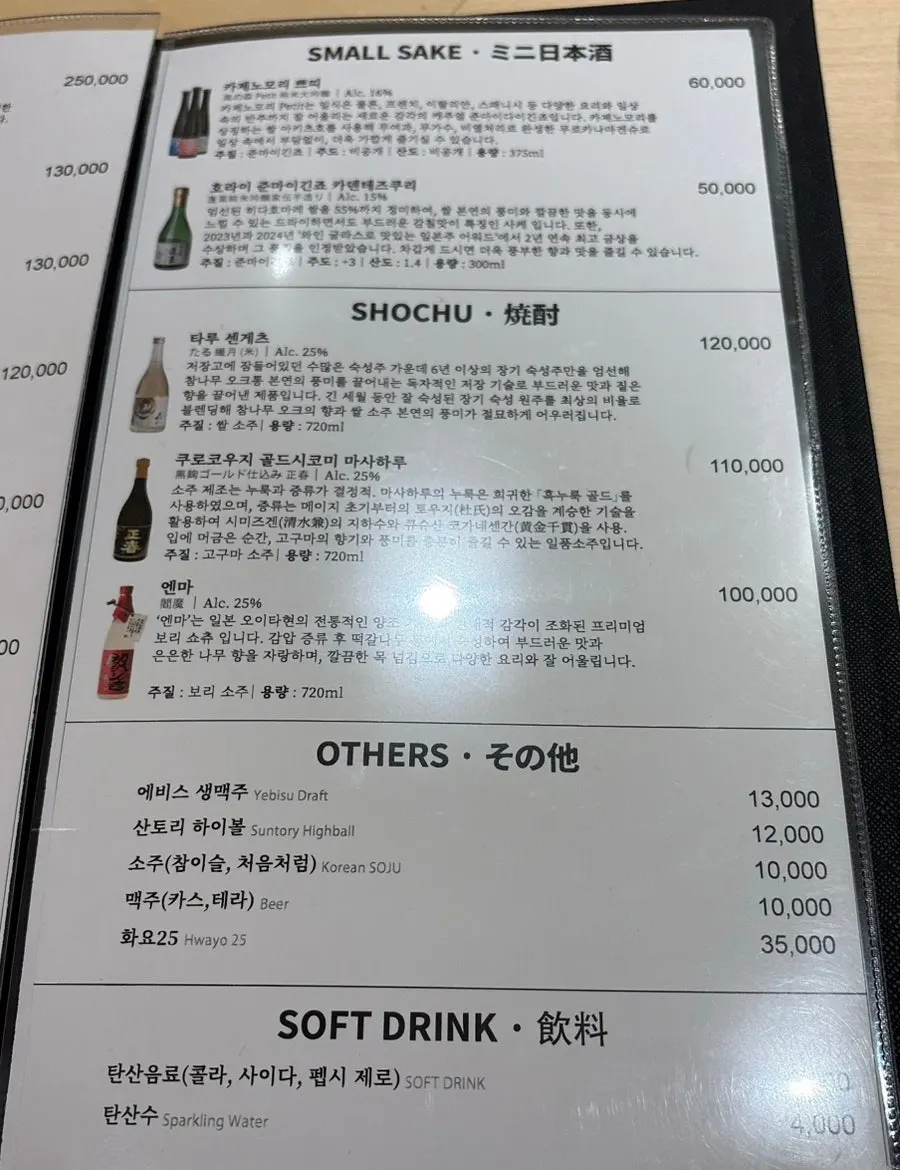
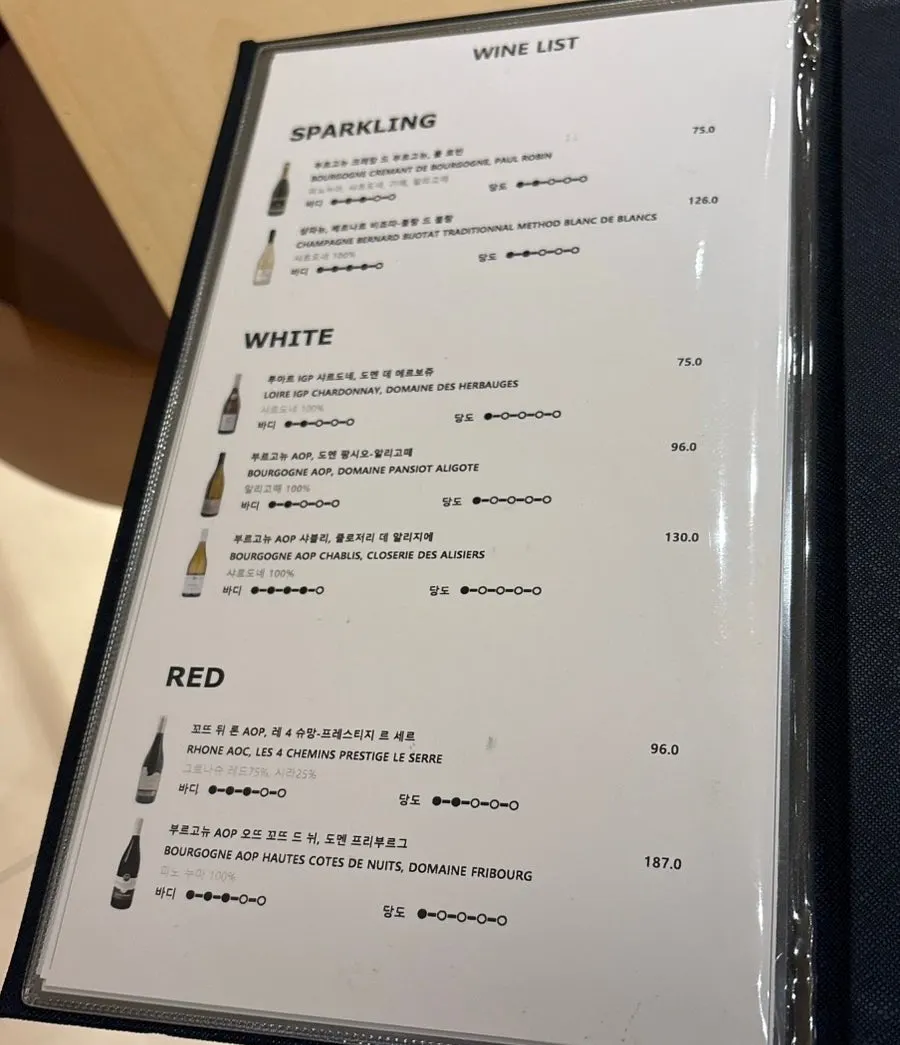
If I'd gone in the evening I would have ordered sake right away — such a shame I couldn't. Apparently there's even a (probably) September-only sake event: if you show them an event feed on Instagram, they give you a whole tokkuri (sake flask). I asked if it's just a glass, but no, a whole flask — I'm so tempted. What a generous chef. Sake isn't exactly soju-priced, you know?
What comes in the Sushi Hibi lunch omakase course?
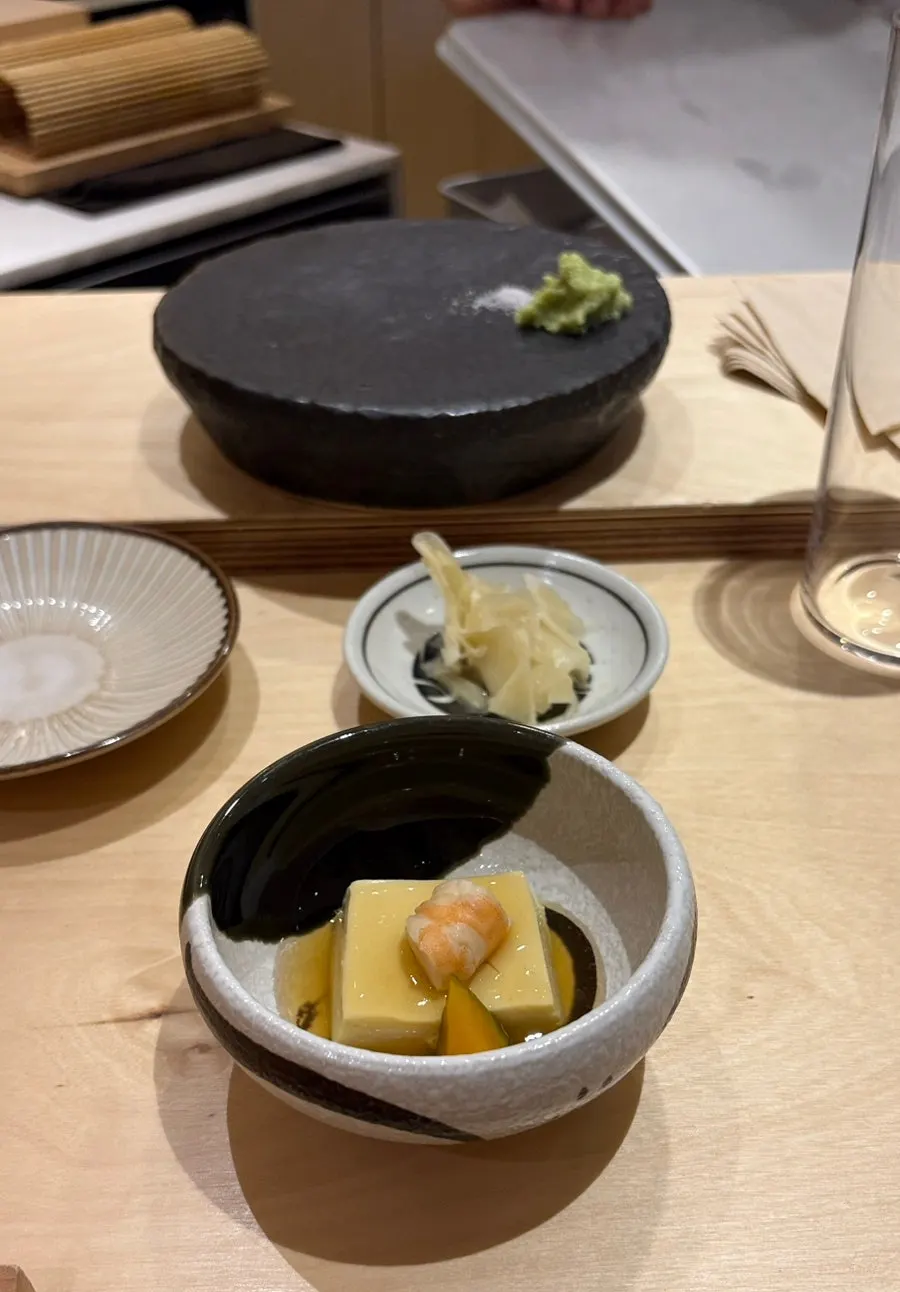
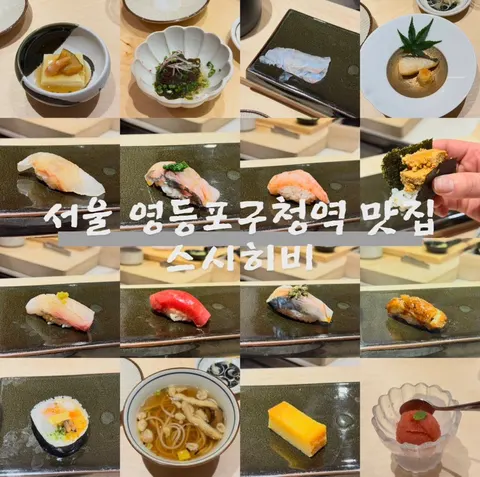
The course finally began. The opening dish matters so much, right? It was steamed egg topped with shrimp and sweet pumpkin, with a bonito flake sauce that blended beautifully. Soft, silky egg with real umami depth.
And this is octopus. The octopus was so tender, it was genuinely surprising. And the tangy sauce paired with it was so good — a vinegar jelly sauce, and somehow vinegar tasted delicious? Does that even make sense. I wanted to slurp it right up but held myself back.
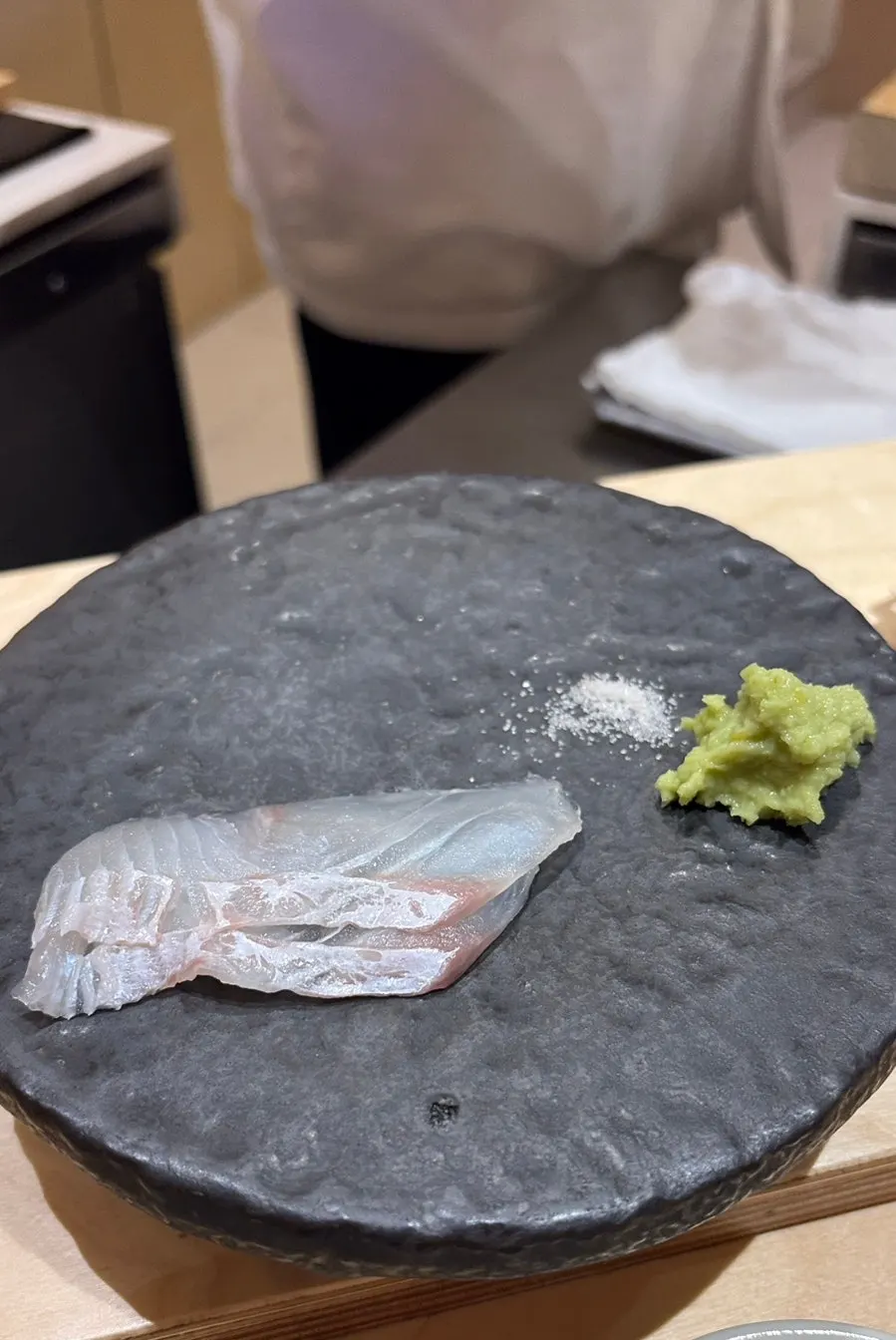
Aged flounder sashimi, and why the chef says salt only
The first fish was flounder. Served as aged sashimi, it was chewy yet tender — I love aged sashimi. He also suggested trying it with salt instead of soy sauce, saying that to taste the raw fish's true flavor, salt alone is the way to go. But apparently that only works if the fish wasn't rinsed with tap water — if it was, dipping it in salt just makes you taste the tap water. Wait, does this mean I can never eat raw fish from the fish market again...?
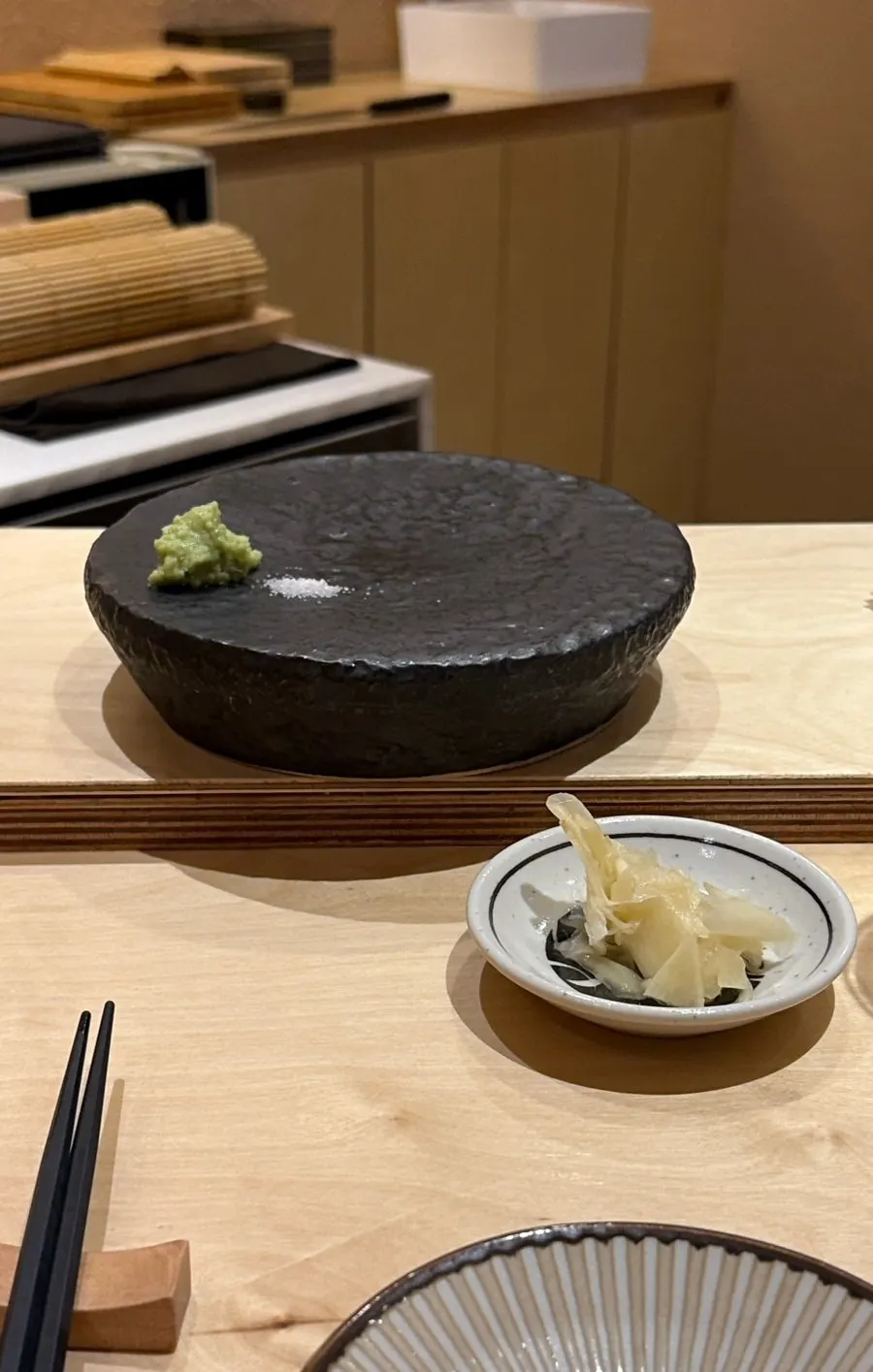
A little moment that made me happy: after my first piece of nigiri, the chef turned the plate around for me, a lefty, so the wasabi would be on the left side. Left-handed people have this kind of low-key inconvenience where everything's just set up for right-handers by default, and you get used to it — a small gesture like this really makes you notice. Ah, right-handers really do have it easy.
While chatting about this and that, the chef even explained his knives at some point. That short one, apparently, is a paring knife — but an expensive one. Sushi masters apparently don't blame their tools.
Grilled Spanish mackerel and soybean paste soup
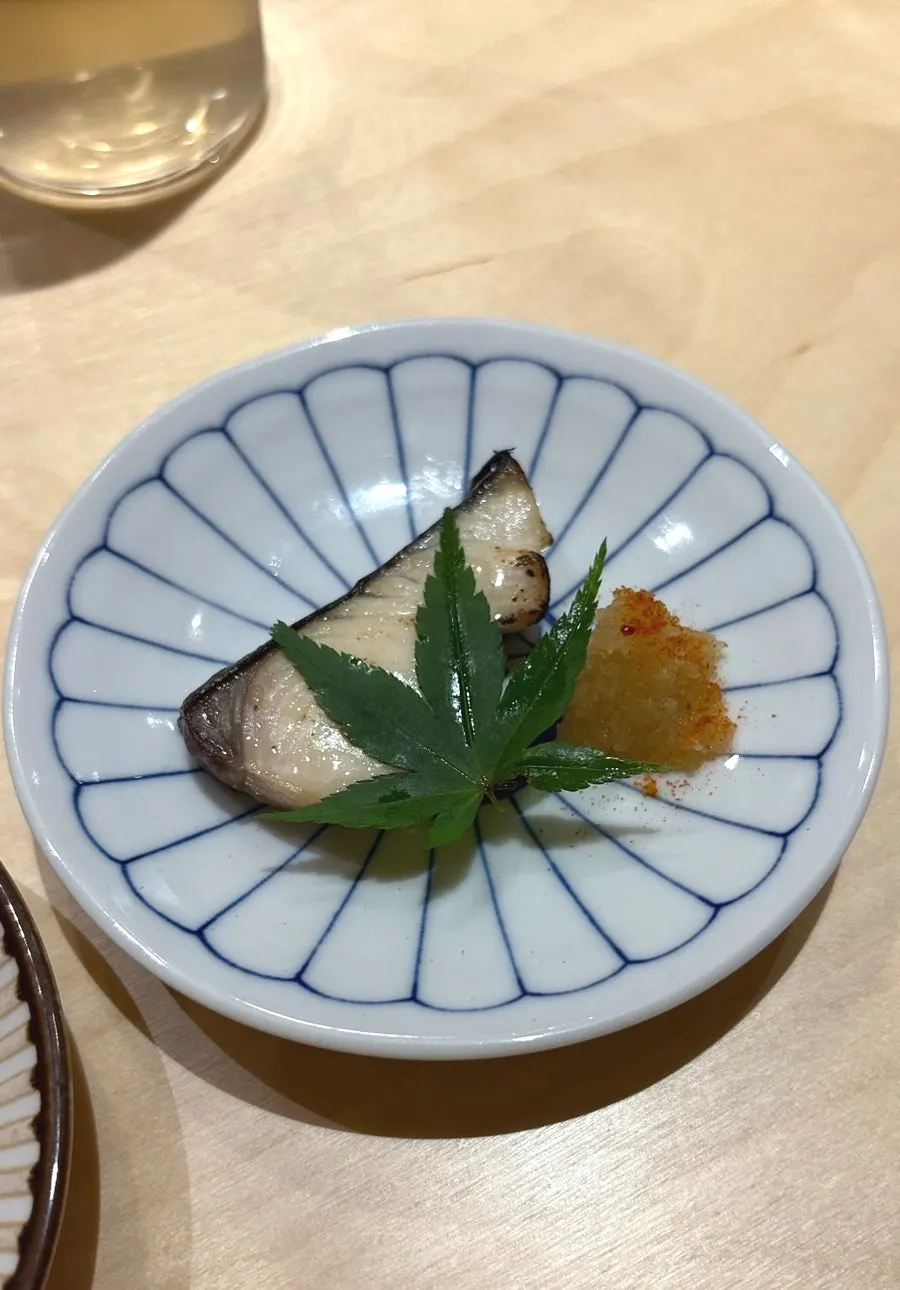
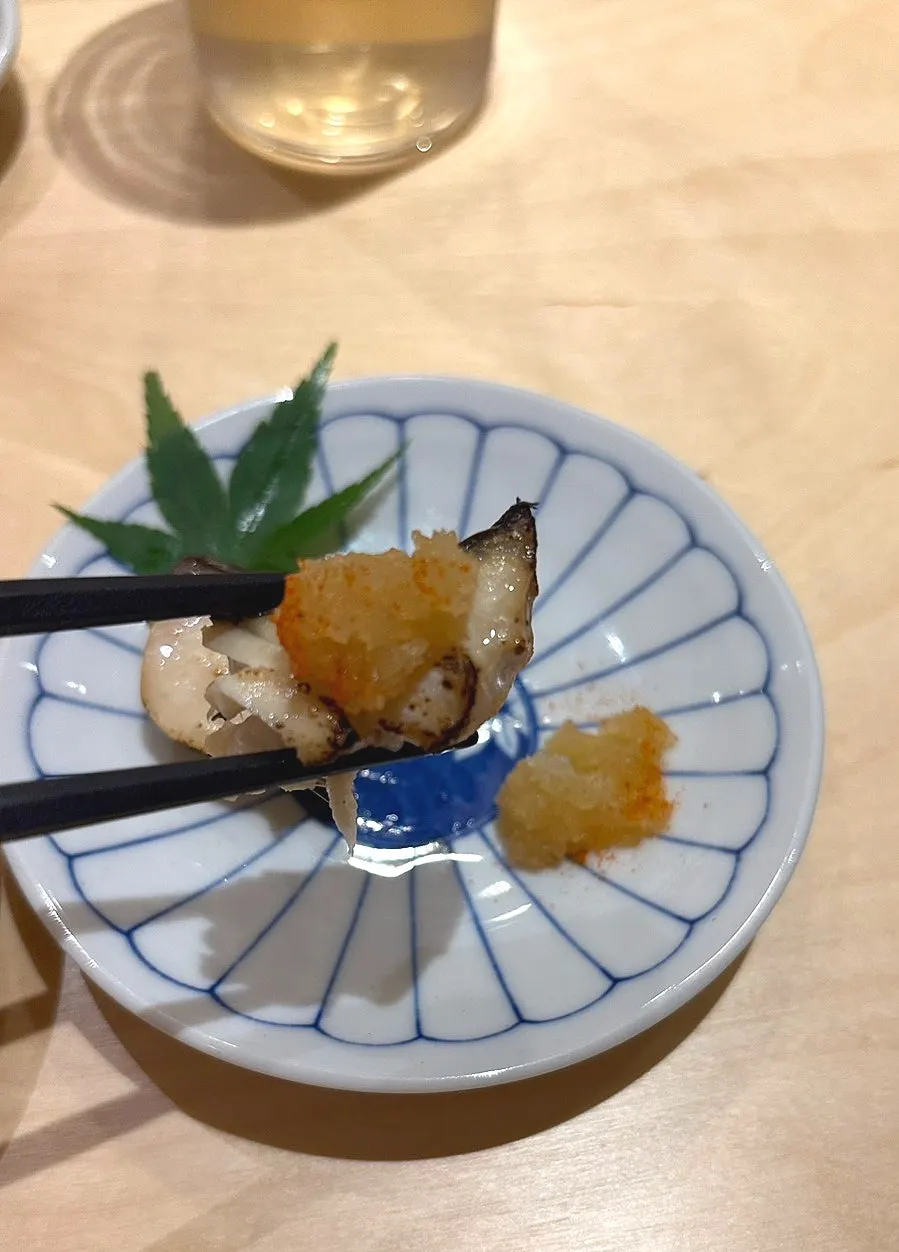
This here is grilled Spanish mackerel. Topped with grated radish and yuzu ponzu sauce, it was fragrant, and the mackerel's savory flavor blended in beautifully. There was also a maple leaf garnish that we were told not to eat, so I set it politely aside.
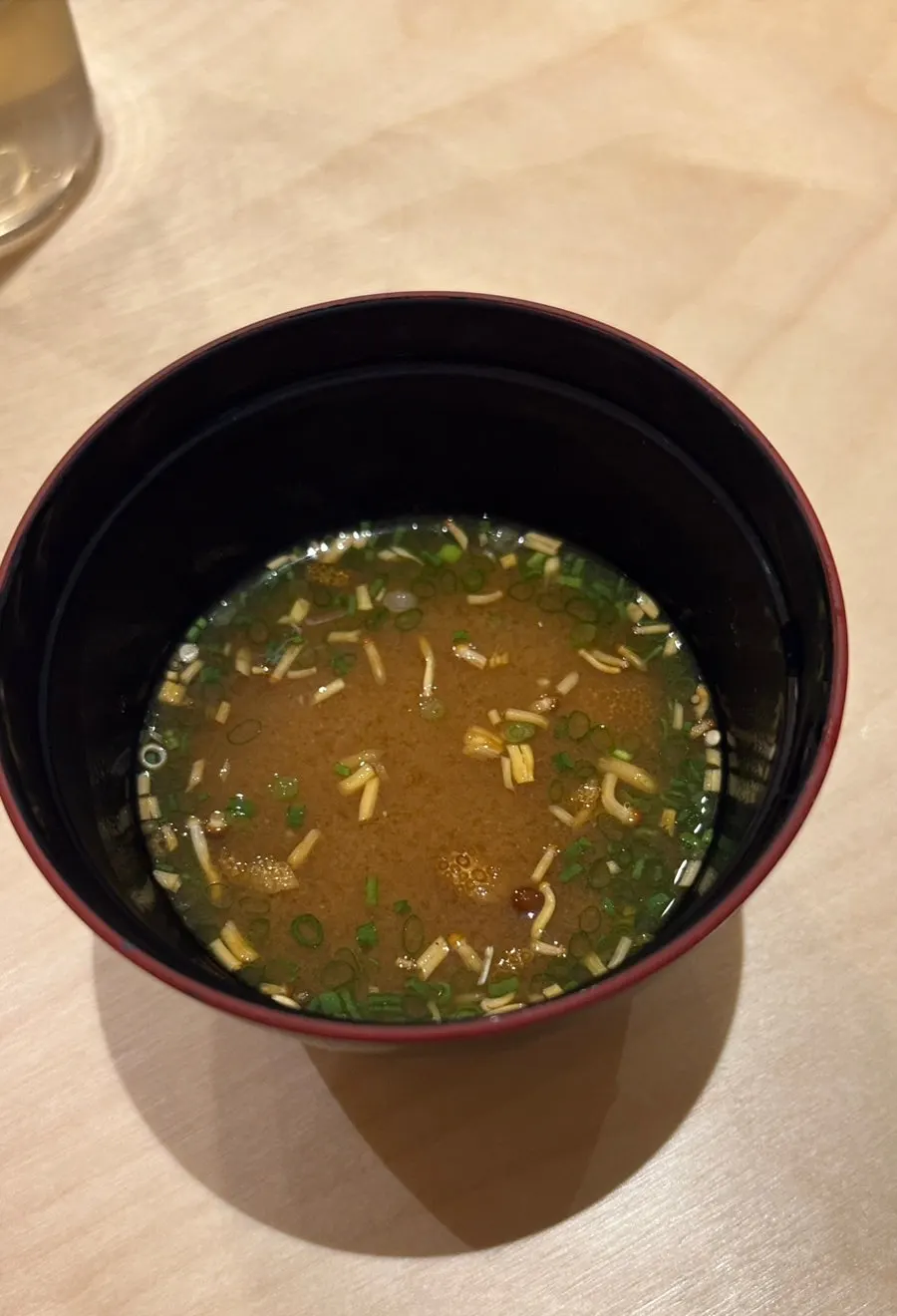
This place is great at miso soup too. How did they know I love those brown mushrooms.
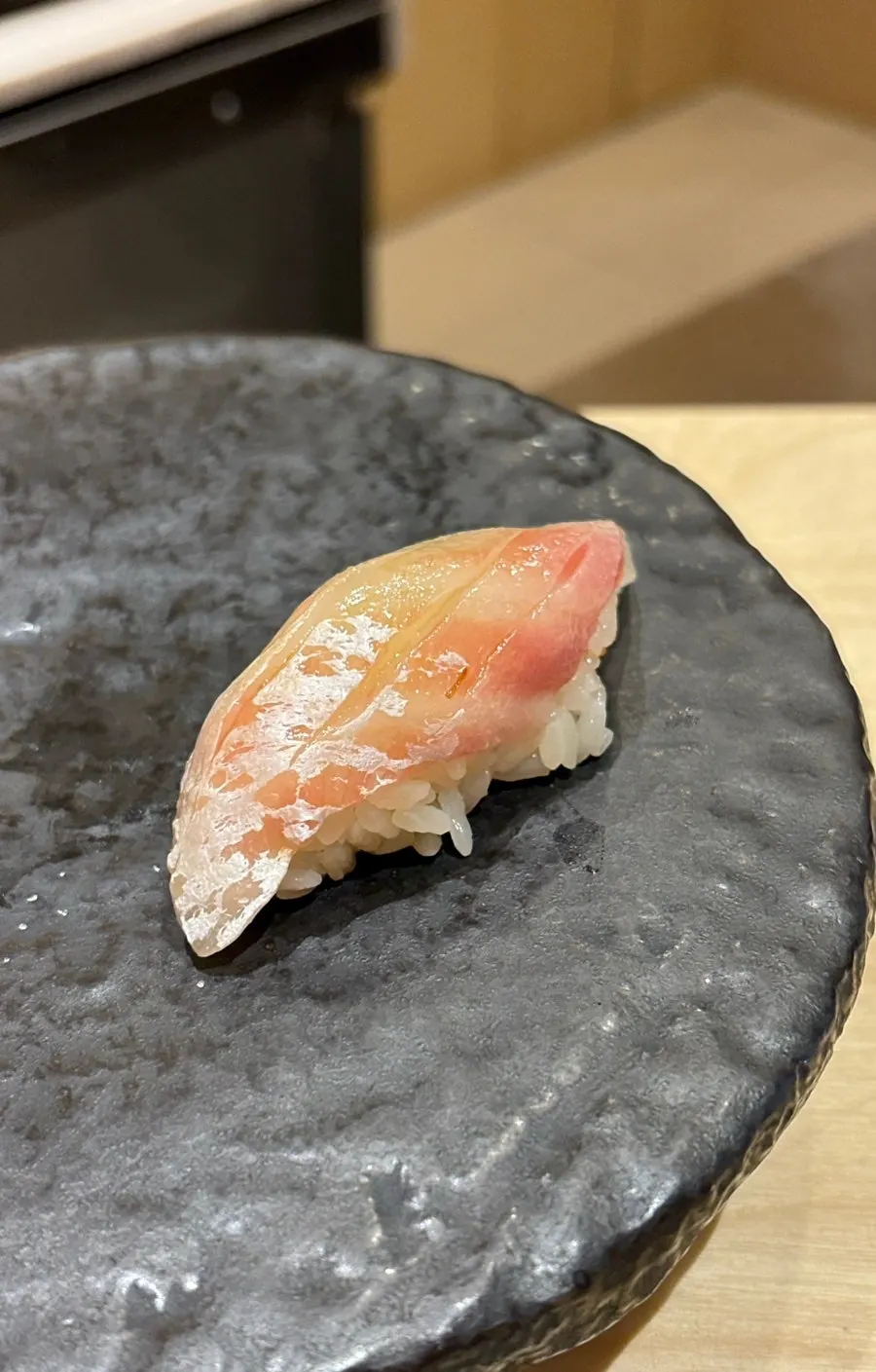
Daurade nigiri with negi tempura inside: the surprise of the course
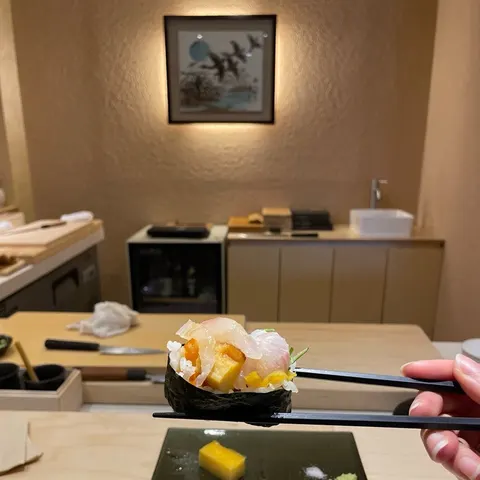
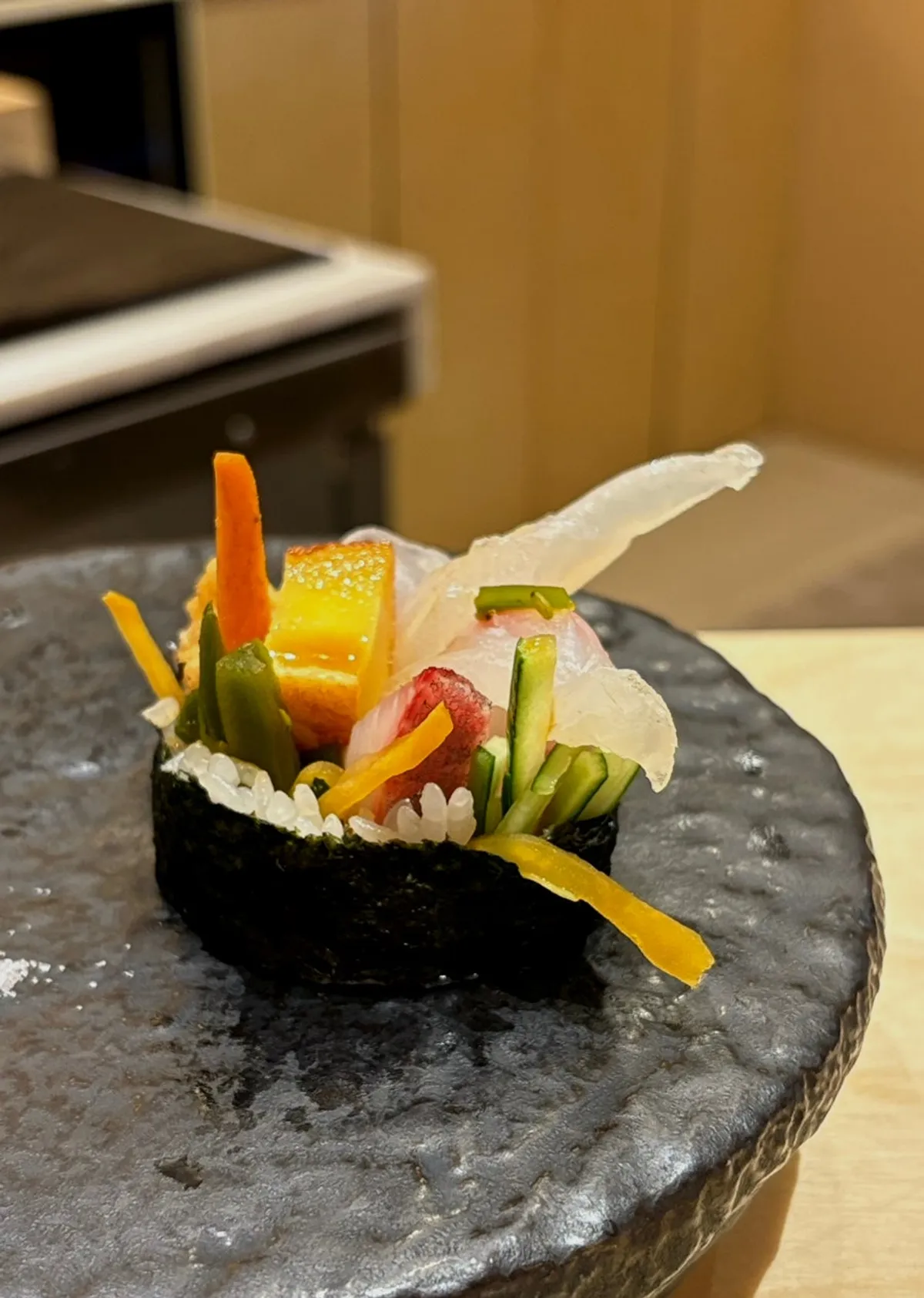
This one is daurade, my favorite fish. What's truly amazing about this nigiri is that there's fried green onion (negi tempura) inside. It was so, so good, honestly — I hated that it disappeared with each bite. I didn't know negi and daurade nigiri could pair this well. Genuinely a bit shocked. Sorry for the exaggeration but I mean it. After eating this, when he later asked if there was anything I'd want to eat again, I had already prepared to say this exact dish — or maybe there wasn't even a need, haha.
As the nigiri course began, the chef checked whether the rice and wasabi amounts were okay for me — and I'm the type who firmly believes the standard portion is always the most accurate and delicious. That's just who I am. Please keep it exactly as is.
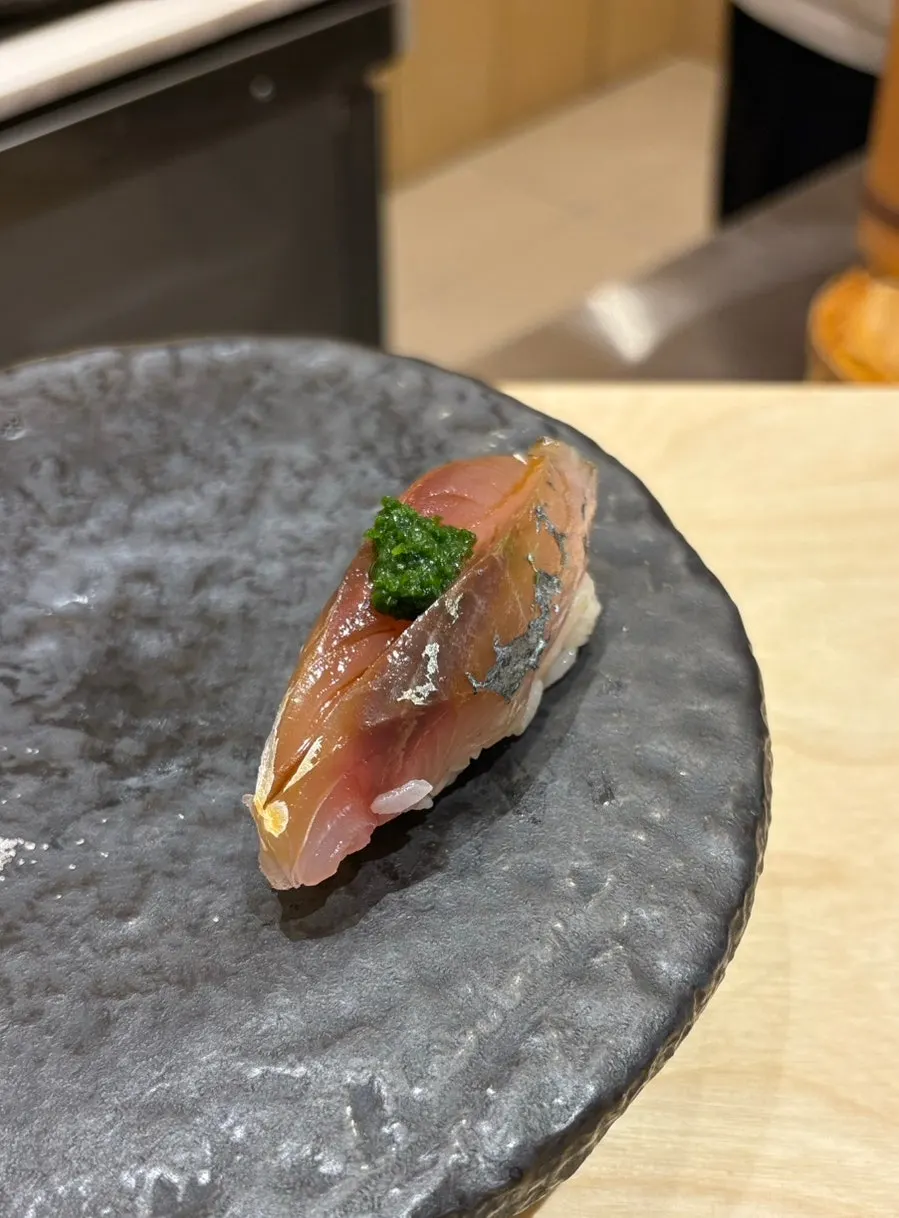
Horse mackerel nigiri and shrimp at Sushi Hibi
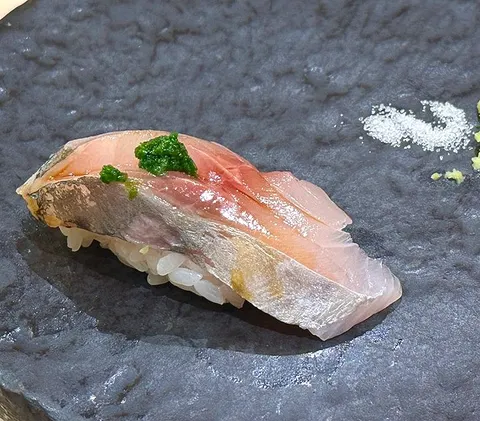
Next was horse mackerel nigiri. Have I ever even had horse mackerel before? Probably a first for me. Horse mackerel can be a fishy-tasting fish, but topped with a minced chive sauce, it nicely tamed any fishiness — I liked that a lot.
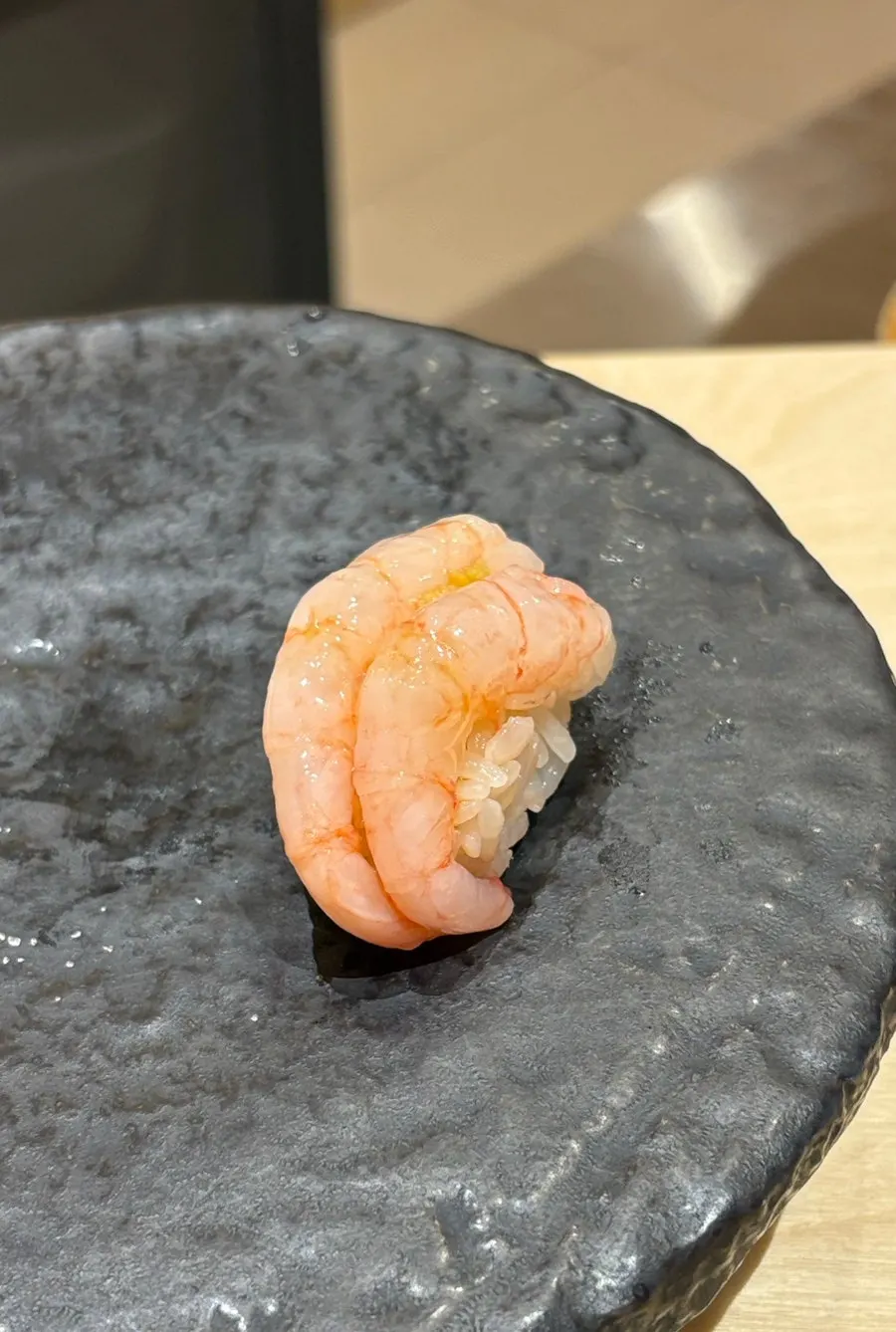
Shrimp! I love all shellfish, but shrimp especially. It was lightly blanched, so it had this soft yet still bouncy texture — honestly, everything here is just delicious.
Why Sushi Hibi topped the nigiri with monkfish liver instead of uni
This looks exactly like uni, but it's actually monkfish liver. I love monkfish stew but had never tried monkfish liver — I'm not usually one to seek out seafood organs. But this was incredibly rich and delicious. So rich, so savory — I don't even know if that's the right word. So, so rich! Honestly, it was amazing.
The chef mentioned that uni would be nice, but it's too expensive — rather than go with mediocre-quality uni, he chose this menu based on good ingredients and better flavor. Big thumbs up to that.
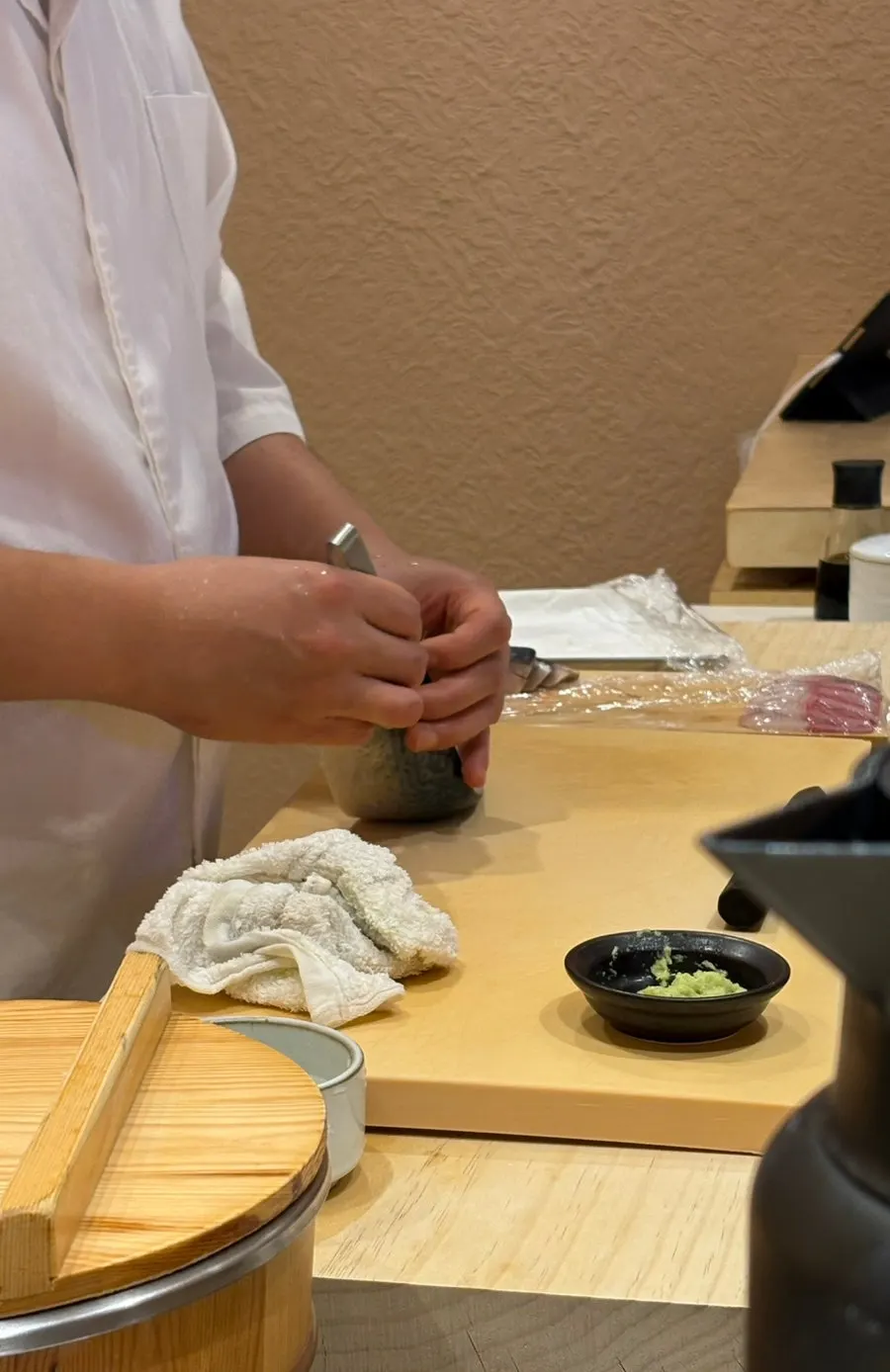
Watching his hands as he removed the bones. A true bone-remover.
Summer amberjack with yuzu kosho
This is summer amberjack! Did you know amberjack (jaetbang-eo) gets its Korean name from its grayish (jaet) color? I love this kind of straightforward naming. The signature richness of amberjack wasn't overwhelming — soft and delicious to chew.
The amberjack came with yuzu kosho on top. Yuzu means citron, kosho means pepper — so you get the citron's refreshing aroma along with a subtle spiciness, and the chef recommended it as one of his favorite sauces. Sweet with a sharp kick — such an appealing flavor. To me it tasted like a mix of yuzu sauce and wasabi. I heard there's a store-bought version, so I quickly looked it up. It seems like it'd go well with beef too. Gotta buy some later.
Getting to hear about how they source fresh, quality ingredients, and even the chef's thoughts on which sauces pair well, while eating — I think that's part of what makes Sushi Hibi such a standout sushi spot in Yeongdeungpo.
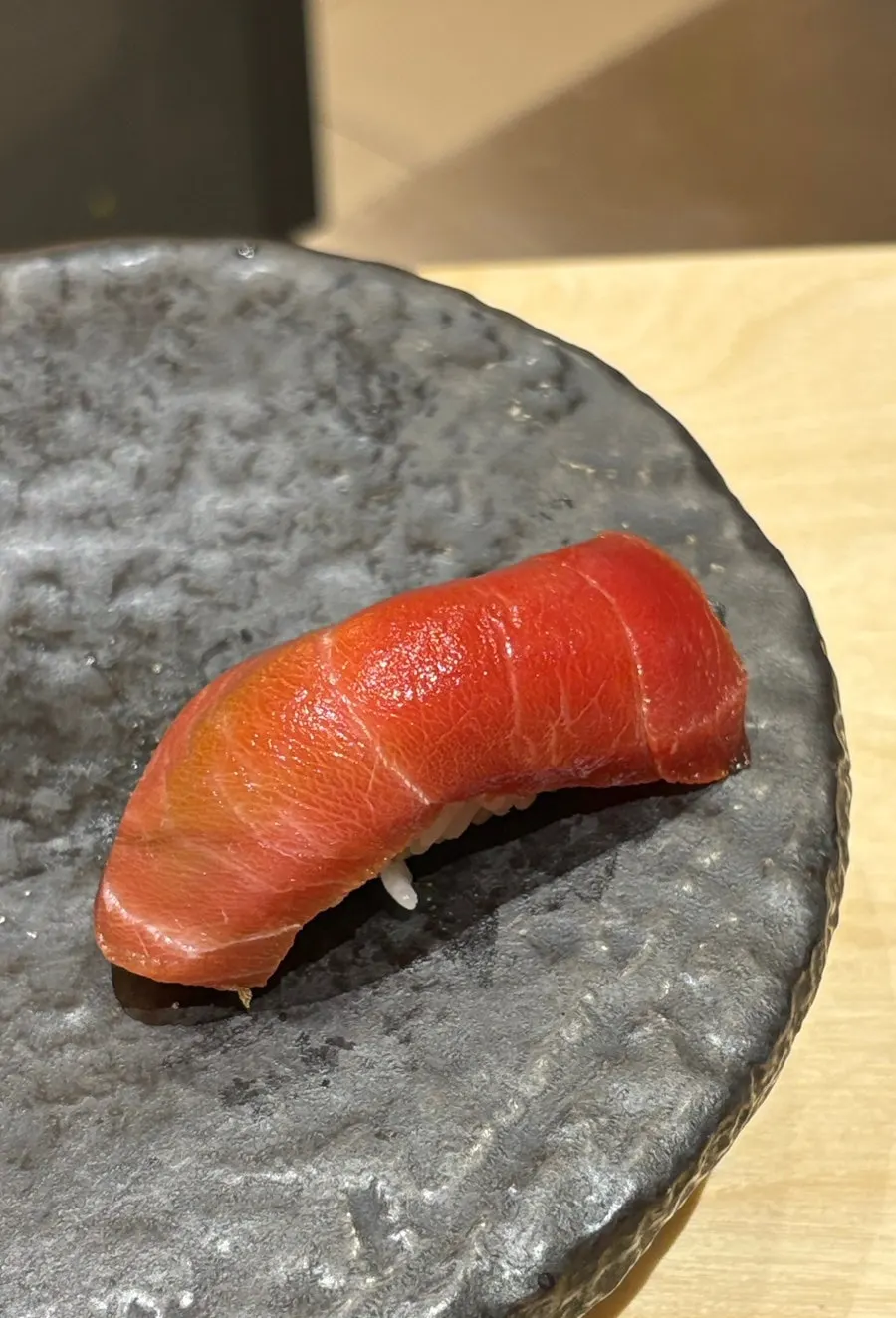
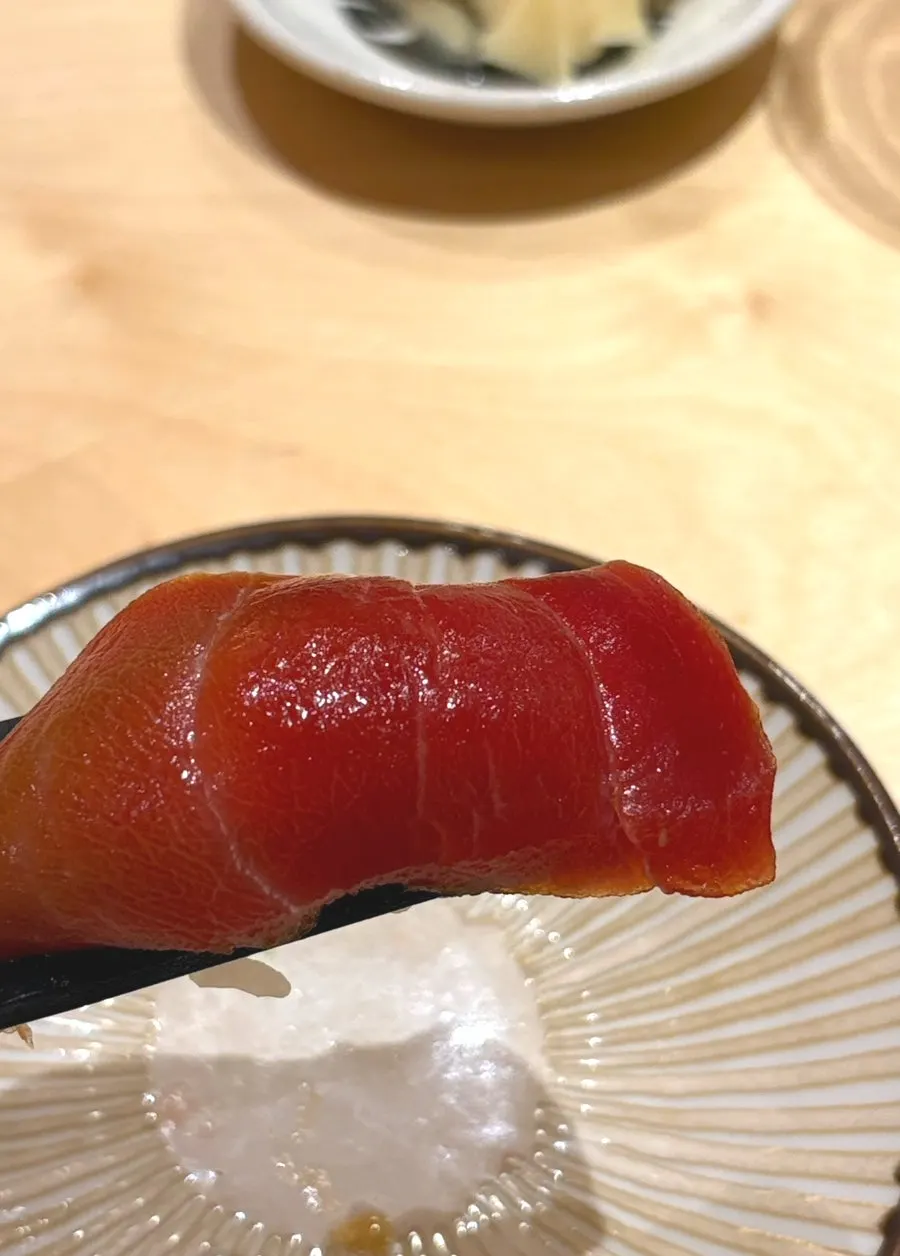
Tuna nigiri and mackerel nigiri
Tuna, but from the part where the back meat meets the belly meat. Nicely balanced between leanness and just the right fattiness. It's marinated in soy sauce beforehand to add depth before being shaped into nigiri — and yeah, this one was delicious too.
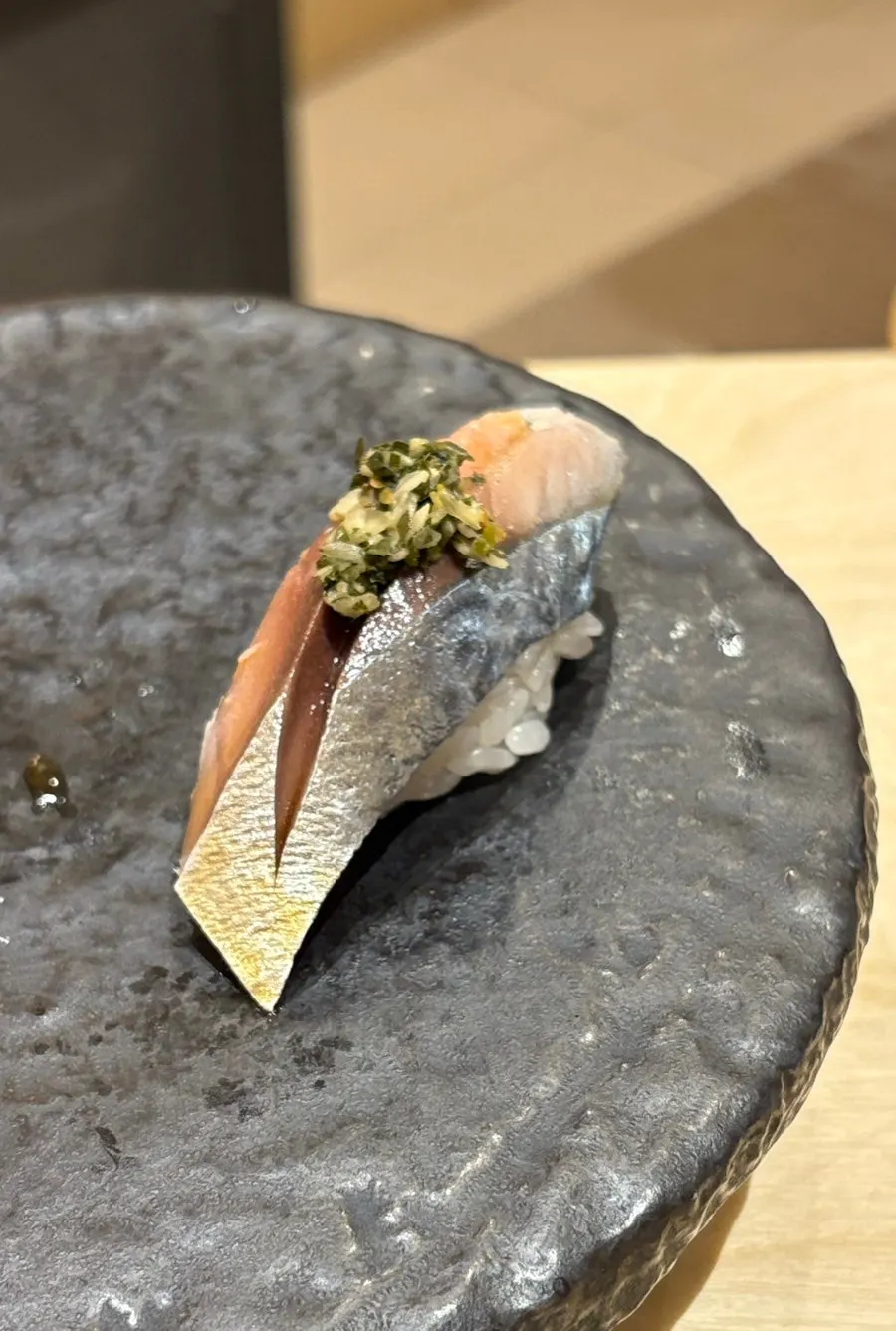
I really, really love live mackerel sashimi. Most mackerel nigiri that isn't from live fish is aged and can taste a bit fishy, but the shiso and pickled ginger on top tamed that fishiness perfectly. As I'd felt from earlier dishes too, the Sushi Hibi chef clearly knows flavor — why, you ask? Because the sauce pairings for each piece of nigiri were seriously on point.
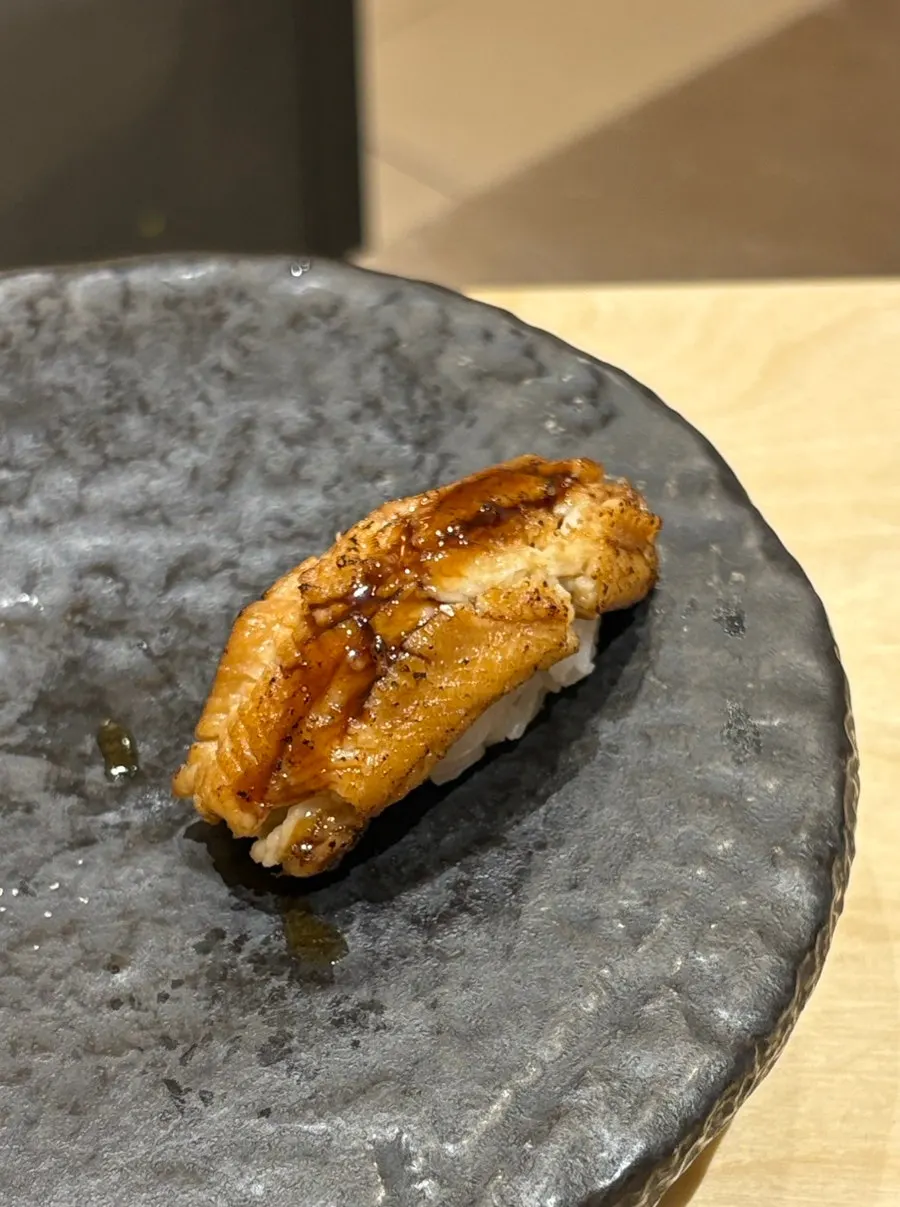
The last nigiri: sea eel
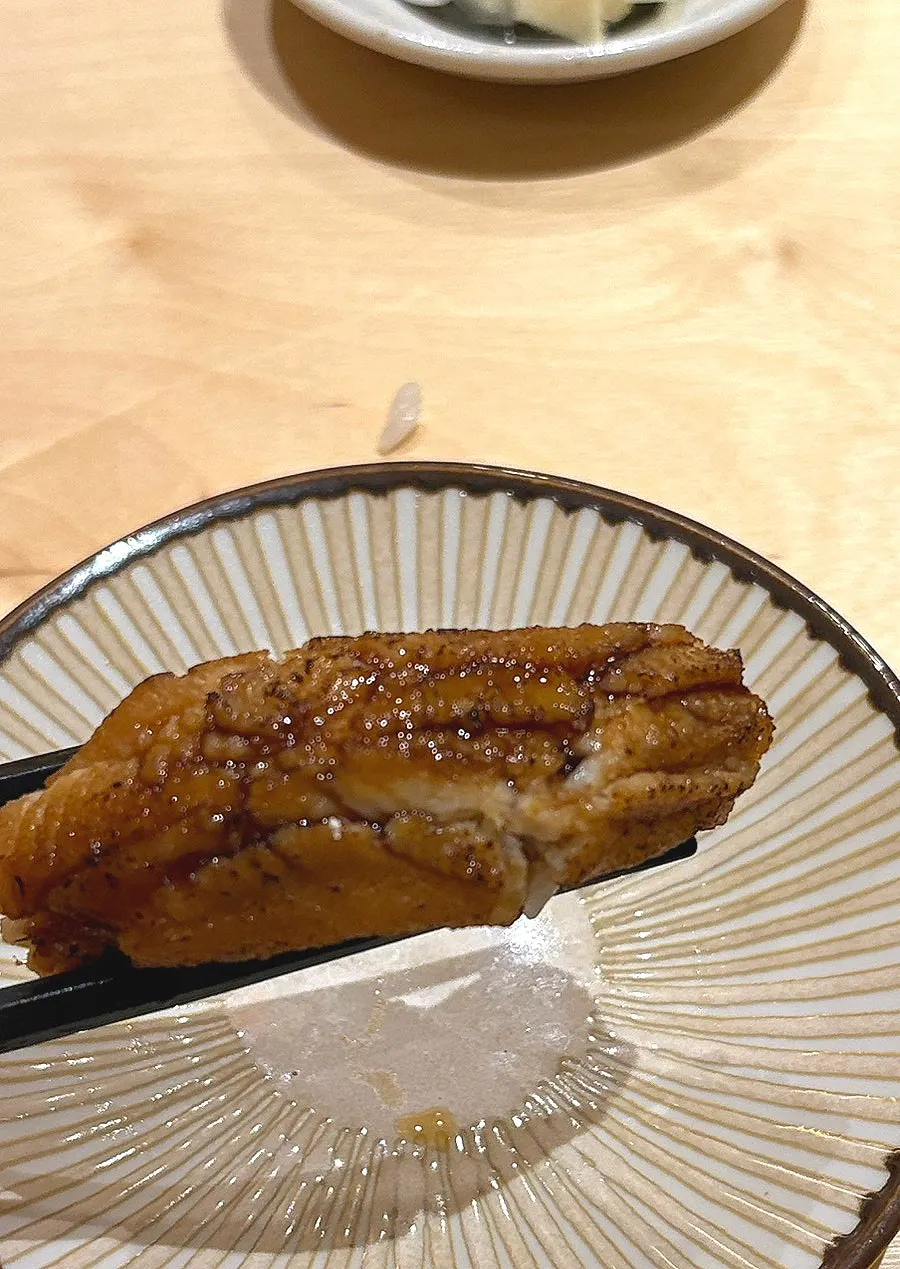
The last piece of nigiri: conger eel. Apparently eel has a lot of bones, a whole lot — so they cook it for a long time, which softens even the small bones along with everything else. Afterward, it's lightly seared on the outside like a quick fry, so even if a bone remains, it's soft enough from the outer searing that guests barely notice, apparently. Wait, really? Haha. It was just so wonderfully soft — the kind of texture you'd swallow bones and all without noticing. I told him this was the softest eel I'd ever had, and he seemed genuinely surprised, going 'really?' — turns out one of the staff had grilled it, haha. Anyway, this one was delicious too.
Futomaki and tamago simmered for two hours
The futomaki end piece came to me — what an honor! Thank you, chef. But my mouth is quite small, and futomaki is really meant to be eaten in one big bite, but it was too big, so I tried splitting it in half and it just fell apart.
And inside the futomaki was tamago (Japanese-style egg). This, apparently, is simmered for two hours — over such a low flame that if you walked by too fast, it could blow the burner out. If it does go out, they have to start the whole thing over from scratch, so apparently the people making it get tense and even argue over it sometimes. This was my first time trying tamago, and it genuinely tasted like a soft castella cake, or like chawanmushi, or like a sweet cake — I remember once seeing on TV some successful person who has a sushi chef friend supply him tamago every morning. I genuinely have no idea what level of success that requires.
Strawberry sorbet for dessert
The final dessert was strawberry sorbet. A closing dessert really should be refreshing. Eating it with apple mint in between made it feel new again. More random trivia: the chef's older brother apparently runs a strawberry farm, and that's where these strawberries come from. What a lucky guy. Even a small ingredient having a story behind it makes it memorable.
Full and satisfied, we headed out, once again a bit behind schedule ^_^ Sorry about that ^_^
Is the Sushi Hibi lunch omakase worth it?
Instead of running nigiri after nigiri, Sushi Hibi's omakase alternated between sashimi, grilled dishes and more, so the course never felt repetitive. Many dishes showed how a familiar fish can taste completely different depending on the sauce it's paired with, which made for a fresh experience. Watching the chef cook with the belief that good ingredients are the true foundation of flavor, I left, as a guest, completely satisfied.
I think I've been to omakase maybe three times so far, and honestly, given the reasonable price here, I didn't expect too much. But every time the chef served a dish, he explained the ingredient's characteristics, the cooking process, and the recommended way to eat it in such detail, and it was so fun that time flew by. I'm glad there's a hidden sushi gem like this in my own neighborhood. If anyone's looking for great sushi in Yeongdeungpo, I'd definitely recommend this place.
Where it is
1st floor, 14-1 Dangsan-ro 32-gil, Yeongdeungpo-gu, Seoul, South Korea서울특별시 영등포구 당산로32길 14-1 1층