Jongno Japanese restaurant premium kaisendon comparison: Ilpum
In short
Ilpum Gwanghwamun is a Japanese restaurant in Jongno, Seoul, serving kaisendon, sushi, and unagidon. I compared the 26,000 won kaisendon and 37,000 won premium kaisendon, both served with chawanmushi, karaage udon, and dessert. Verdict: a more satisfying kaisendon meal than the ones I had in Japan.
Good to know
- Kaisendon
- ₩26,000
- Premium kaisendon
- ₩37,000
- Included with all mains
- Chawanmushi, noodle and fried dish, and dessert
- Seating
- Three four-person tables and counter seats
- Hours
- Mon–Sat 11:00–21:30; break 15:00–17:30; closed Sun
- Access
- 3 minutes from Gwanghwamun Station Exit 4; 5 minutes from Jonggak Station Exit 1
as written by the visitor on Sep 11, 2026
A bowl compared with the kaisendon I ate in Japan
When I travel in Japan, I often buy kaisendon (seafood rice bowl) in regions famous for seafood. In Japan, kaisendon is usually around ¥3,000 and comes with kaisendon and miso soup. Kaisendon in Japan costs about ¥3,000, but in Korea, a pretty good bowl is around ₩30,000 and the set is much better than in Japan.
At Ilpum Gwanghwamun, a great kaisendon spot in Gwanghwamun, the kaisendon is in the ₩20,000 range and includes chawanmushi, roasted seaweed, karaage udon, and dessert. The variety and amount of seafood were also very good, so I found it far more satisfying than the kaisendon I bought in Japan.
Ilpum Gwanghwamun location and lunchtime
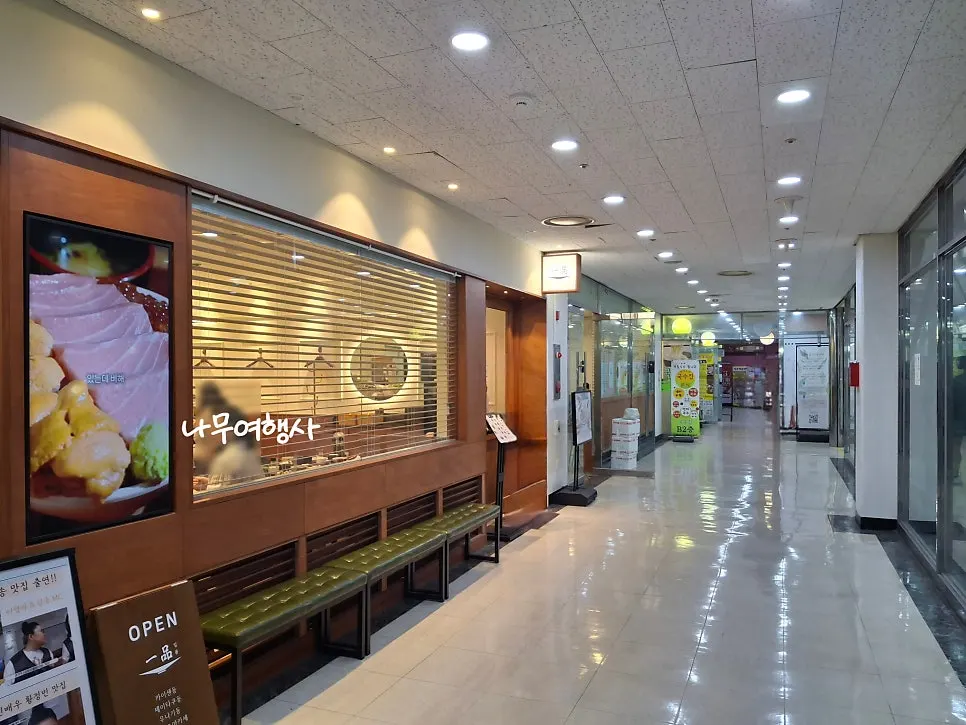
Ilpum Gwanghwamun is opposite the escalator on B2 of Le Meilleur Jongno Town in Jongno 1-ga. Gwanghwamun and Jongno 1-ga are packed with offices, so there is a line here at lunchtime too. If you go around 1:30 p.m., after the lunch rush, you can enter without waiting and enjoy a relaxed lunch.
The standing sign in front of Ilpum Gwanghwamun says it specializes in sushi, kaisendon, and unagidon (grilled eel rice bowl).
Inside Ilpum Gwanghwamun are three four-person tables and counter bar seats. If two people come in, you will be shown to the counter seats.
Ilpum Gwanghwamun menu and what comes with mains
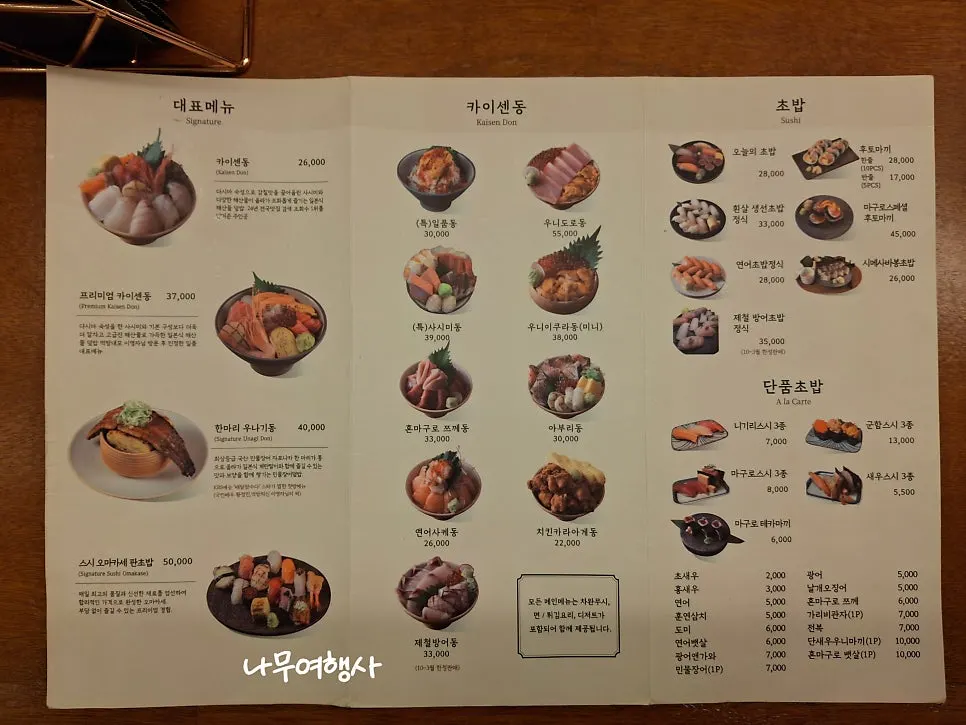
- Kaisendon ₩26,000 / Premium kaisendon ₩37,000
- Whole unagidon ₩40,000 / Sushi omakase platter ₩50,000
- Special Ilpum-don ₩30,000 / Uni toro-don ₩55,000 / Special sashimi-don ₩39,000
- Unaikura-don (mini) ₩38,000 / Honmaguro zuke-don ₩33,000 / Aburi-don ₩30,000
- Salmon sake-don ₩26,000 / Chicken karaage-don ₩22,000 / Seasonal yellowtail-don ₩33,000
- Today’s sushi ₩28,000 / White-fish sushi ₩33,000 / Salmon sushi set ₩28,000 / Seasonal yellowtail sushi set ₩35,000
- Futomaki, one roll ₩28,000, half roll ₩17,000 / Maguro special futomaki ₩45,000
- Shime saba pressed sushi ₩26,000
- All main dishes include chawanmushi, a noodle and fried dish, and dessert
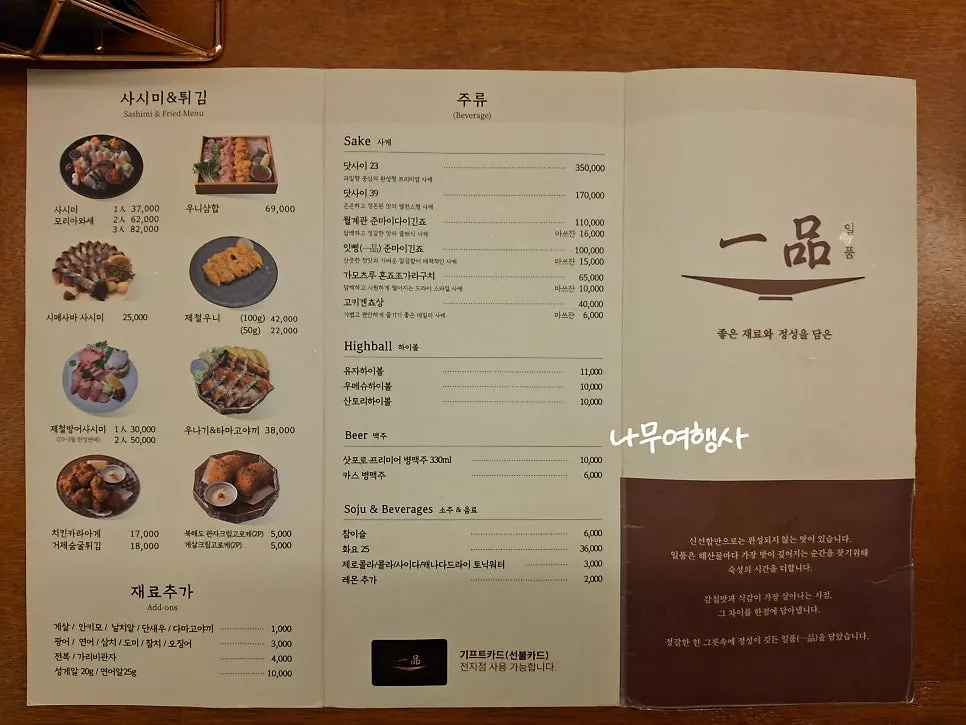
- Sashimi moriawase: one person ₩37,000 / two people ₩62,000
- Shime saba sashimi ₩25,000 / Seasonal yellowtail sashimi: one person ₩30,000, two people ₩50,000
- Uni samhap ₩69,000 / Seasonal uni (100 g) ₩42,000
- Unagi and tamagoyaki ₩38,000 / Chicken karaage ₩17,000
- Geoje oyster fritters ₩18,000 / Hokkaido scallop cream croquettes (2 pieces) ₩5,000 / Crab cream croquettes (2 pieces) ₩5,000
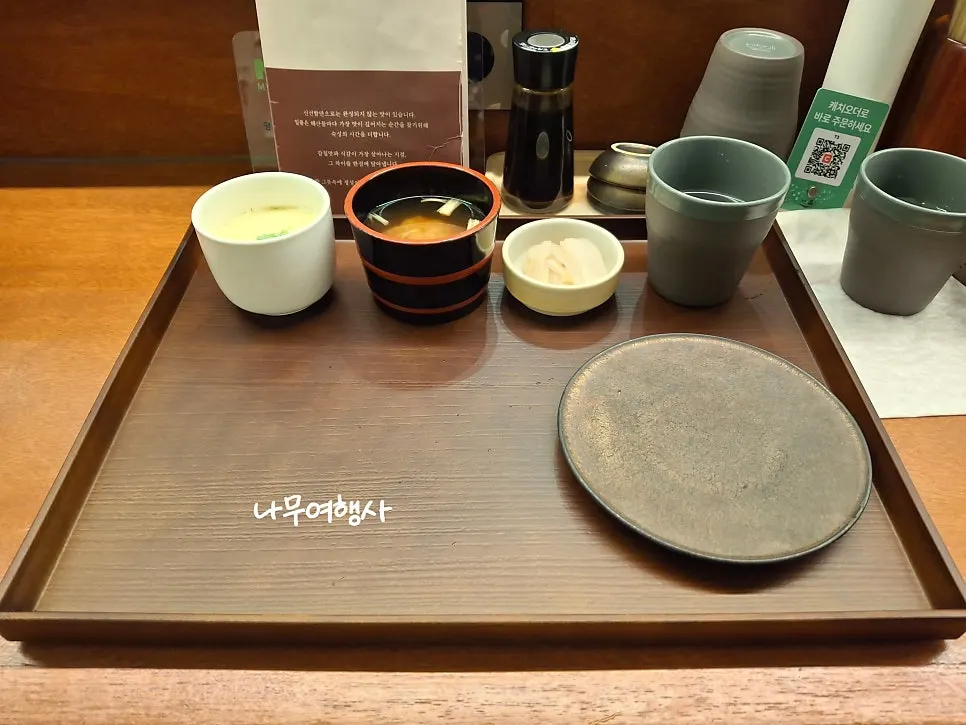
Ordering kaisendon and premium kaisendon
As soon as we ordered one kaisendon and one premium kaisendon, the chawanmushi, miso soup, and white kimchi came out.
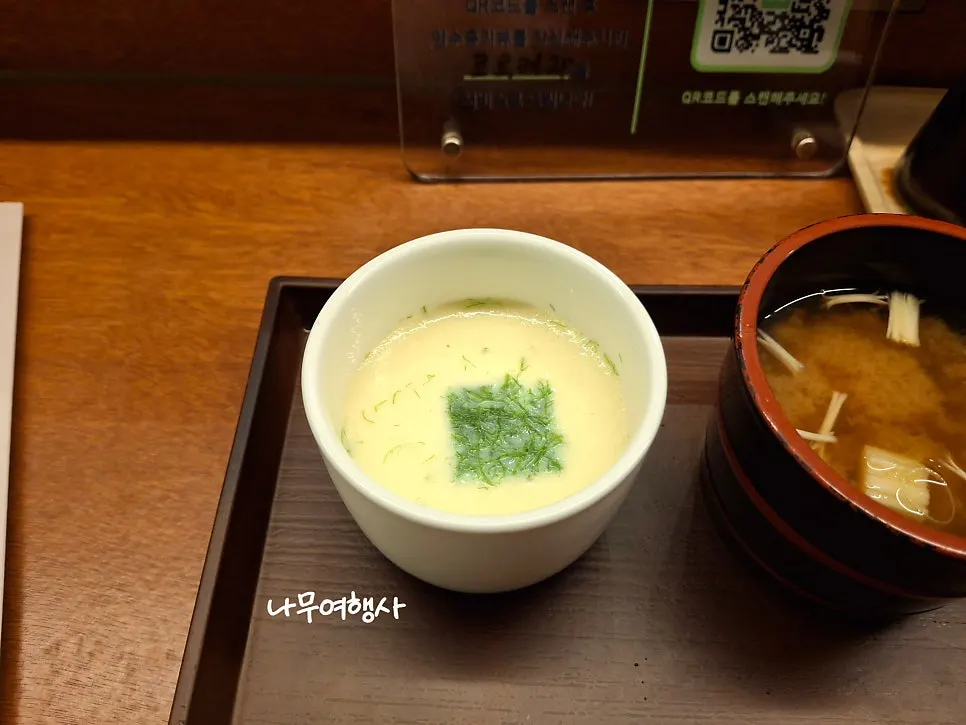
Chawanmushi (Japanese steamed egg custard) is included. In Japan, even one chawanmushi would cost extra.
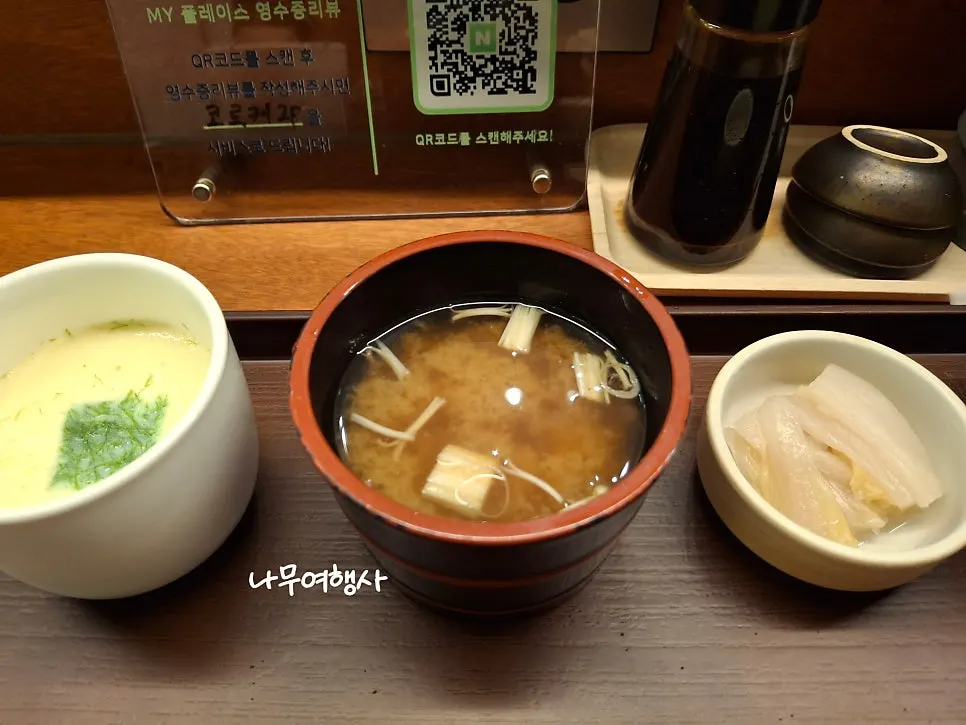
Japanese miso soup with enoki mushrooms. Nicely fermented white kimchi.
What comes with the premium kaisendon
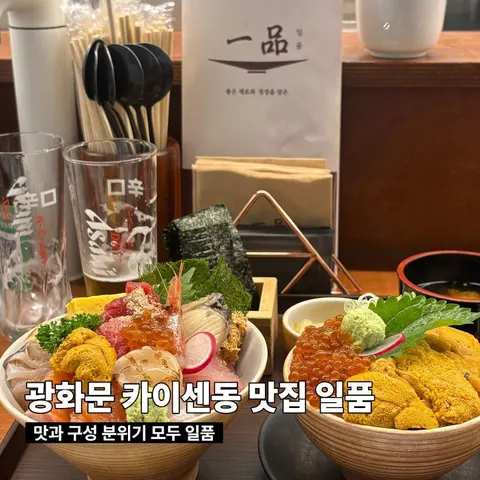
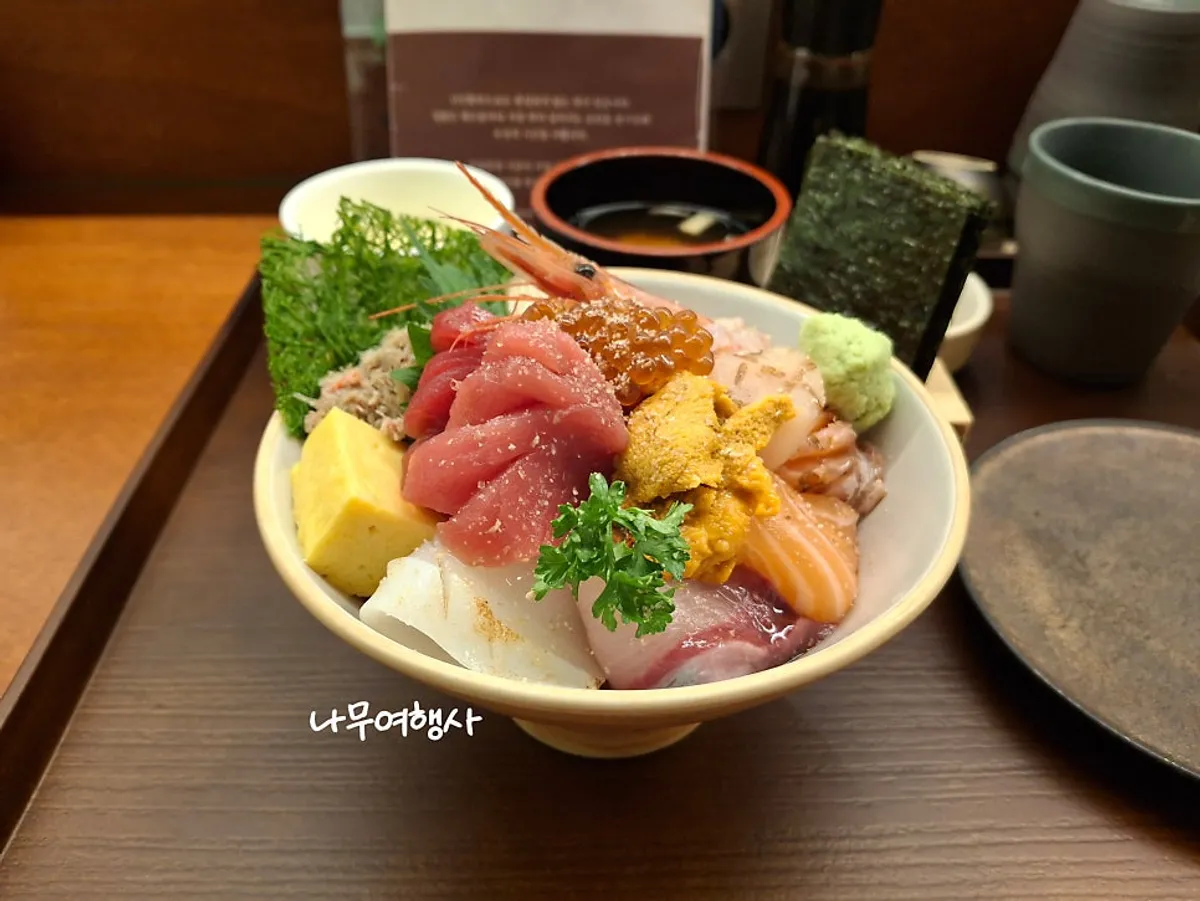
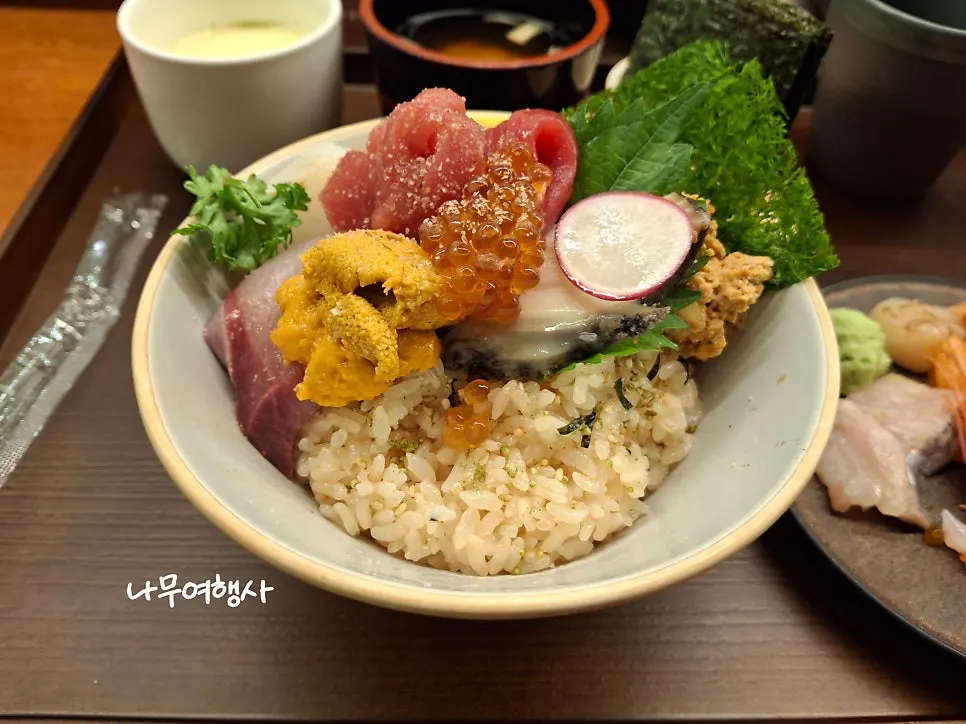
Ilpum Gwanghwamun’s premium kaisendon. I could see flower-shaped tuna in the center, salmon roe, sea urchin roe (uni), sweet shrimp, tamagoyaki, white fish, sea bream, fresh wasabi, and aburi-seared sashimi.
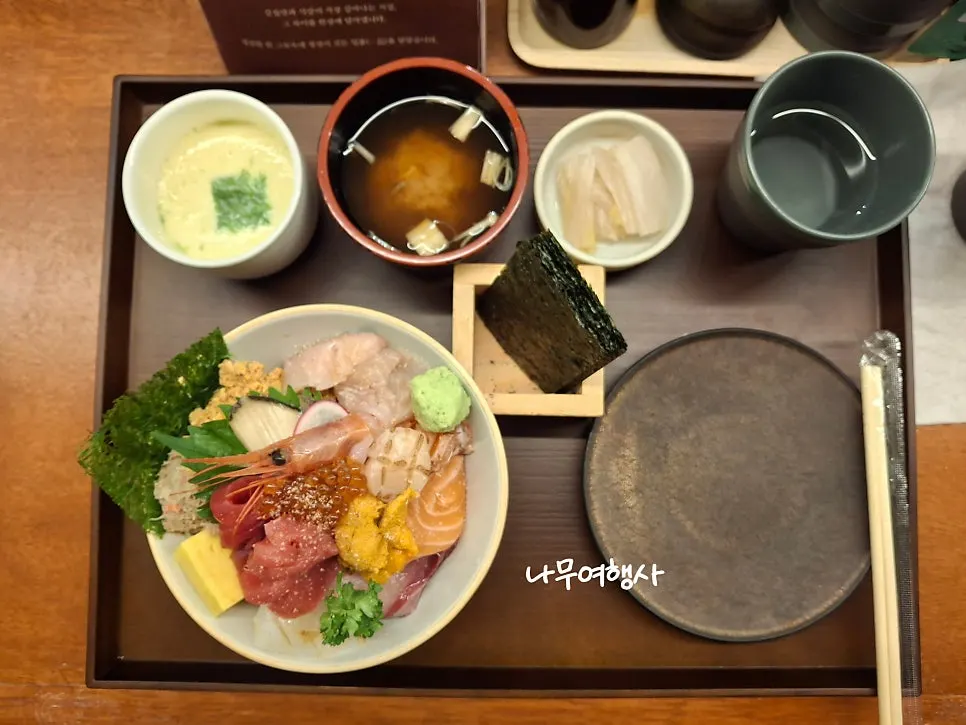
The kaisendon set includes chawanmushi, miso soup, white kimchi, and roasted seaweed, plus karaage udon and dessert, which had not come out yet.
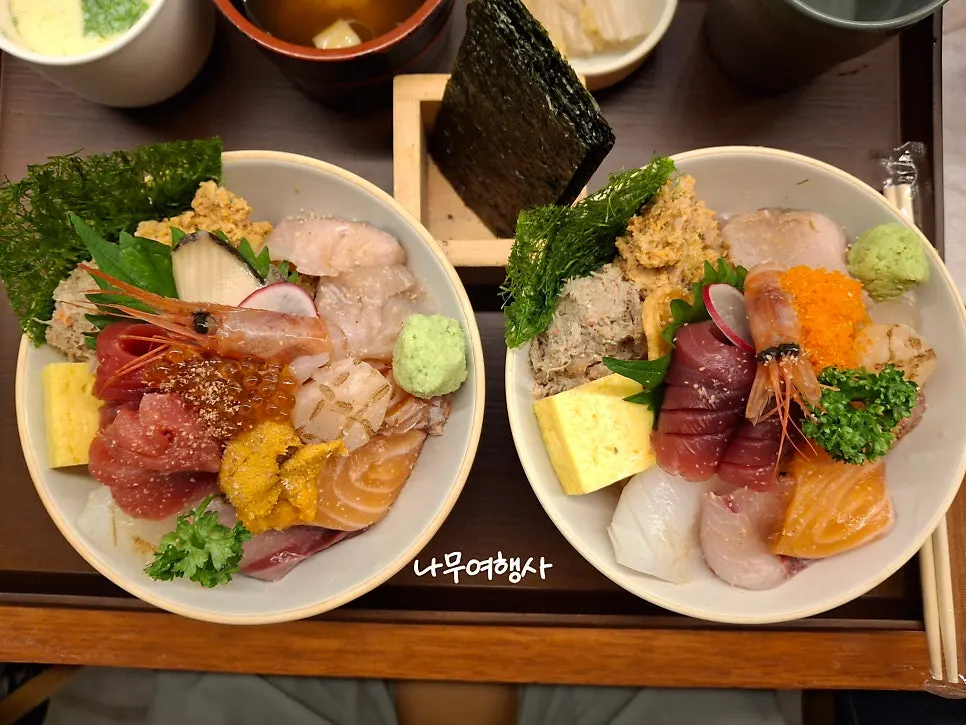
On the left is the premium kaisendon (₩37,000), and on the right is the kaisendon (₩26,000).
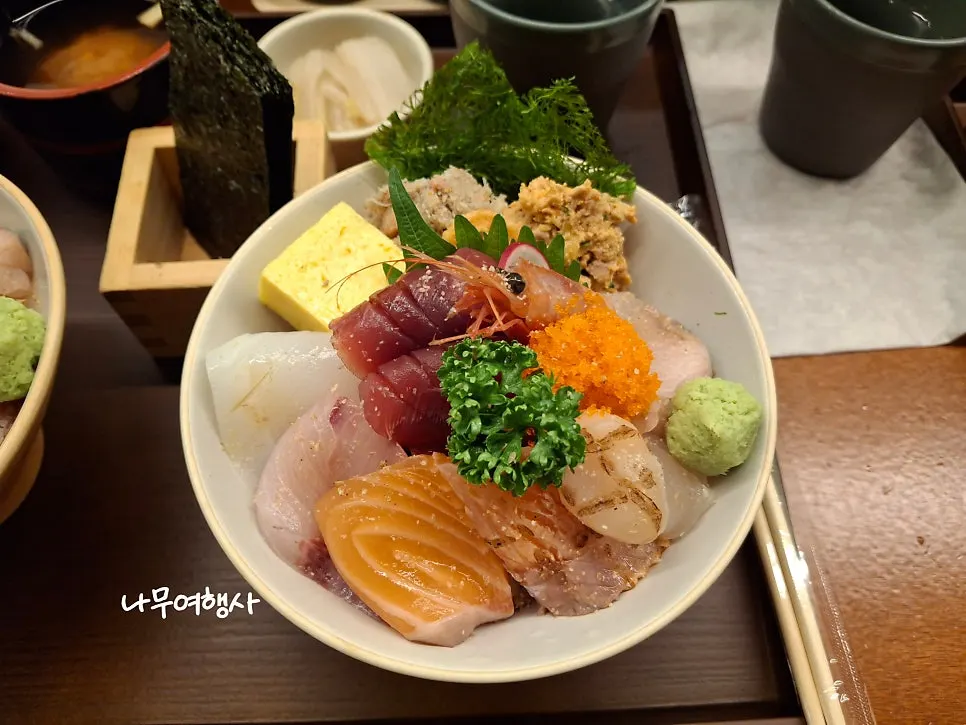
The regular kaisendon had salmon, tuna, scallop, white fish, sweet shrimp, sea bream, flying-fish roe, tamagoyaki (Japanese rolled omelet), and fresh wasabi.
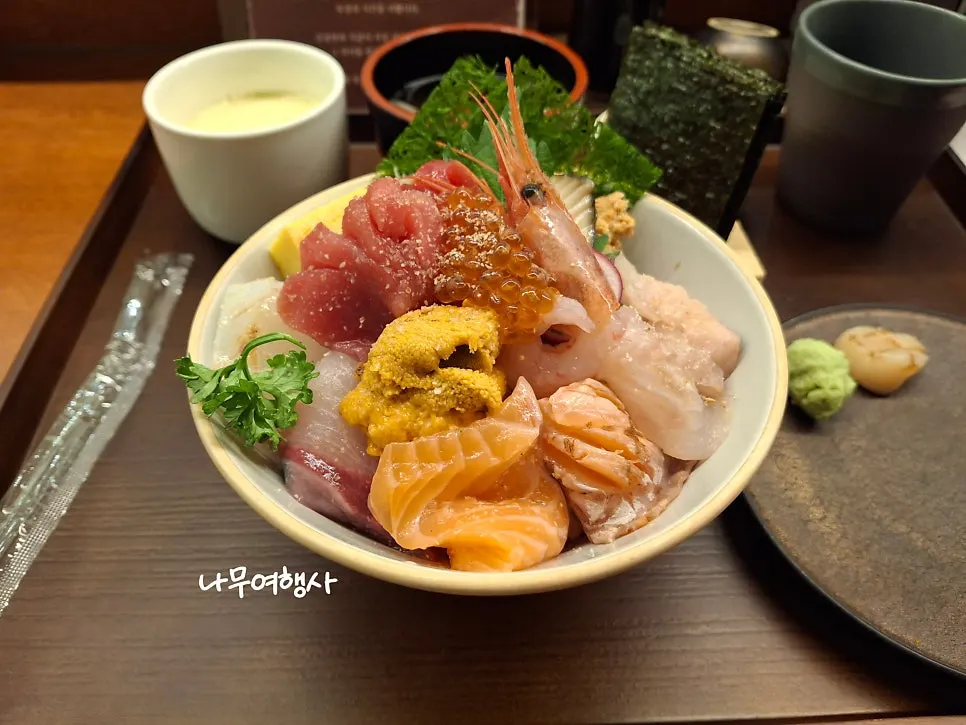
The premium kaisendon had salmon roe, sea urchin roe (uni), abalone, salmon, aburi salmon, scallop, white fish, sea bream, tuna, sweet shrimp, tamagoyaki, and more.
The biggest difference was that the regular kaisendon had flying-fish roe, while the premium bowl had uni, salmon roe, and abalone. The premium bowl also had extra aburi sashimi. Considering the seafood included, the price difference was understandable and reasonable.
What I found after moving the seafood aside
The rice in the kaisendon was not plain rice but sushi rice seasoned with sweet vinegar, and it had cooked tuna flakes and more in it. It was delicious enough to eat even without the sashimi and seafood.
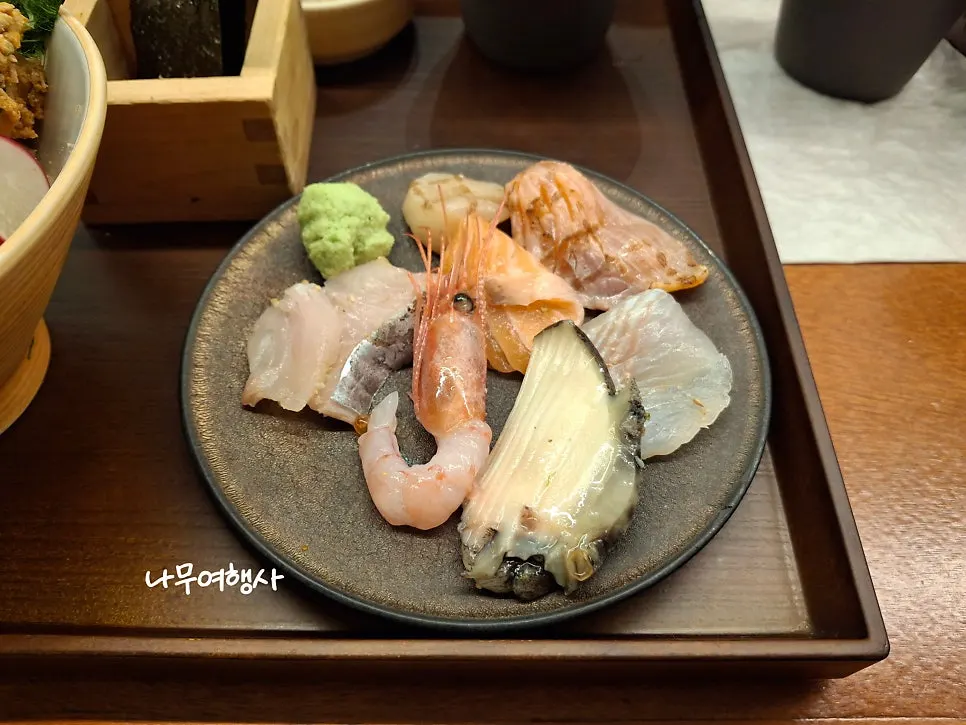
I moved the sashimi one piece at a time onto an empty plate. Once I moved it aside, I could see squid, shiso, lotus root, and things that had been hidden. There was a wide variety and generous amount of seafood: tuna, sea bream, sweet shrimp, salmon, aburi salmon, scallop, abalone, and more. Red tuna belly.
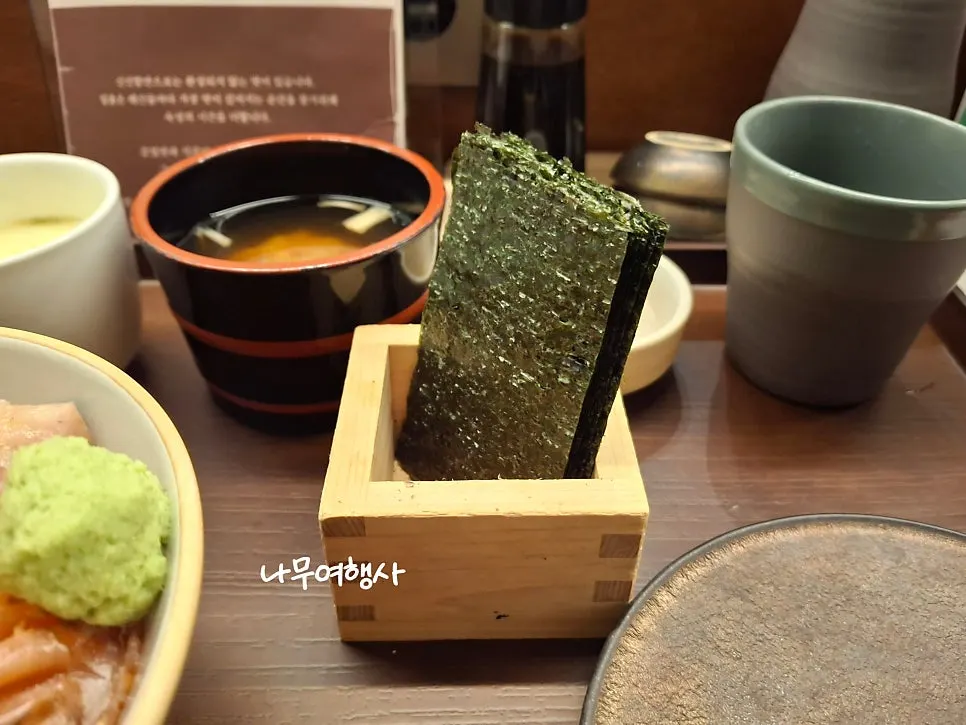
Roasted seaweed is included with the kaisendon too.
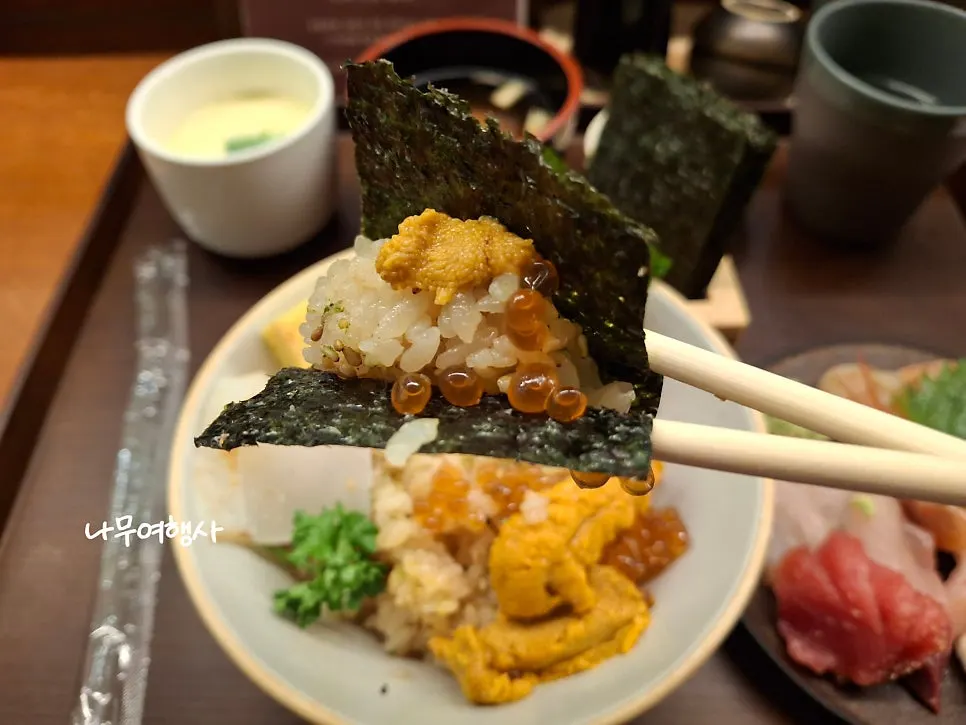
It was even better wrapping the sushi rice, uni, and salmon roe in roasted seaweed.
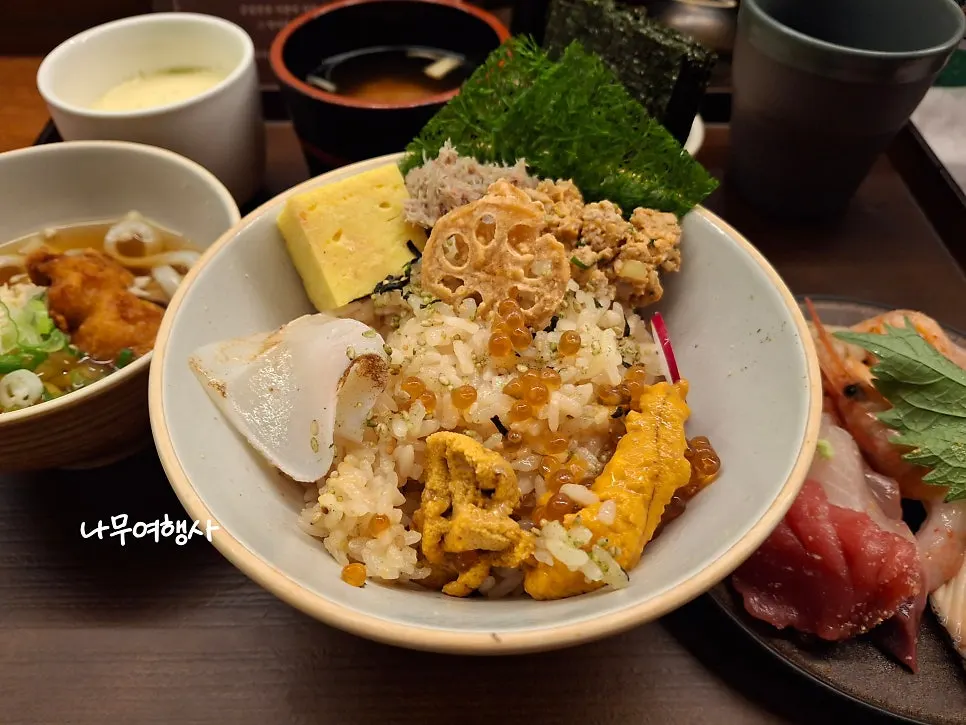
Fried lotus root and cooked tuna flakes.
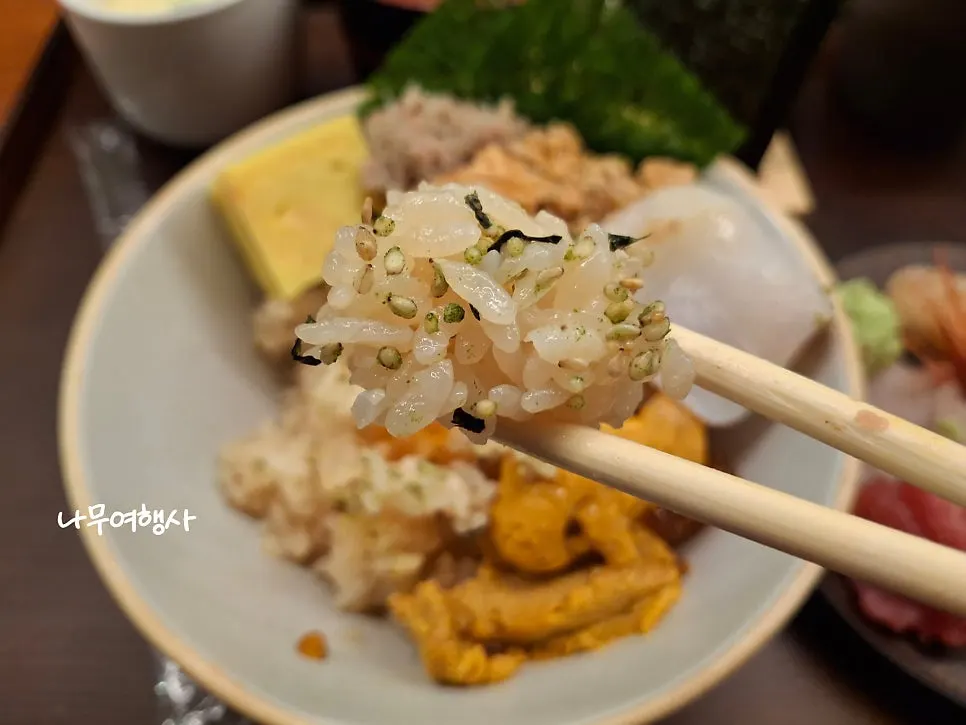
The sushi rice is also seasoned with sesame and crushed seasoned seaweed, so it is tasty even on its own.
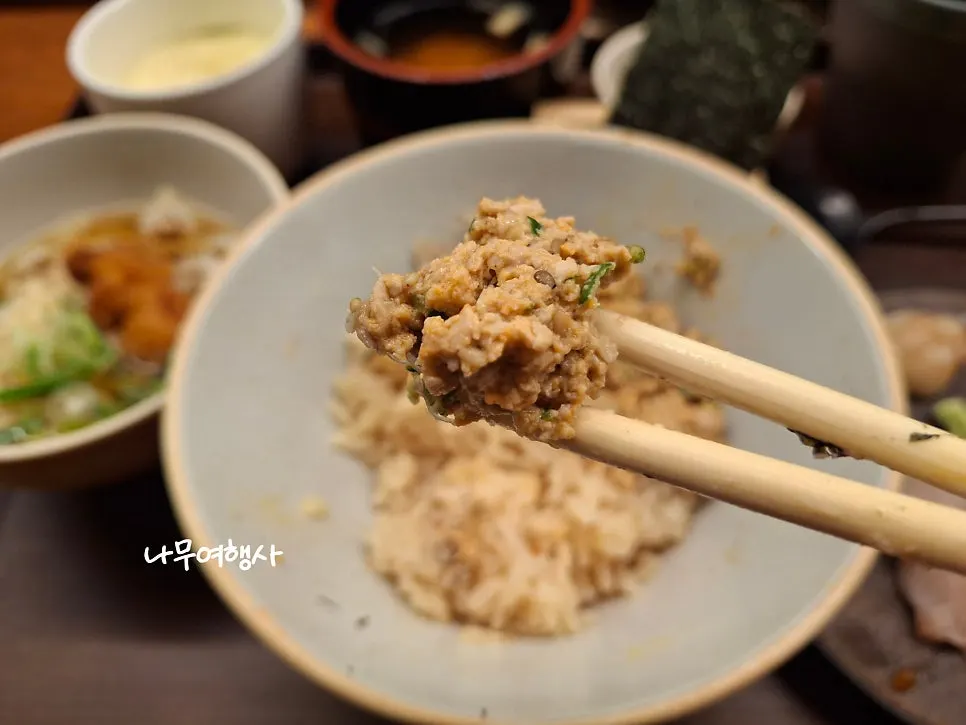
The seasoned tuna flakes were such a rice thief, too. And there was aburi salmon, lightly seared on the outside.
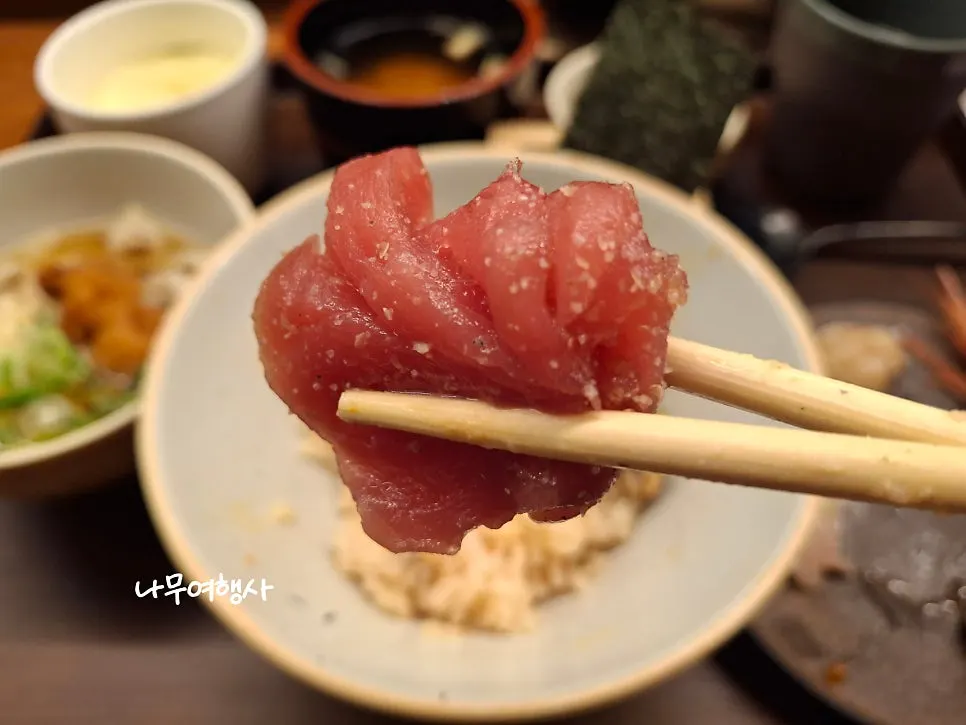
The flower-shaped tuna was really delicious.
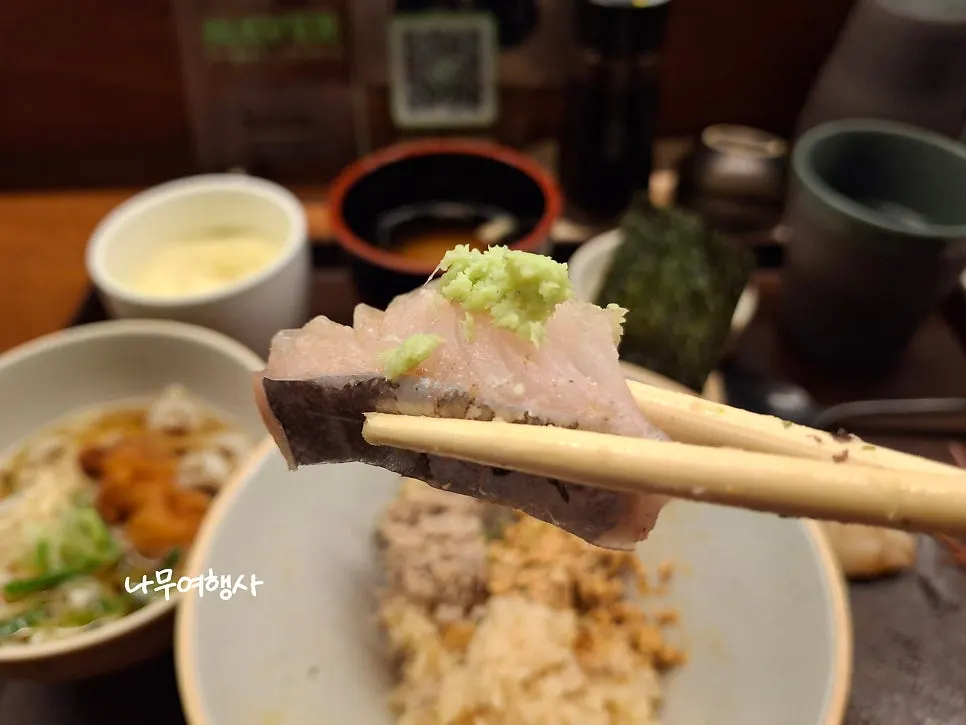
Sea bream with fresh wasabi. Scallop. Abalone, the king of seafood. Sweet shrimp. The surface of the Japanese steamed egg custard, chawanmushi, was decorated with gamtae seaweed, and there was shrimp inside.
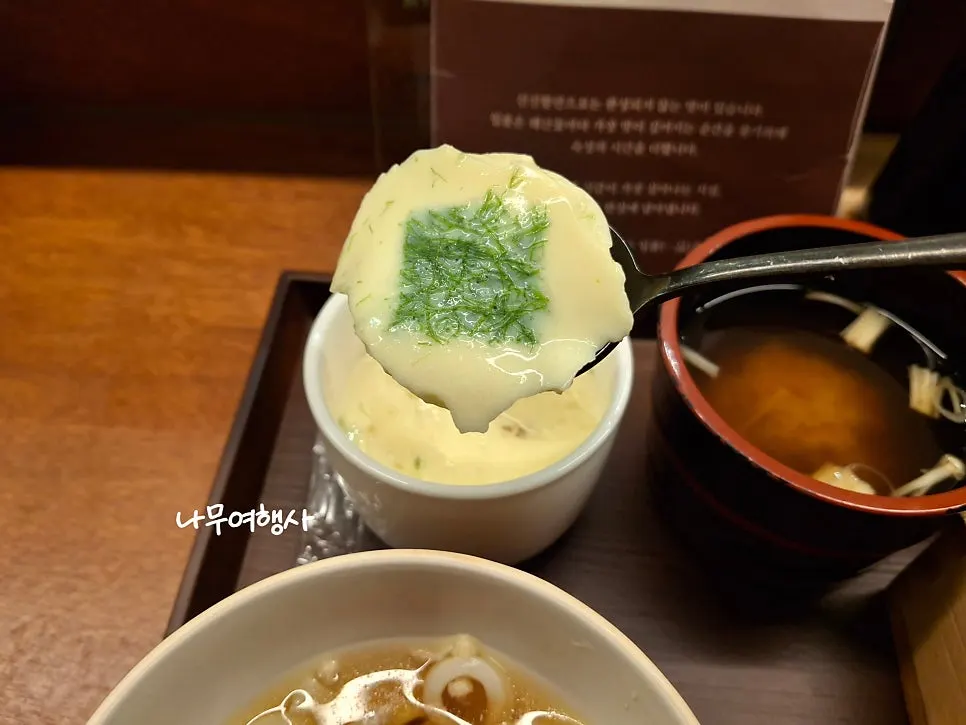
The chawanmushi was like pudding. Since this is Korea, it comes with the meal at no extra charge; in Japan, it costs extra. Truly, there is no country as generous with food as ours ^^
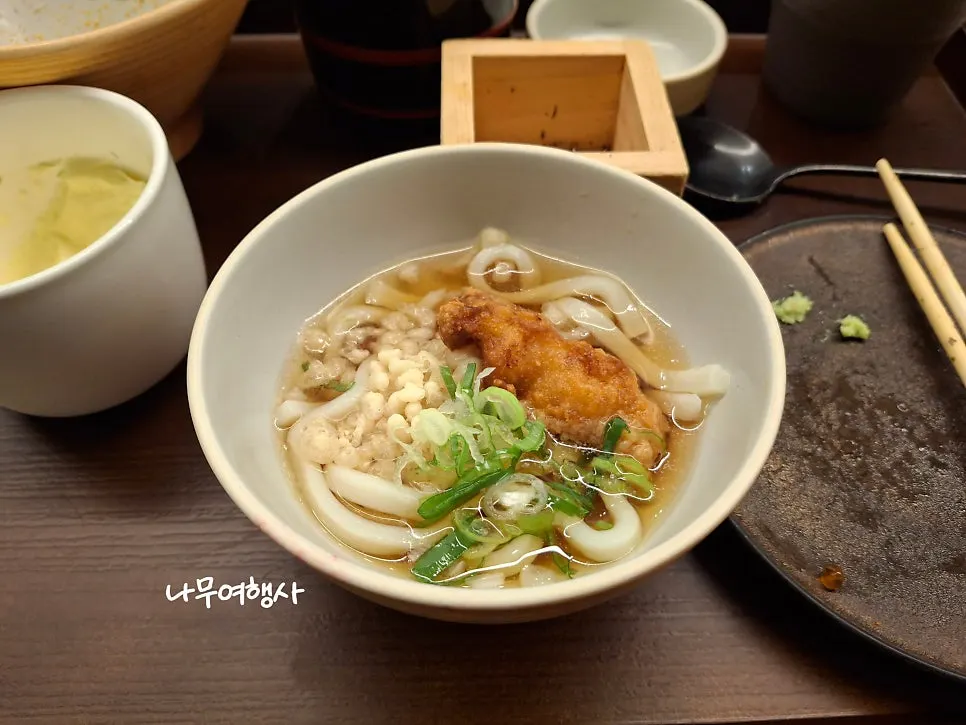
Karaage udon is included too.
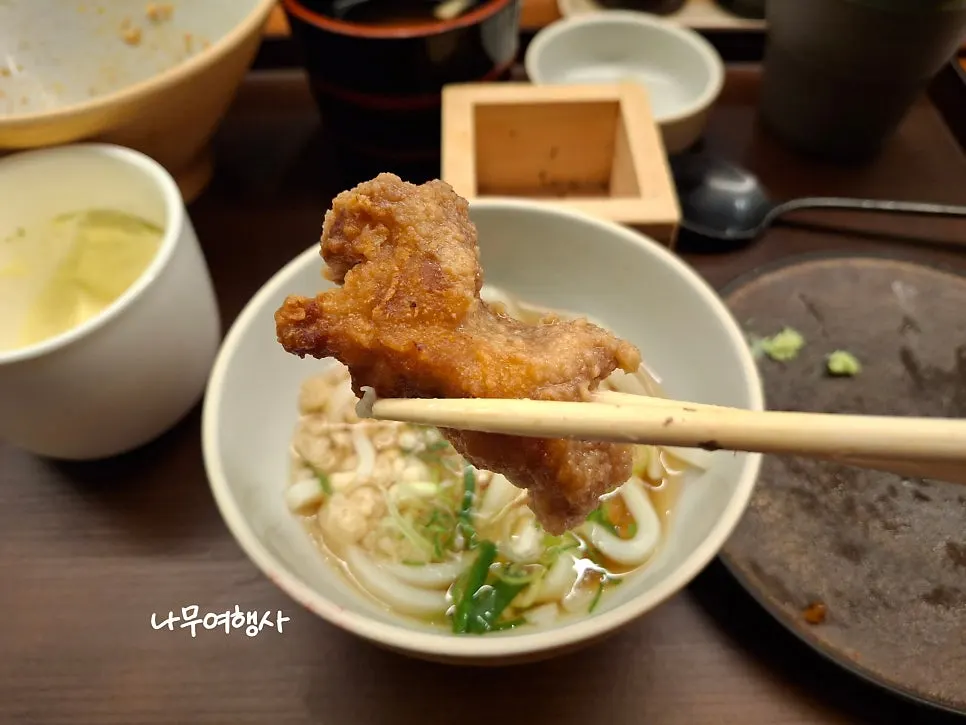
Karaage fried chicken.
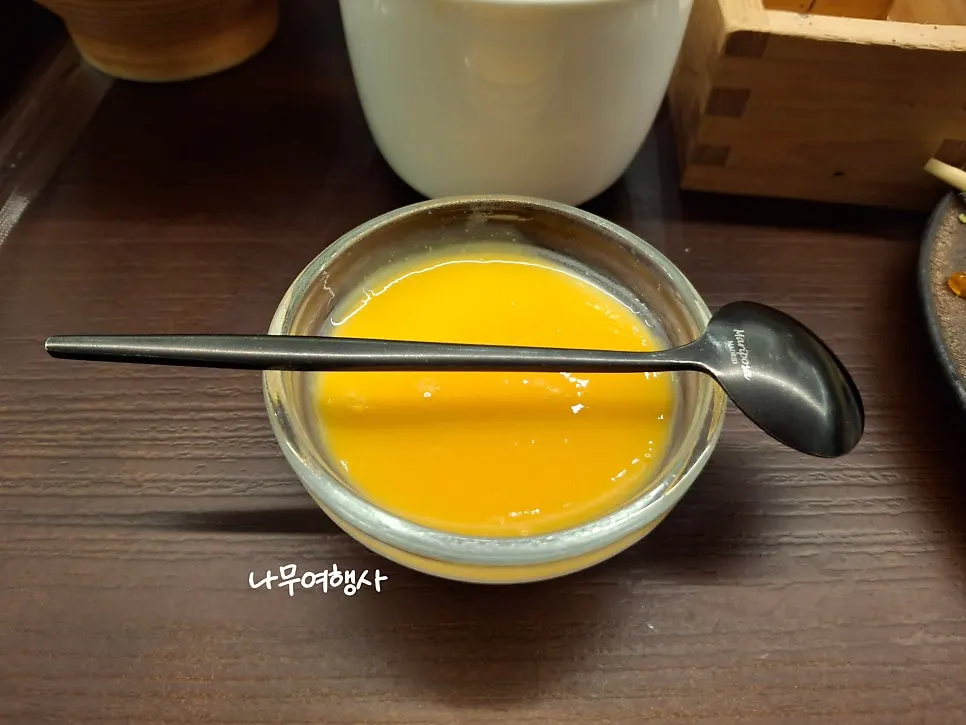
Panna cotta for dessert.
The kaisendon at Ilpum Gwanghwamun was a much more satisfying meal than the kaisendon I ate in Japan.
Opening hours and how to get there
Ilpum Gwanghwamun is open Monday through Saturday from 11:00 to 21:30, with a break from 15:00 to 17:30. It is regularly closed on Sundays. It is a 5-minute walk from Exit 1 of Jonggak Station on Line 1 and a 3-minute walk from Exit 4 of Gwanghwamun Station on Line 5, opposite the escalator on B2 of Le Meilleur Jongno Town.
Where it is
B2, Unit 223, 19 Jong-ro, Jongno-gu, Seoul, South Korea (서울특별시 종로구 종로 19 지하2층 223호 일품 광화문점)서울특별시 종로구 종로 19 지하2층 223호 일품 광화문점