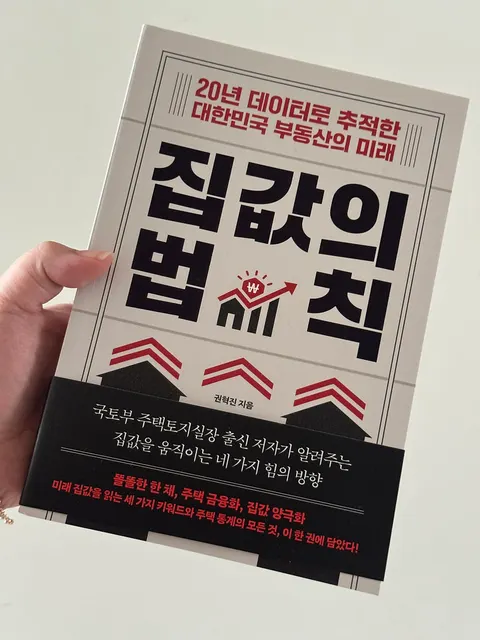
Why Korean home prices move: the book The Law of Housing Prices
In short
The Law of Housing Prices is a Korean real estate book by Kwon Hyuk-jin, who spent about 30 years working on housing policy at Korea's Ministry of Land, Infrastructure and Transport, and it explains what moves home prices through four forces: demand, supply, finance and regulation. The book backs this up with data, including the 2010-2014 stretch when jeonse and sale prices in the Seoul metro area moved separately, population, household and housing stock changes in the metro area from 1990 to 2024, and housing policy alongside Seoul apartment prices from 2014 to 2025. The Law of Housing Prices is less a book that picks where prices will rise and more an introduction to what to look at when reading the housing market.

Good to know
- Book title
- The Law of Housing Prices
- Author
- Kwon Hyuk-jin
- Author background
- Economics at Yonsei University, real estate MBA at the University of Wisconsin, about 30 years at Korea's Ministry of Land, Infrastructure and Transport
- Core framework
- Four forces: demand, supply, finance and regulation
Prices as written by the tester on Sep 21, 2026 · not updated automatically
I've always been interested in real estate — I think a lot of people are, actually, keeping an eye on it. Watching the news, you keep hearing that home prices are going up, or going down, and the forecasts are wildly different even though it's the same market. So sometimes I find myself wondering, "what actually makes home prices go up or down?" That's how I ended up getting the chance to read a book called The Law of Housing Prices.
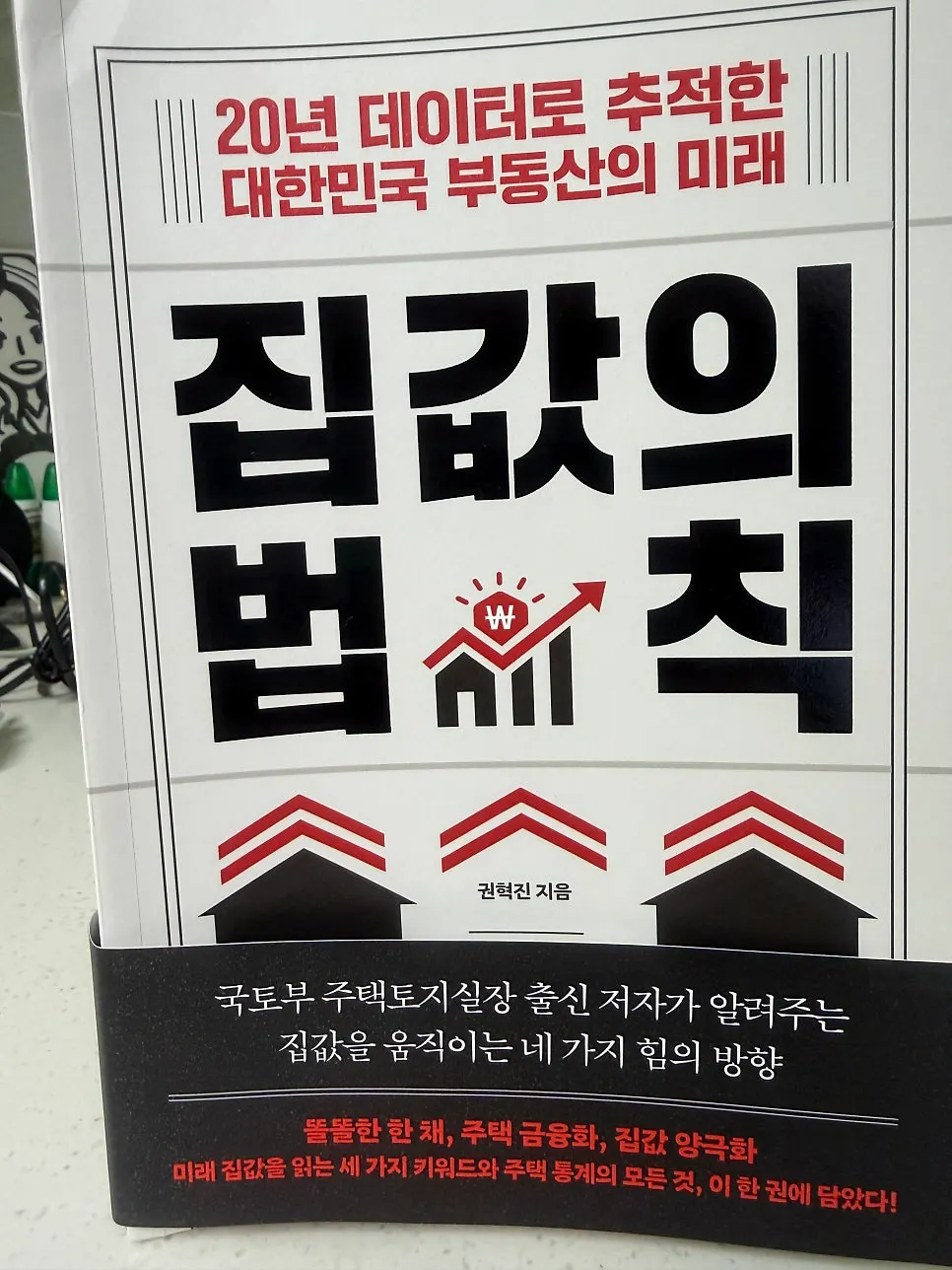

Who wrote The Law of Housing Prices?
The author of The Law of Housing Prices is Kwon Hyuk-jin. He majored in economics at Yonsei University, then finished a real estate MBA at the University of Wisconsin. After that he worked at Korea's Ministry of Land, Infrastructure and Transport for about 30 years, handling housing policy work.

Under the Roh Moo-hyun administration he was a housing policy division deputy director; under Park Geun-hye, a housing policy division director; under Moon Jae-in, a housing policy administrative officer at the Blue House. Later, under Yoon Suk-yeol, he served as director-general of housing and land, and he's also worked as a policy analyst at the OECD office in Paris. Knowing the author had directly handled housing policy for so long made me even more interested.
Four forces that move home prices: demand, supply, finance, regulation
The Law of Housing Prices explains what moves home prices largely through four forces: demand, supply, finance, and regulation. Once I opened it, it turned out to be a lot less simple than I expected.



At first I thought demand and supply were the most important factors in home prices, but the book compares finance to the horse pulling the carriage, and regulation to the driver. If demand and supply are the wheels of the carriage, then finance and regulation are just as essential to understanding how prices move. It felt a bit complicated at first, but as I kept reading I gradually understood why all four need to be looked at together.
Why do jeonse (lump-sum deposit lease) and sale prices move differently?
The Law of Housing Prices explains that jeonse (long-term lump-sum deposit rental) demand is centered on actual residence, while sale demand includes both real need and investment demand. This was something I'd always wondered about while watching real estate news. Sometimes jeonse prices and sale prices seem to rise together, and then at some point they suddenly move apart.
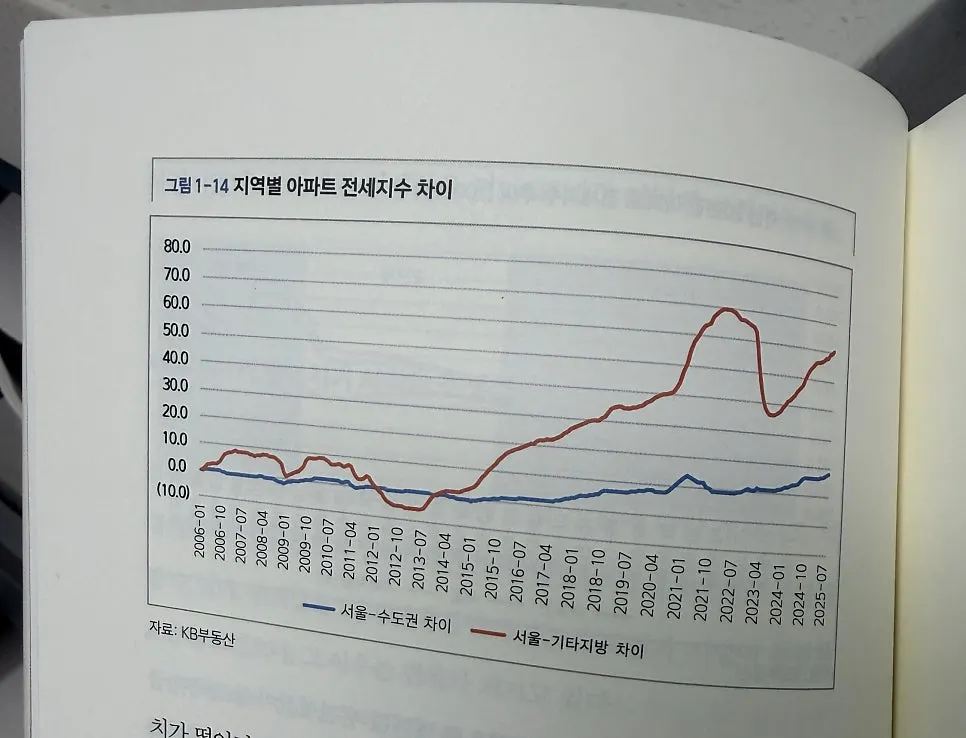
So by looking at the gap between sale prices and jeonse prices, or the jeonse-to-sale-price ratio, you can get a sense of how investment demand was moving in the market at the time. The book shows that from 2010 to 2014, jeonse prices in the Seoul metro area rose an average of 7.6% a year, while sale prices actually fell an average of 1.3% a year. Seeing that in numbers made it much clearer that sale prices and jeonse prices don't always move in the same direction. Even the jeonse-to-sale ratio, which I'd only ever looked at as a plain number, felt different once I saw it from this angle.
When supply rises, do home prices fall right away?
The Law of Housing Prices argues that when looking at supply, you shouldn't just look at newly built apartments — you need to look at existing housing stock and the number of households too. This is another thing I'd wondered about while following real estate: "They say there's a lot of new move-ins coming, so why don't prices drop right away?" How many new apartments are coming in matters, but so does how much housing already exists, and whether that's enough relative to the number of households.

The book actually shows that from 1990 to 2024, the population of the Seoul metro area grew about 1.4 times, but the number of households grew 2.2 times, and the number of housing units grew 3.9 times. Looking at not just population but also household counts and total housing stock made me realize that judging supply based only on this year's move-in volume isn't enough. For someone like me who'd only ever looked up move-in numbers when studying real estate, this part was pretty eye-opening.
Do interest rates move home prices too?
The Law of Housing Prices also looks at how interest rates, mortgage loans, and money supply relate to home prices. It seems like interest rates are always part of the conversation when it comes to housing prices. Since a lot of people take out loans to buy a home, of course there's a connection.

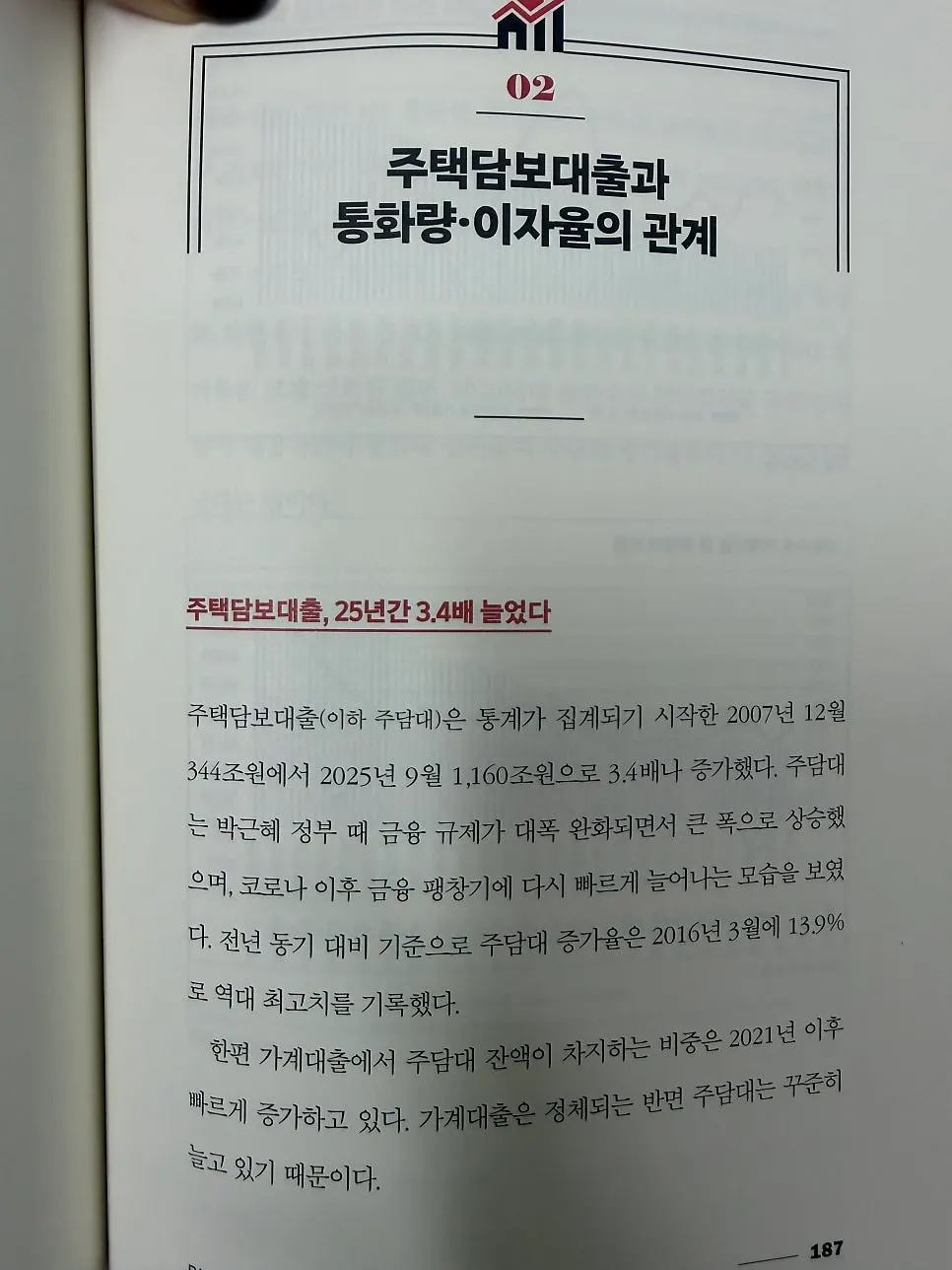
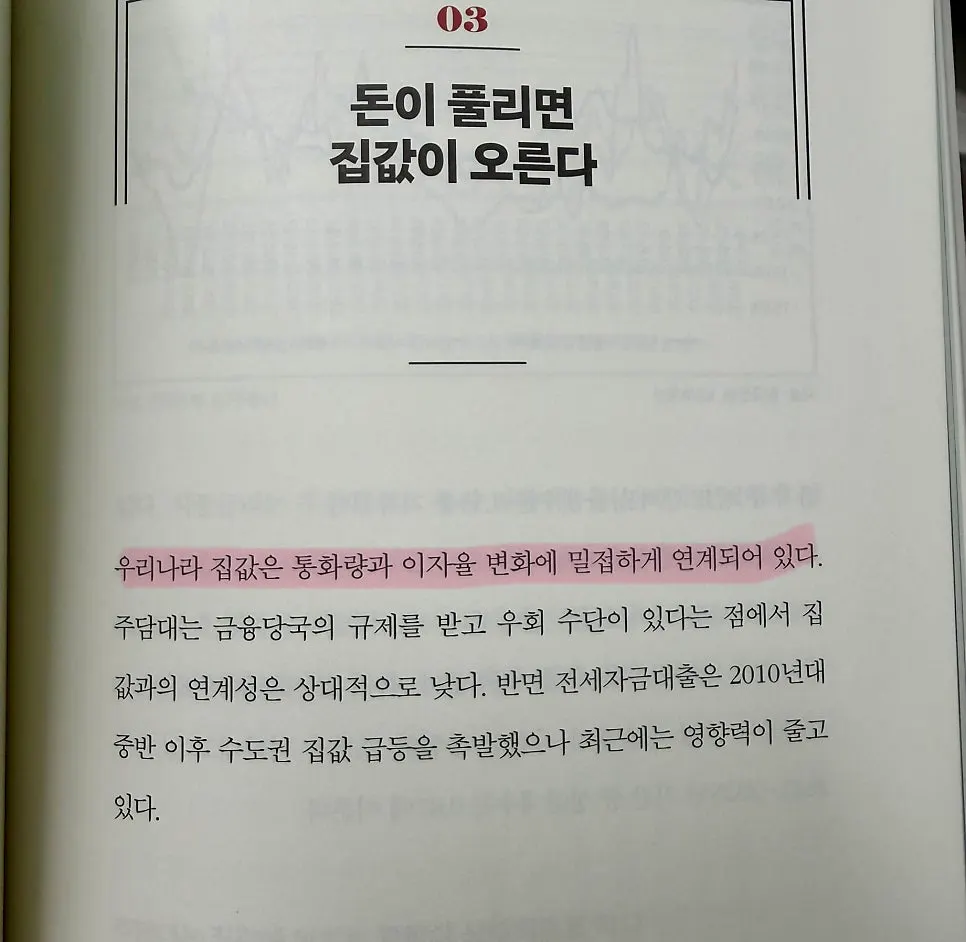
Reading that when interest rates drop and borrowing gets easier, money can flow into the housing market, and that the reverse holds too when financial conditions change, made me think that from now on, when I read real estate news, I shouldn't just look at price numbers but also at interest rates and financial markets.
How much do government policies really affect Korean home prices?
The Law of Housing Prices also covers various policies like transaction restrictions, financial regulation, and taxes. It makes the point that even though it feels like prices should move right away when a policy comes out, the real market involves many factors working together, so it's not that simple.

In particular, the book analyzes several past housing policies using data to show how they actually affected the market. There's a section that looks at major housing policies from 2014 to 2025 alongside actual Seoul apartment price trends, and instead of just saying "this is what the policy said," it shows the price movements before and after with data, which made it a more interesting read.
Where are home prices headed? The author's view of the future housing market
Toward the end, The Law of Housing Prices talks about the housing market ahead. The author predicts an "age of supply" is coming, and that price gaps between regions may grow even larger.
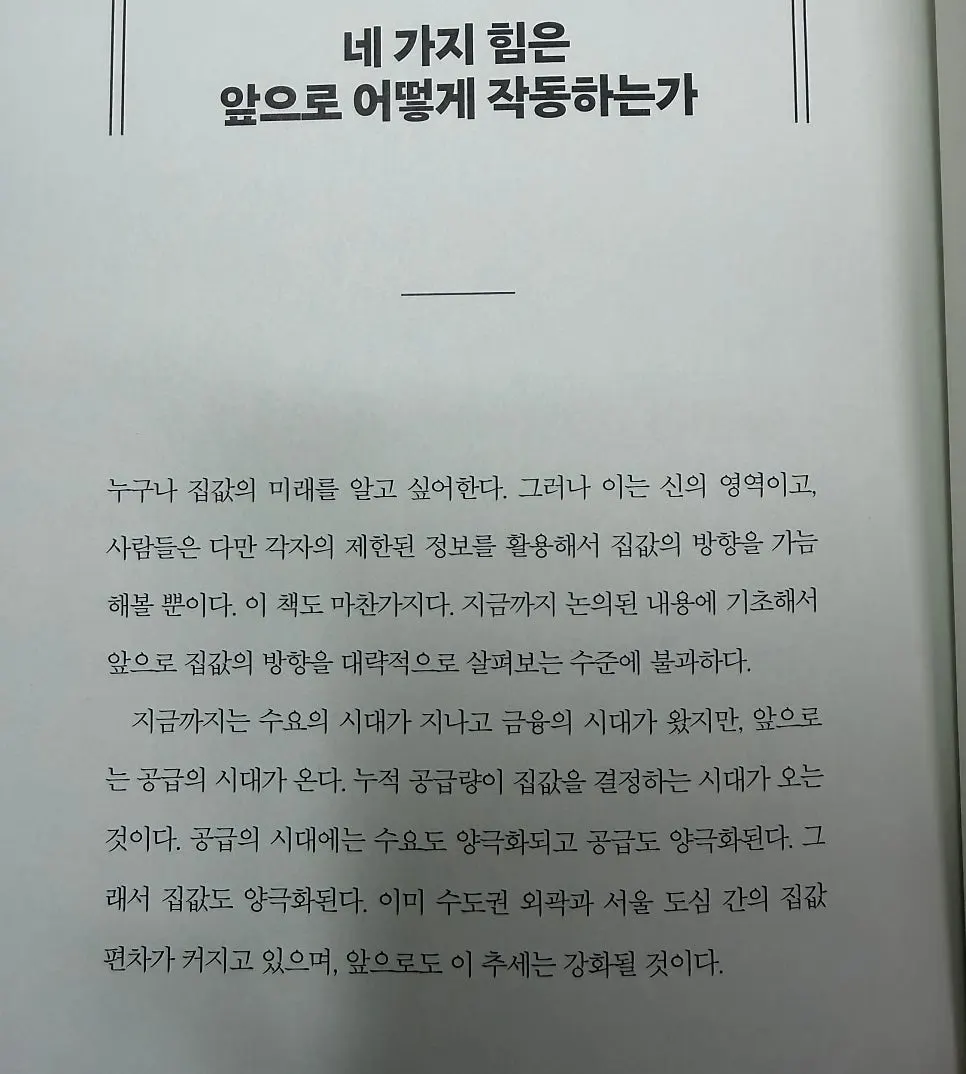
Even as housing stock keeps growing, not every region will see the same situation, because there's a difference in demand between areas people flock to and areas they don't — so regional polarization could become an important issue going forward. In the end... isn't the point that instead of just asking "will prices go up or down," you need to look comprehensively at which region, what the demand is like, whether supply is sufficient, and what the financial environment looks like?
What The Law of Housing Prices was like to read
The Law of Housing Prices felt less like a book that tells you where prices will rise, and more like a book that tells you what to look at together when reading home prices.
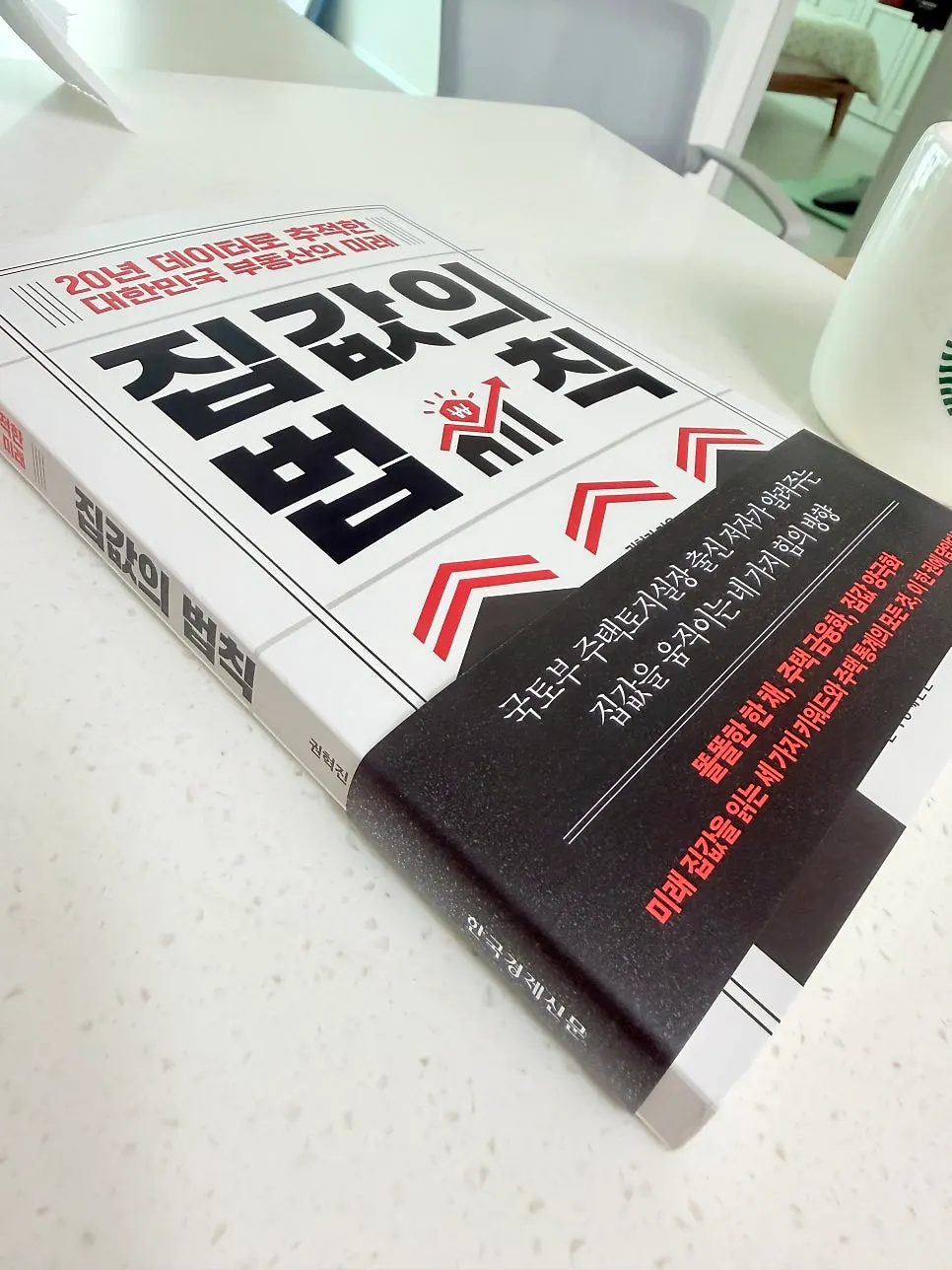

I've always been interested in real estate, but I'd only ever caught fragments of it through news stories about prices. Reading this book gave me time to think through not just demand and supply but finance and regulation together. What stuck with me most was how hard it is to explain why prices rise or fall with just a single cause.
Who should read this Korean real estate book?
- Anyone who's generally interested in real estate
- Anyone wanting to start studying real estate
- Anyone curious about why home prices move the way they do
For someone like me who has a lot of questions about real estate but wasn't sure where to start studying it, this felt like a book worth adding to a real estate reading list.
And now, after reading it, when I see real estate news I don't think I'll just stop at "oh, prices went up" — I think I'll find myself asking "why?" one more time :)
Where to buy
- 온라인 서점
- 원문에 구매 링크가 안내되어 있었습니다