Seogwipo Korean restaurant for braised mackerel: Jungmun Godeungeo Ssam-bap
In short
Jungmun Godeungeo Ssam-bap is a Korean restaurant in Jungmun, Seogwipo, Jeju, serving aged-kimchi braised mackerel and abalone stone-pot rice. The 2-person set costs ₩36,000 and comes with a generous self-serve bar. A satisfying breakfast stop for rice, soup, fish, and wraps.
Good to know
- Address
- 1F, 1240 Iljuseo-ro, Seogwipo-si, Jeju Special Self-Governing Province, South Korea (제주특별자치도 서귀포시 일주서로 1240 1층)
- 2-person set
- ₩36,000
- 3-person set
- ₩54,000
- 4-person set
- ₩72,000
- Self-bar leftover fee
- ₩5,000 if side dishes are left
- Morning offer
- Free abalone porridge with a Naver Place coupon, 9 AM–12 PM
as written by the visitor on Sep 11, 2026
A hearty Korean breakfast in Jungmun, Seogwipo
When you are traveling around Jeju, there are days when warm rice, soup, and side dishes sound better than bread or coffee first thing in the morning, right? I found Jungmun Godeungeo Ssam-bap while looking for a filling Korean meal around Jungmun. With braised mackerel, abalone stone-pot rice, and plenty of side dishes all together, it naturally caught my eye as a Seogwipo breakfast spot.
When I arrived, the single-story building, with its black exterior and red brick, made the sign easy enough to spot from a distance. Long windows ran along the front, so the exterior did not feel closed in, and green trees and landscaping continued around it. A ramp led to the entrance and there was a separate accessible parking space, so the route from parking to the restaurant was easy to take in at a glance.

Parking extended generously not only in front of the building but also along its side. Since so many people get around Jeju by rental car, parking is something you quietly end up considering when choosing a restaurant. Even with several cars coming in, the traffic flow did not look complicated. It would feel especially convenient on a schedule where you need to finish breakfast and head straight to the next destination.

A spacious dining room and tablet ordering
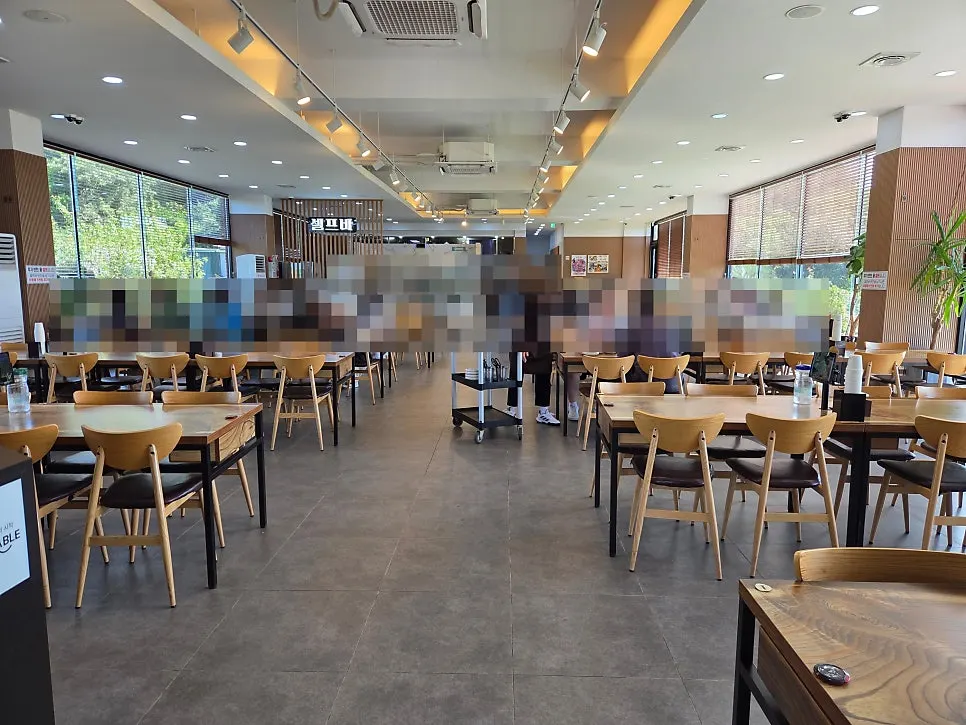
Inside, the dining room was much larger than I had expected from the exterior. Natural light came through the window seats, and the tables were spaced fairly generously, making it suitable for groups from two people to several. A large self-serve bar for side dishes occupied one side, so even for Seogwipo breakfast, it looked like more than a simple meal of rice and a main dish—you could put together a proper Korean table spread.
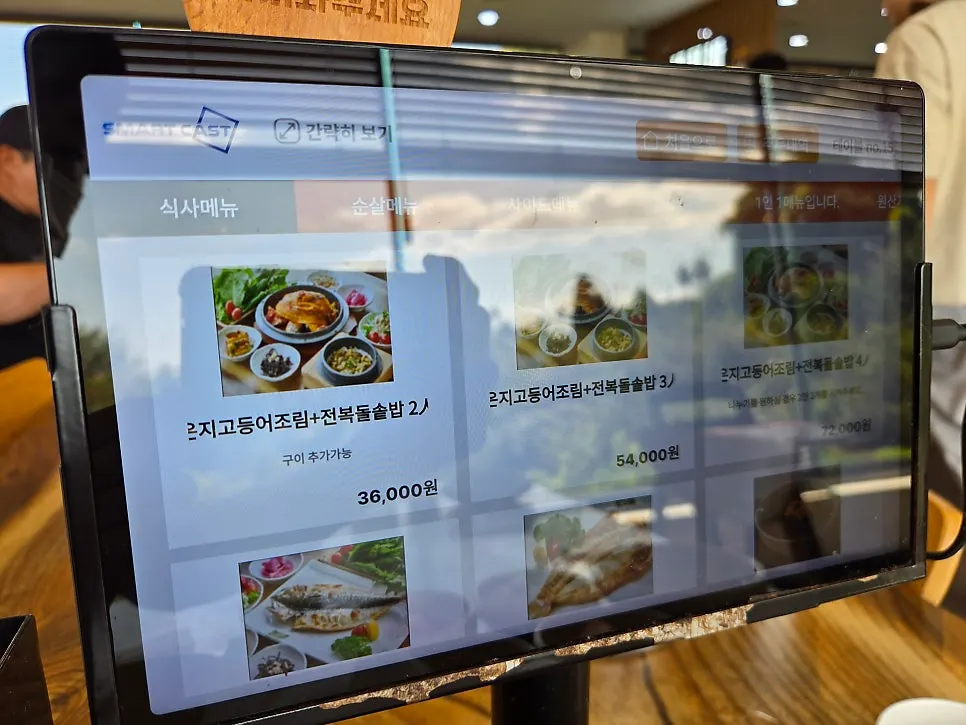
Orders were placed using the tablet on the table. You could browse categories such as meal sets, boneless dishes, and sides. The aged-kimchi braised mackerel and abalone stone-pot rice set was listed at ₩36,000 for two, ₩54,000 for three, and ₩72,000 for four. Choosing by group size was straightforward, and the screen also noted that grilled fish could be added.
The self-serve bar for wrap vegetables and side dishes
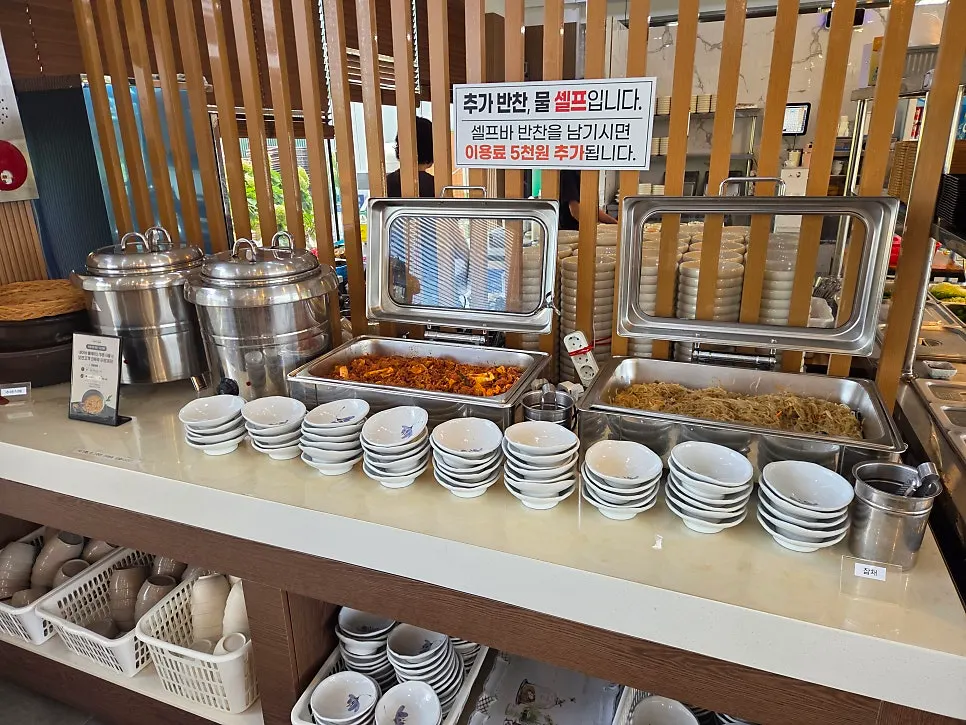
After ordering, I looked around the self-serve bar first. Plates and bowls were stacked generously by type, while cold side dishes, vegetables, and warm foods were separated into zones. A notice asked guests to take only what they could eat for environmental reasons and said side dishes are not reused. It also noted a ₩5,000 fee for leaving self-bar side dishes, so it is better to start with small portions.
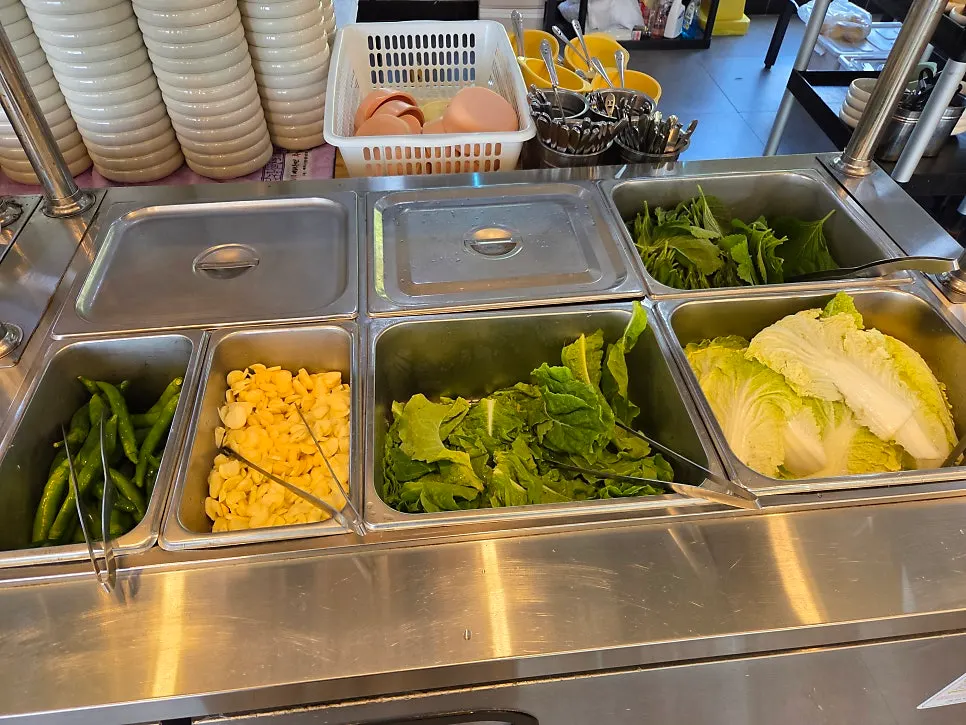
The wrap-vegetable section had green chili peppers, whole garlic cloves, several leafy vegetables, and napa cabbage in large trays. A sign above said the vegetables for ssambap (rice wraps) are grown directly on the farm. True to a place named for mackerel ssambap, the vegetable section had quite a substantial presence. If you pick up your preferred vegetables and accompaniments before the main arrives, everything is ready to eat as soon as the table is set.
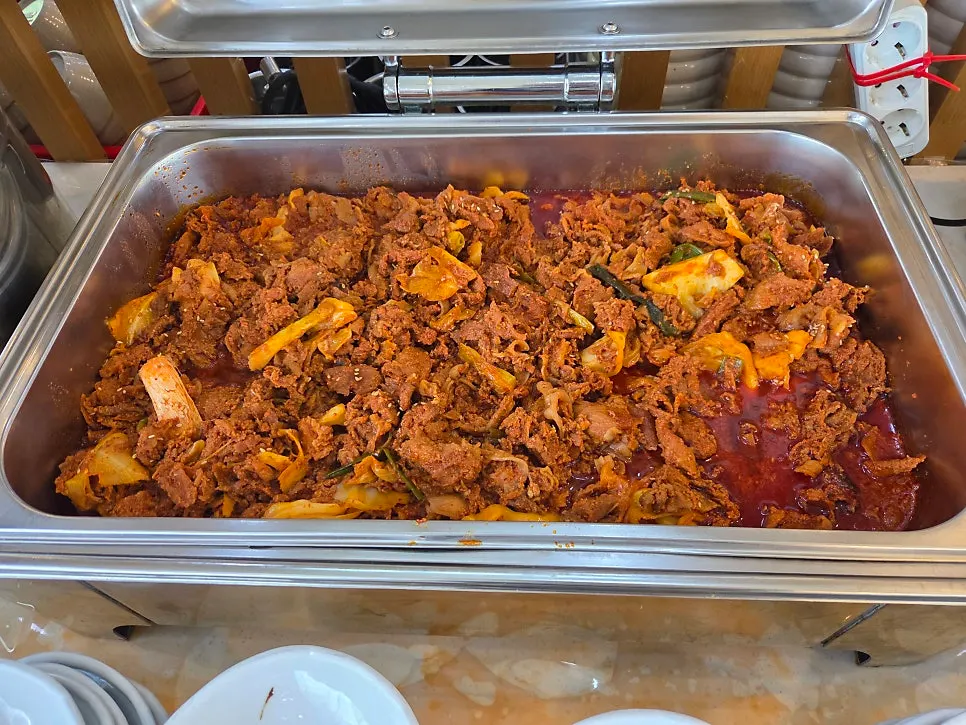
The self-serve bar next to it held not just one or two small side dishes, but many different compartments of them. Red-seasoned dishes, soy-seasoned dishes, and pickles in different colors and shapes lined up, making it fun to take a little of each. Japchae (stir-fried glass noodles) and jeyuk-bokkeum (spicy stir-fried pork) were also prepared separately in large warm containers. For Seogwipo breakfast, you might expect only a few basic banchan (side dishes), but the table was already quite abundant before the mains arrived.
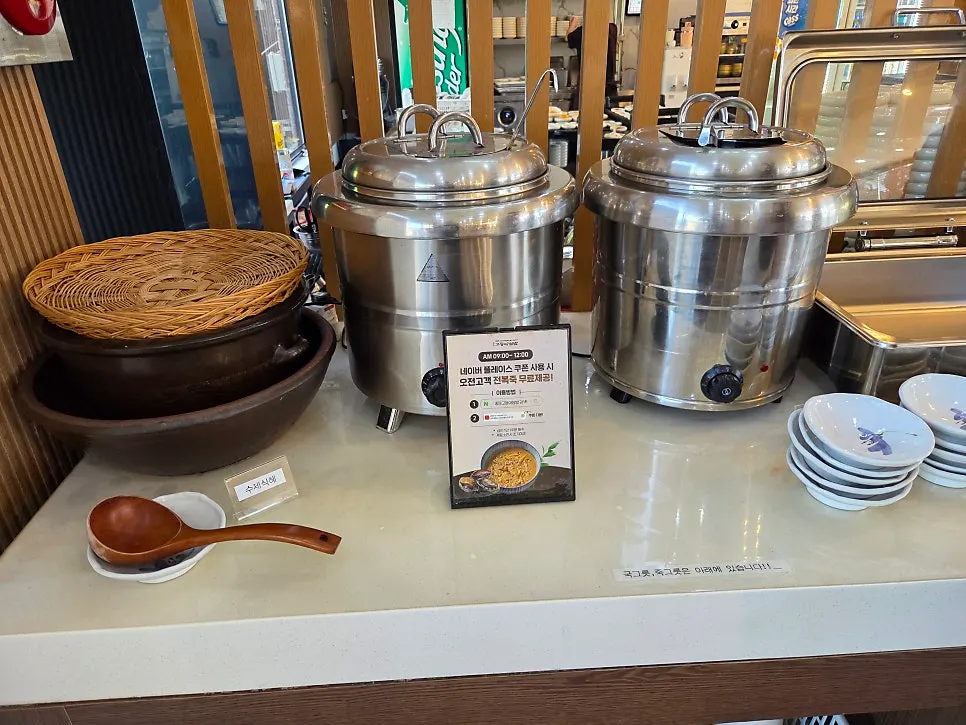
One side of the self-serve bar had a large insulated dispenser and jar-shaped containers. I filled a bowl with sikhye (sweet rice punch), a pale-brown drink that was nice during or after the meal. The sign beside it also said that morning guests using a Naver Place coupon from 9 AM to noon receive free abalone porridge. If you are planning an early Seogwipo breakfast, it would be worth checking the coupon and availability on the day you visit.
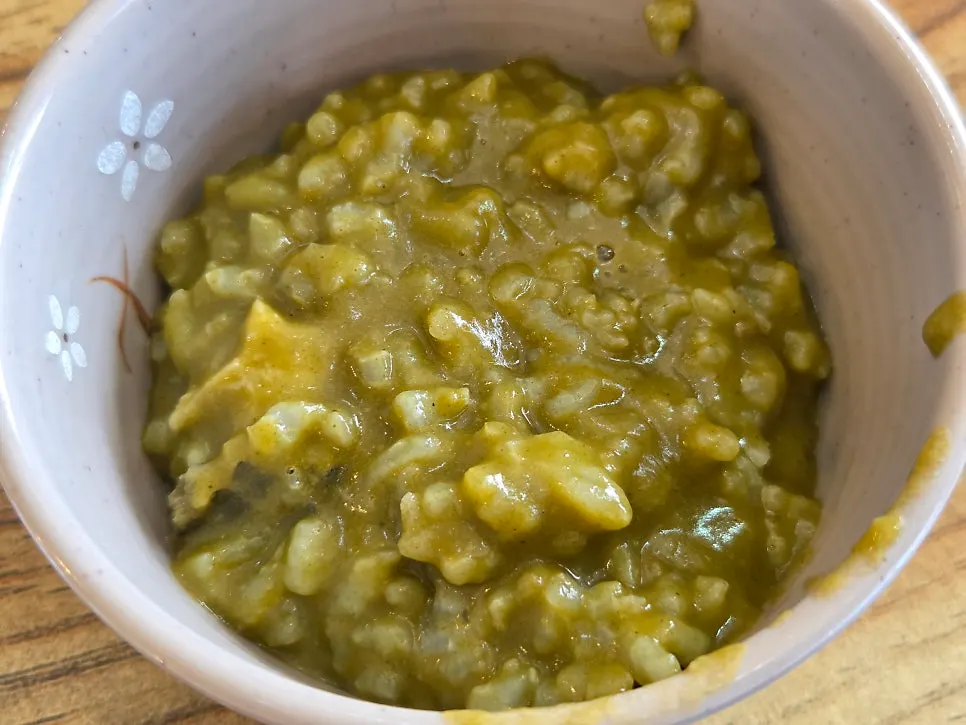
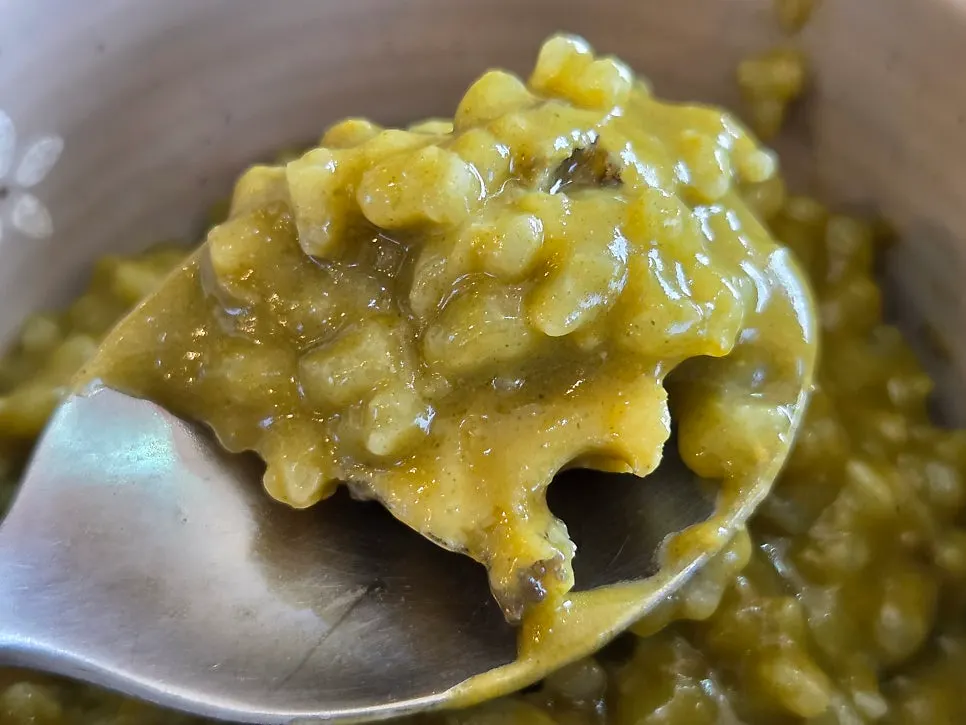
In a small bowl, the abalone porridge was thick and greenish, with rice grains and finely chopped ingredients clearly visible. One spoonful brought up a piece of abalone, and the grains still held their shape, so I could see exactly what the breakfast dish was like up close. Being able to have something warm before the full braised mackerel and stone-pot rice meal arrived also seemed well suited to a morning visit.
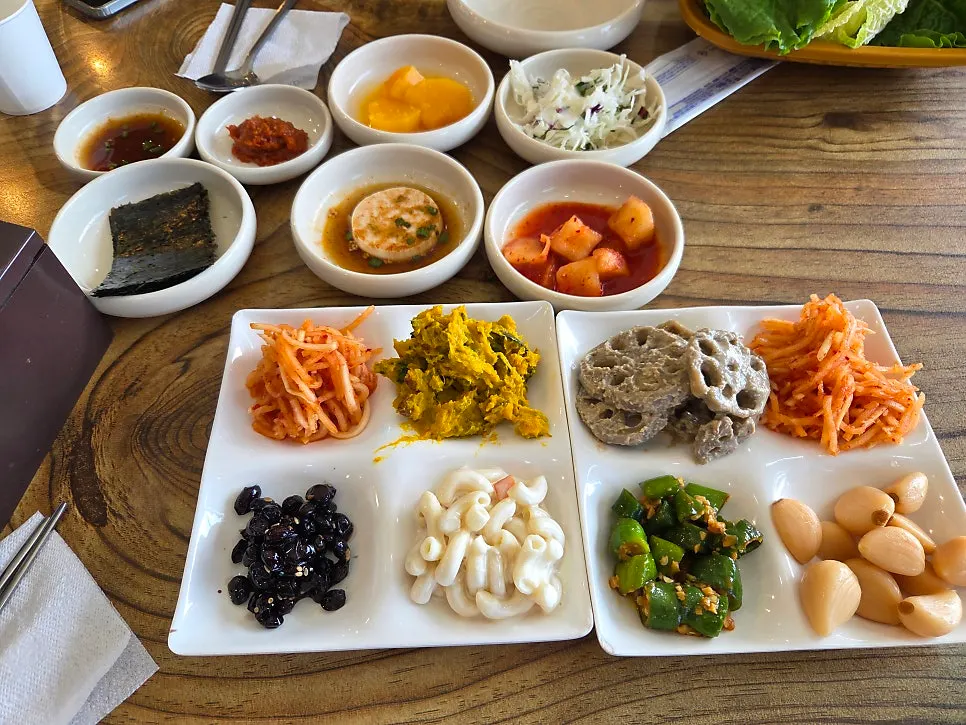
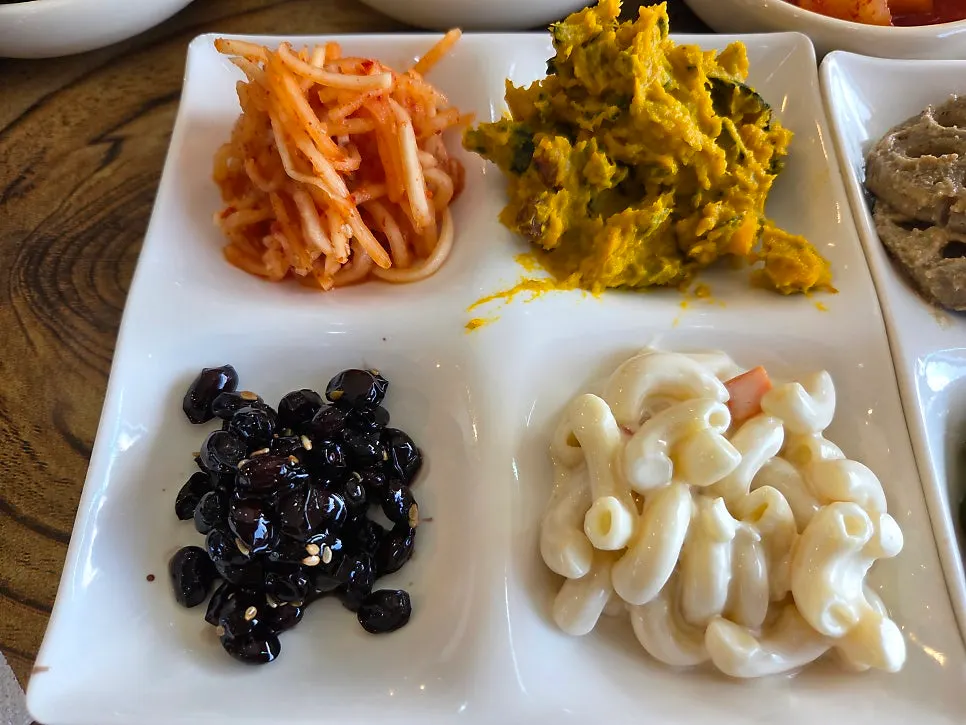
I ended up bringing back quite a few kinds of side dishes too. I placed small portions of braised black beans, macaroni salad, mashed kabocha squash, spicy seasoned vegetables, lotus root, seasoned green chili peppers, and whole garlic on a square plate. With roasted seaweed, kkakdugi cubed radish kimchi, tofu pickles, salad, and sauces in separate small bowls, the familiar Korean-restaurant pleasure of choosing among many side dishes naturally came together.
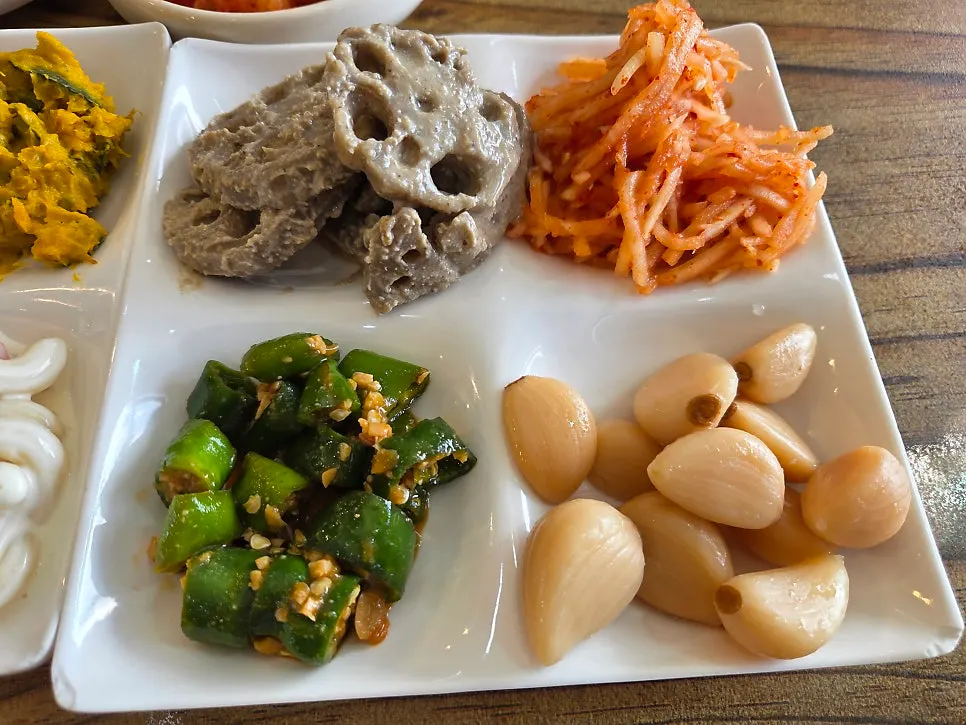
Looking at the side dishes close up, the table did not feel monotonous because even the vegetables were prepared in different ways. The lotus root was evenly coated in a grayish-brown sauce, the green peppers had finely chopped seasoning clinging to them, and the whole garlic was served bite-sized. On the other plate were tangy shredded radish, kabocha, beans, and macaroni, easy to enjoy between bites of the mains.
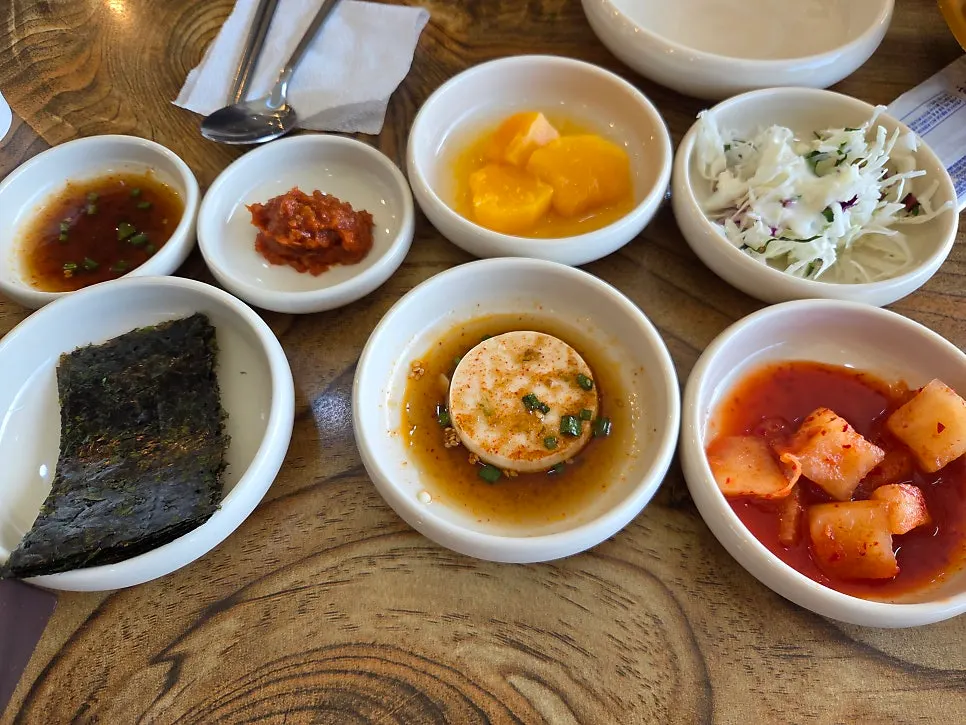
When I spread out the basic side dishes served on small round plates, there was quite a variety there too. A large sheet of seaweed, dipping sauce, ssamjang (seasoned soybean paste), yellow pickled vegetables, cabbage salad, and kkakdugi were each served separately. One piece of tofu sat in soy seasoning, topped with chopped scallion and sesame seeds, so each banchan could be picked up and enjoyed on its own.
Aged-kimchi braised mackerel with abalone stone-pot rice
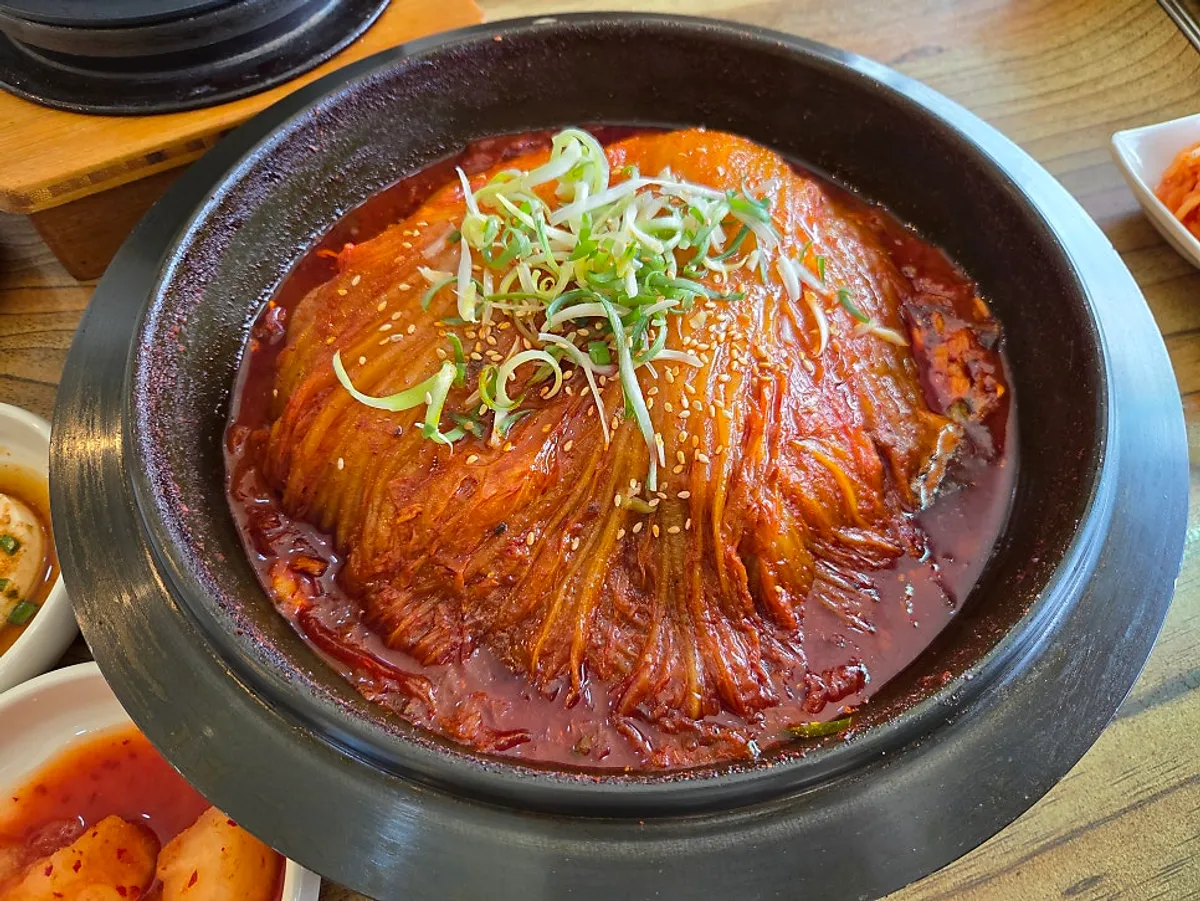
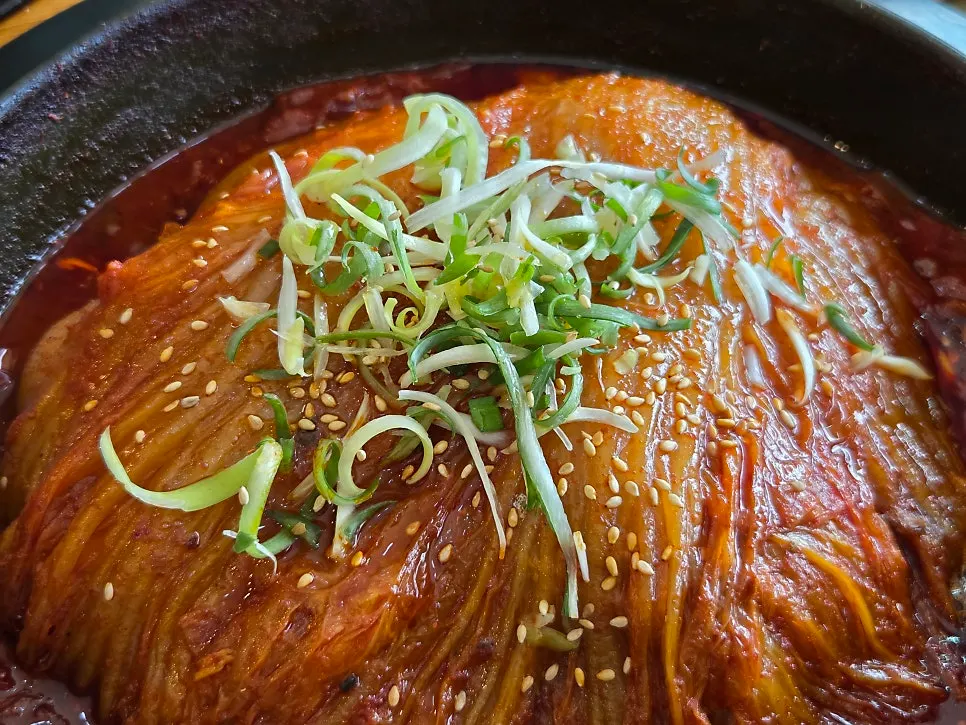
Soon, the main dish—aged-kimchi braised mackerel—arrived in a large pot. At first, wide sheets of aged kimchi almost covered the red broth, with sliced scallion and sesame seeds in the middle, so it had real presence on the table. The kimchi, spread wide like whole cabbage leaves, filled the pot so generously that it did not look small even as a two-person menu.
Up close, the aged kimchi retained its texture from stem to leaf and was evenly coated in red seasoning. Broth pooled between the leaves, while the mackerel sat underneath, so initially the kimchi was more visible than the fish. For anyone looking for a fish dish for Seogwipo breakfast, this would make a different kind of Korean spread from simply having grilled fish.
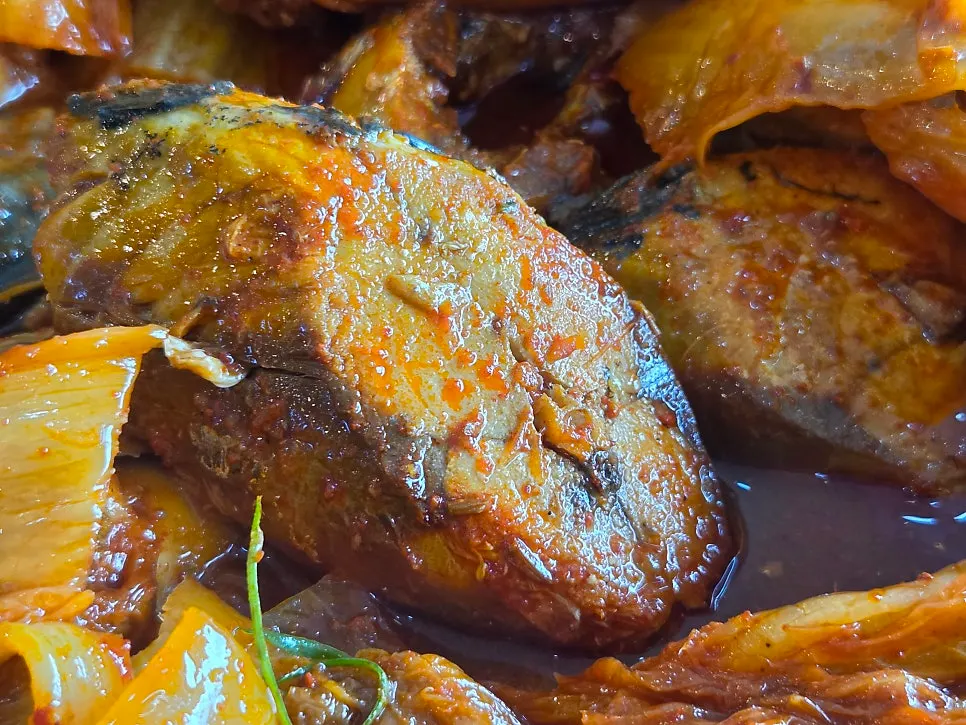
When I gently moved the aged kimchi aside, the large pieces of mackerel underneath came into view. Several generously cut pieces remained intact, with silver skin and flesh visible and plenty of red seasoning on their surfaces. Each piece was large enough to divide between rice and kimchi. The cross-sections were thick and the skin held its shape. Tender cabbage stems and leaves layered around the fish, with plenty of red braising broth below, making it easy to portion out mackerel and kimchi with wrap vegetables. Add lettuce, garlic, and peppers from the self-bar and you can make bites of mackerel ssambap just as the name suggests.
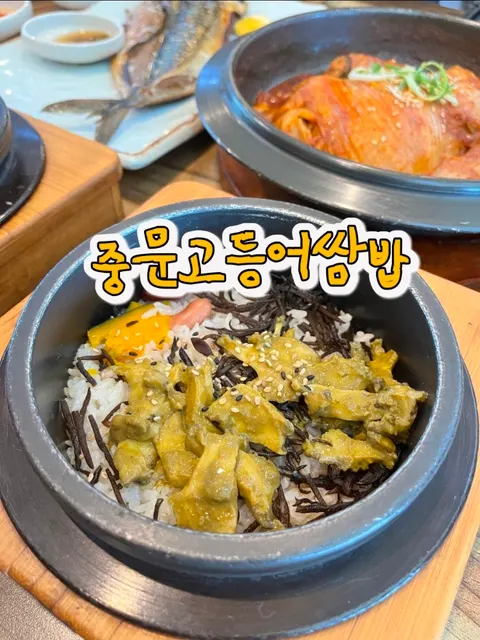
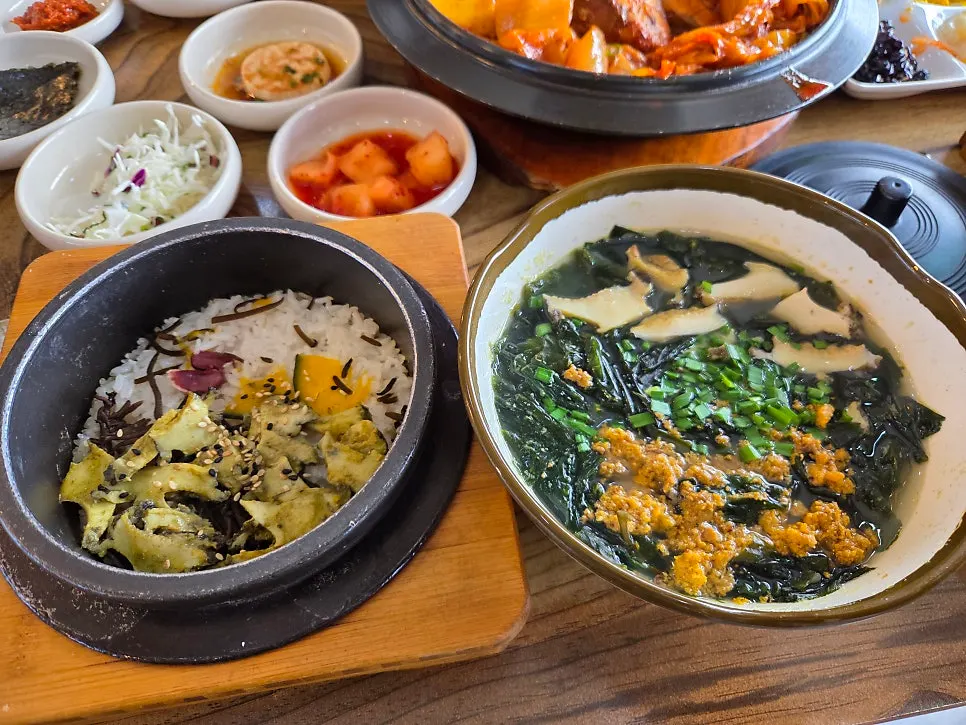
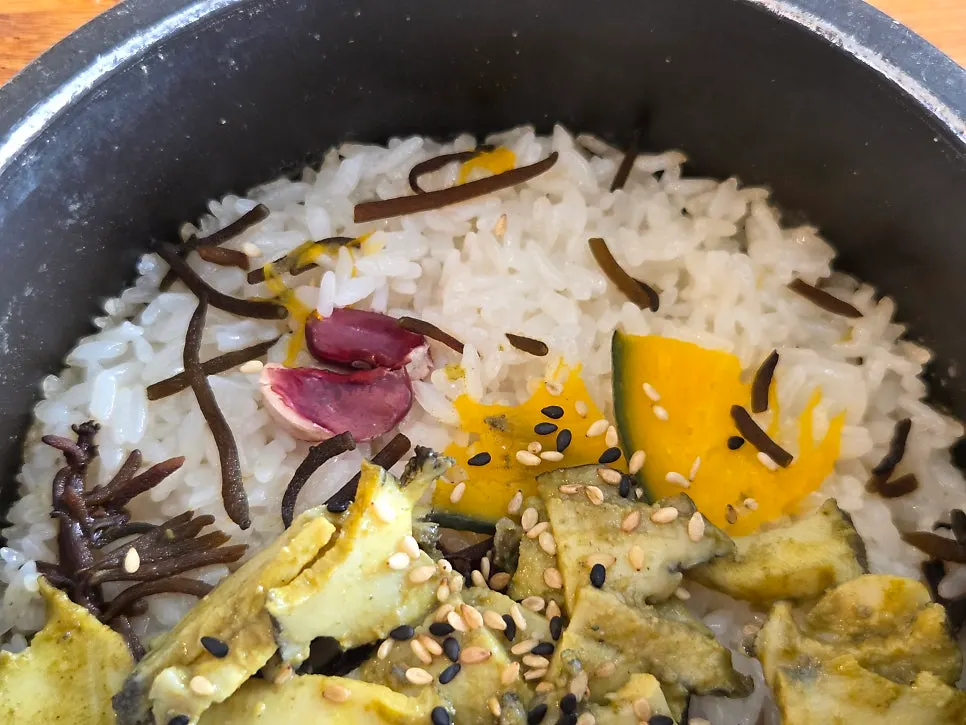
The abalone stone-pot rice alongside the braised mackerel was another fixture of the table. White rice filled a black stone pot, topped with pieces of abalone, kabocha squash, beans, dark hijiki seaweed stems, and sesame seeds, so all the ingredients were visible as soon as the lid came off. Rather than plain white rice alone, it gave you different ingredients to alternate with the braised mackerel.
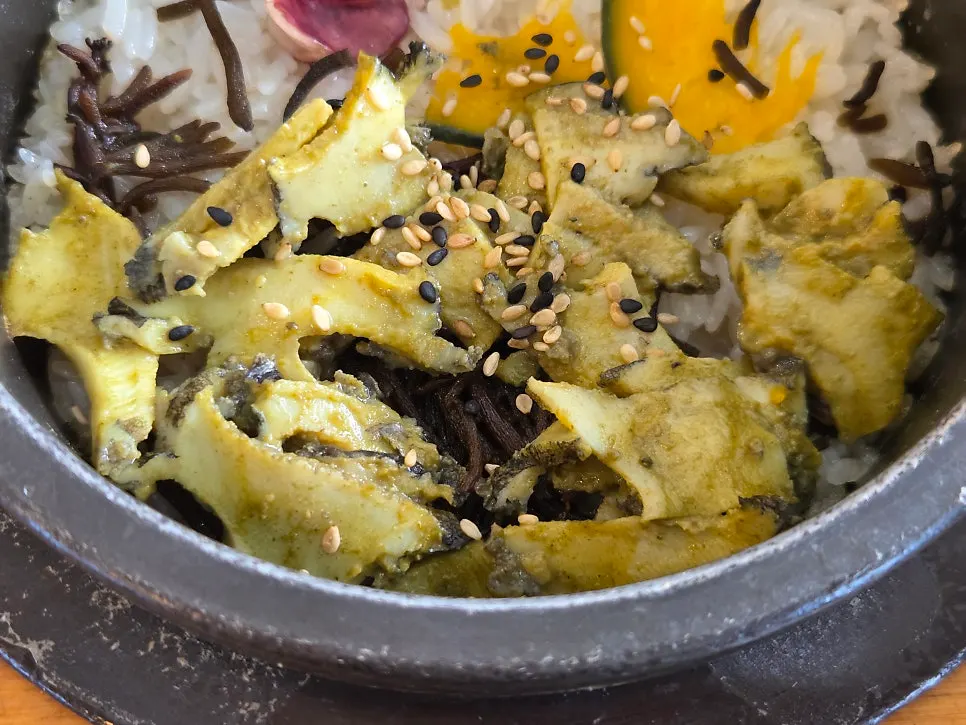
Looking closer at the abalone, several thin slices were laid over the rice. Their dark outer edges and inner flesh were both visible, with black and white sesame scattered on top, so the rice did not look plain at all. Kabocha, beans, and hijiki were mixed throughout, making it nice to scoop the ingredients you wanted with rice rather than mixing everything at once.
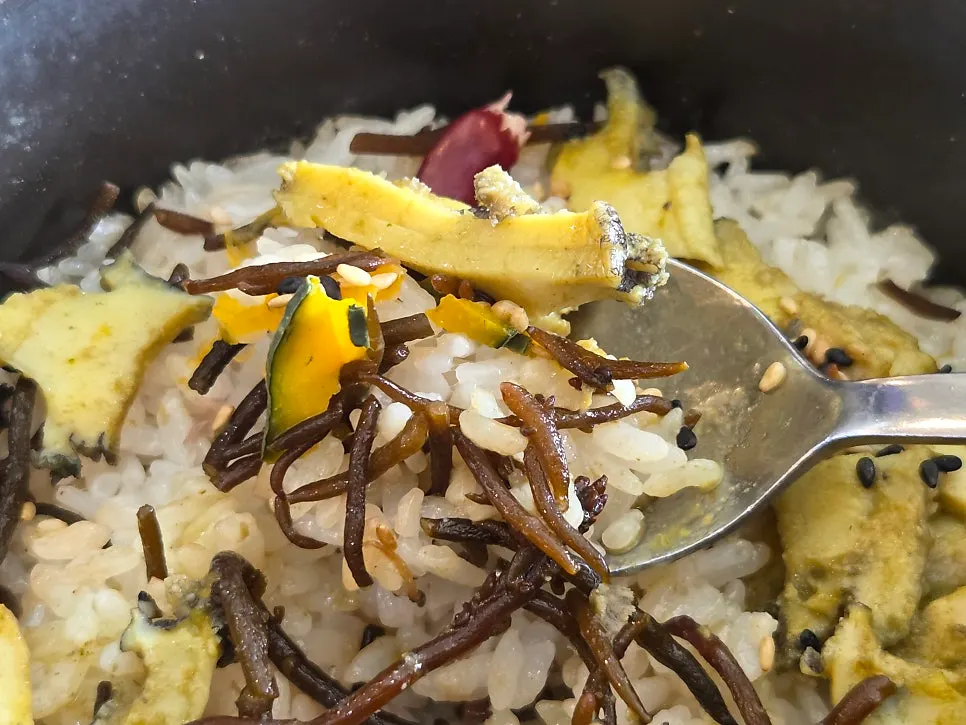
When I scooped up the rice, hijiki, rice grains, and a piece of abalone came up together. Seeing the amount and size of the ingredients directly made the abalone stone-pot rice feel more substantial, and its form was distinct from the large fish in the braise. If rice is an important part of breakfast for you, the inclusion of stone-pot rice will likely stand out.
A meal rounded out with abalone and sea urchin seaweed soup
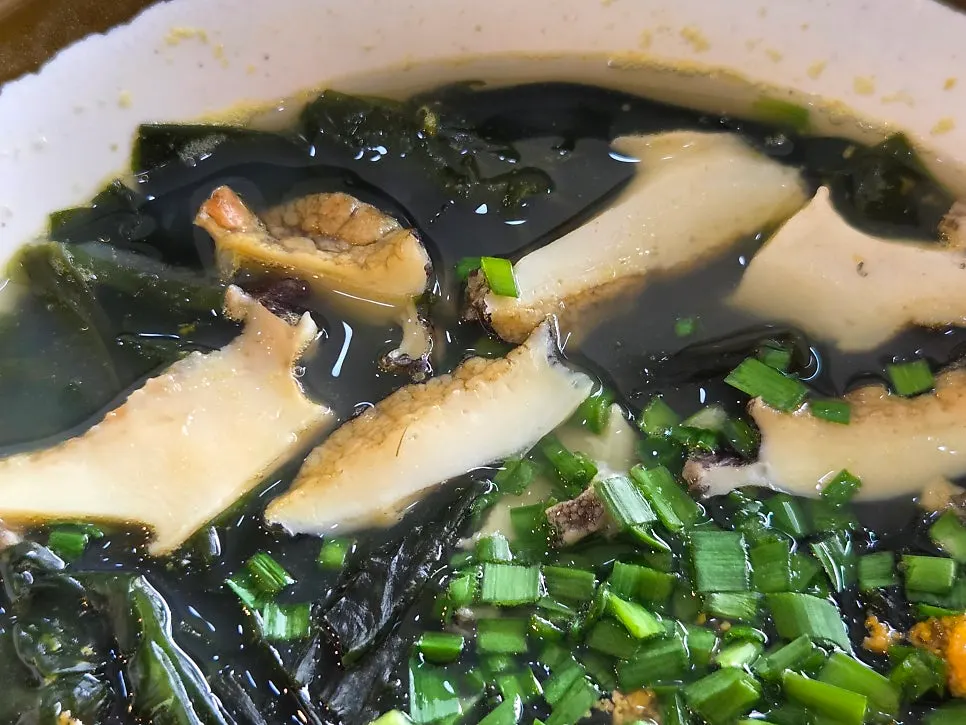
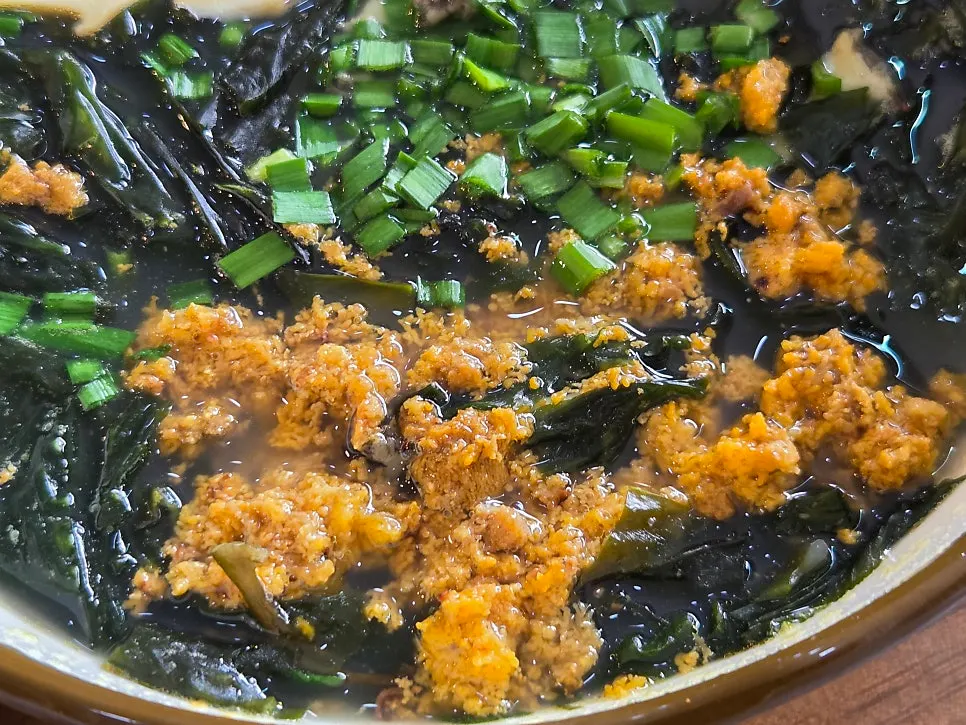
The miyeokguk (seaweed soup) that came with the meal was also served in a fairly large bowl. Deep-green seaweed filled the broth, topped generously with large-cut abalone, finely chopped chives, and orange sea urchin. Set next to the red braised mackerel, the abalone and sea urchin seaweed soup looked completely different in color, making each dish on the table clearly distinct.
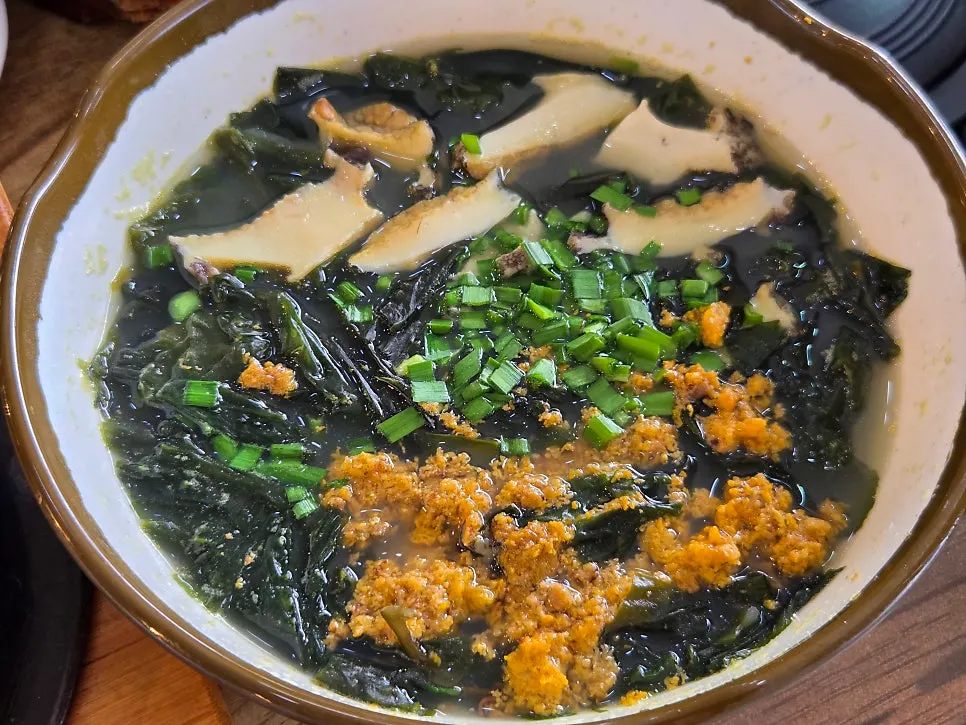
It was fun to look through the ingredients in the abalone and sea urchin seaweed soup one by one. There were several pieces of abalone, from long strips to thicker sections, while little clusters of sea urchin were spread among the seaweed. When I lifted a piece of abalone and seaweed on the spoon together, the ingredients in a single bite felt quite substantial too.
Jungmun Godeungeo Ssam-bap has a spacious dining room and a separately large self-serve bar, so the flow of a Korean meal with several travelers did not feel difficult. From the parking lot to the entrance, table, ordering tablet, and self-bar, the route was fairly simple. The morning abalone-porridge notice also made it easy to understand why people seek it out for Seogwipo breakfast. Morning benefits and operating hours can change, though, so it is best to check before going if you plan to visit early.
Once the mains, stone-pot rice, and seaweed soup were all set out, the side dishes I had brought at the beginning connected everything together. I ate the aged kimchi and mackerel with rice, then brought back a little more lettuce, garlic, or peppers from the self-bar as needed, changing up the table as I went. Since there are so many side dishes, the cleanest approach is to take only what you can eat at first, as the notice says, then go back if needed.
If you are visiting Jeju in autumn, you may often plan breakfast around a trip to see Jeju’s pink muhly grass, right? Before a pink-muhly photo stop or sightseeing around Seogwipo’s Jungmun area, this kind of Korean meal seemed well suited to days when you want warm rice and fish. The wide parking area also seemed convenient for getting straight back in the car after eating and linking the meal to a day visiting several places, such as pink muhly spots.
At Jungmun Godeungeo Ssam-bap, the meal did not stop at aged-kimchi braised mackerel: there was abalone stone-pot rice, abalone and sea urchin seaweed soup, abalone porridge, and a variety of self-serve side dishes all in one place. In particular, being able to take as many wrap vegetables as you need made it a fitting setup for a Korean table centered on mackerel and aged kimchi. If you are looking for Seogwipo breakfast in Jeju’s Jungmun area and want rice, soup, fish, and side dishes all covered, it is worth remembering as a stop on your travel route.
Where it is
1F, 1240 Iljuseo-ro, Seogwipo-si, Jeju Special Self-Governing Province, South Korea (제주특별자치도 서귀포시 일주서로 1240 1층)제주특별자치도 서귀포시 일주서로 1240 1층