Army stew restaurant in Dujeong-dong, Cheonan: 1++ beef mince for two
In short
Cheongwon Restaurant: Cooking Budae-jjigae, Cheonan Dujeong Main Branch is a Songtan-style budae-jjigae (army stew) specialist in Dujeong-dong, Cheonan. The Cheongwon budae-jjigae for two costs 12,000 won per person and arrives loaded with 1++ Korean beef mince, sliced beef belly and thick ham and sausage, eaten over rice and finished with ramyeon noodles in the leftover broth. When you want meat and a sharp chili kick rather than a ham-heavy stew, the Cheongwon budae-jjigae is the one to order.
Good to know
- Location
- 1st floor, 32-4 Dujeongsangga 4-gil, Seobuk-gu, Cheonan-si, Chungcheongnam-do
- Hours
- 11:00–21:00 (last order 20:30)
- Closed
- Every Sunday
- Parking
- Parking in front of the restaurant; when full, 2 hours free at the Starpellis officetel underground lot
- Menu prices
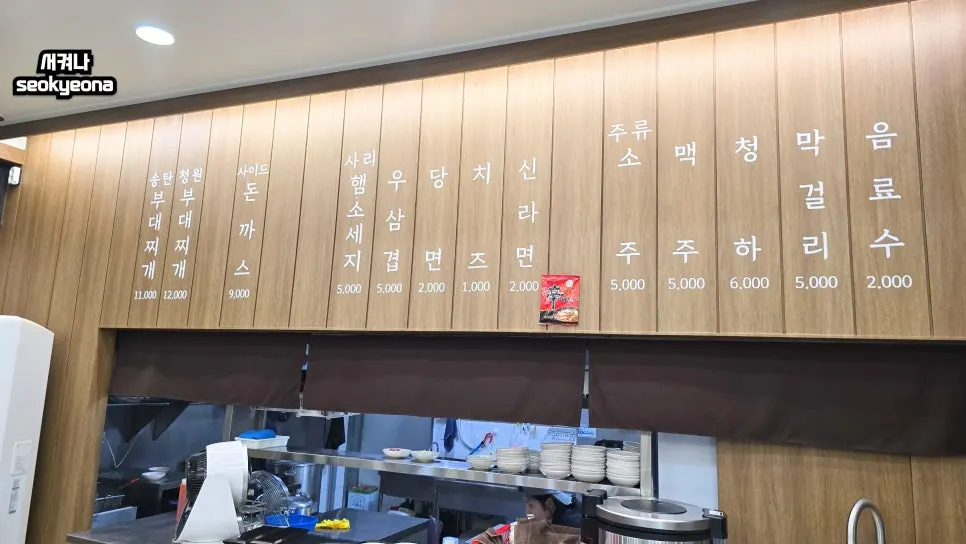
- Songtan budae-jjigae 11,000 won / Cheongwon budae-jjigae 12,000 won / side pork cutlet 9,000 won
- Add-ons
- Ham and sausage 5,000 won, beef belly 5,000 won, glass noodles 2,000 won, cheese 1,000 won
- Self-serve bar
- Free refills on rice and ramyeon noodles; basic side dishes self-serve (fish cake side dish on request)
- Visit date
- Evening of September 3, 2026
- Price reference
- ₩11,000 ≈ $8.2 · ₩12,000 ≈ $8.9 · ₩9,000 ≈ $6.7 (2026-09-15)
as written by the visitor on Sep 6, 2026
I went looking for budae-jjigae (army stew) in Dujeong-dong, Cheonan, and ended up at Cheongwon Restaurant: Cooking Budae-jjigae, Cheonan Dujeong Main Branch. I ordered the Cheongwon budae-jjigae for two — the standard Songtan-style base with beef belly and cheongyang chili added — and worked through generous portions of 1++ Korean beef mince, ham and sausage before moving on to rice and finally ramyeon noodles. If you're searching for good budae-jjigae in Cheonan or a Korean restaurant in Dujeong-dong, this place is worth checking for both the menu setup and how to actually eat it.
Where is Cheongwon Restaurant in Dujeong-dong, Cheonan?
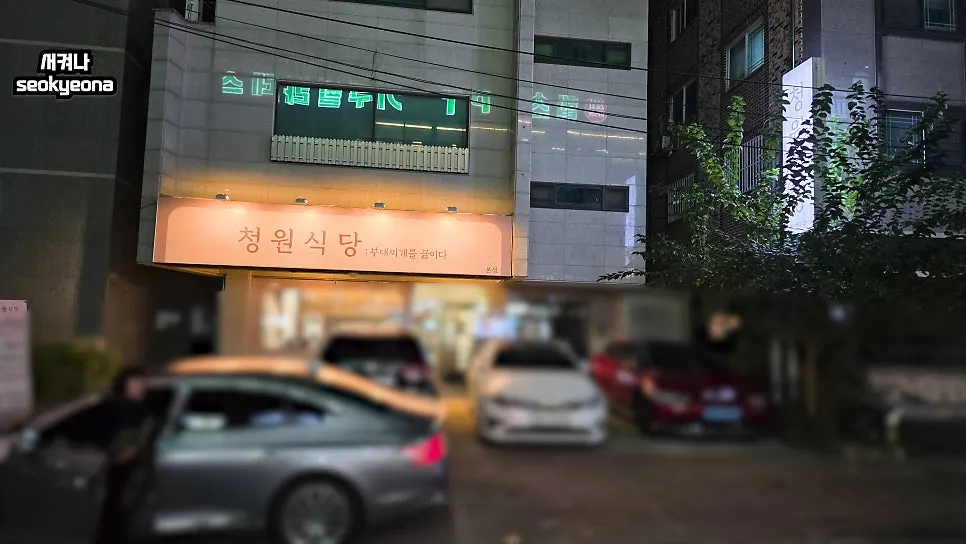
I visited on the evening of September 3, 2026. The address is 32-4 Dujeongsangga 4-gil, Seobuk-gu, Cheonan-si, Chungcheongnam-do, South Korea, 1st floor. It's a budae-jjigae specialist centered on Songtan-style and Cheongwon-style stews, and the lit-up sign made it easy to spot in the evening. If you're hunting for good food in Cheonan or Dujeong-dong and want a hot soup dish, the menu choice here is pretty clear-cut.

Hours, parking and what the restaurant feels like
Cheongwon Cheonan Dujeong Main Branch is open 11:00–21:00, last order 20:30, closed every Sunday. There's parking space right in front, and if it's full, you can use the underground lot at the Starpellis officetel next door free for 2 hours. If you're driving to a budae-jjigae place in Cheonan, that parking info is handy to know ahead of time. There was also a large sign near the entrance about air conditioning, showing they think about indoor temperature while pots simmer on the tables.
The interior is mostly standard tables, and several were already occupied when I arrived in the evening. One table had a pot bubbling away, another was adding rice and noodle refills — a lively, typical neighborhood Korean restaurant vibe rather than anything fancy. It's the kind of place suited to family meals or casual get-togethers around one pot. If you're after a Korean restaurant in Dujeong-dong with a relaxed dining atmosphere, this fits well.
Cheongwon Restaurant menu and prices
The menu at Cheongwon Cheonan Dujeong Main Branch is fairly simple. The signature dishes are Songtan budae-jjigae at ₩11,000 and Cheongwon budae-jjigae at ₩12,000, with a side pork cutlet at ₩9,000. Add-ons include ham and sausage at ₩5,000, beef belly at ₩5,000, glass noodles at ₩2,000, and cheese at ₩1,000. Rather than spreading across many dishes, the menu focuses tightly on budae-jjigae, which suited my reason for coming — Cheonan budae-jjigae.
Songtan vs Cheongwon budae-jjigae: what is the difference?
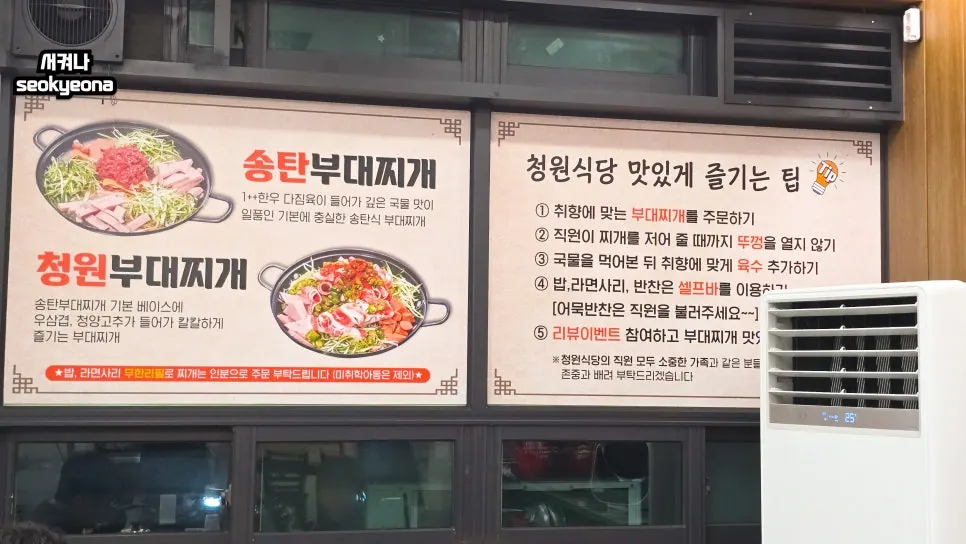
The difference between Songtan and Cheongwon budae-jjigae is spelled out clearly on the menu. Songtan budae-jjigae is the classic style built around 1++ Korean beef mince, while Cheongwon budae-jjigae takes that same base and adds beef belly and cheongyang chili for a spicier kick. If you want something clean and basic, go Songtan; if you want more meat and more heat, go Cheongwon. This time I ordered the Cheongwon budae-jjigae for two. If you're after Cheonan budae-jjigae and want more than just a ham-heavy bowl, Cheongwon is the one to notice.
How to eat it, plus free rice and ramyeon refills
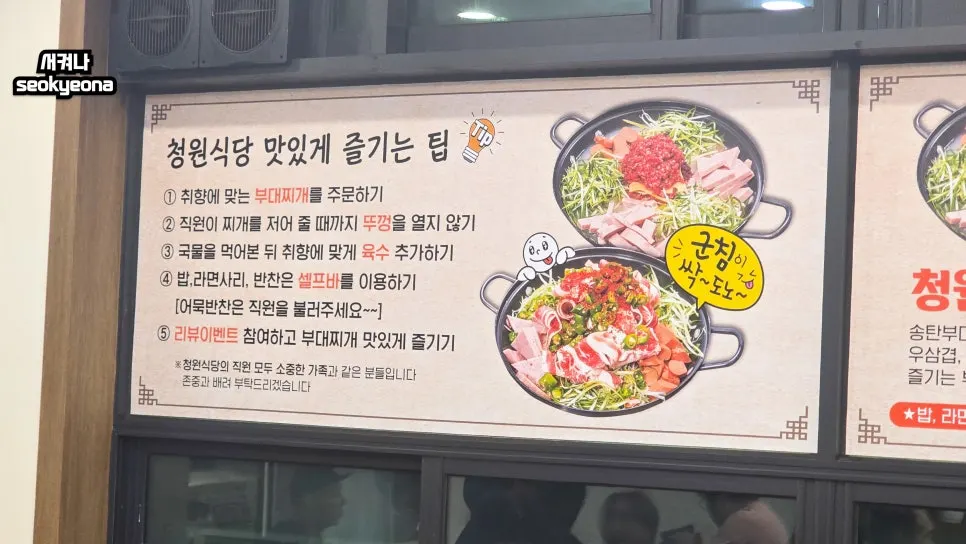
There's guidance on how to eat here too. After ordering, wait to lift the lid until a staff member stirs the pot, and once you've had some broth, add more stock to taste. Rice, ramyeon noodles, and basic side dishes are self-serve, while the fish cake side dish is available on request from staff. Even as a first-timer looking for budae-jjigae in Dujeong-dong, there wasn't much to figure out.
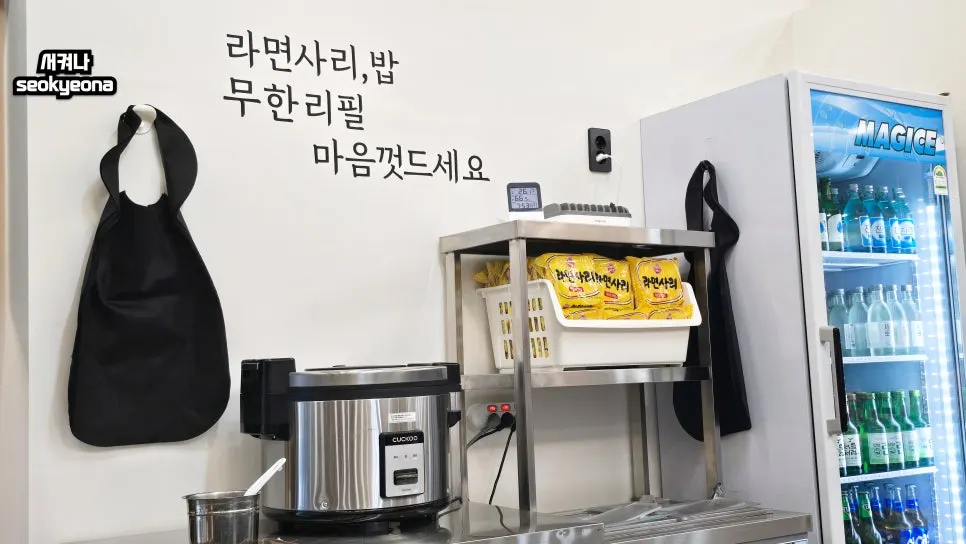
The self-serve station had a rice cooker and ramyeon noodles ready, with a sign on the wall reading 'Free refills on ramyeon noodles and rice, help yourself.' Personally, I preferred eating my fill of stew and rice first before adding noodles to the leftover broth, rather than adding noodles right away. If you love both rice and ramyeon, this is a solid, filling pick among Korean restaurants in Dujeong-dong.
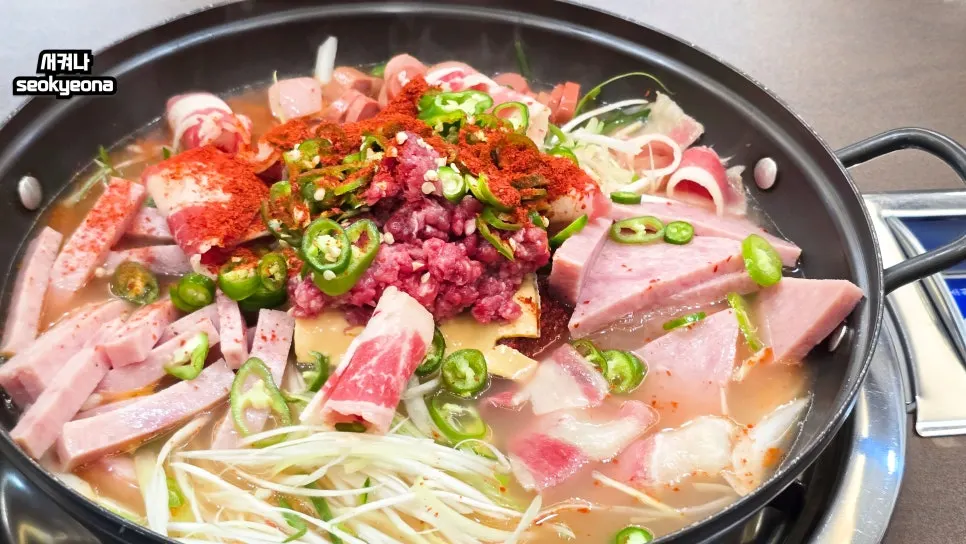
First look at the Cheongwon budae-jjigae for two
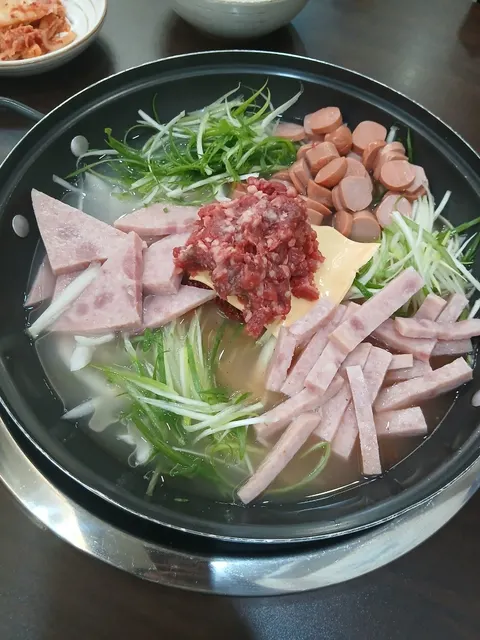
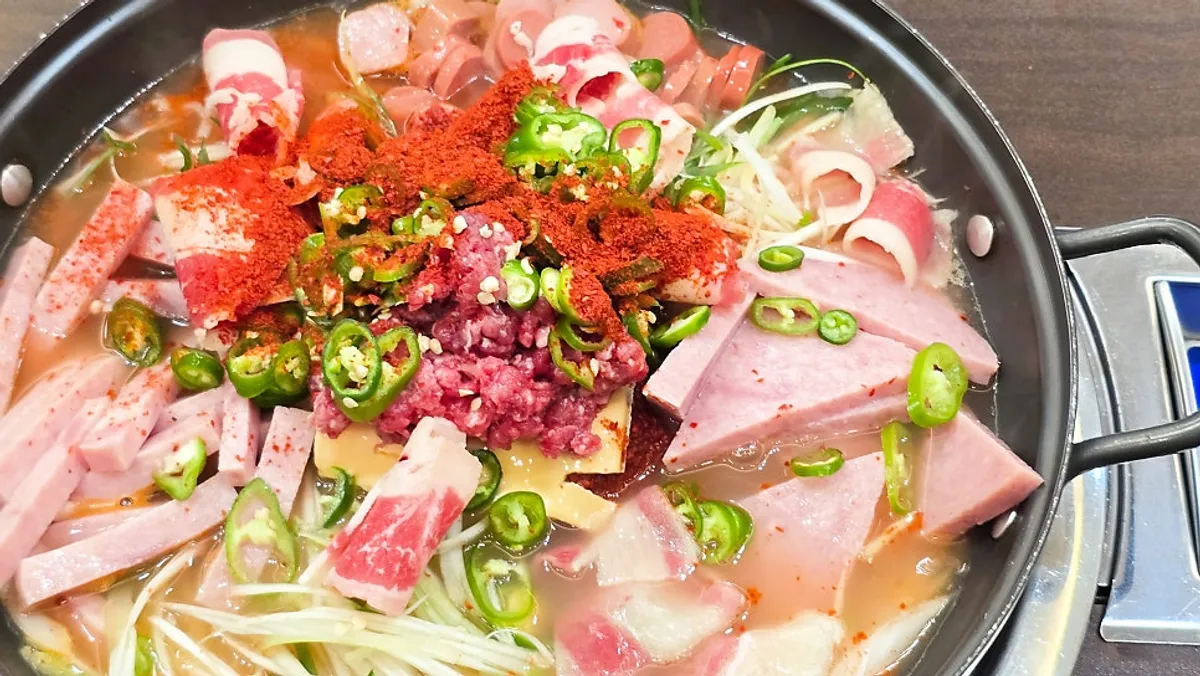
When the Cheongwon budae-jjigae arrived at the table, the sheer amount of ingredients stood out first. Chunky ham and sausage, thinly sliced beef belly, a heap of 1++ Korean beef mince in the center, plus scallion, onion, and cheongyang chili. The red seasoning sat on top, but before it started boiling in earnest, each ingredient was still clearly distinct. If ingredient volume matters to you when picking a budae-jjigae place in Cheonan, this is a pretty welcoming first look.
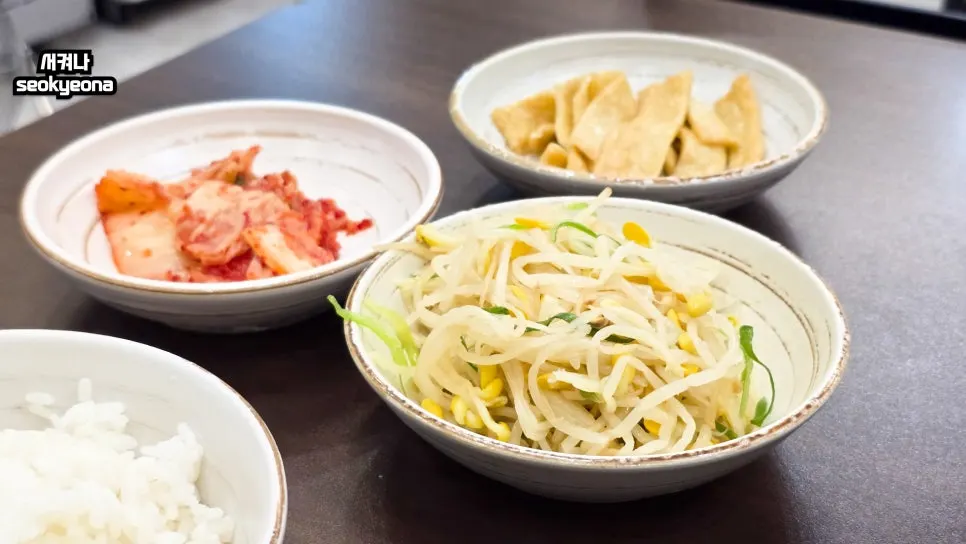
The three basic side dishes
The basic side dishes are simple: kimchi, seasoned bean sprouts, and stir-fried fish cake. Rather than piling on many side dishes, they seem chosen to pair well between bites of stew and rice. Since the main dish itself already packs ham, meat, and vegetables, this modest lineup didn't disrupt the meal's flow.
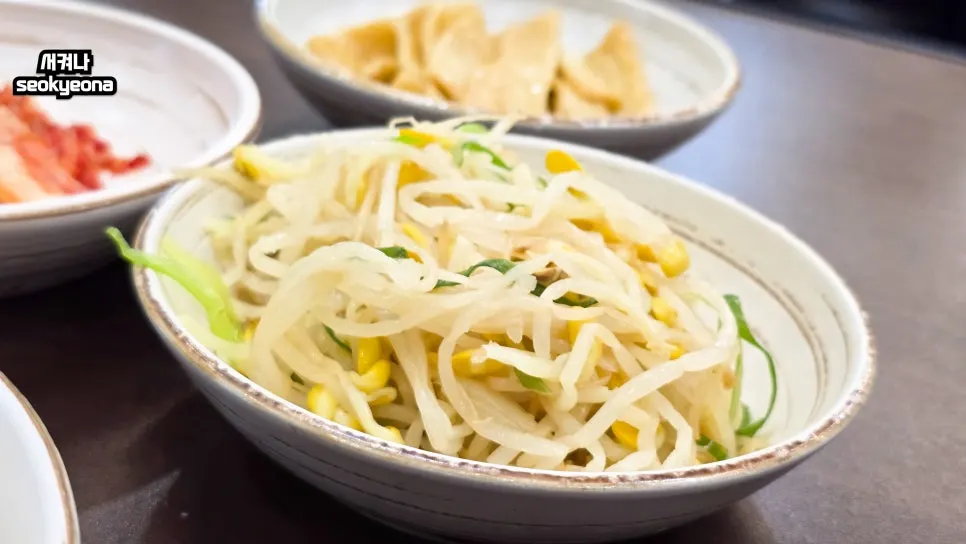
The seasoned bean sprouts kept a crisp bite in the stem parts and leaned clean rather than heavily seasoned. After the salty, spicy stew broth, the bean sprouts refreshed the palate a bit. Mixing them into rice soaked with stew broth later also gave a nice textural contrast.
The stir-fried fish cake used broad fish cake sliced long and stir-fried until moist. The texture wasn't chewy but soft, with the fish cake's subtle sweetness and saltiness coming through easily. It was an easy side to pick at in the middle of eating the spicy Dujeong-dong budae-jjigae.
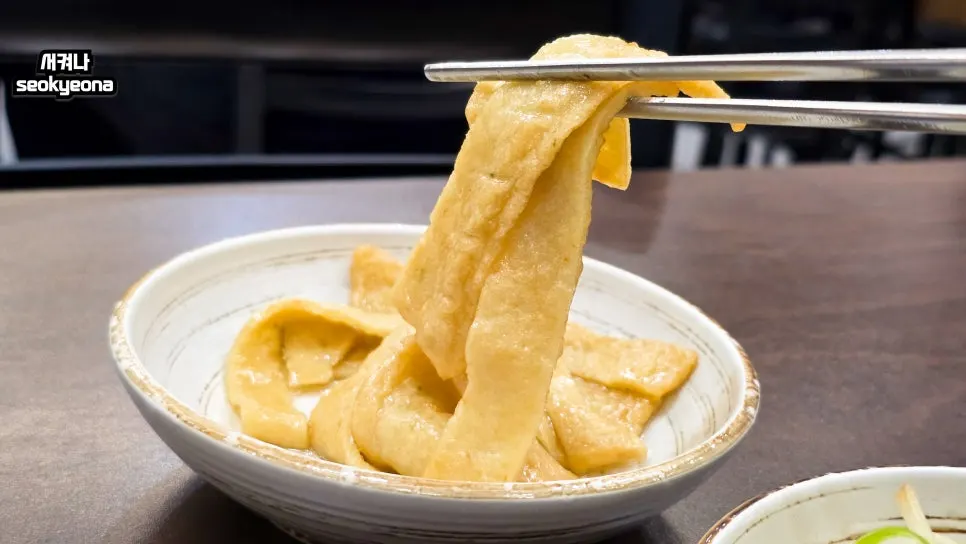
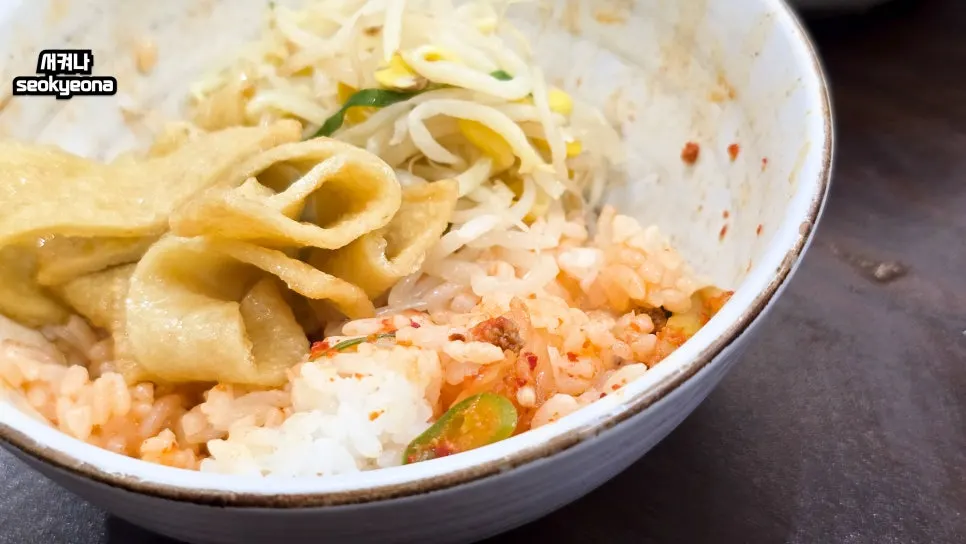
Lifting a piece with chopsticks, the thickness and soft bend of the fish cake were clear. It wasn't overly coated in sauce, so it worked well as a plain side with rice, and later mixing it with the bean sprouts into a rice bowl with stew broth worked nicely too.
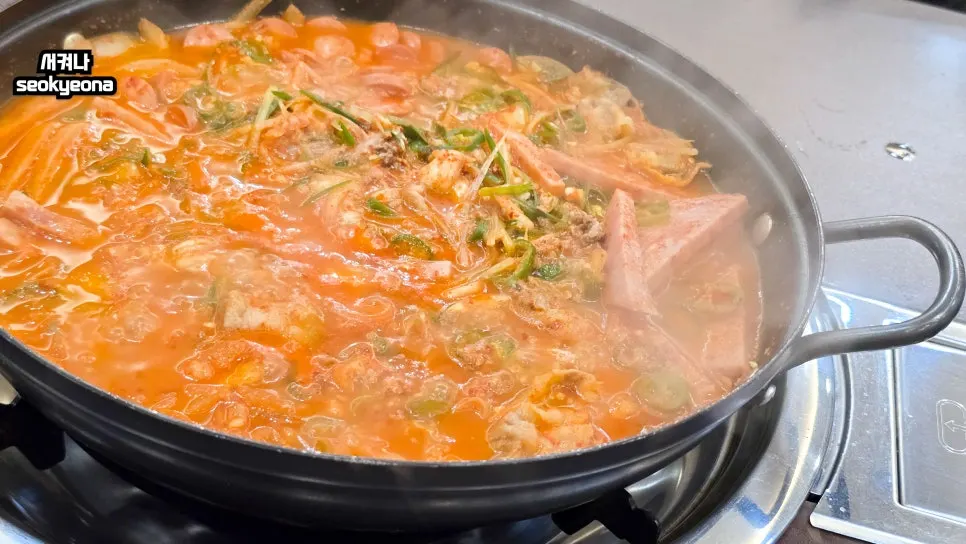
How the Cheongwon budae-jjigae broth tastes once it boils
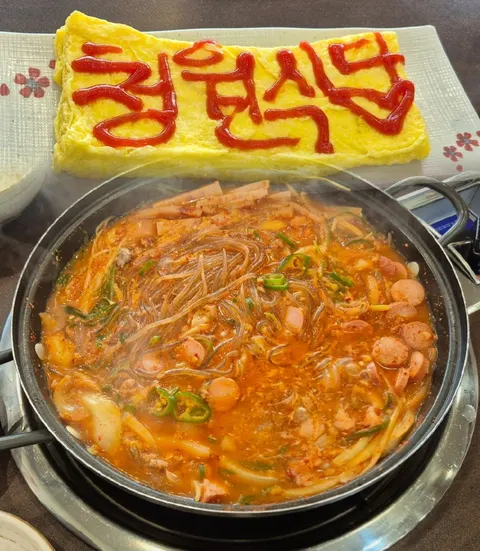
Once staff stirred it and it started boiling properly, the previously distinct seasoning, mince, and vegetables melted into the broth. The saltiness from ham and sausage, the savory richness of beef belly, and the umami of the mince all merged, with cheongyang chili adding spice. The essence of a good Cheonan budae-jjigae really came down to this broth formed as all the ingredients boiled together.
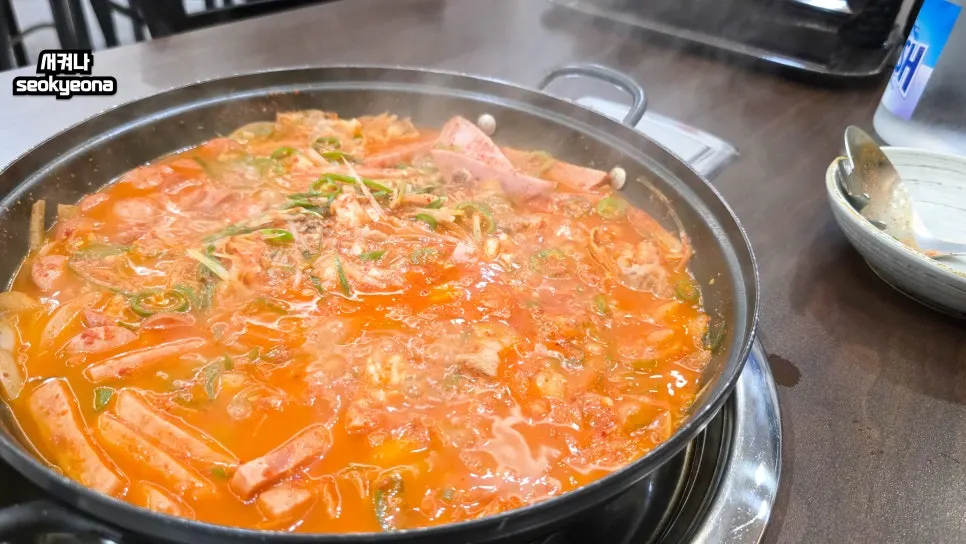
Boiled a bit longer, the broth deepened in color and the onion and scallion softened. What started as separate ingredients gradually merged the flavors of meat and ham into the broth. With cheongyang chili in the mix, a spicy finish lingered, making it noticeably spicier than a typical ham-heavy budae-jjigae. If you're looking for budae-jjigae in Dujeong-dong and want to eat the broth properly with rice, boiling it to this point works well.
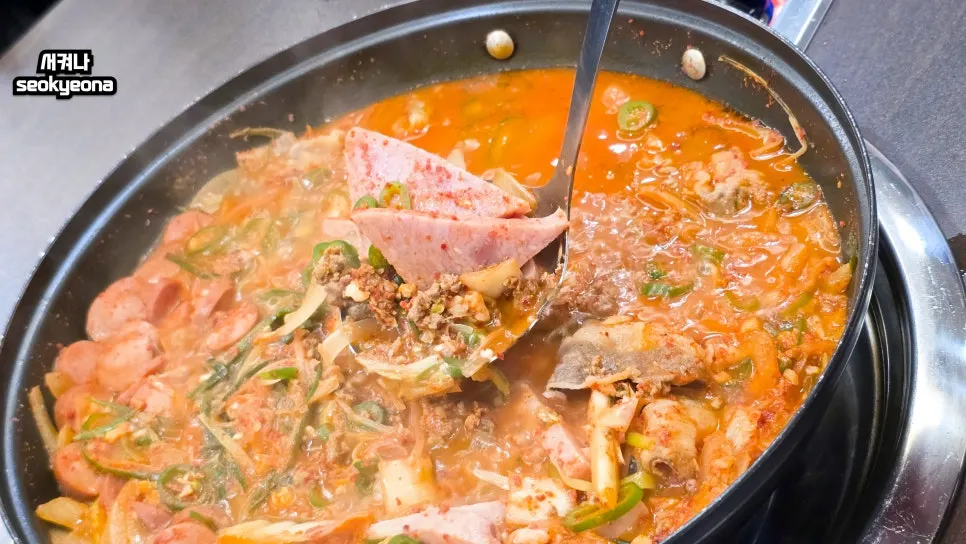
Fishing out the beef belly and 1++ Korean beef mince
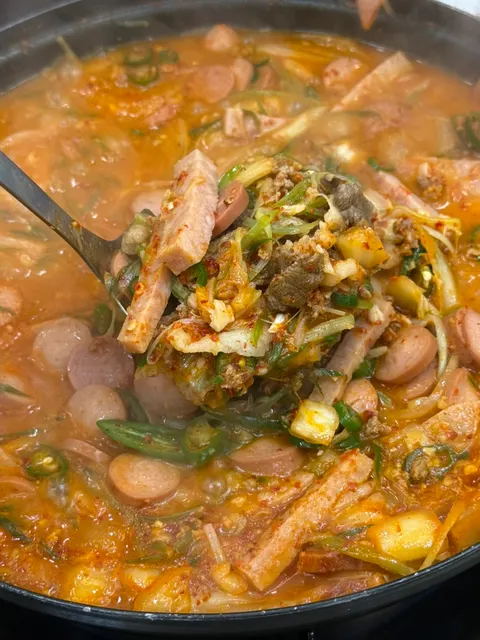
Digging the ladle deep, beef belly, mince, onion, and scallion came up along with the thick ham. The beef belly was thin enough to break apart easily without much chewing, and the mince spread finely, blending naturally between broth and rice. This meat lineup is what sets it apart from budae-jjigae made with just ham and sausage.
Scooping up sausage, ham, vegetables, and mince all together, the textural differences were clear. The sausage stood out in particular — even after simmering plenty in the broth, it kept a springy bite rather than going mushy, while staying soft inside. The spicy broth soaked in made its salty flavor pop even more.
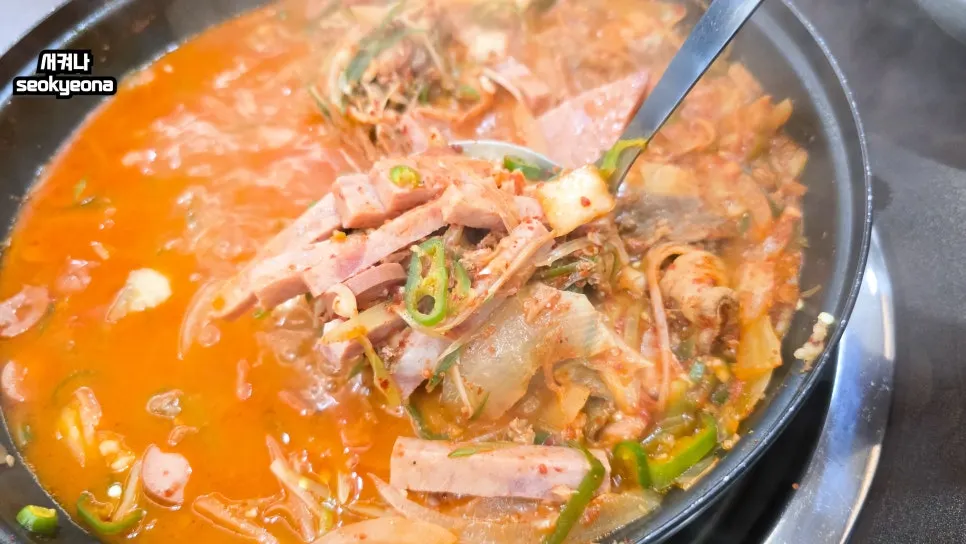
The thick ham showed yet another texture from the sausage. Each piece was fairly large, chewing soft and hearty in the mouth, and topped with mince and vegetables, no single spoonful tasted flat. This lineup especially suits anyone who likes eating the ingredients almost like a rice side dish.
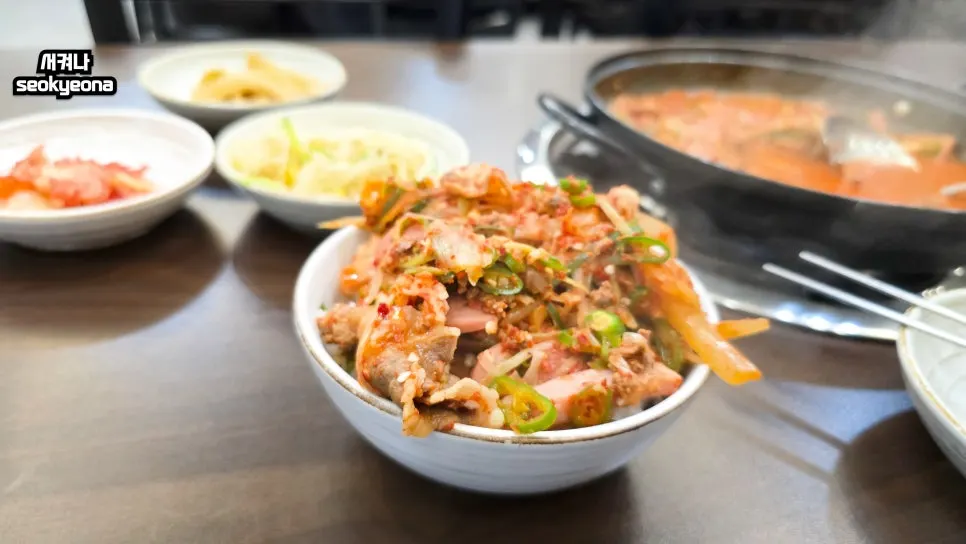
Spooning the stew over rice
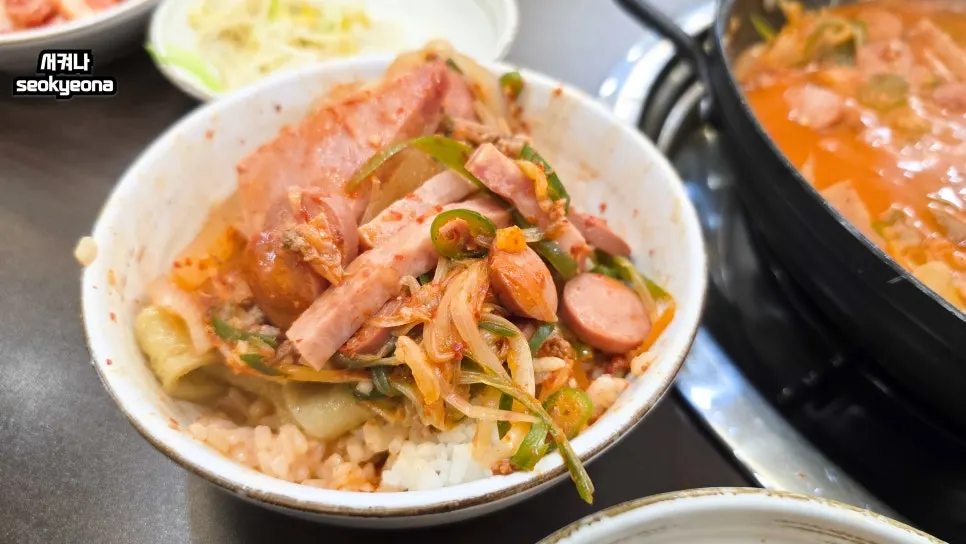
I piled beef belly, ham, sausage, mince, cheongyang chili, and onion generously onto rice. Unlike scooping straight from the pot, seeing it all on rice really drove home the portion size. As expected of a good Korean restaurant in Dujeong-dong, plain white rice ended up being the best match after all.
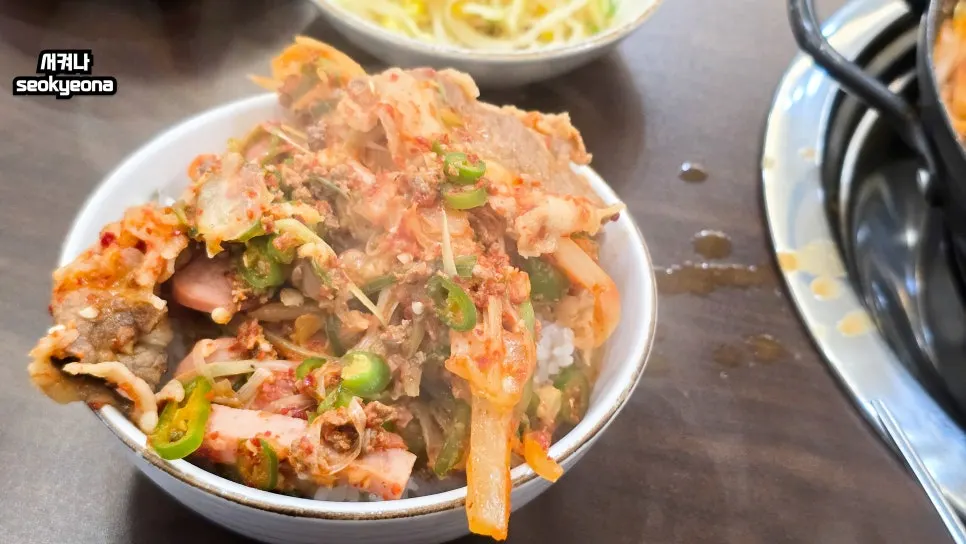
Adding a bit of broth and mixing it into the rice and toppings let the mince and seasoning seep between the grains. The soft texture of the beef belly, the heartiness of the ham, and the spicy kick of cheongyang chili came through one after another, and the rice absorbed the salt and spice, making it much easier to eat. Personally, this way of eating was my favorite part of the Dujeong-dong budae-jjigae.
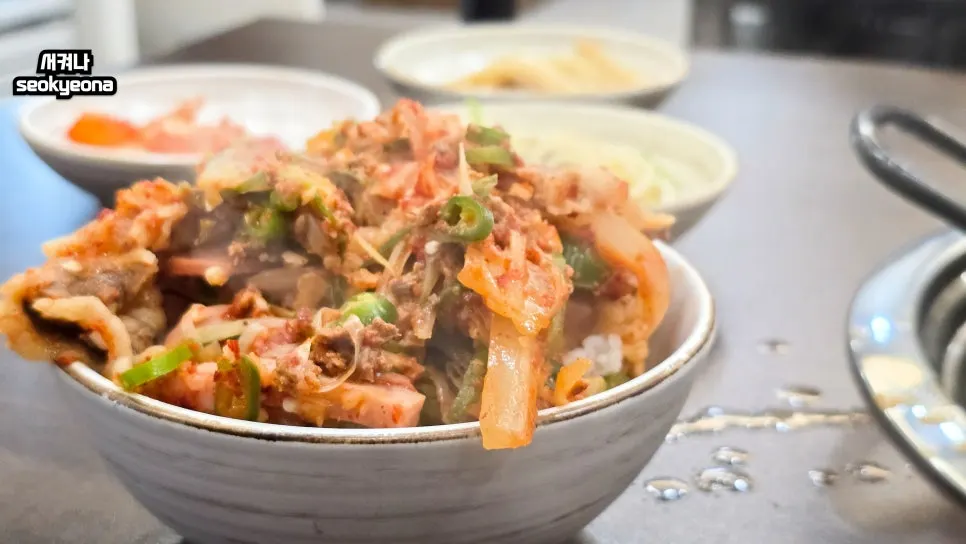
Once the bowl is close by, there's no need to pick out ingredients one by one. Scooping large spoonfuls that mix rice, meat, ham, and vegetables together shows off the Cheongwon budae-jjigae at its best. Rather than pouring in too much broth, keeping it just moist enough to dampen the rice preserved texture while keeping the seasoning balanced.
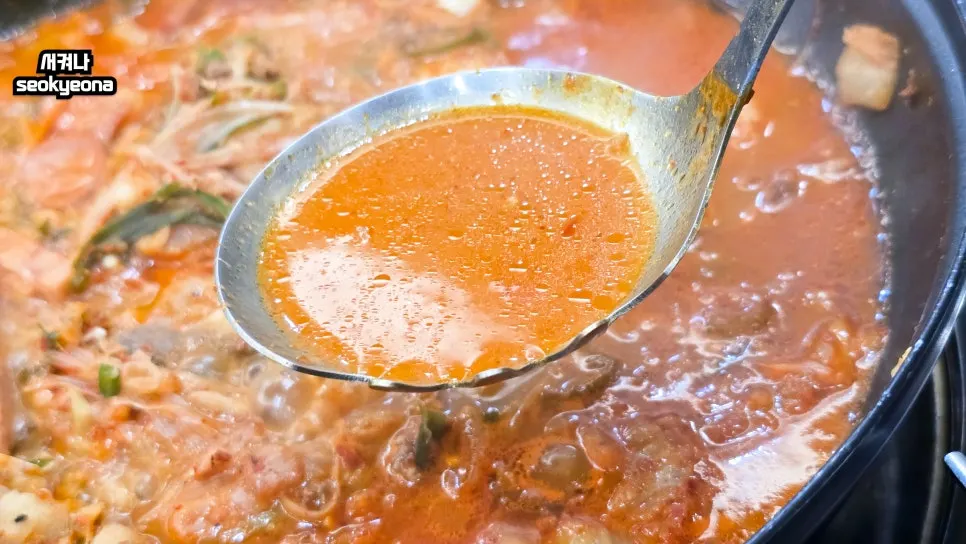
The broth had a vivid red color with a thin sheen of meat fat on the surface. The first taste brought the classic salty umami of budae-jjigae, followed by the spice of cheongyang chili. With beef belly and mince in the mix, the broth carried more richness and savoriness than one made with ham alone. This is a good match for anyone looking for a Cheonan budae-jjigae place that also wants a broth with real presence.
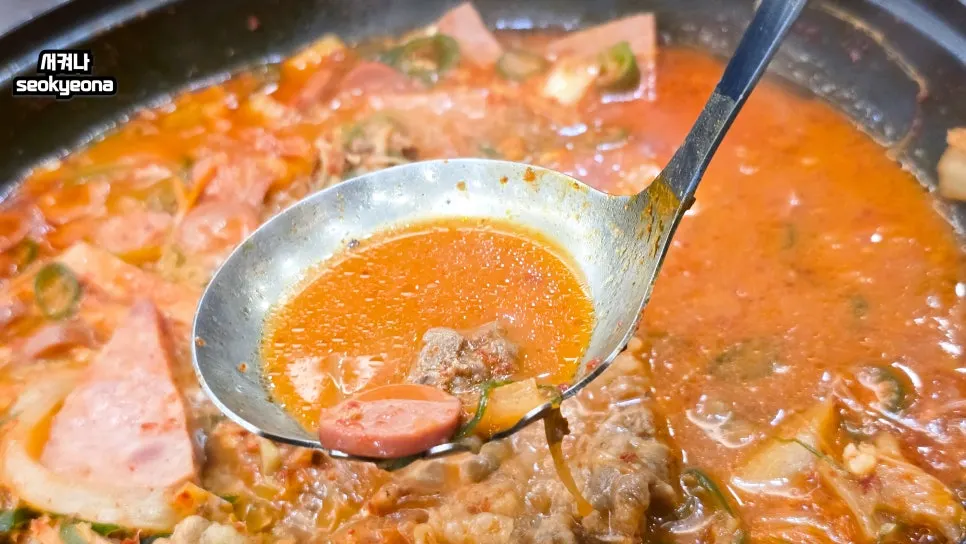
Scooping up sausage and mince together with the broth made the difference even clearer. The sausage's saltiness gained added umami from the meat, and the occasional cheongyang chili cut through any heaviness. Since the broth keeps deepening the longer it simmers, if it starts tasting too strong, you can always add more stock as instructed.
I mixed rice with stew broth and topped it with the seasoned bean sprouts on the side. Between the soft rice and meat-heavy combo, the crunch of the bean sprouts lightened things up. Rather than eating the stew and rice separately, mixing in the side dishes freely like this turned out to be part of the fun in a Korean restaurant in Dujeong-dong.
Ham and sausage still left halfway through the meal
Even midway through the meal, several pieces of ham and sausage kept surfacing in the bowl. The ham was cut thick and chunky, the sausage sliced into rounds, so the texture never settled into just one thing. If ham and sausage proportion matters to you when picking a Cheonan budae-jjigae spot, this is a satisfying lineup.
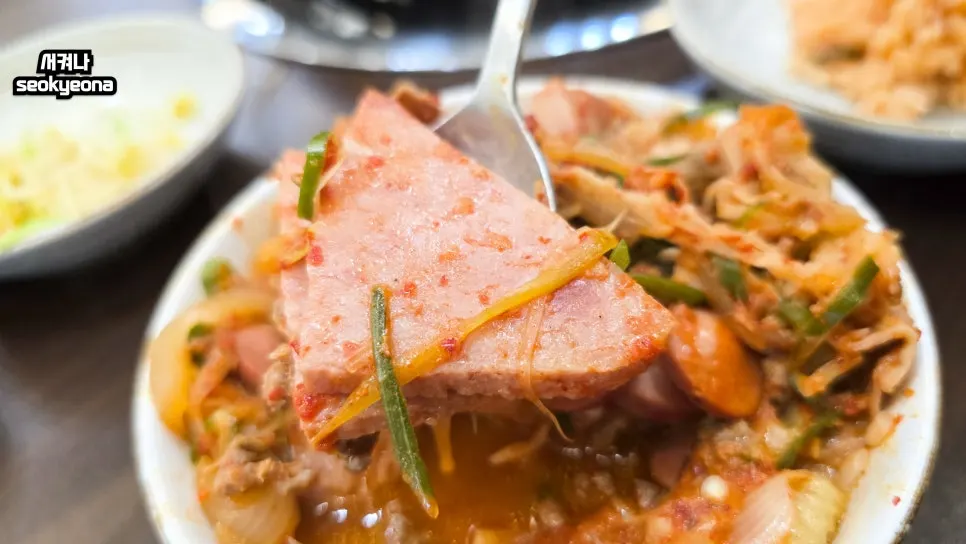
Lifting a thick piece of ham with a spoon, the thickness was obvious. It chewed soft without falling apart, holding its shape, with broth soaked into the surface giving it a salty, spicy edge. It was a completely different texture from the springy sausage, which made switching between the two fun.
Finishing with ramyeon noodles in the leftover broth
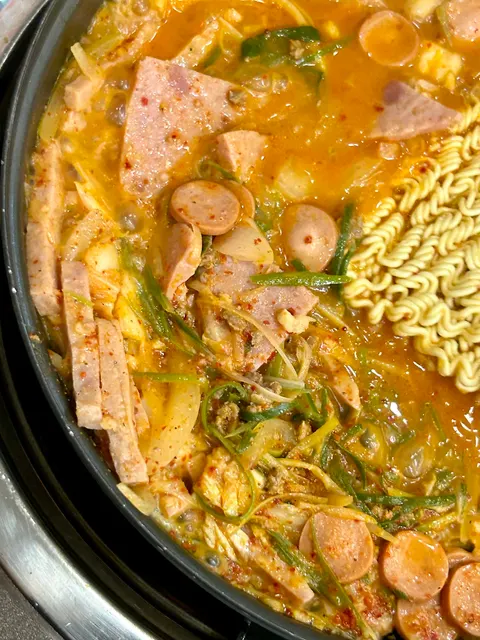
After finishing most of the rice and ingredients, I added ramyeon noodles to the leftover broth. Since the broth had already absorbed the flavors of beef belly, mince, ham, and sausage, it tasted noticeably richer than before the noodles went in. Topping the noodles with the remaining ham and vegetables and boiling them together felt less like a separate ramyeon dish and more like the final course of the budae-jjigae. Even after finishing your rice, don't let your guard down at a Dujeong-dong budae-jjigae place — this stage still counts.
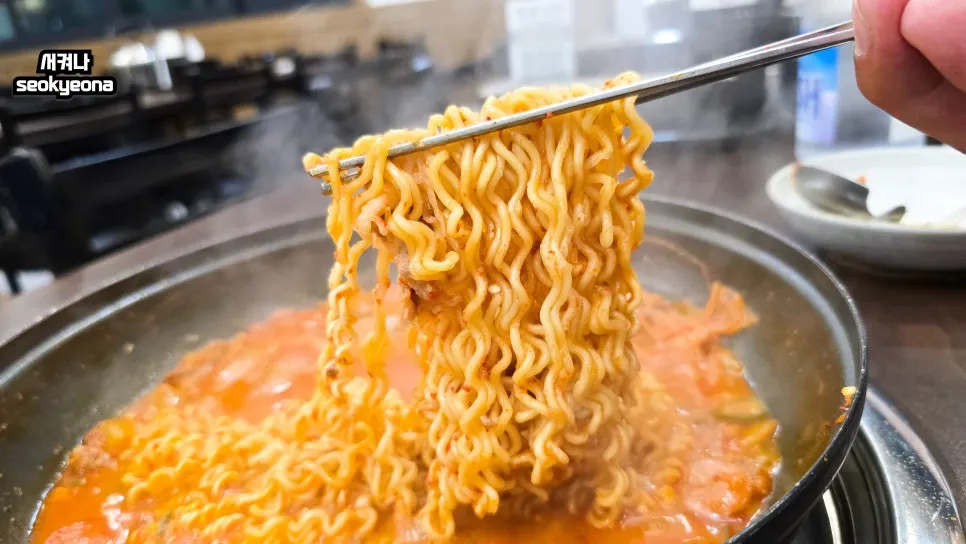
At the end, I lifted up noodles thoroughly soaked in the broth. The noodles had absorbed the budae-jjigae seasoning, giving a distinct salty, spicy flavor, and eating them while still slightly firm rather than overcooked made for a great pairing with the broth. Even after finishing rice, the ramyeon noodles still went down easily. This is why free refills are dangerous.
Who should order the Cheongwon budae-jjigae?
What stuck with me most about the Cheongwon budae-jjigae for two at Cheongwon Cheonan Dujeong Main Branch was the variety — beef belly, 1++ Korean beef mince, and cheongyang chili — rather than just piles of ham and sausage. If Songtan budae-jjigae is the classic, basic style, think of Cheongwon budae-jjigae as the option that leans more into meat and heat.
- If you want plenty of meat, not just ham, in your stew
- If you want a hearty bowl of rice at a Korean restaurant in Dujeong-dong
- If you want to properly finish with ramyeon noodles after your rice
- If you're looking for a dish to share casually over one pot with family or friends
Piling the ingredients generously into a rice bowl, mixing with just enough broth, and finishing with ramyeon noodles — this whole flow of eating the Cheongwon budae-jjigae was quite satisfying. Next time you're craving Dujeong-dong budae-jjigae, it might be worth comparing it against the classic Songtan version too.
Where it is
32-4 Dujeongsangga 4-gil, Seobuk-gu, Cheonan-si, Chungcheongnam-do, South Korea, 1st floor충청남도 천안시 서북구 두정상가4길 32-4 1층