Songdo dak kalguksu restaurant, weekend dinner for four: Eonyang Dak
In short
Eonyang Dak Kalguksu Incheon Songdo Branch is a chicken kalguksu (chicken noodle soup) and dak gomtang (chicken and rice soup) restaurant on Haedoji-ro in Songdo 1-gongu, Yeonsu-gu, Incheon. On a chilly weekend evening, a family of four shared one chicken kalguksu with half a chicken for 11,000 won and one dak gomtang for 11,000 won, and the thick noodles kneaded and rested a day ahead plus the spicy self-serve kimchi stood out. Eonyang Dak Kalguksu serves generous portions that suit noodle lovers and rice lovers at the same table.
Good to know
- Location
- 160-15 Haedoji-ro, 1st floor, units 129-132, Yeonsu-gu, Incheon (Songdo 1-gongu)
- Chicken kalguksu
- 11,000 won (half a chicken)
- Dak gomtang
- 11,000 won (half a chicken)
- Eonyang-style kalguksu
- 8,000 won
- Other menu items
- Chewy mandu (dumplings), spicy braised chicken, soy-braised chicken, boiled pork
- Side dishes
- Self-serve kimchi and pickled radish; kimchi made in-house
- Noodles
- Hand-kneaded and rested a day ahead, boiled fresh every 15 minutes
- Cooking time
- About 15 minutes
- Ordering
- Tablet ordering at the table
- Seating
- Large restaurant with group tables and window seats
- Price reference
- ₩11,000 ≈ $8.2 · ₩8,000 ≈ $5.9 (2026-09-15)
as written by the visitor on Sep 6, 2026
On a weekend evening, after everyone had gone about their own schedules, the four of us finally sat down together for dinner.
The daytime heat still lingers, but the morning and evening air has clearly changed. Once the cold wind starts blowing, I stop craving cold food and start thinking about warm soup — and after moving around all day, we were pretty hungry too.
Looking for something with both broth and meat, we headed to Eonyang Dak Kalguksu that evening. Hearing that the kalguksu (knife-cut noodle soup) comes with half a chicken, I thought it would work well as dinner for a family of four.
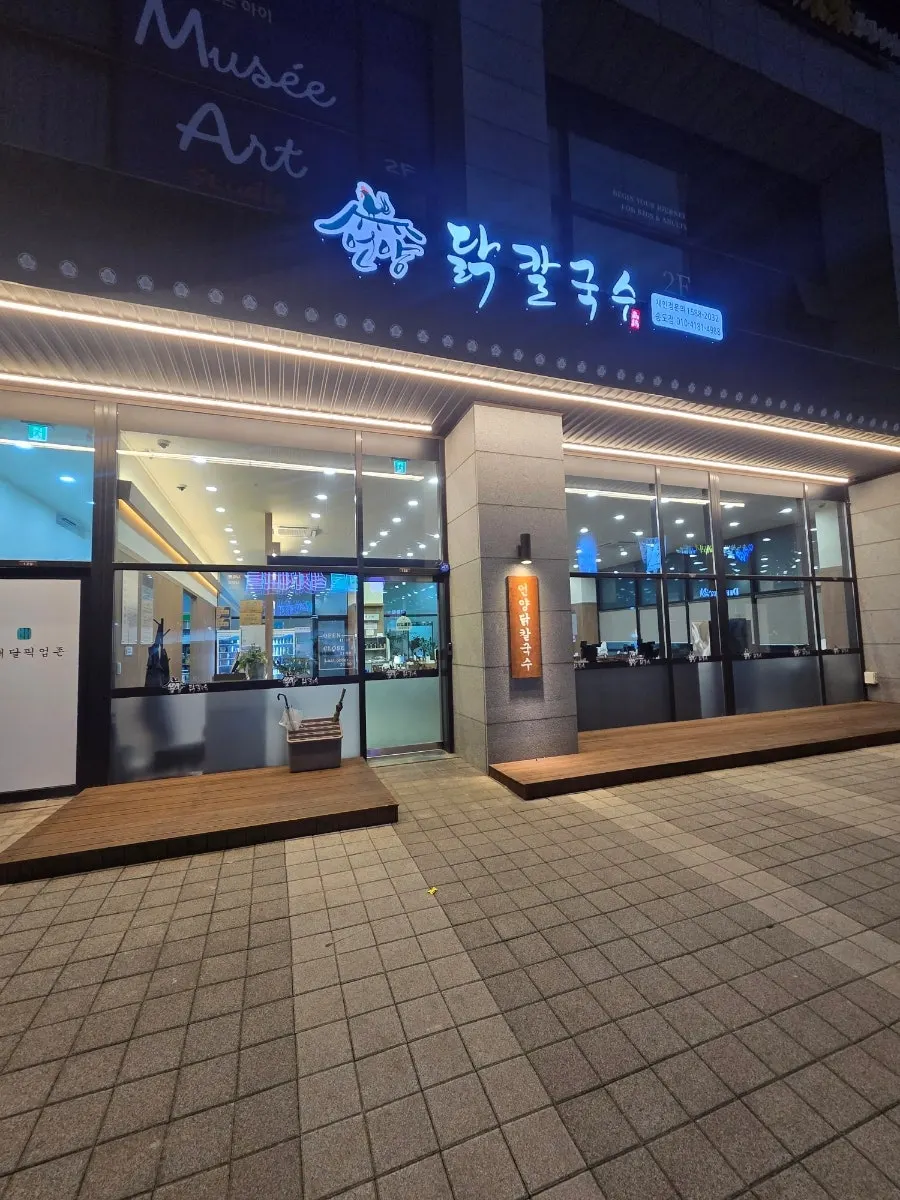
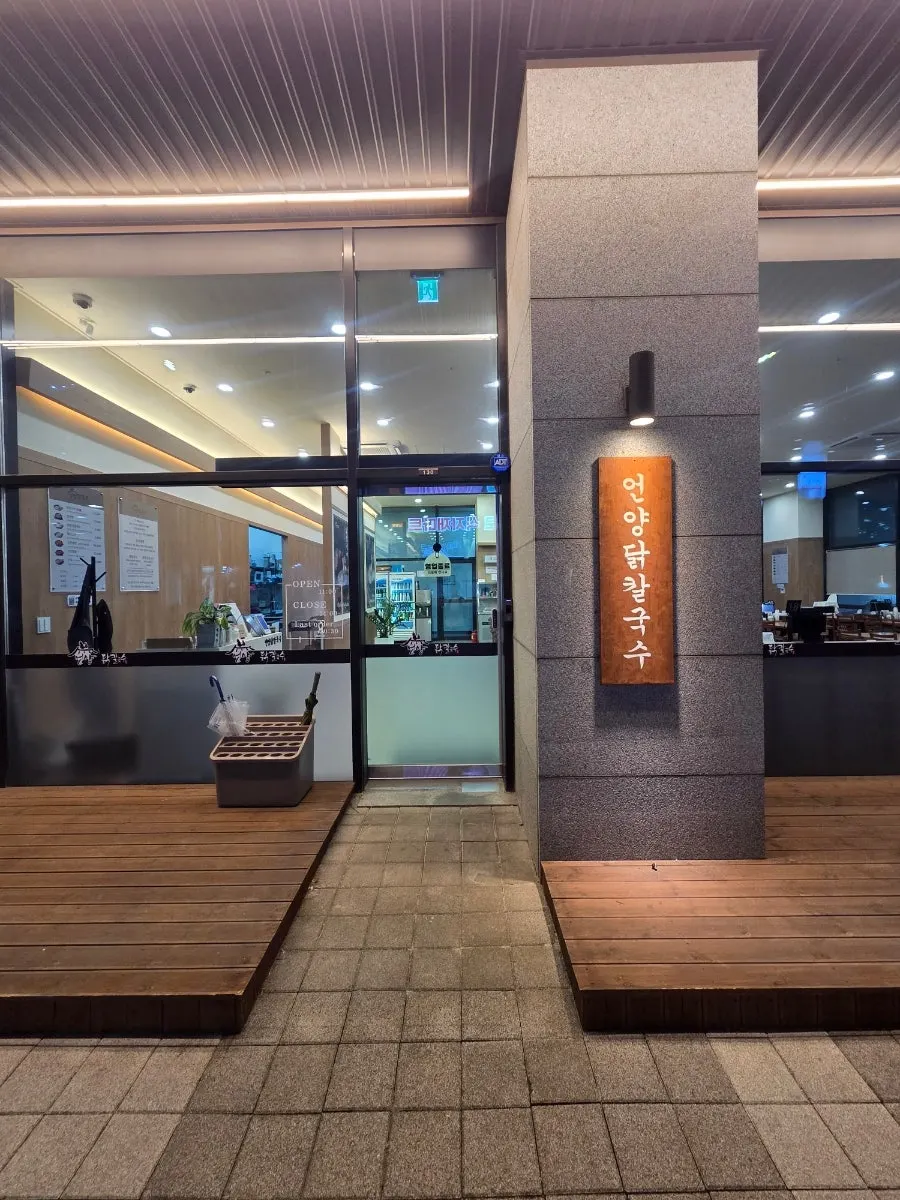
Inside Eonyang Dak Kalguksu in Songdo 1-gongu: space and seating
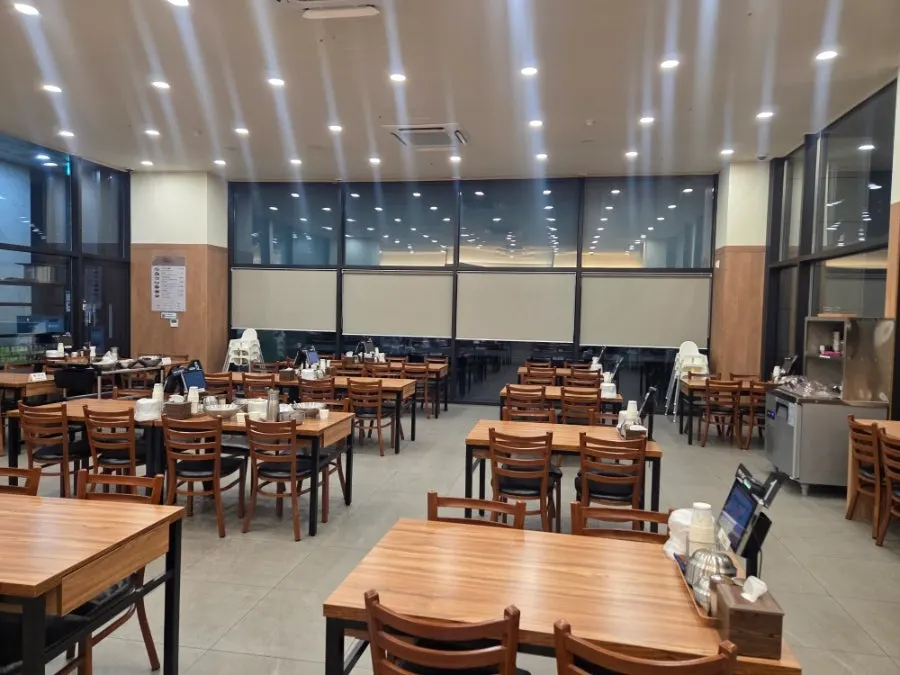
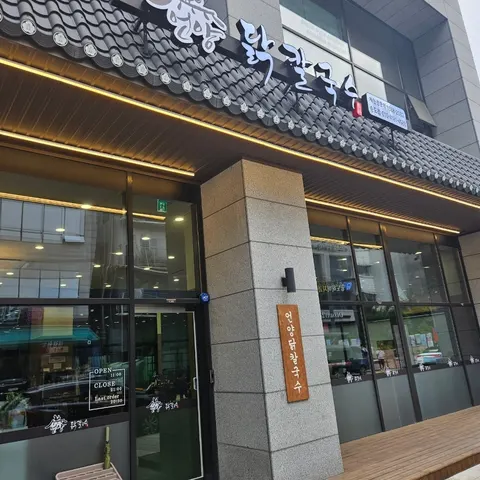
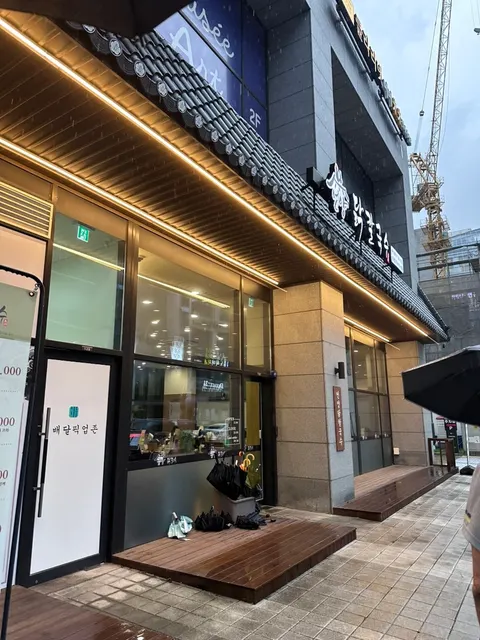
When we arrived, Eonyang Dak Kalguksu Incheon Songdo Branch turned out to be a fairly large restaurant. Plenty of tables inside, plus a row of window seats.
There were many tables big enough for groups, so it looked convenient for family dinners or larger gatherings too. The overall mood was bright and clean. Once seated, you can browse the menu and order right away on the tablet.
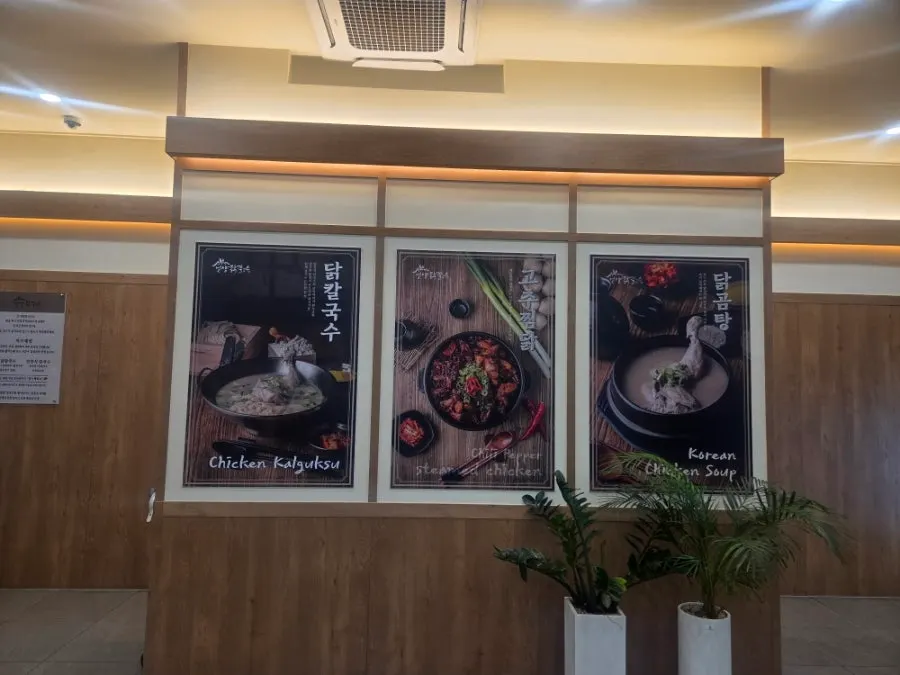
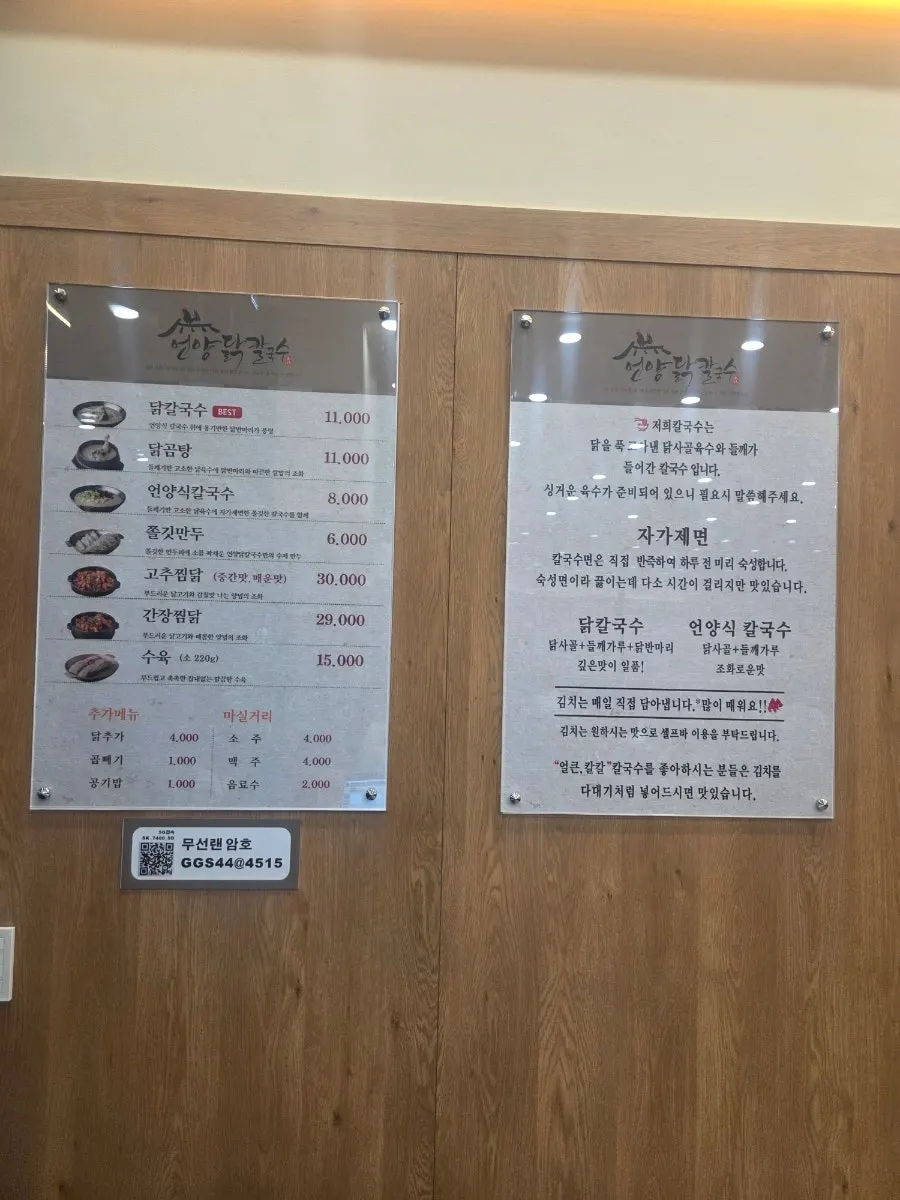
Menu and prices: chicken kalguksu 11,000 won, dak gomtang 11,000 won
The main menu items at Eonyang Dak Kalguksu are chicken kalguksu ₩11,000, dak gomtang ₩11,000, and Eonyang-style kalguksu ₩8,000. There's also chewy mandu, spicy braised chicken, soy-braised chicken, and boiled pork, so there are options beyond just a single bowl.
True to the reason we came, our family picked the chicken kalguksu and the dak gomtang.
Kimchi and pickled radish from the self-serve bar
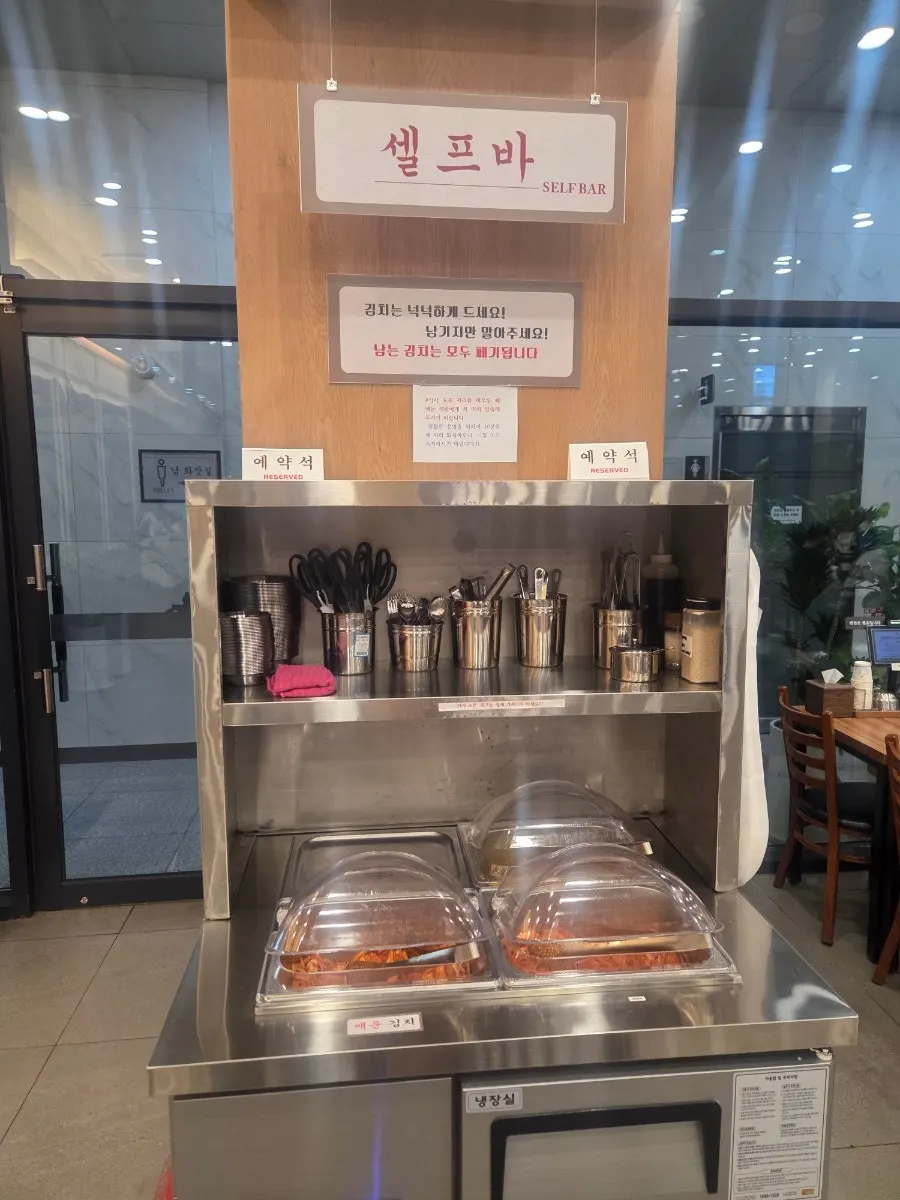
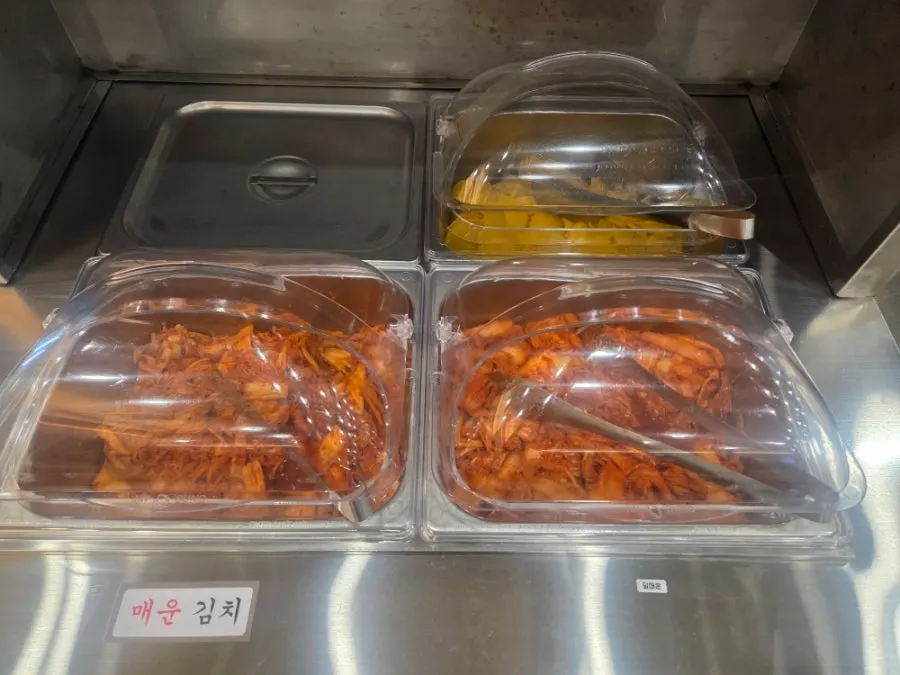
After ordering, we grabbed the side dishes first. Kimchi and pickled radish are set up at a self-serve bar — just take as much as you'll eat.
What amused me was the note about the kimchi. It's made in-house, and there's a sign asking guests to eat as much as they like but not to leave leftovers.
You end up eating a lot of kimchi on kalguksu days, don't you? This kimchi was fairly spicy, which made it great to alternate with the milky chicken broth. We piled some on the noodles, and also had a piece after some chicken.
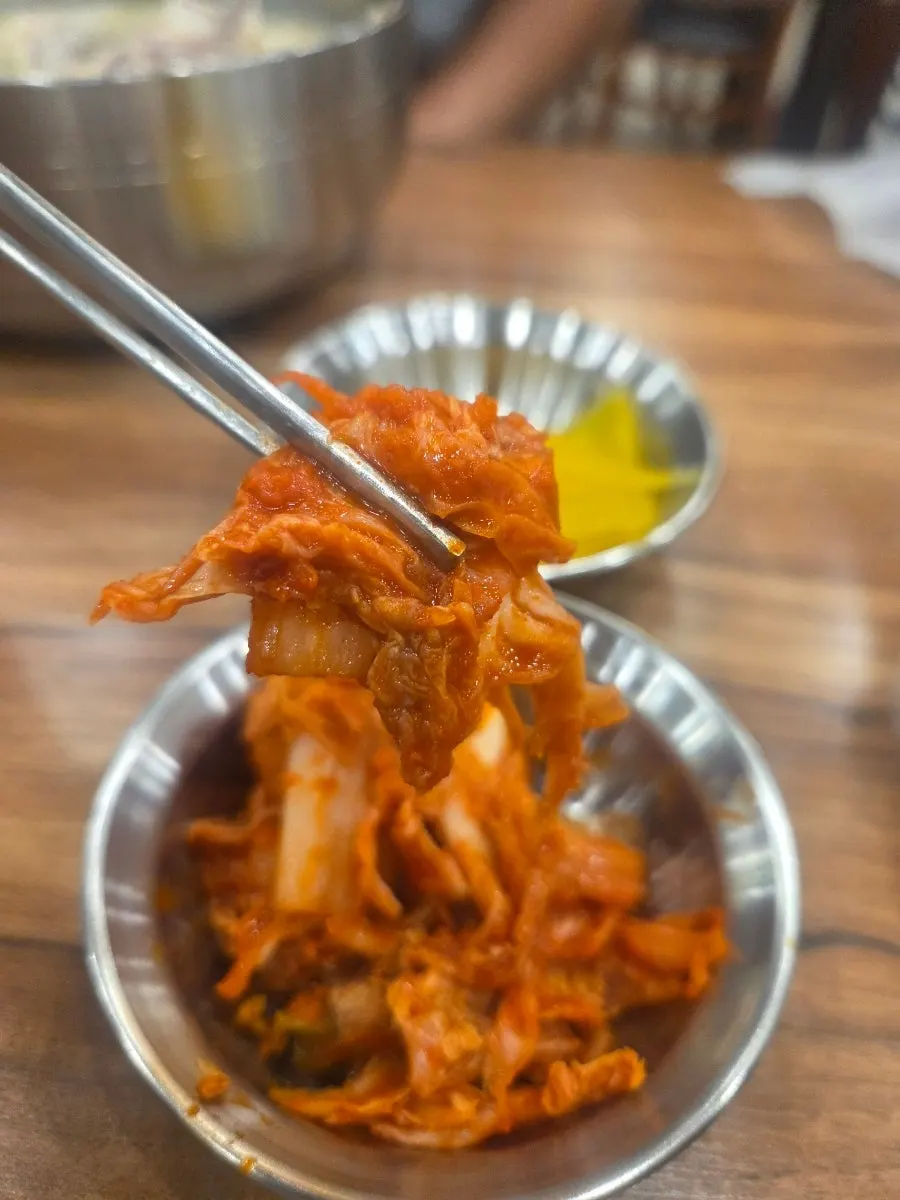
Since it's self-serve, you can casually go back for more if you run out.
Noodles rested a day ahead and boiled every 15 minutes
While waiting for the food, I noticed a separate sign on the table about the noodles. At Eonyang Dak Kalguksu, the noodles are hand-kneaded and rested overnight before use.
Rather than keeping a pot of noodles boiling continuously, they boil the rested noodles fresh every 15 minutes, so depending on when you order, there can be a short wait before the food arrives.
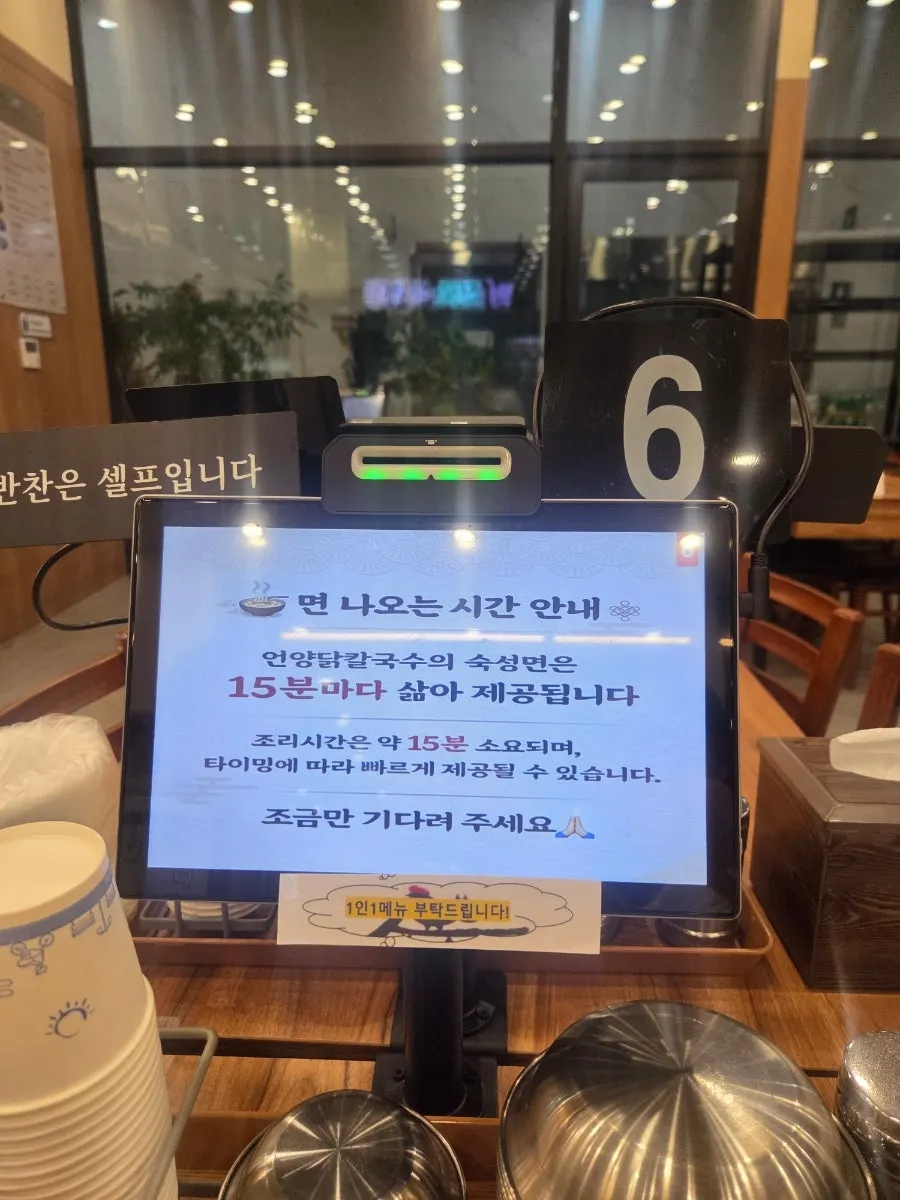
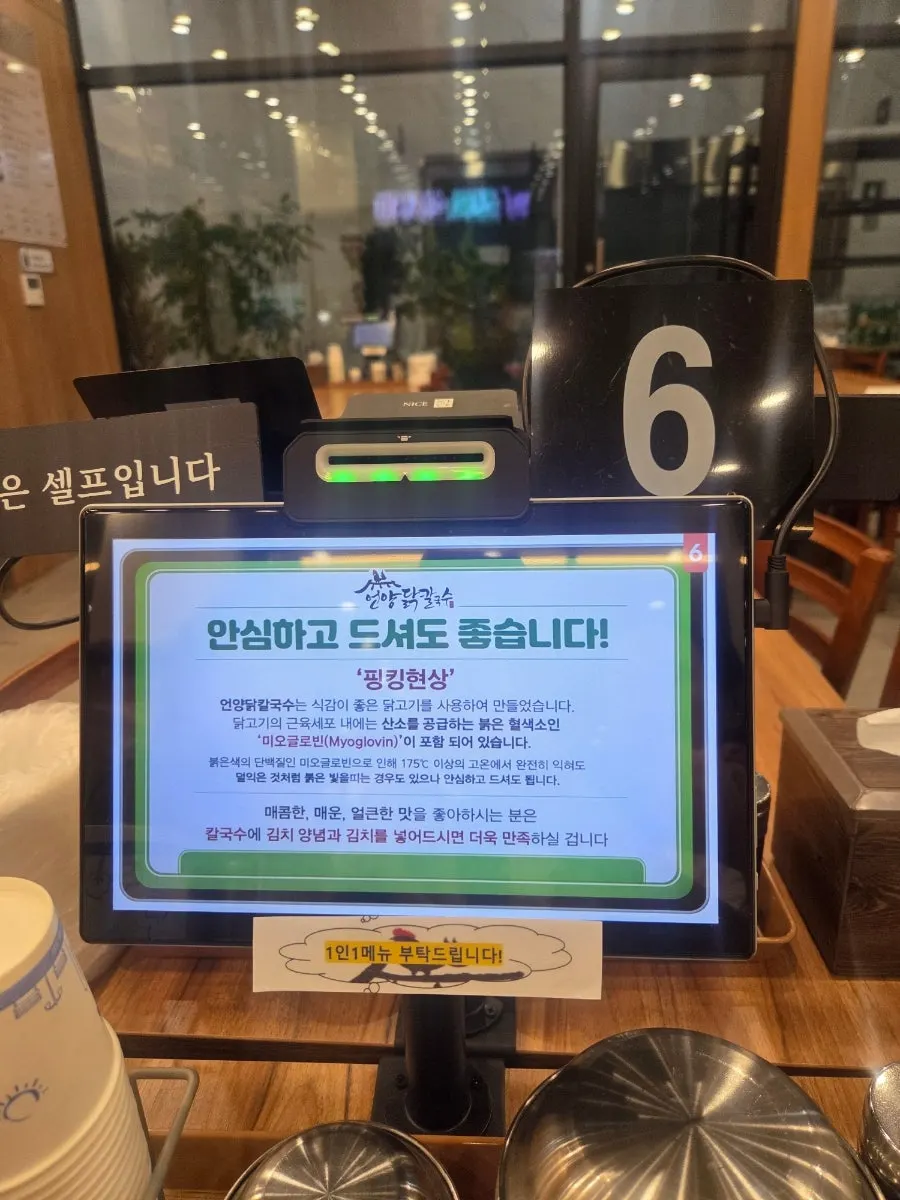
Cooking time was about 15 minutes. There was a reason this kalguksu place bothered to post a sign specifically about noodle-boiling times.
Even with a short wait, being able to eat noodles boiled to order rather than sitting pre-cooked felt like a distinguishing trait of this restaurant worth remembering.
What the chicken kalguksu with half a chicken looks like
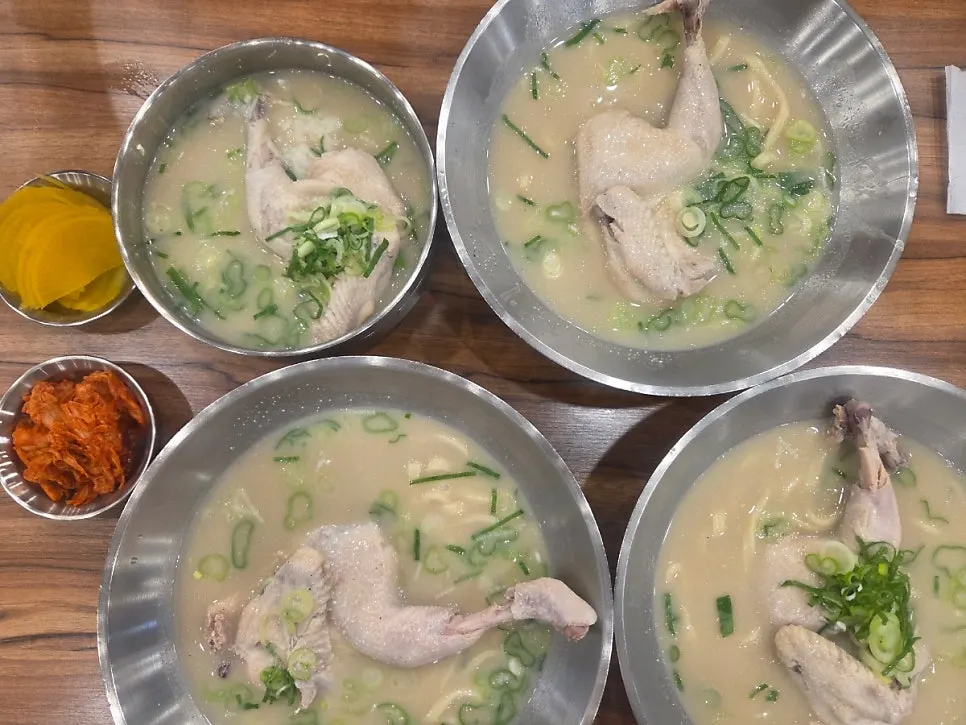
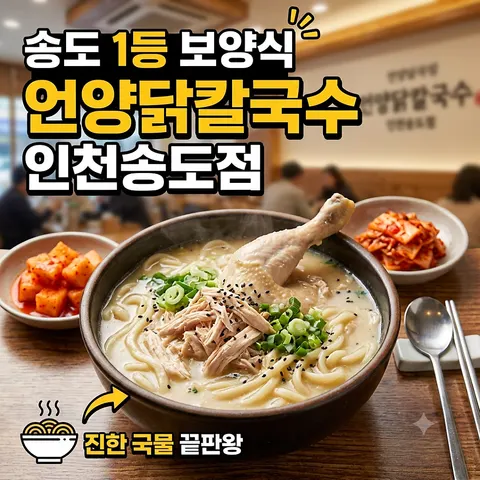
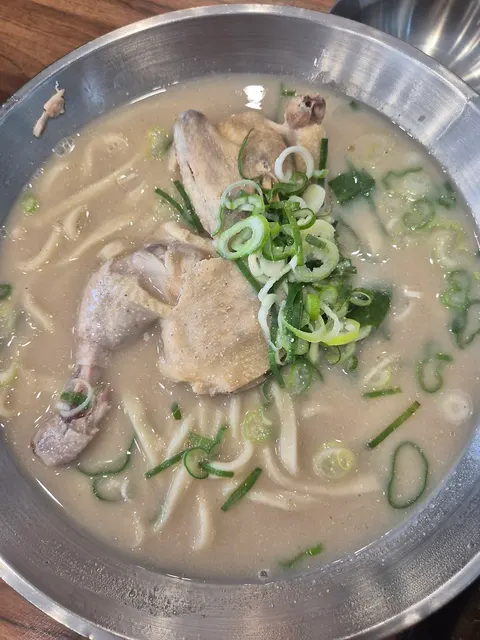
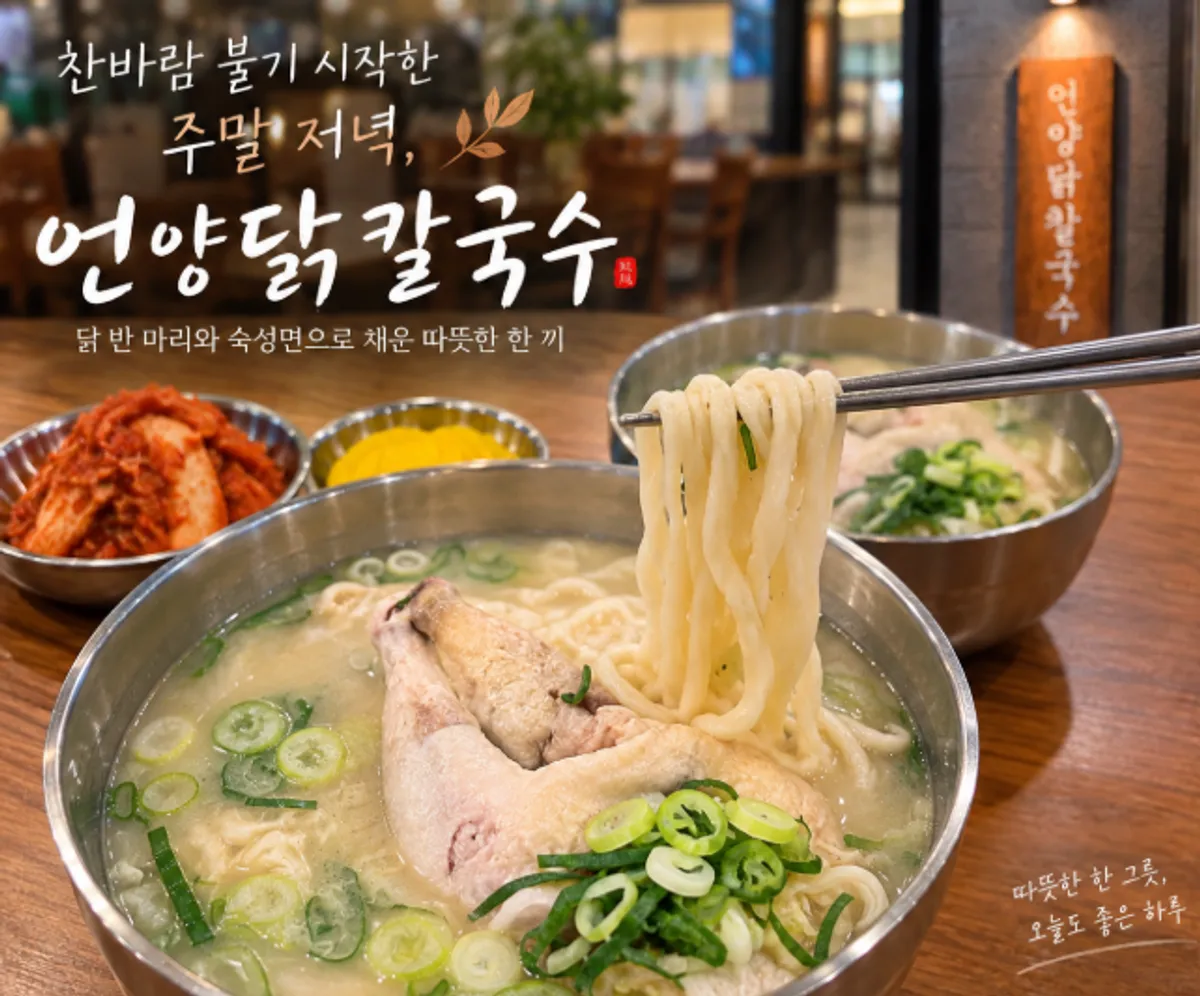
After a short wait, the chicken kalguksu arrived in a large bowl. On top of the milky chicken broth sat plenty of green onion, with half a whole chicken in the bowl.
Usually you'd picture chicken kalguksu with shredded chicken scattered on top like a garnish, but here the leg and wing come in whole.
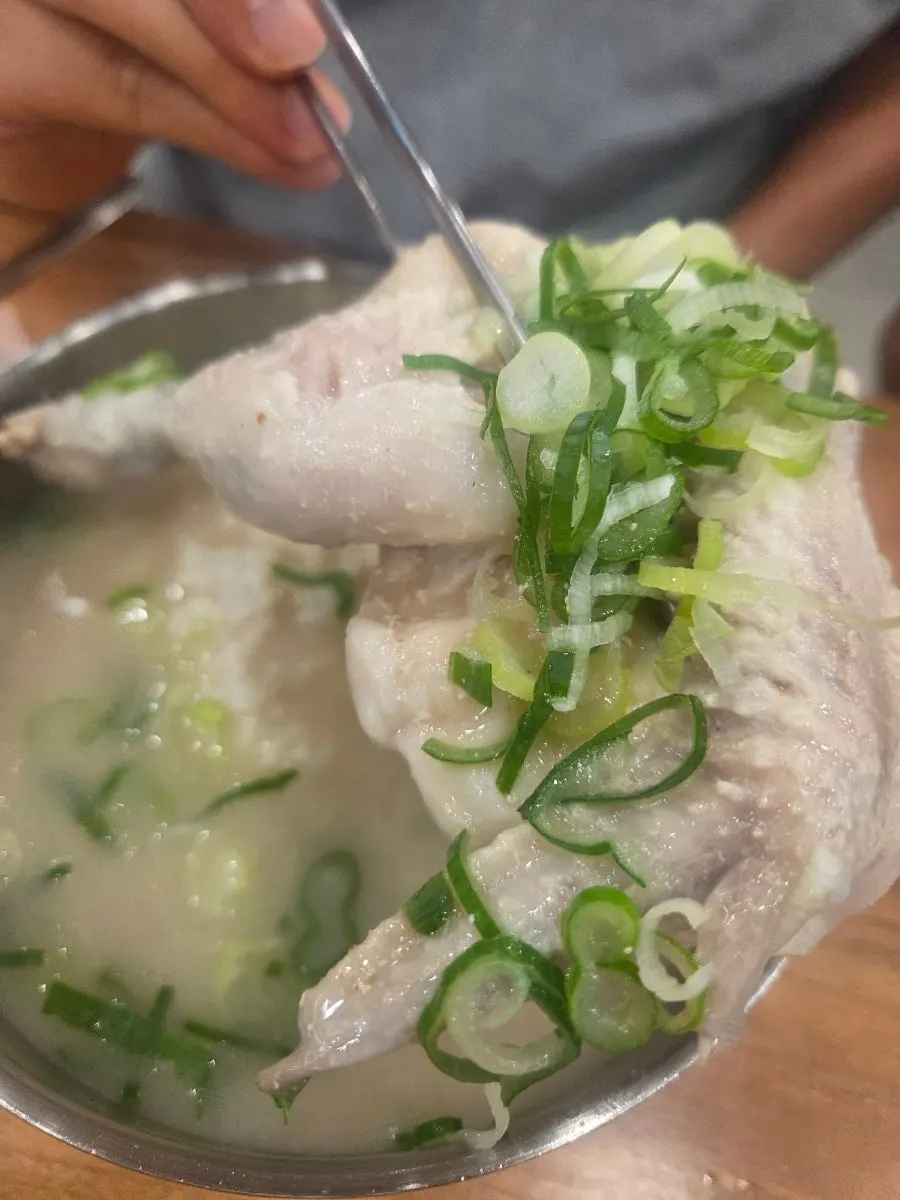
Lifting the chicken with chopsticks, you can really feel its size. There's plenty of meat to pick off, and you end up eating slowly — a bite of chicken, then a bite of noodles. There was also plenty of green onion to eat alongside the chicken.
Under the chicken: thick, day-rested noodles
After working through the chicken for a while, we got to the kalguksu noodles underneath. The hand-kneaded, overnight-rested noodles are quite thick.
You could see the thickness clearly when lifting them with chopsticks. In the mouth, they had more chew than a soft, easily-broken noodle. Sometimes we ate the noodles alone, sometimes with a bit of chicken on top.
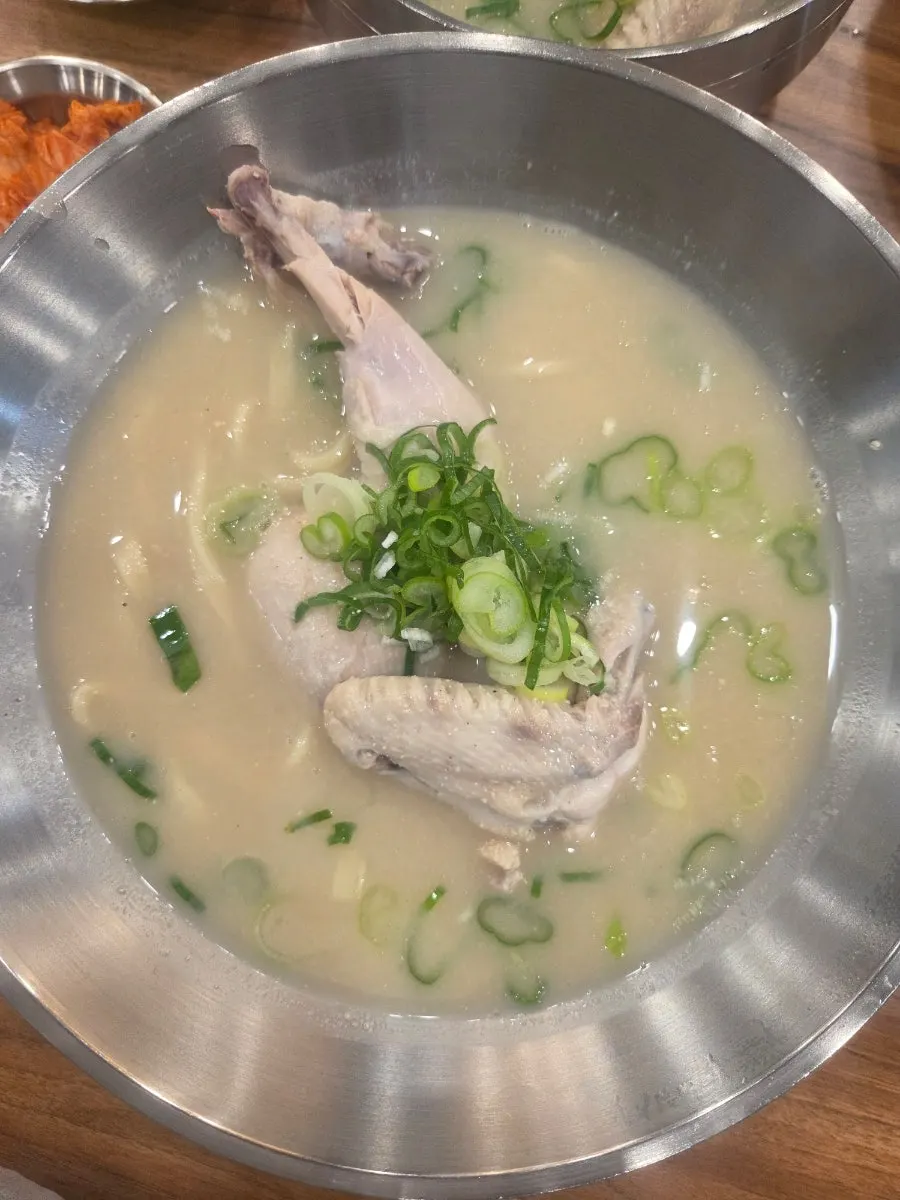
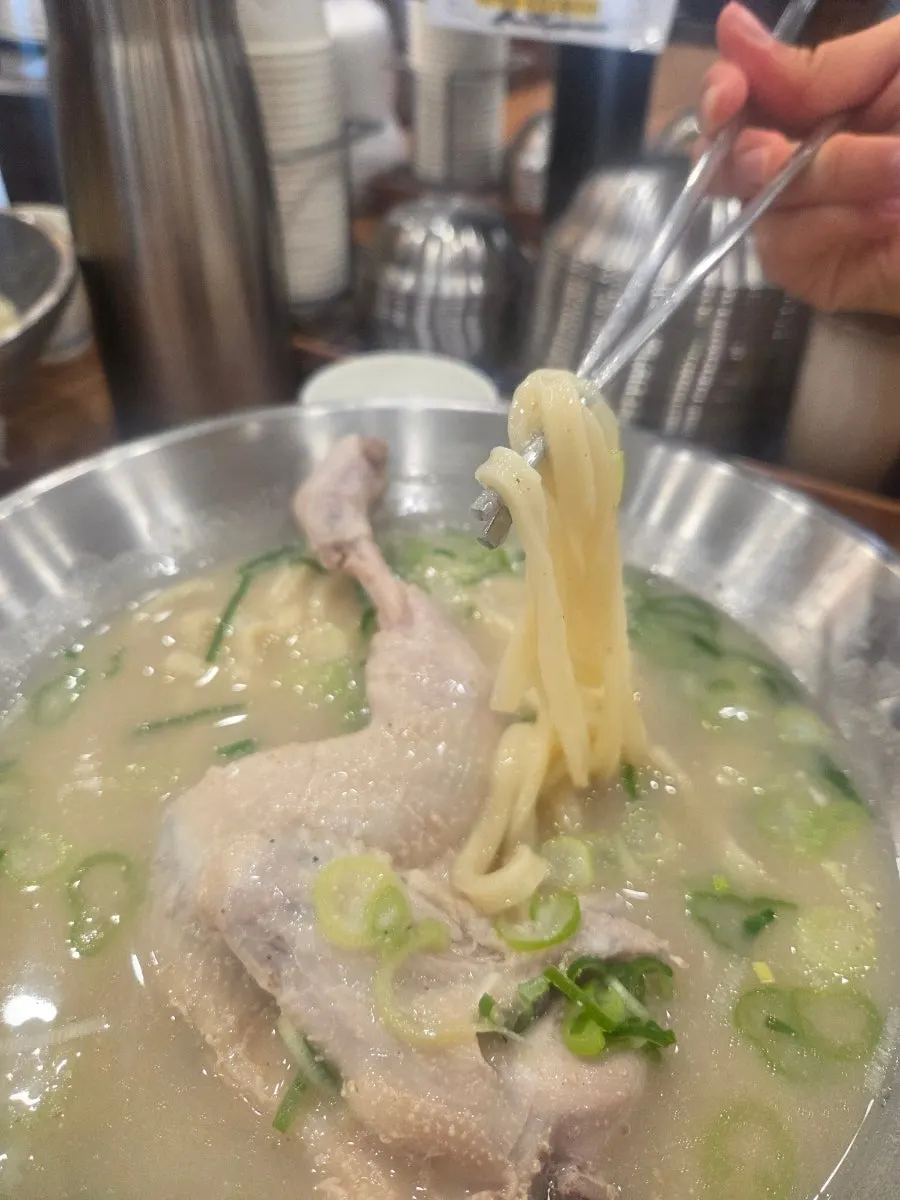
So the way you eat this chicken kalguksu is a bit different from an ordinary bowl of kalguksu. There's the fun of picking apart the chicken, and the noodles waiting underneath, so over the course of one bowl you alternate between chicken and noodles. The portion naturally feels bigger too.
Craving rice instead of noodles? Order the dak gomtang
We also ordered dak gomtang at the same table. It too comes with half a chicken in a milky chicken broth. The clearest difference between the chicken kalguksu and the dak gomtang is noodles versus rice.
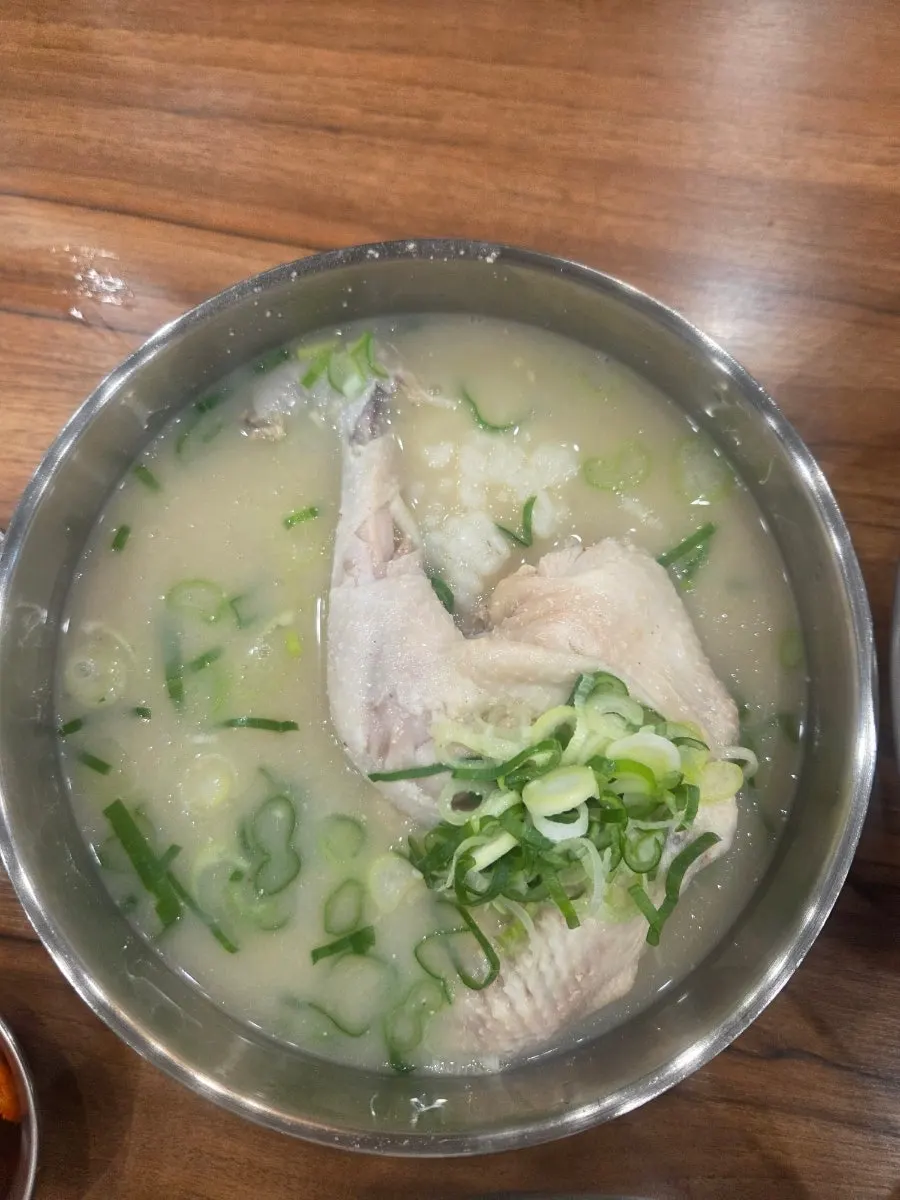
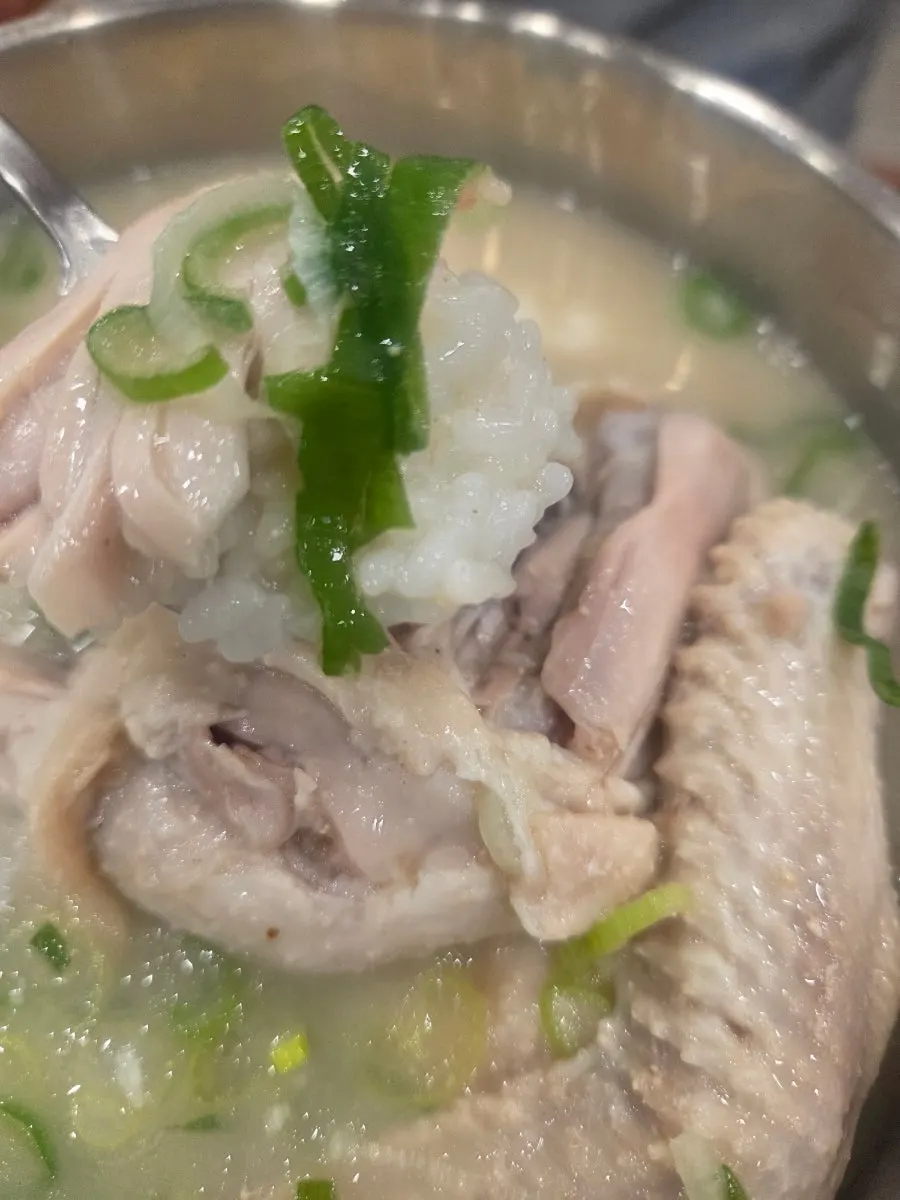
As in the photo, we piled plenty of chicken meat on top of the rice and spooned it up with green onion and broth. If you like eating rice and soup together, gukbap-style, the dak gomtang will suit you better. If you're visiting with a group like we were, splitting an order of chicken kalguksu and dak gomtang isn't a bad idea either.
Is it a noodle soup or a chicken dish?
Eating through it, an amusing thought crossed my mind. We came for chicken kalguksu, but the amount of actual chicken you eat turns out to be bigger than expected.
With a hefty half a chicken in the bowl, you start by picking the meat off, then move on to the broth, and then to the rested noodles. So the whole thing felt structured differently from a kalguksu that's mainly about filling up on noodles.
Chicken + chicken broth + rested noodles.
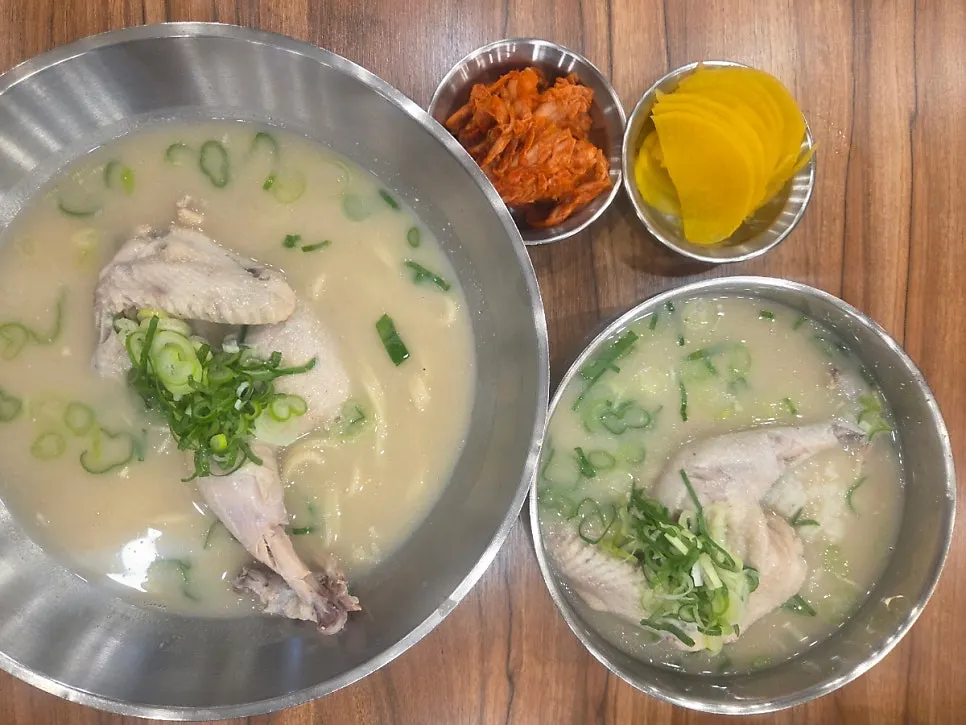
It was a menu with three fairly distinct elements in one bowl. Dak gomtang essentially swaps in rice for the rested noodles. Coming as a family, it worked well for ordering to fit both noodle lovers and rice lovers.
A weekend dinner that follows the season in Songdo
After a day spent on separate schedules, the four of us only sat down at one table once evening came. Just a few days ago, choosing dinner would have meant thinking of naengmyeon (cold noodles) or something cool first — now we were sitting in front of hot soup instead.
I think you notice the seasons changing at the table before you notice it on the calendar.
Picking chicken off the bone piece by piece, pulling up the thick noodles, mixing rice into the broth — the portions were generous enough for four hungry people on a weekend evening.
Each dish had a clear identity of its own: the chicken kalguksu with half a chicken, the noodles kneaded and rested overnight and boiled fresh every 15 minutes, and the dak gomtang you eat with rice.
Now that the cold wind has started blowing morning and evening, our own dinner menu at home has quietly shifted toward warm soup too.
Where it is
160-15 Haedoji-ro, 1st floor, units 129-132, Yeonsu-gu, Incheon, South Korea인천광역시 연수구 해돋이로 160-15 1층 129-132호