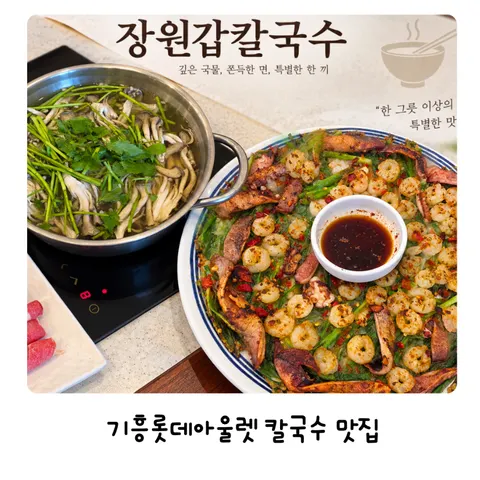
Yongin Korean restaurant for 5-minute fresh noodles: Jangwongap
In short
Jangwongap Kalguksu Yongin Giheung Branch is a Korean restaurant in Yongin, Gyeonggi, serving shabu kalguksu and fresh noodles. Before visiting IKEA, I tried the ₩44,000 live-abalone shabu kalguksu for two, with noodles that change texture by the minute and free perilla-oil kkakdugi fried rice. Verdict: worth the wait for chewy noodles and a clean, refreshing broth.
Good to know
- Hours
- Daily 10:30 AM–9:00 PM
- Break time
- 4:00–5:00 PM
- Parking
- Available
- What we ordered
- Live abalone shabu kalguksu for 2, ₩44,000
- Kalguksu without meat
- ₩10,000 per person
- Broth choices
- White, spicy, or mala
- Wait time
- About 15 minutes
- Complimentary item
- Perilla-oil kkakdugi fried rice
as written by the visitor on Sep 11, 2026
Parking and a weekend wait before IKEA
Jangwongap Kalguksu Yongin Giheung Branch (장원갑칼국수 용인기흥점) is right near the entrance to Lotte Outlet and IKEA in Giheung-gu, Yongin. Lotte Outlet is about a three-minute drive away and IKEA about five minutes, so it is a great spot for lunch before weekend shopping. I went for lunch before visiting IKEA on Saturday, and was startled to see the huge parking lot completely full, haha. Thankfully, there was a parking attendant, so it was not complicated and I could park right away.

Jangwongap Kalguksu seems to be getting more and more famous as a great kalguksu (knife-cut noodle soup) spot in Giheung-gu, Yongin. When I came at a similar time before, it was not nearly this busy, but perhaps word has spread because there seem to be more people every day, haha.
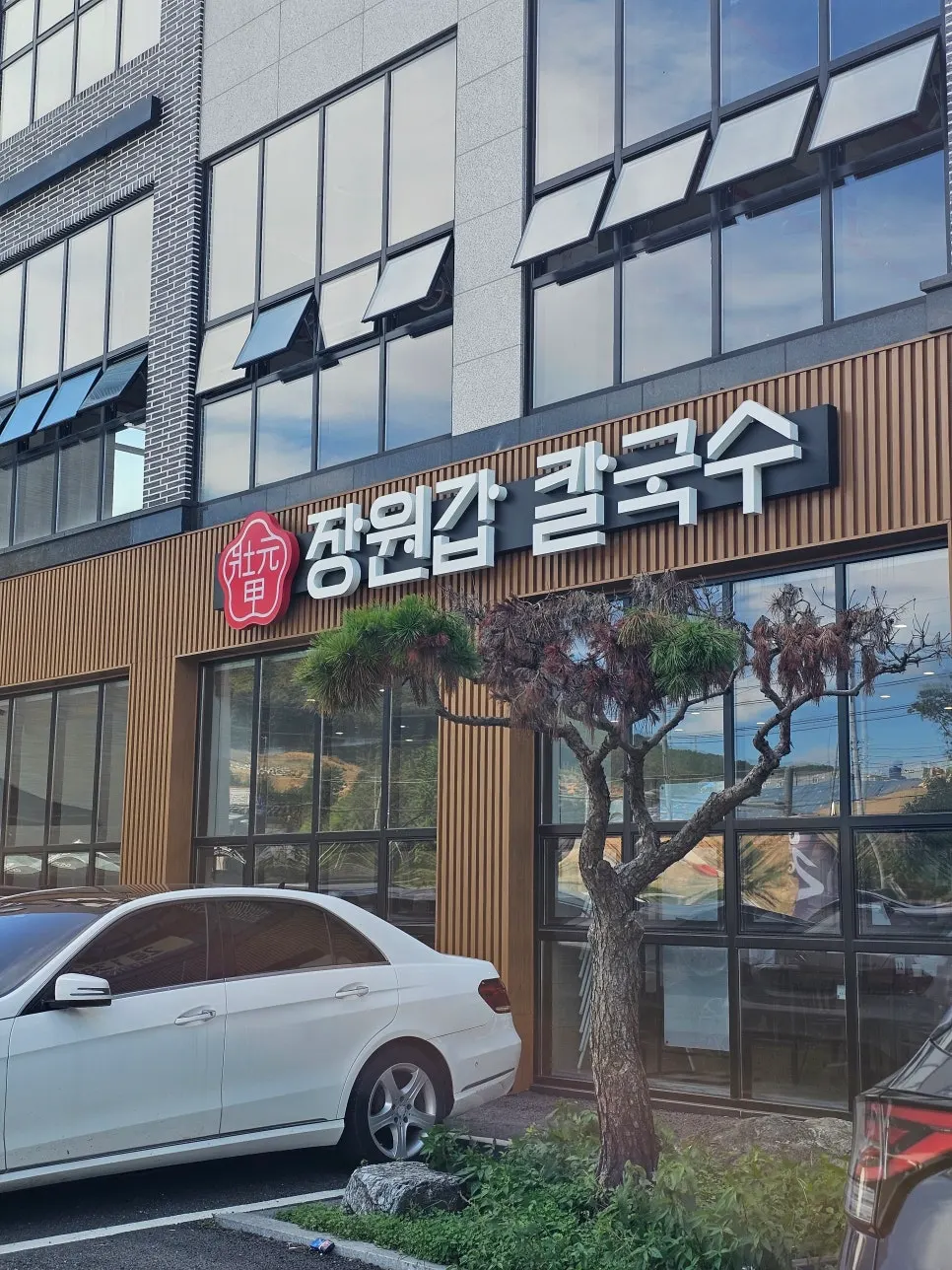
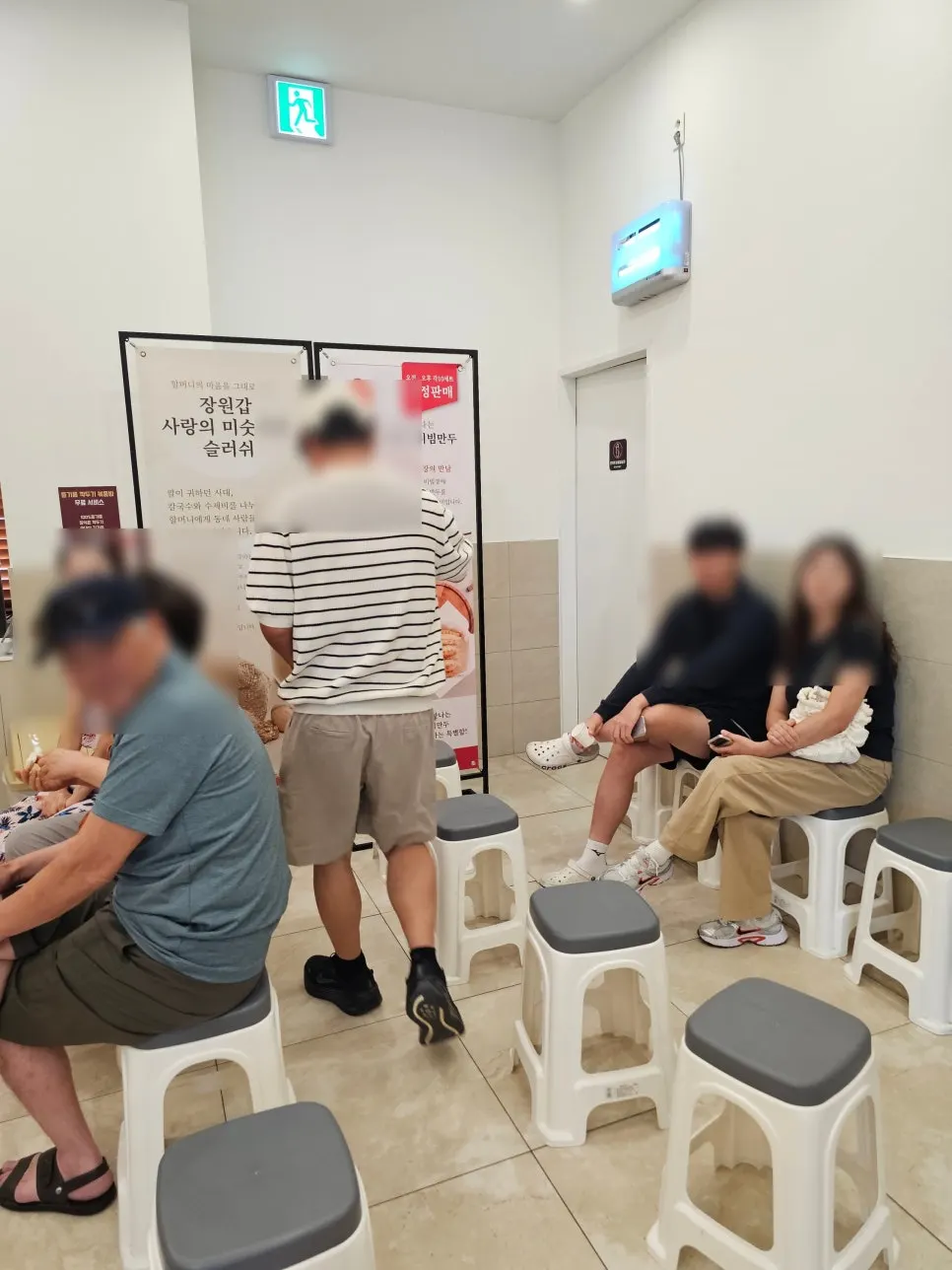
There were five parties ahead of me, and customers kept arriving behind me to join the wait, so it has become a truly popular spot.
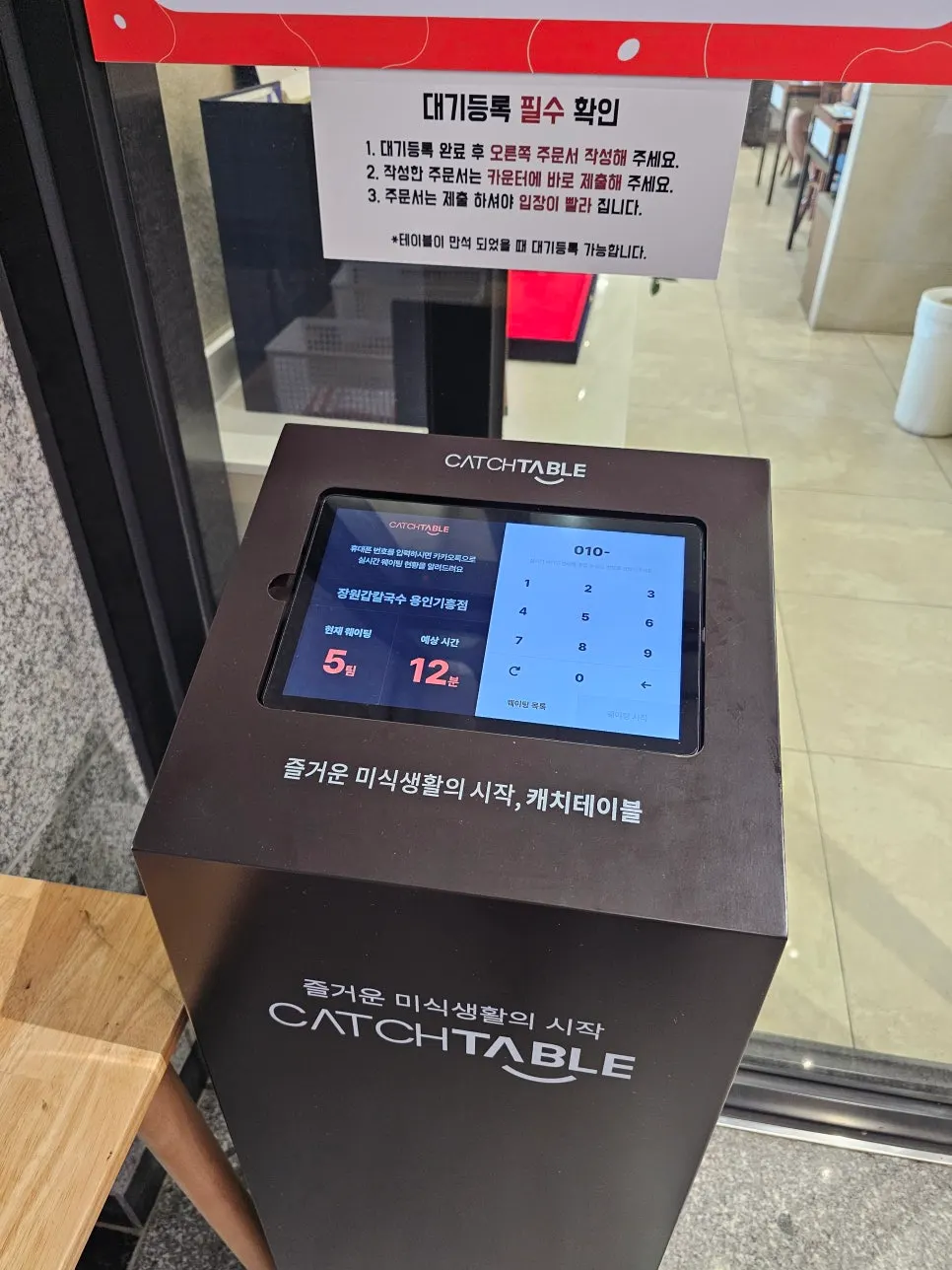
I liked that you can fill out your order while waiting, so the food comes right out once you sit down. The waiting area has misutgaru (mixed-grain powder) slushies for dessert, old-fashioned snacks, and coffee, so I could snack, drink, and relax comfortably while I waited.
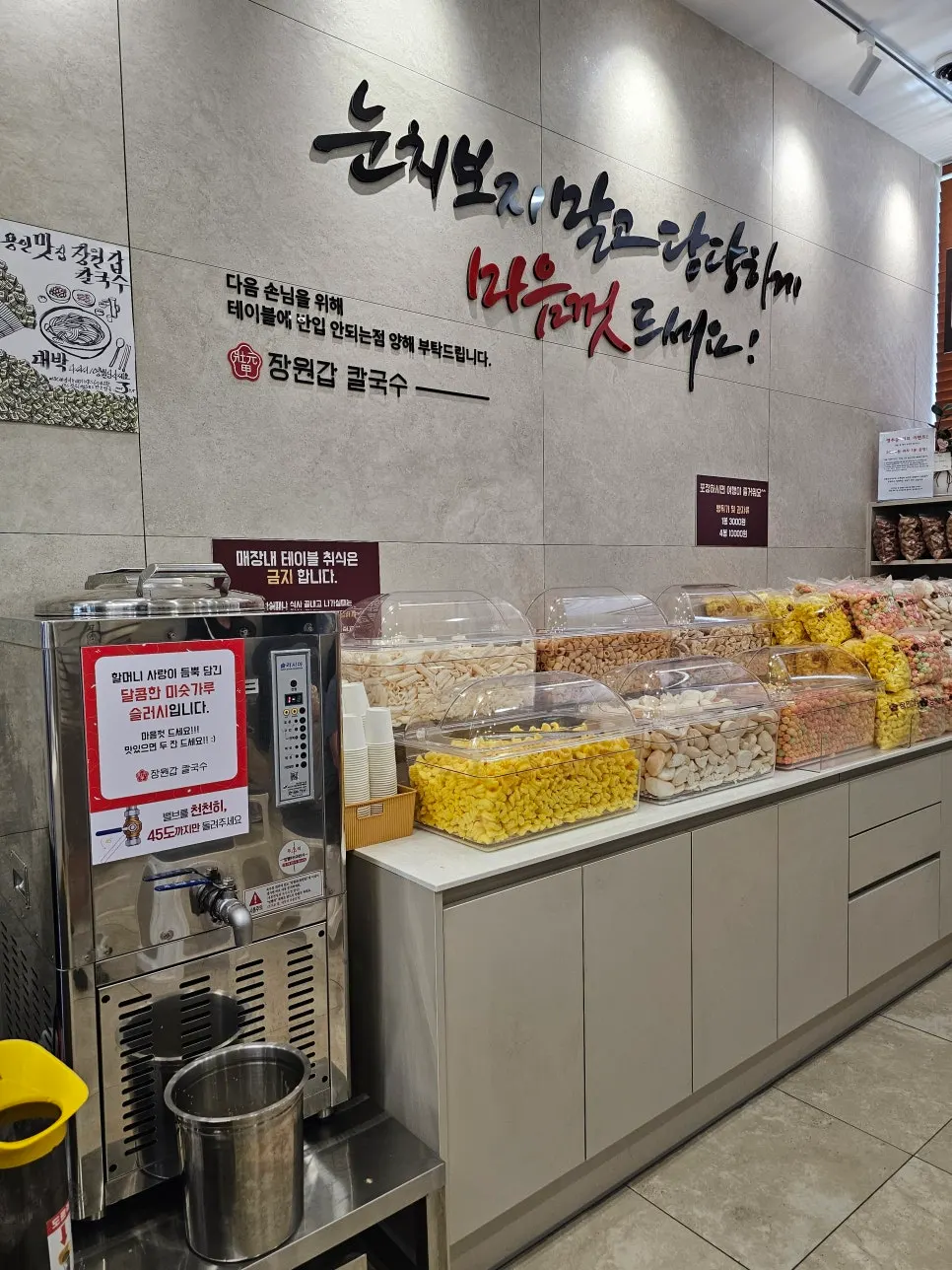
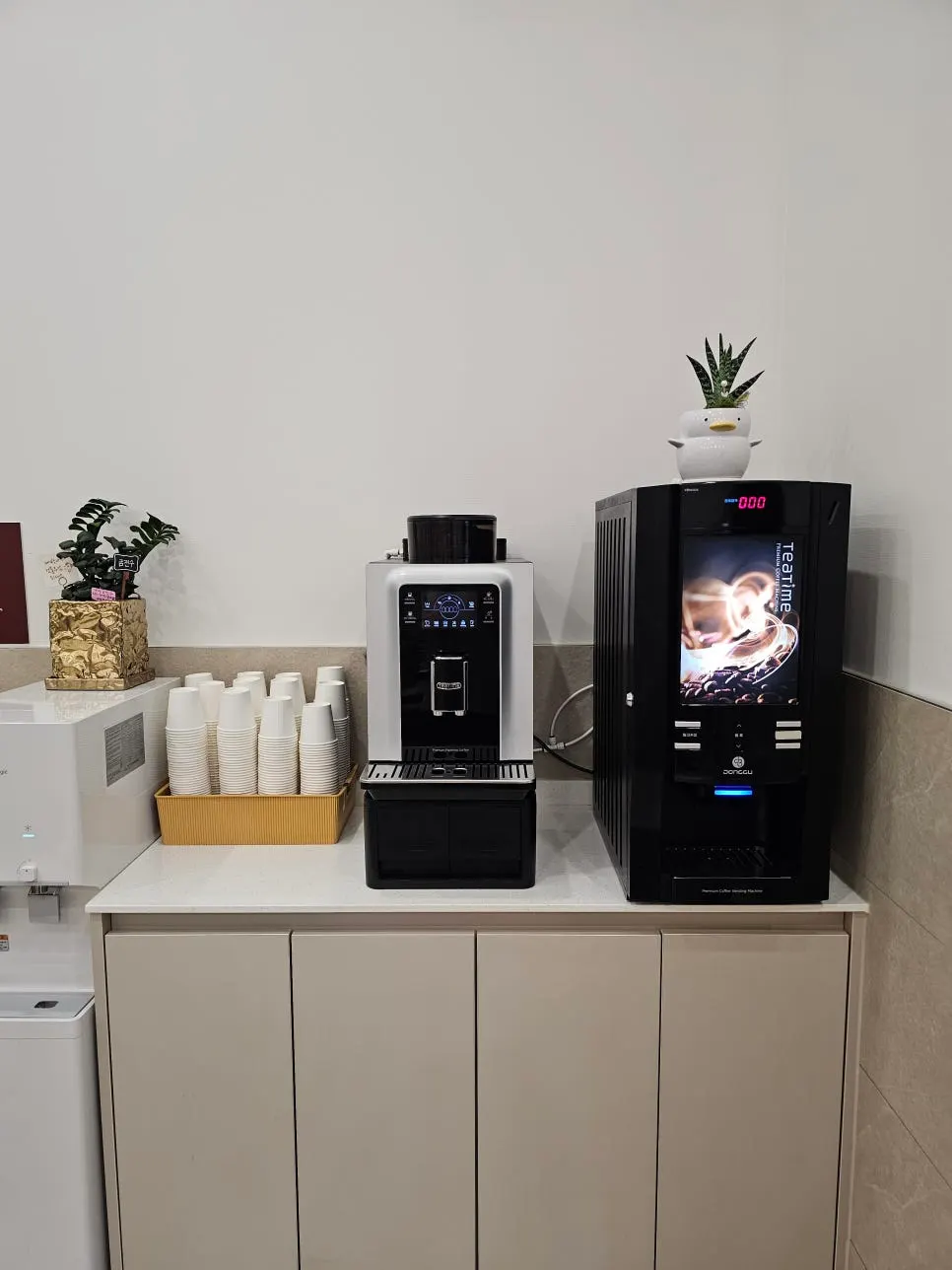
While sitting there, I noticed a plaque recognizing a Korean food master and a note about Jangwongap's own principles. It made me think that this place became popular because it uses good ingredients.
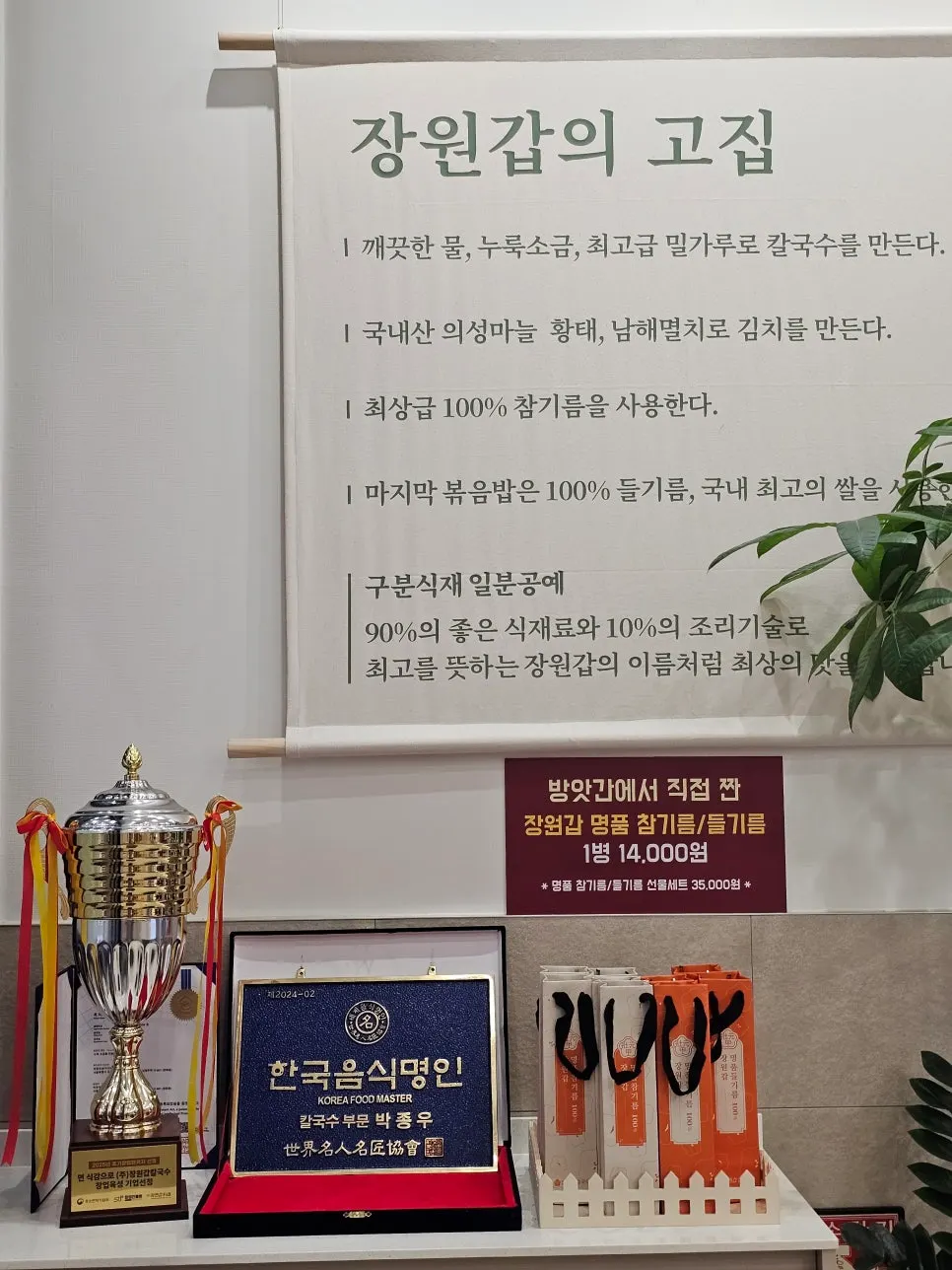
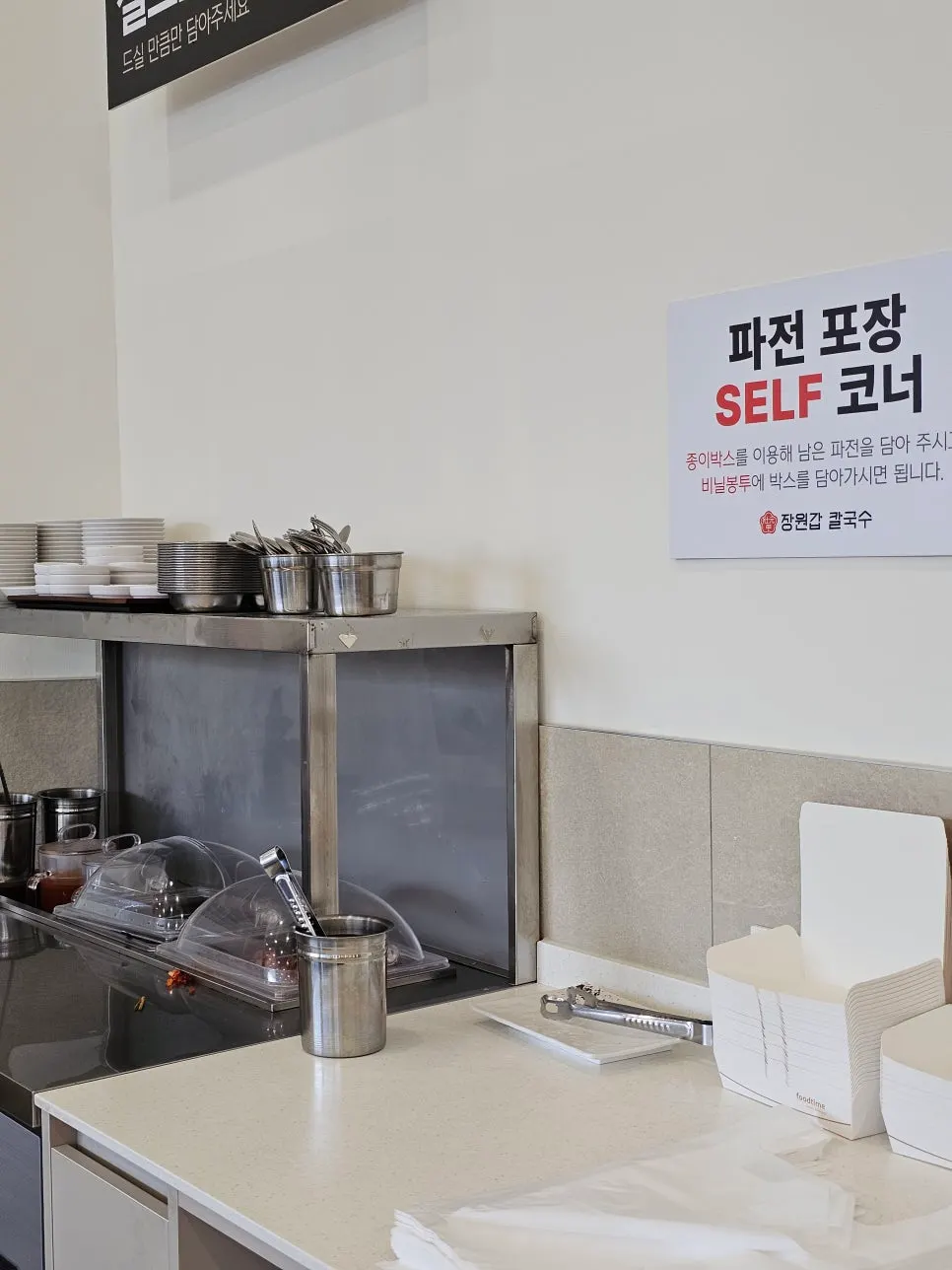
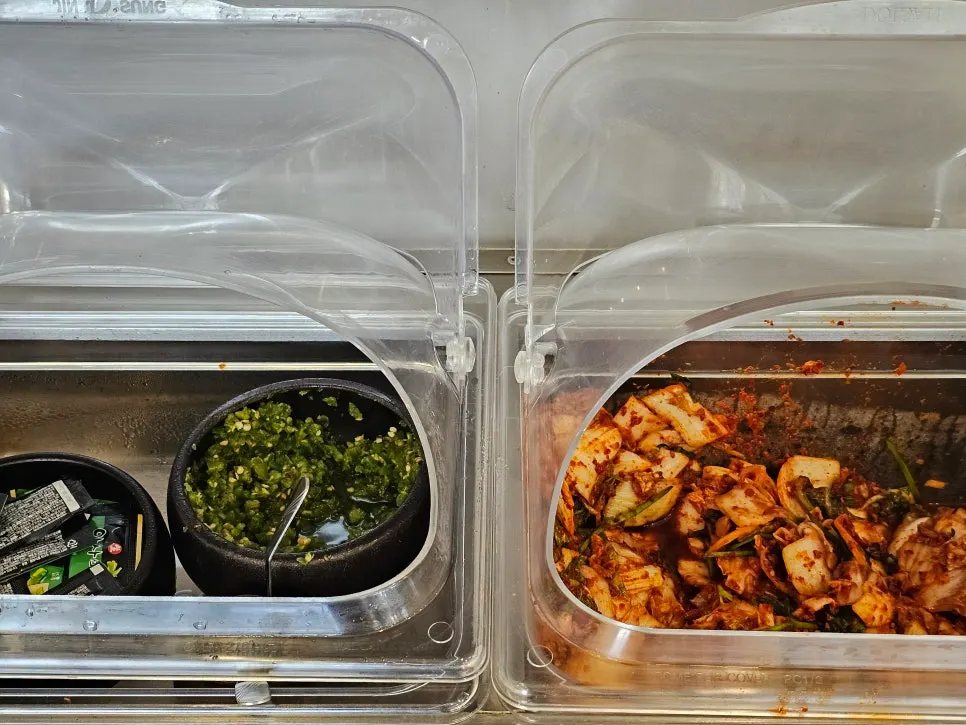
We got in after waiting about 15 minutes. Inside, there were really so many people, from families with children to older diners around my parents' age. The restaurant is quite spacious, with high ceilings and full-height windows that give it an open feel. Some restaurants like this echo with voices, but this one did not, so it was comfortable to eat. At the self-service corner, there is a space to pack up leftover pajeon (Korean savory pancake), along with kimchi, broth, and anything else you might need.
Ordering live abalone shabu kalguksu
Once seated, I checked the menu and found that the peach bibim mandu, spicy mixed dumplings with peach, was already sold out.
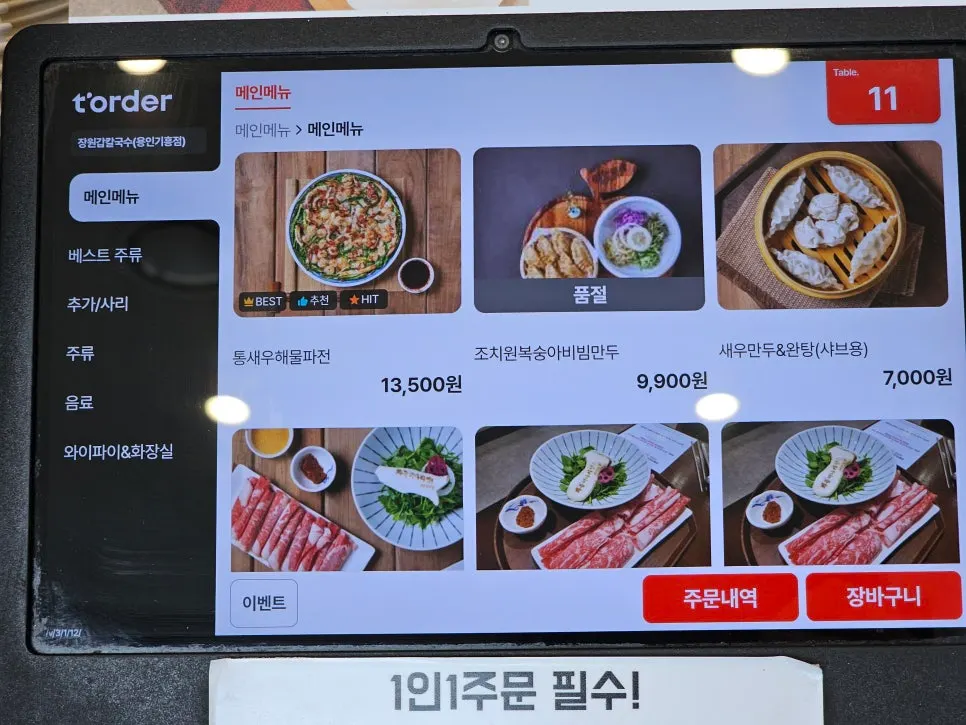
From the popular whole-shrimp seafood pajeon to the shabu kalguksu, there are three broth options: white, spicy, and mala. The kalguksu comes with either chadol minari ssam, brisket and water-parsley wraps, or live abalone, so you can order to suit your taste. Kalguksu without meat is ₩10,000 per person, which felt like great value too.
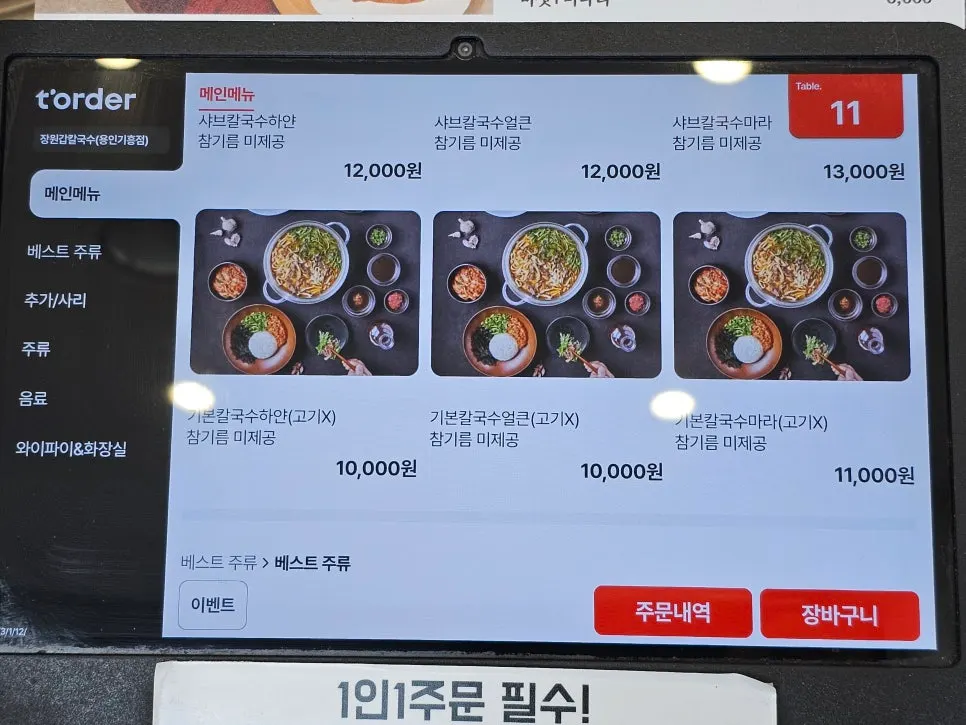
You can also choose extra meat such as deungbeomi assorted beef, chami assorted beef, beef brisket, or sirloin, and add abalone as you like.
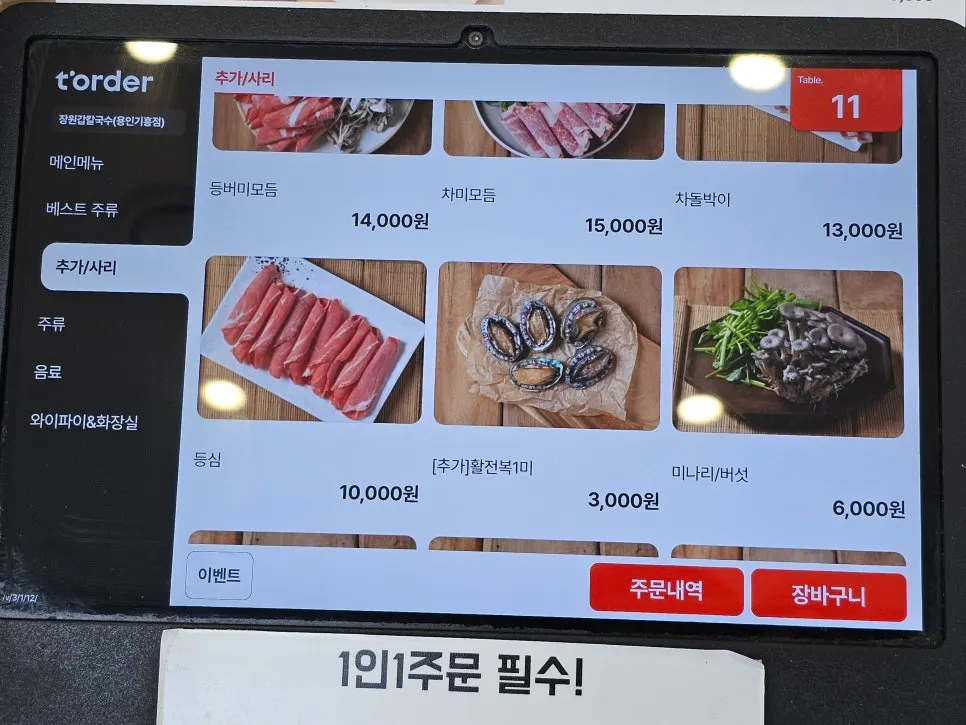
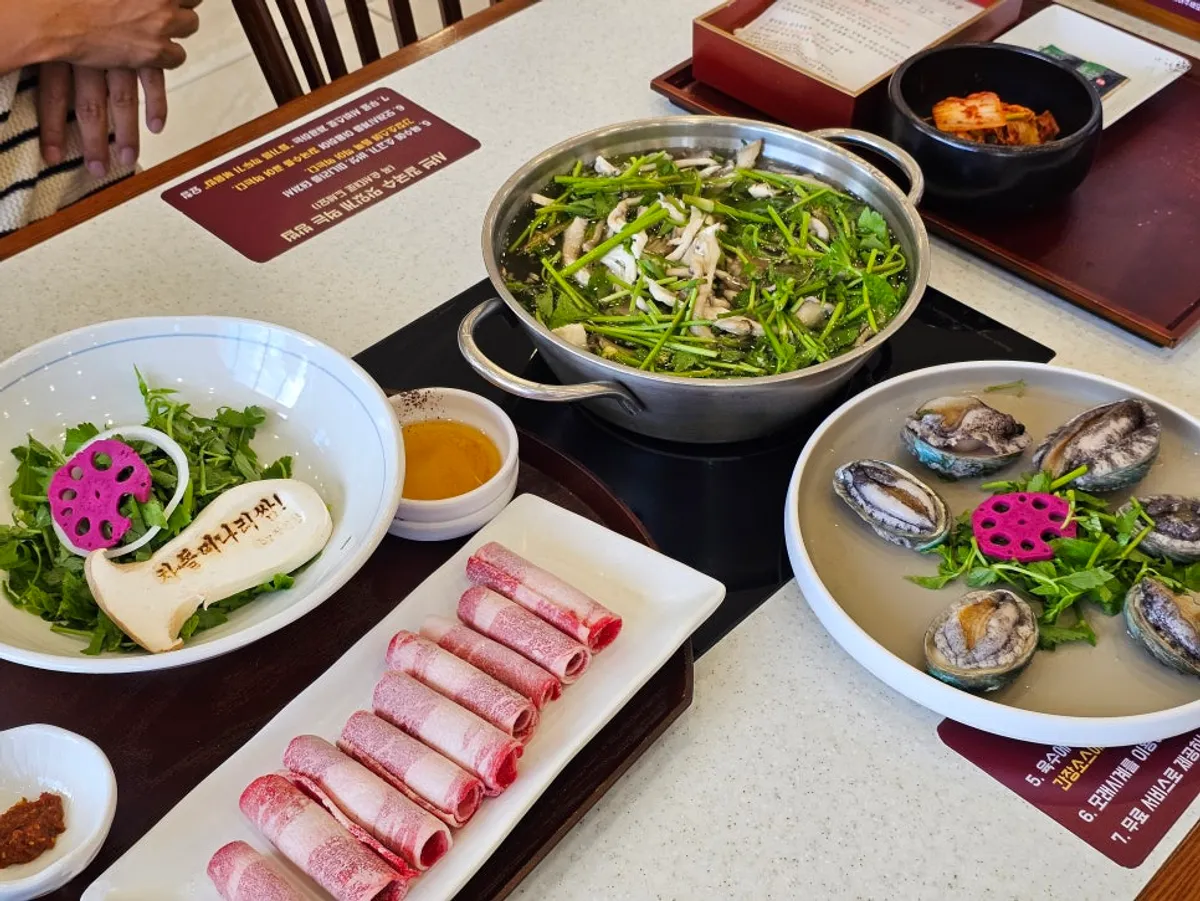
We ordered the live abalone shabu kalguksu for two at ₩44,000.
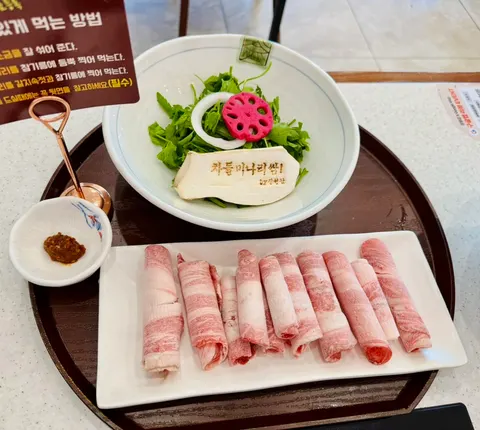
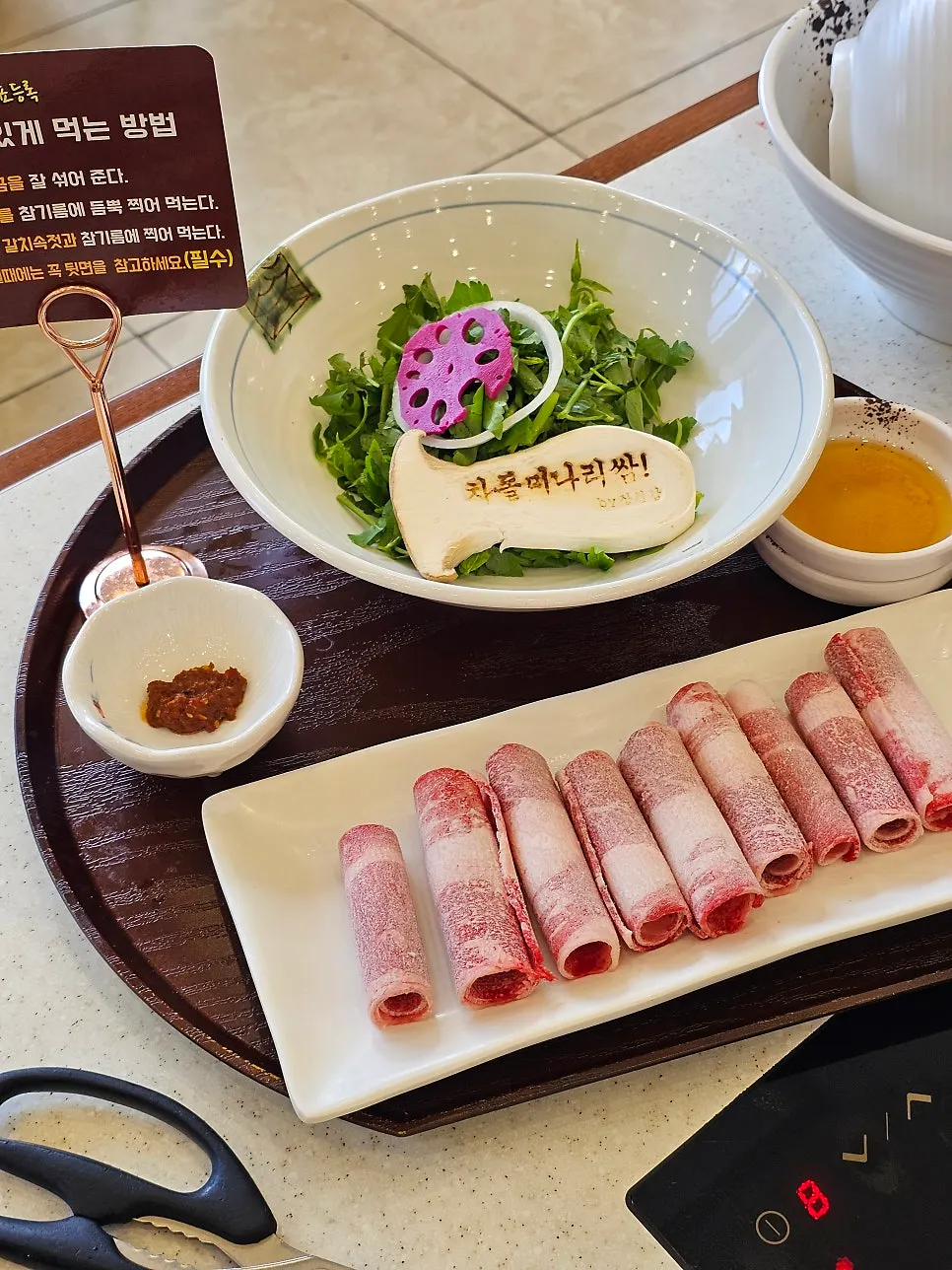
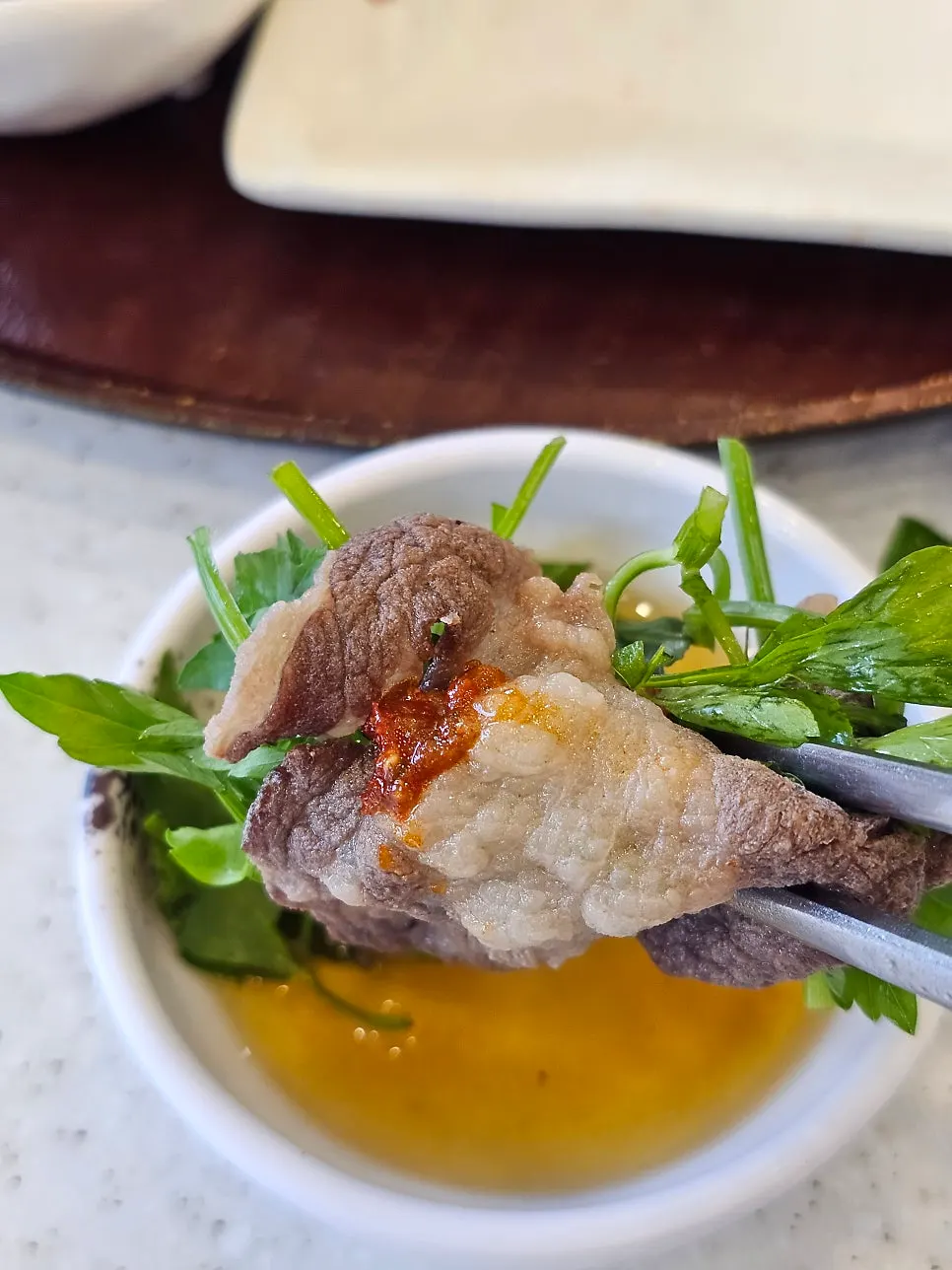
It comes with chadol minari ssam, and they say to wrap the cooked meat with the fresh minari (water parsley). But did you see how fresh that brisket looked? It had been such a long time since I had seen brisket this fresh and appetizing at a shabu kalguksu restaurant.
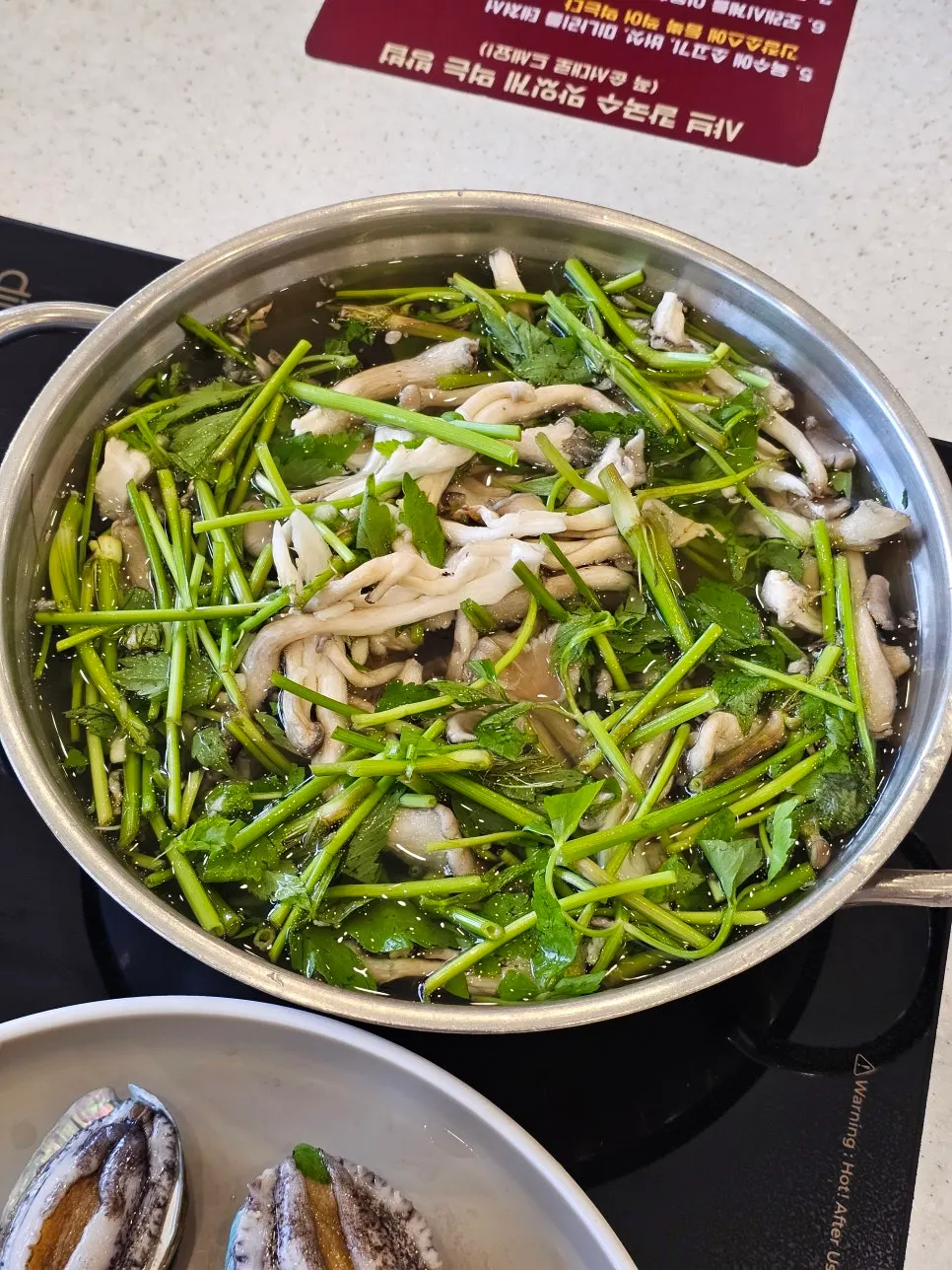
We ordered the white broth, so it was clear. It was packed with mushrooms and minari, enough that there was really no need to add more vegetables.
These were live abalones, cleaned perfectly. They were so fresh that I could see them all moving. One of my favorite things at Jangwongap Kalguksu is its Uiseong garlic kimchi.
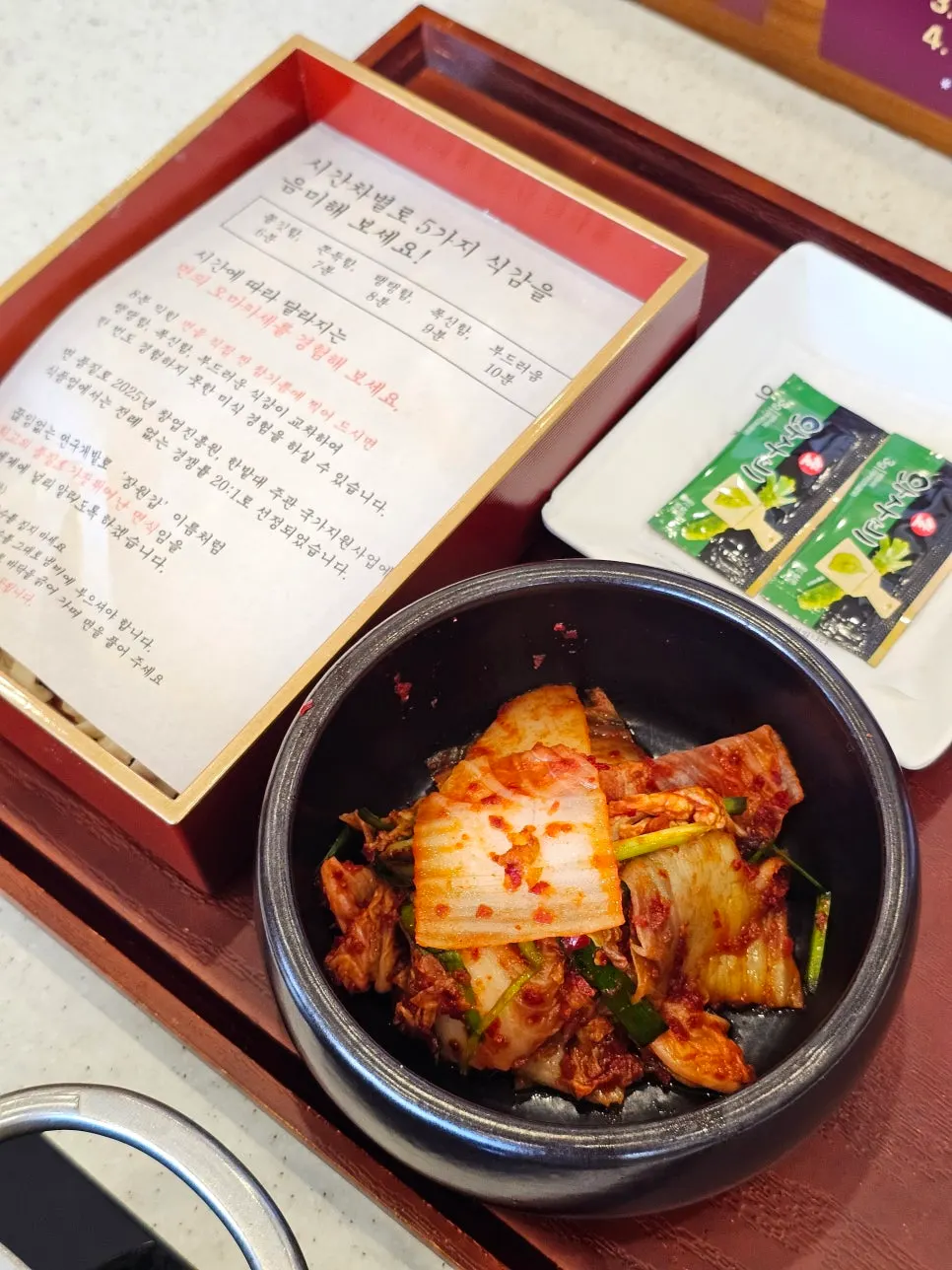
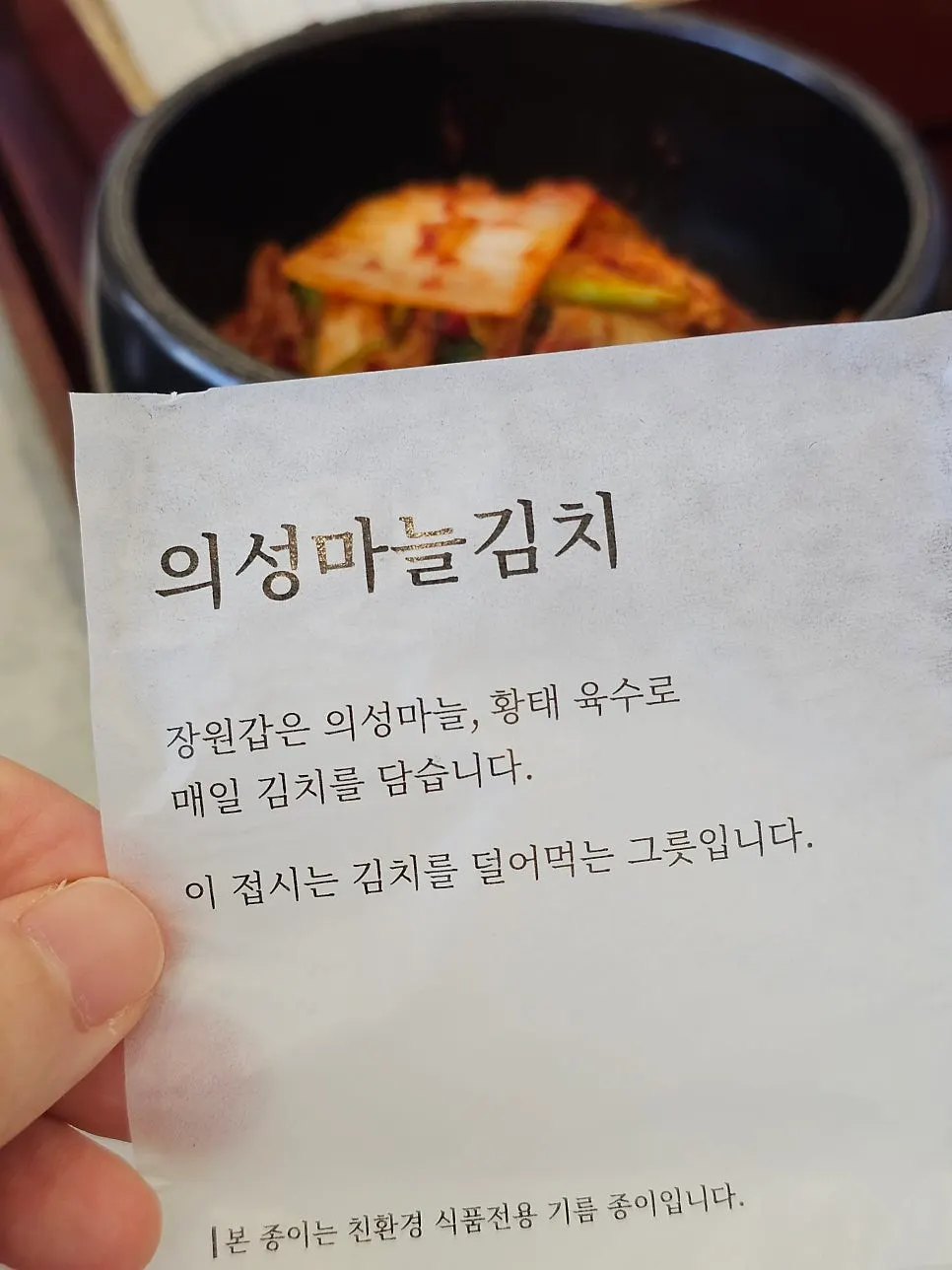
Made with Uiseong garlic and dried-pollack broth, it was spicy and wholesome, with a lovely homemade-kimchi flavor.
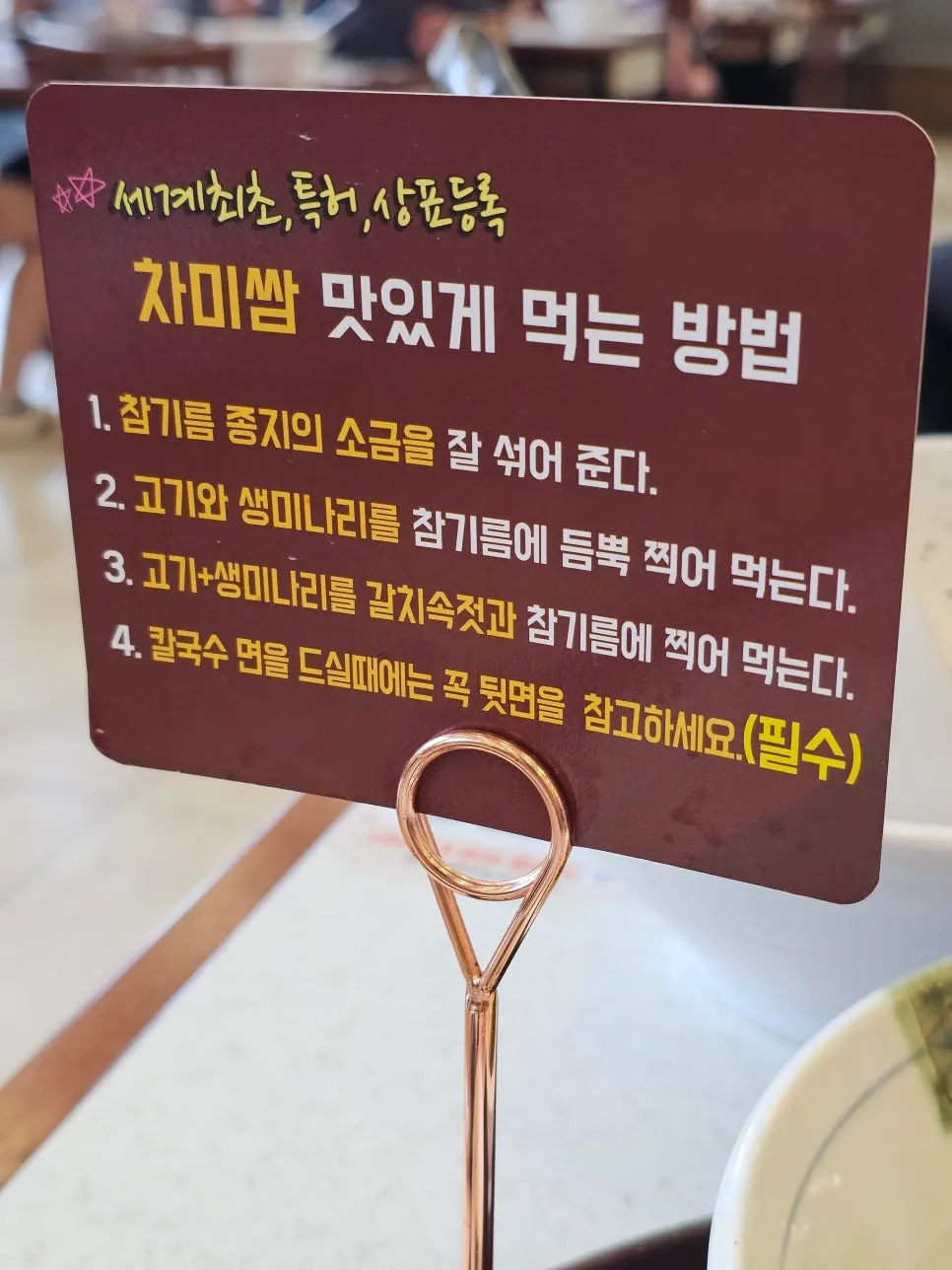
If it is your first visit, the staff will explain in detail how to eat the chami wrap too.
From brisket to abalone, then fresh noodles by the minute
This place is called the omakase of kalguksu, because you get to experience a different flavor at every stage. First, adding the high-quality brisket lets you taste the meat's deep flavor. Because it is good-quality meat, its savory chew was definitely wonderful.
And then there is Jangwongap Kalguksu's signature kick: sesame-oil sauce! They add salt to sesame oil pressed directly at a mill, and dipping the meat and vegetables into it is so, so delicious. It is especially my husband's favorite combination ^^
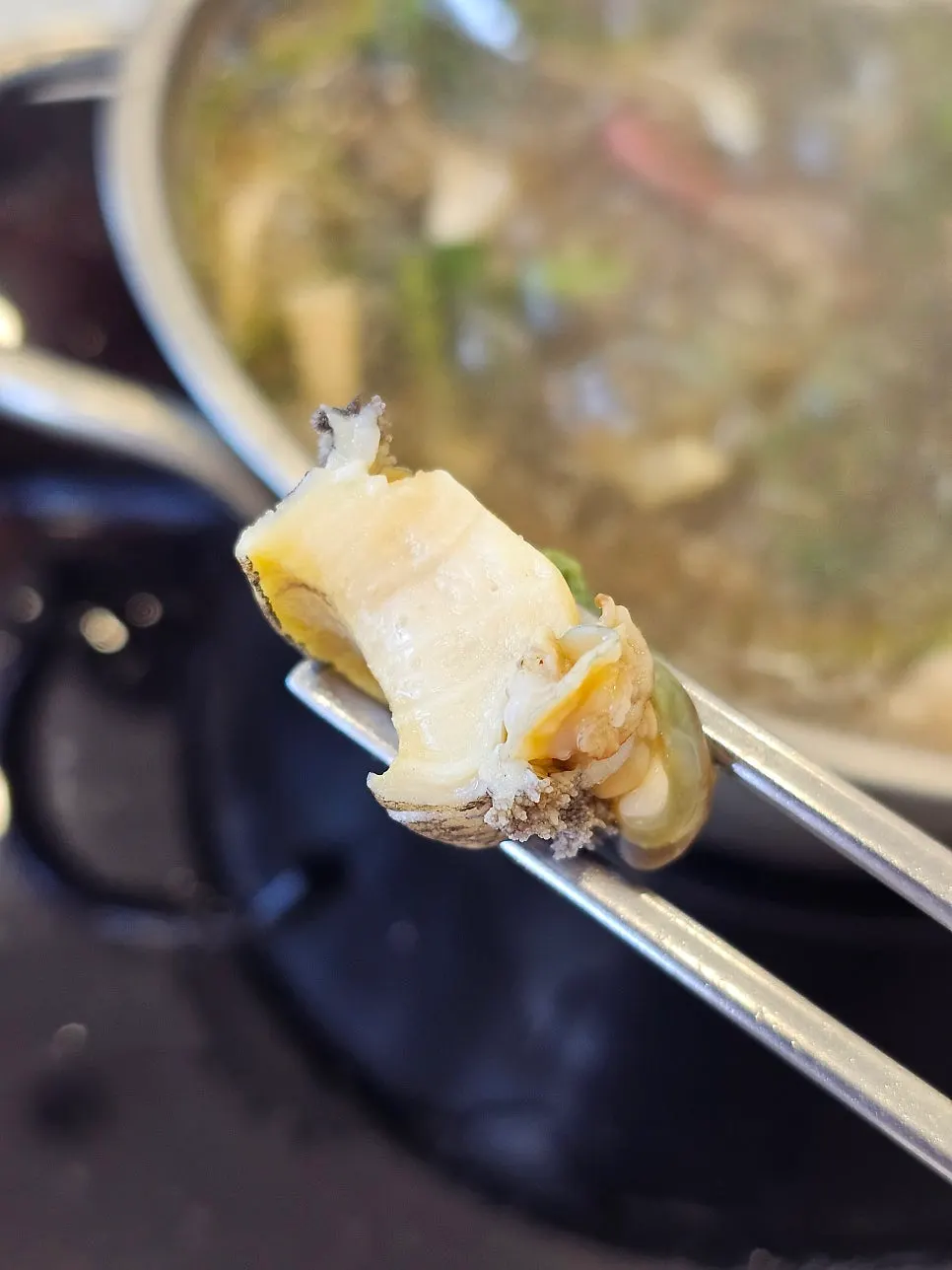
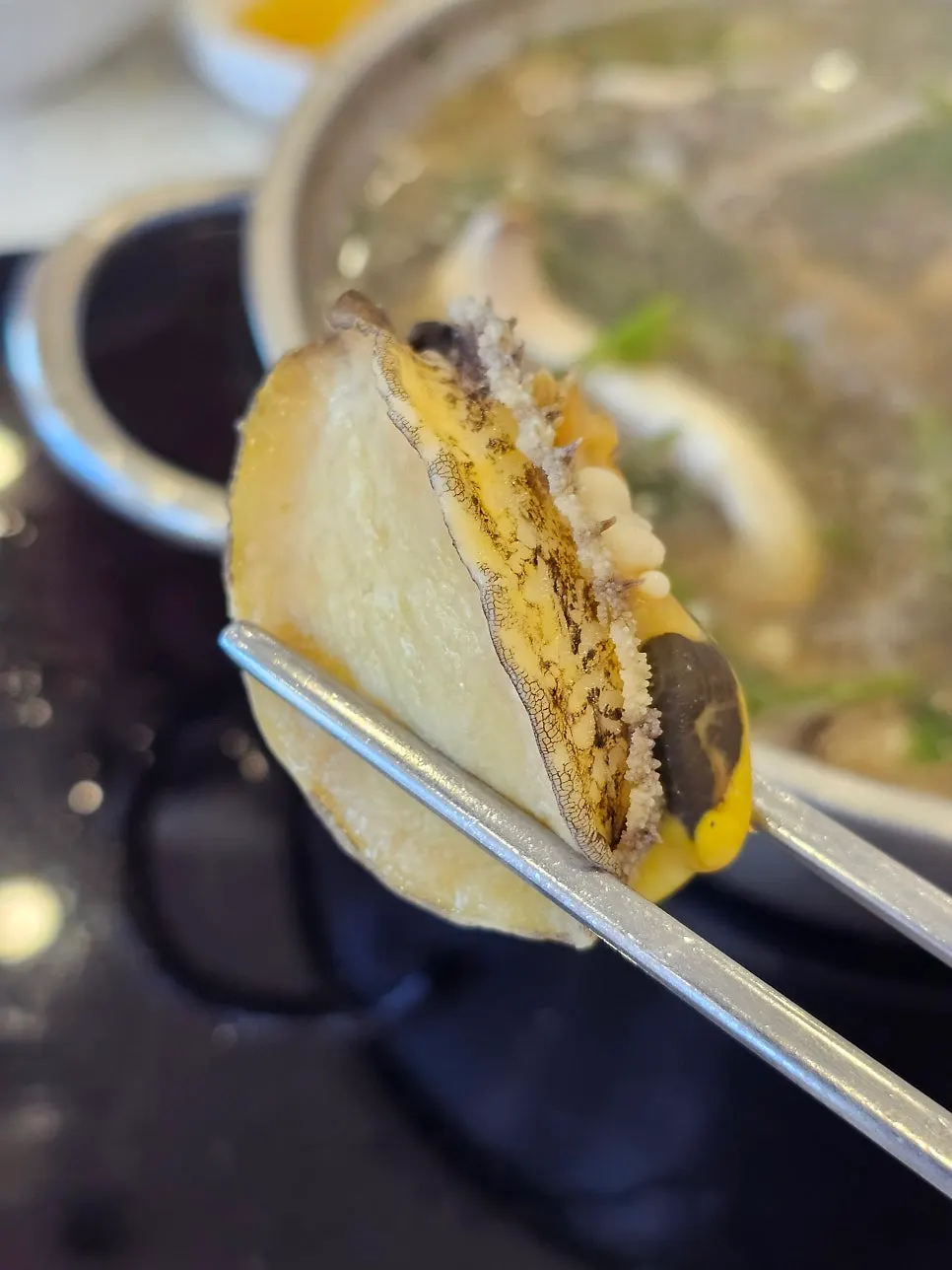
After finishing the meat, we added the abalone, cooked it, and ate it. This time, we could taste the deep flavor of seafood, and it was delicious with the broth. With both meat and seafood in it, the broth was so refreshing that I kept spooning it up without even noticing I was burning the roof of my mouth.
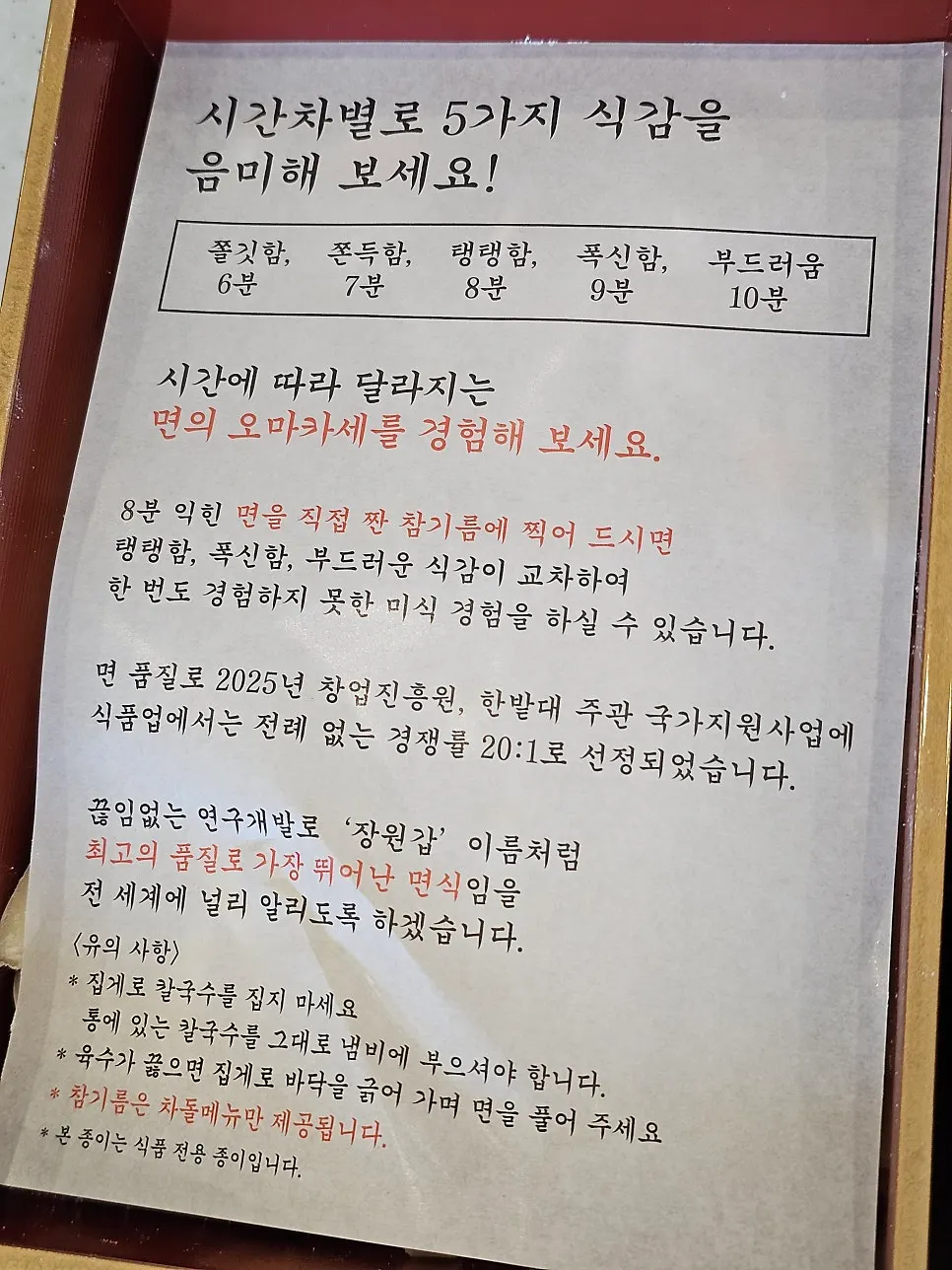
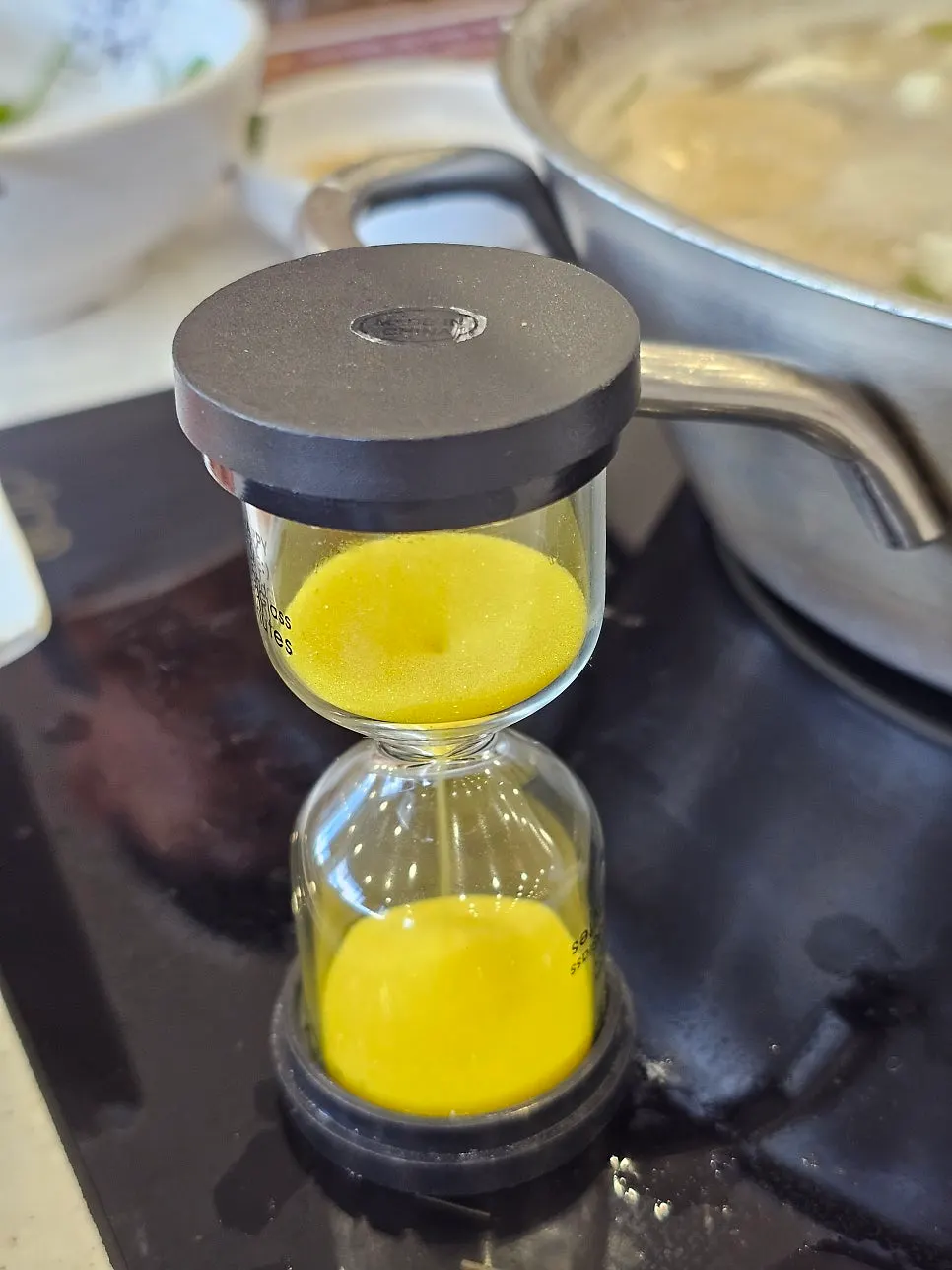
The highlight is the kalguksu noodles. Depending on the cooking time, they change through five textures, making them fun as well as delicious to eat. Once the broth boils, add the noodles and set the hourglass for five minutes; then they are ready to eat. Since they are fresh noodles, they can stick together, so you need to stir them once in a while as they cook.
After five minutes, I lifted the noodles out—can you see that chew? The springiness I could feel through the chopsticks was clearly different from ordinary kalguksu, haha.
- At 6 minutes, the noodles are chewy.
- At 7 minutes, they are pleasantly sticky and bouncy.
- At 8 minutes, they are springy.
- At 9 minutes, they are pillowy.
- At 10 minutes, they become soft.
Since the flavor changes with every minute, I understood why they call it omakase. They were delicious with the spicy Uiseong garlic kimchi, but I found dipping them in the sesame-oil sauce especially novel and tasty.
Free perilla-oil kkakdugi fried rice
You might think that if this is a great kalguksu restaurant in Giheung-gu, Yongin, the kalguksu only needs to be good, right? But here, they even make free perilla-oil kkakdugi (cubed radish kimchi) fried rice at the end, haha. You pour off the remaining broth, add perilla oil, rice, and kkakdugi to the pot, and stir-fry it. As the perilla-oil aroma rises, the savory, spicy fried rice is absolutely fantastic. The quality and flavor are so good that it is hard to believe it is free.
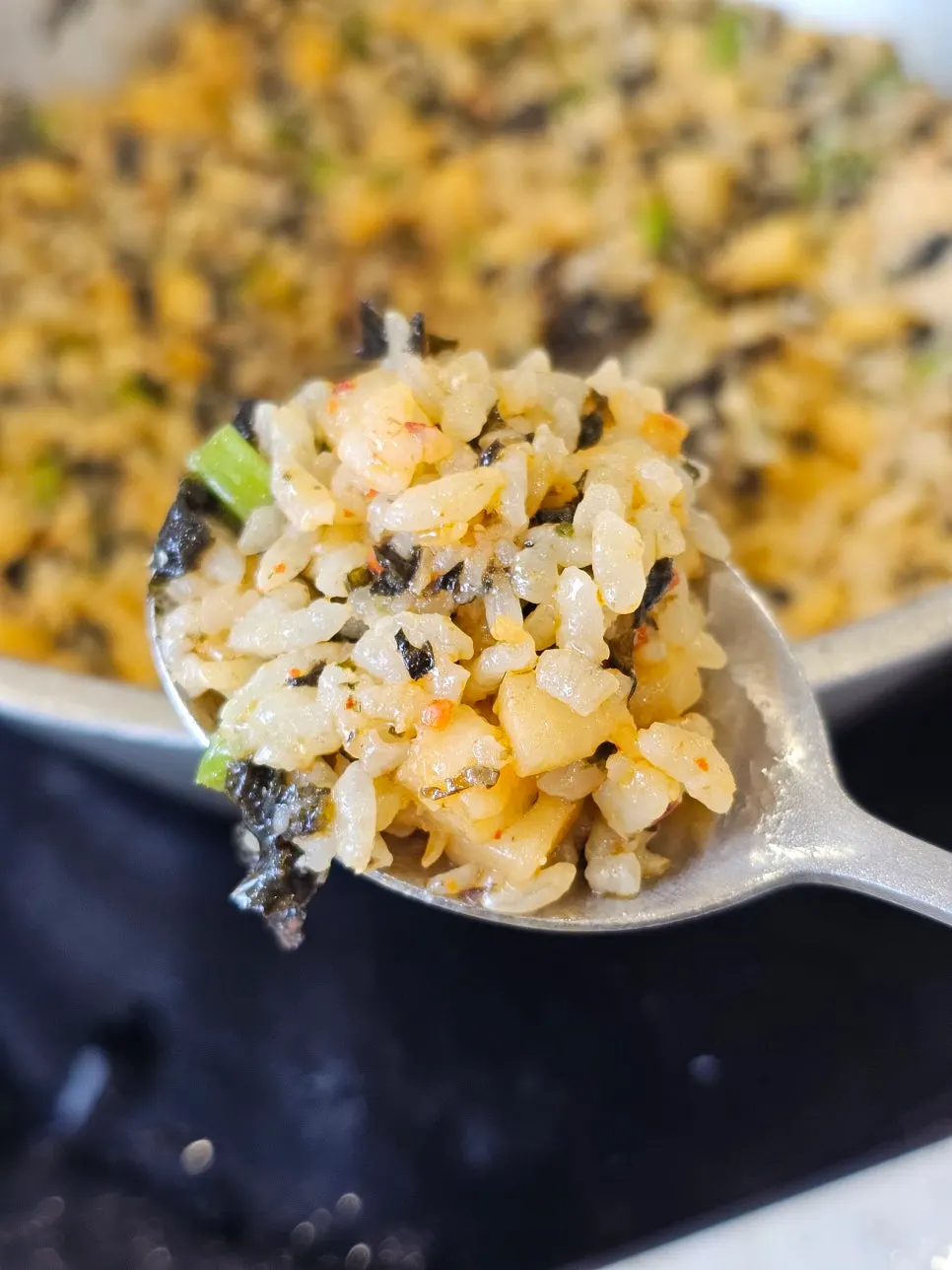
Among restaurants in Giheung-gu, Yongin, Jangwongap Kalguksu had some of the best value, wholesome flavors, and delicious chewy kalguksu noodles ^^ Some kalguksu places leave a strong seasoning flavor afterward, but this one had none of that. It felt like I had eaten a healthy home-cooked meal rather than gone out, which is lovely every time. With its good value and omakase-like progression of flavors, it is a place I would want to recommend to friends. If you are a little tired of the usual intensely seasoned kalguksu, I recommend trying a new flavor at Jangwongap Kalguksu Yongin Giheung Branch!
Where it is
1F, 90 Gomae-ro, Giheung-gu, Yongin-si, Gyeonggi-do, South Korea (경기도 용인시 기흥구 고매로 90 1층)경기도 용인시 기흥구 고매로 90 1층