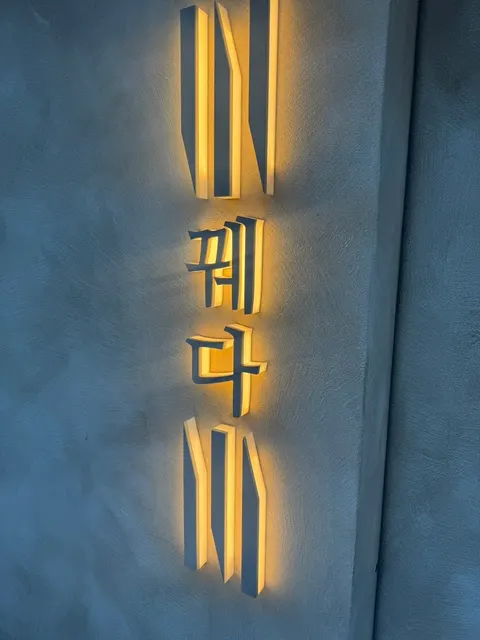
Pangyo omakase restaurant with ₩30,000 corkage: Suyori Sikdang
In short
Suyori Sikdang is a Japanese omakase restaurant with counter seats only, on the B1 floor of the Samhwan Hi-pex building by Pangyo Station in Seongnam, Gyeonggi. Booking the 1:00pm second lunch seating through Catch Table brought an 18-course lunch at ₩45,000 per person, opening with warm shiitake and gamtae porridge and running through truffle halibut sushi and basil pesto smoked tuna sushi before udon, assorted tempura and yuzu sorbet. With 2 hours of free parking and corkage at ₩30,000 per bottle, Suyori Sikdang is an easy choice for a special occasion.
Good to know
- Location
- B126, B1F, Samhwan Hi-pex Building B, 230 Pangyo-yeok-ro, Bundang-gu, Seongnam, Gyeonggi
- Reservations
- Catch Table / Naver Reservation
- Lunch omakase
- ₩45,000 per person (18 courses)
- Lunch seatings
- First 11:40am / Second 1:00pm
- Dinner omakase
- ₩75,000 per person
- Dinner hours
- 6:00–8:00pm, booked in 30-minute slots
- Seating
- All counter seats
- Parking
- 2 hours free / free on weekends
- Corkage
- Allowed, ₩30,000 per bottle (no limit on bottles or type)
- Price reference
- ₩30,000 ≈ $22 · ₩45,000 ≈ $33 · ₩75,000 ≈ $54.5 (2026-09-22)
as written by the visitor on Sep 21, 2026
Looking for a proper Pangyo omakase sushi experience, a real Pangyo Japanese course meal? I visited Suyori Sikdang wanting a special meal in Pangyo.
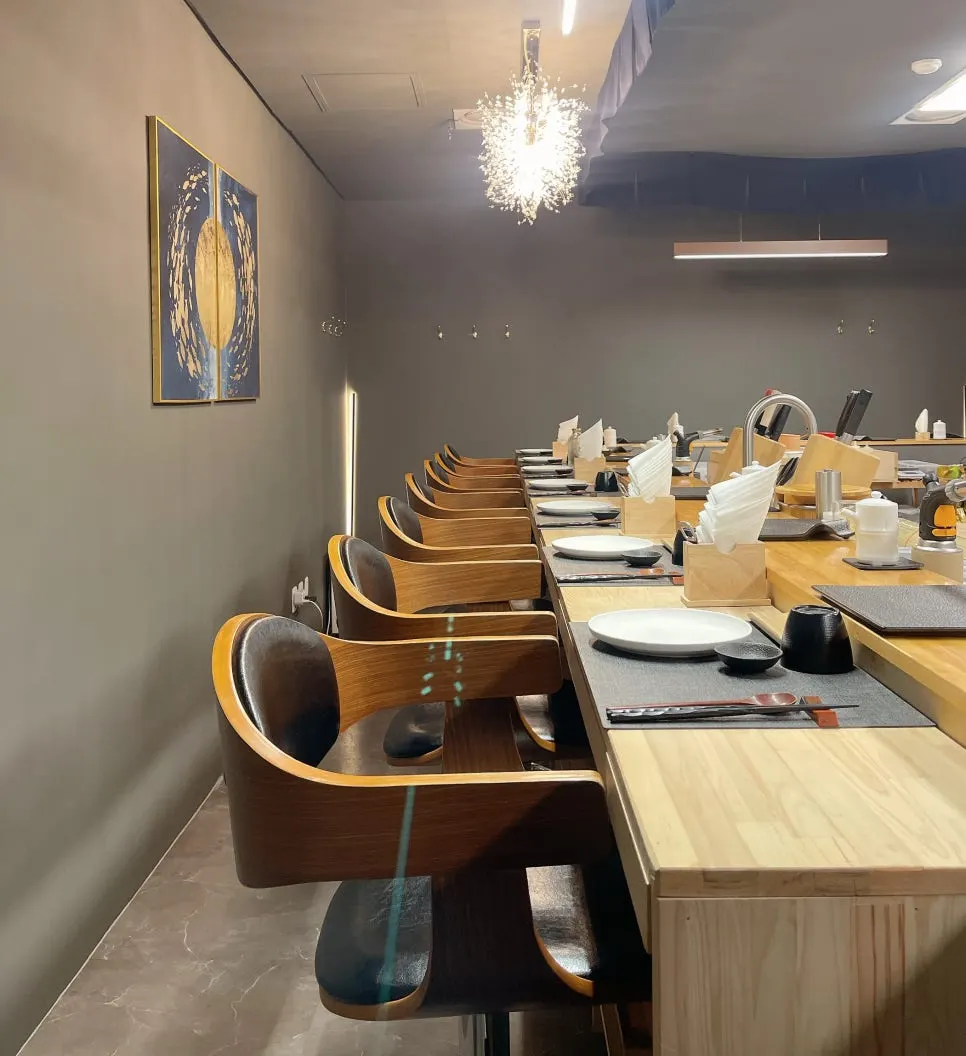
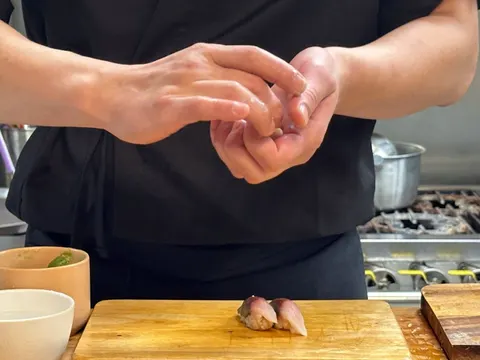
It's a cozy space run entirely on counter seating, so you get to watch the chef prepare each dish right in front of you.
Watching the food come together up close, in a calm, nicely designed space, made the course even more enjoyable. Best of all, the sushi and dishes are put together with a variety of ingredients in unexpected ways, at a price that felt relatively easy to justify even for a special day. Let's take a closer look :)
How to get to Suyori Sikdang from Pangyo Station, and where to park
Suyori Sikdang is located at B126, basement level 1, Samhwan Hi-pex Building B, 230 Pangyo-yeok-ro, Bundang-gu, Seongnam-si, Gyeonggi-do. Coming out of Exit 1 of Pangyo Station, cross the crosswalk, walk over the bridge toward the Tancheon stream, and you'll see the W Wedding Hall straight ahead. The Samhwan Hi-pex building sits just behind it.
Since it's located in one of Pangyo's big planned-city buildings, parking is convenient. You get 2 hours free, and parking is free entirely on weekends, so driving there isn't a hassle. Parking is always a low-key worry when eating around Pangyo Station, so this was a nice bonus.
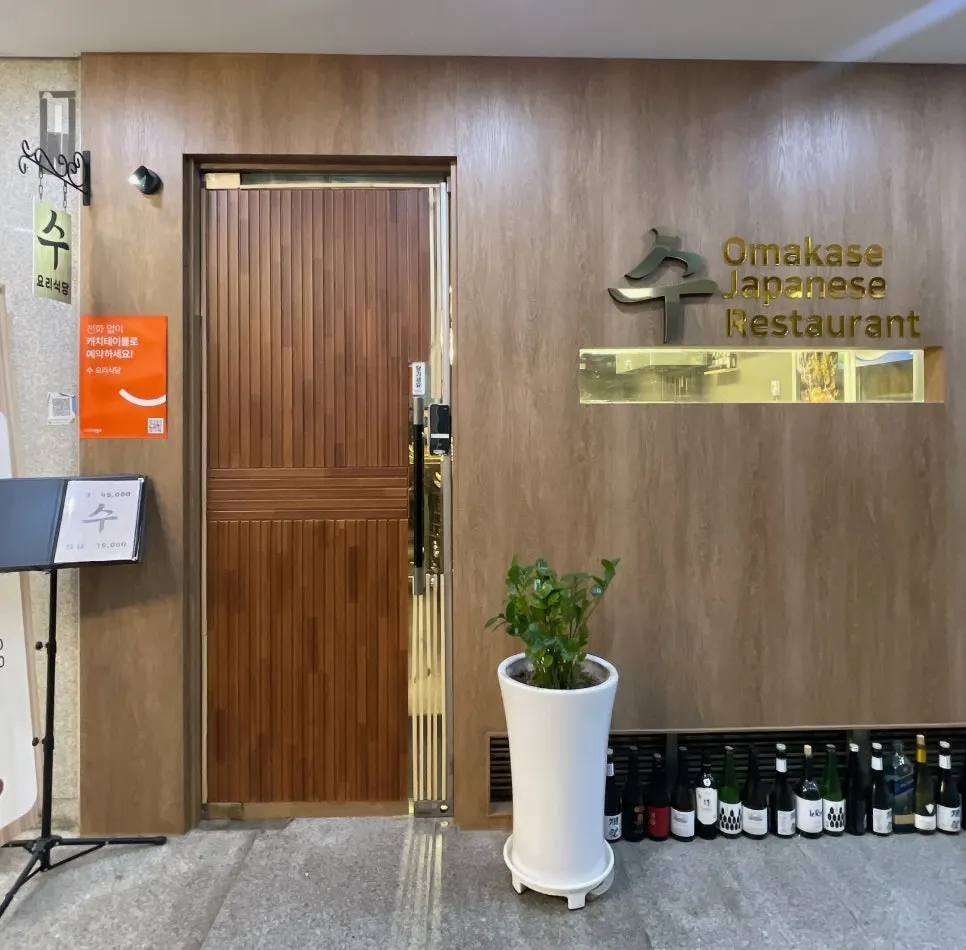
Suyori Sikdang at a glance
- Location: B126, B1F, Samhwan Hi-pex Bldg. B, 230 Pangyo-yeok-ro, Bundang-gu, Seongnam-si, Gyeonggi-do
- Reservations: Catch Table / Naver Reservation
- Lunch omakase: ₩45,000 per person
- Lunch seatings: First 11:40am / Second 1:00pm
- Dinner omakase: ₩75,000 per person
- Dinner seatings: 6:00–8:00pm, 30-minute slots
- Seating: All counter seats
- Parking: 2 hours free / free on weekends
- Corkage: Available, ₩30,000 per bottle
Counter seats only: what the room at Suyori Sikdang feels like
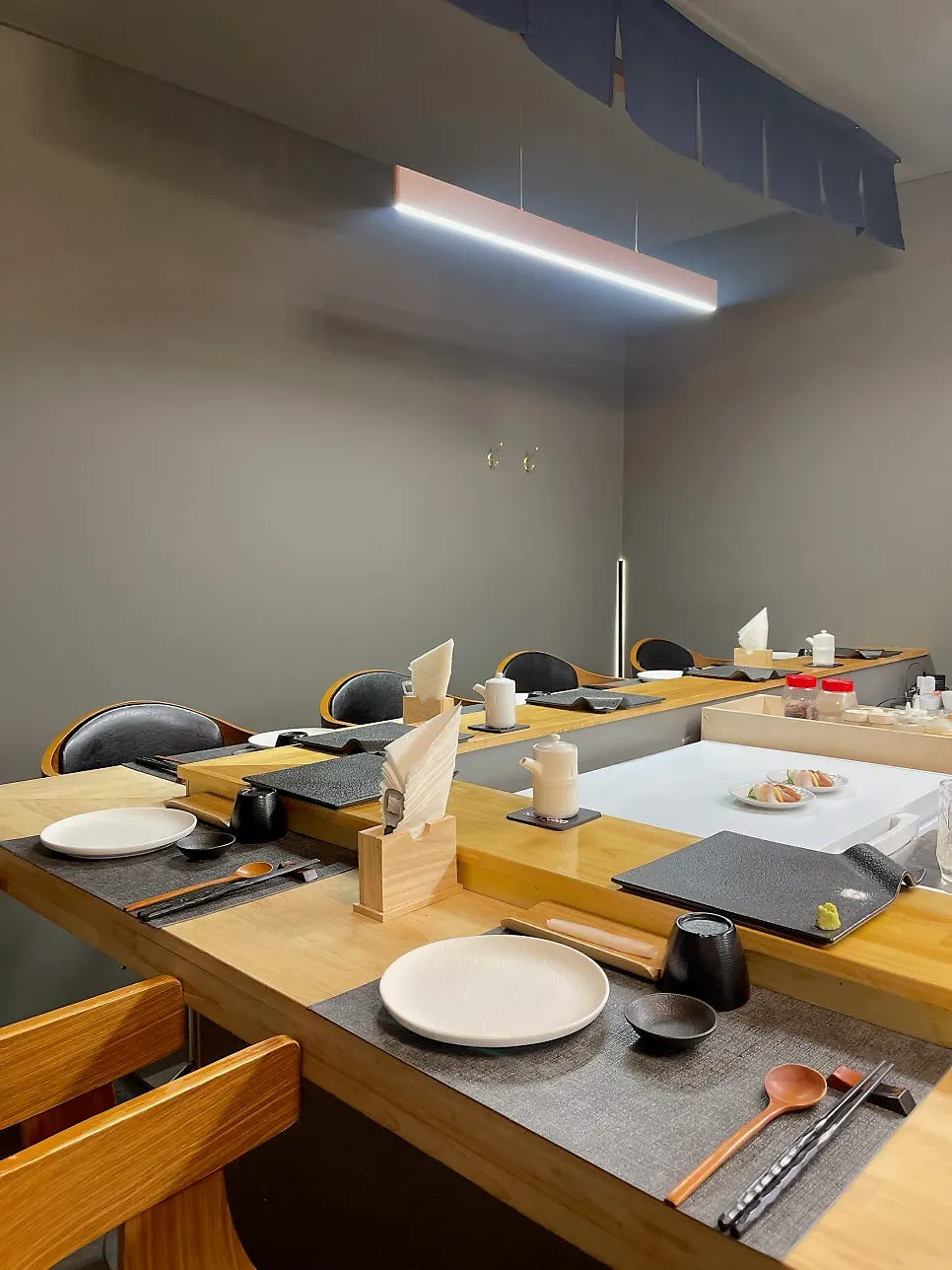
Suyori Sikdang is compact overall, and the whole place is set up as bar-table-style counter seating.
That means you can watch up close as the chef preps and plates each dish, and there's a quiet, late-night-diner kind of atmosphere to it.
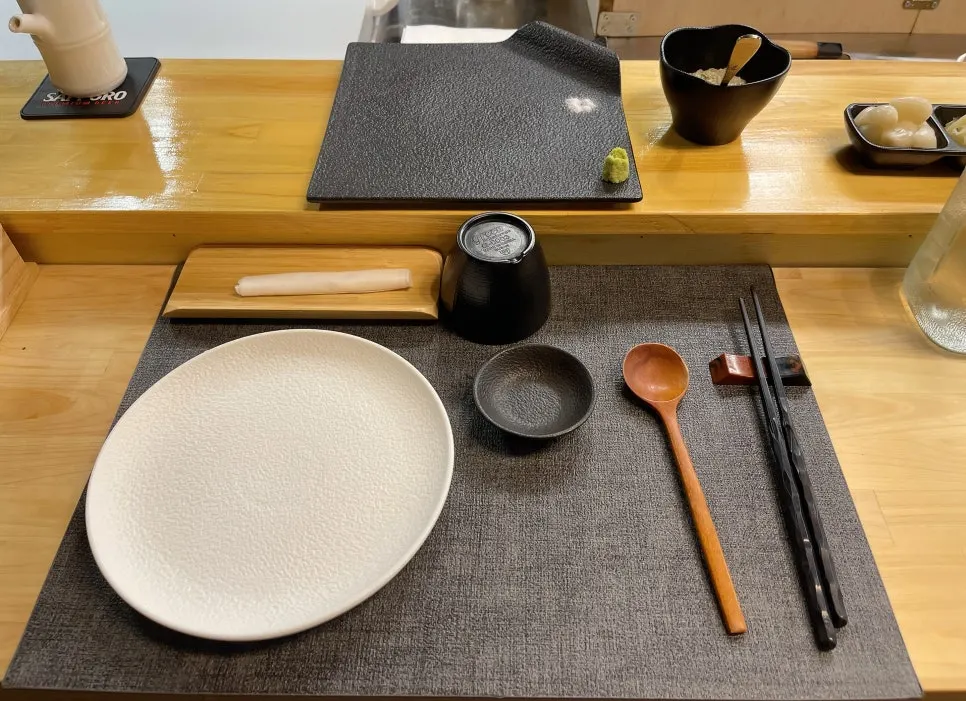
Each seat had plates, utensils and a water glass neatly set out, and the warm wood tones paired with the lighting made it feel comfortable.
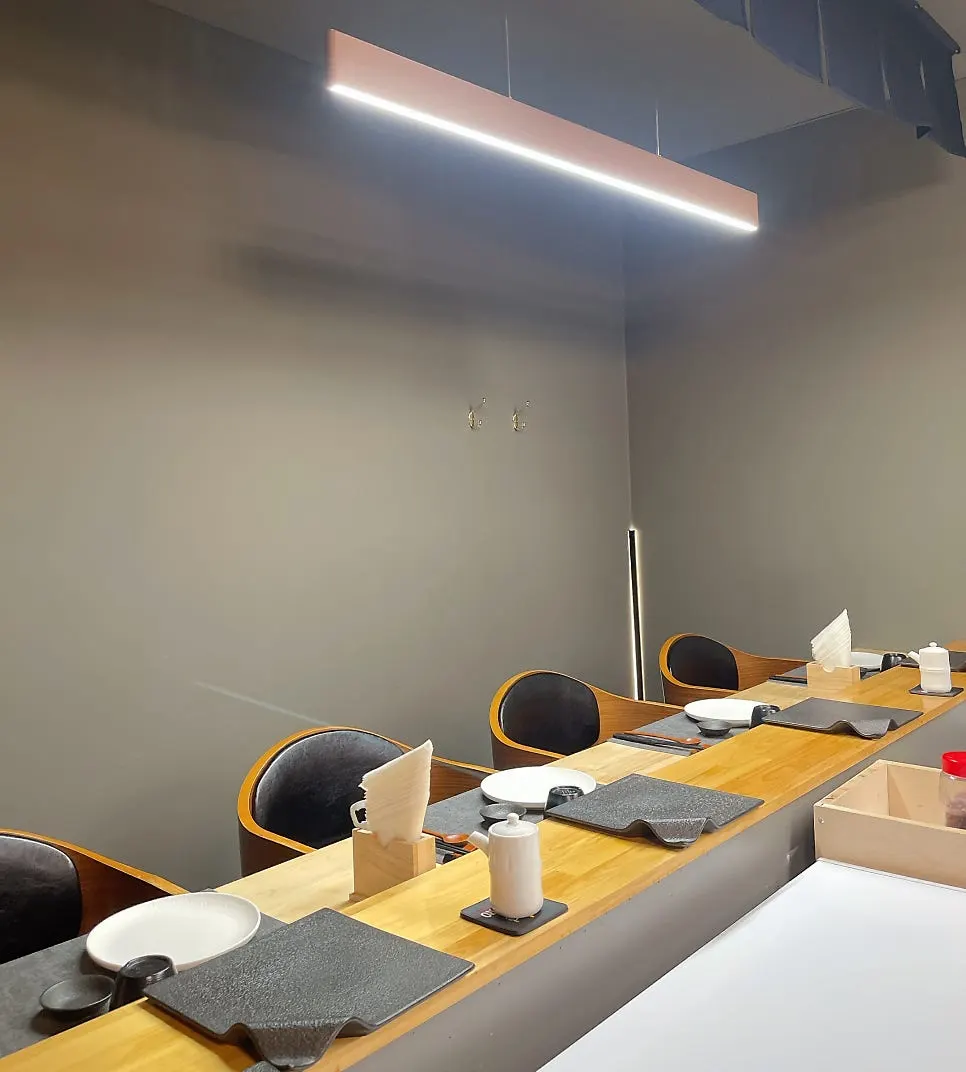
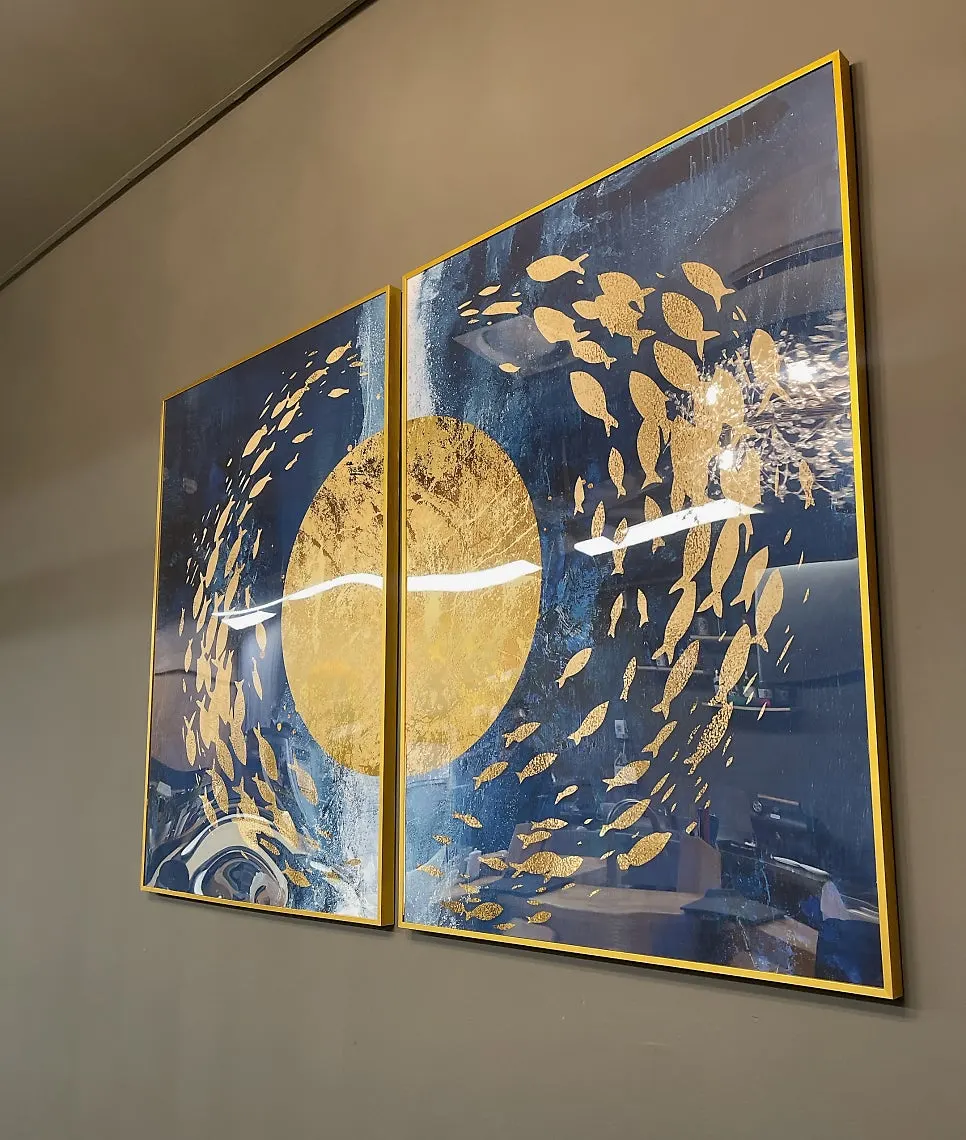
It suits people who'd rather focus quietly on the food than eat in a loud, big restaurant.
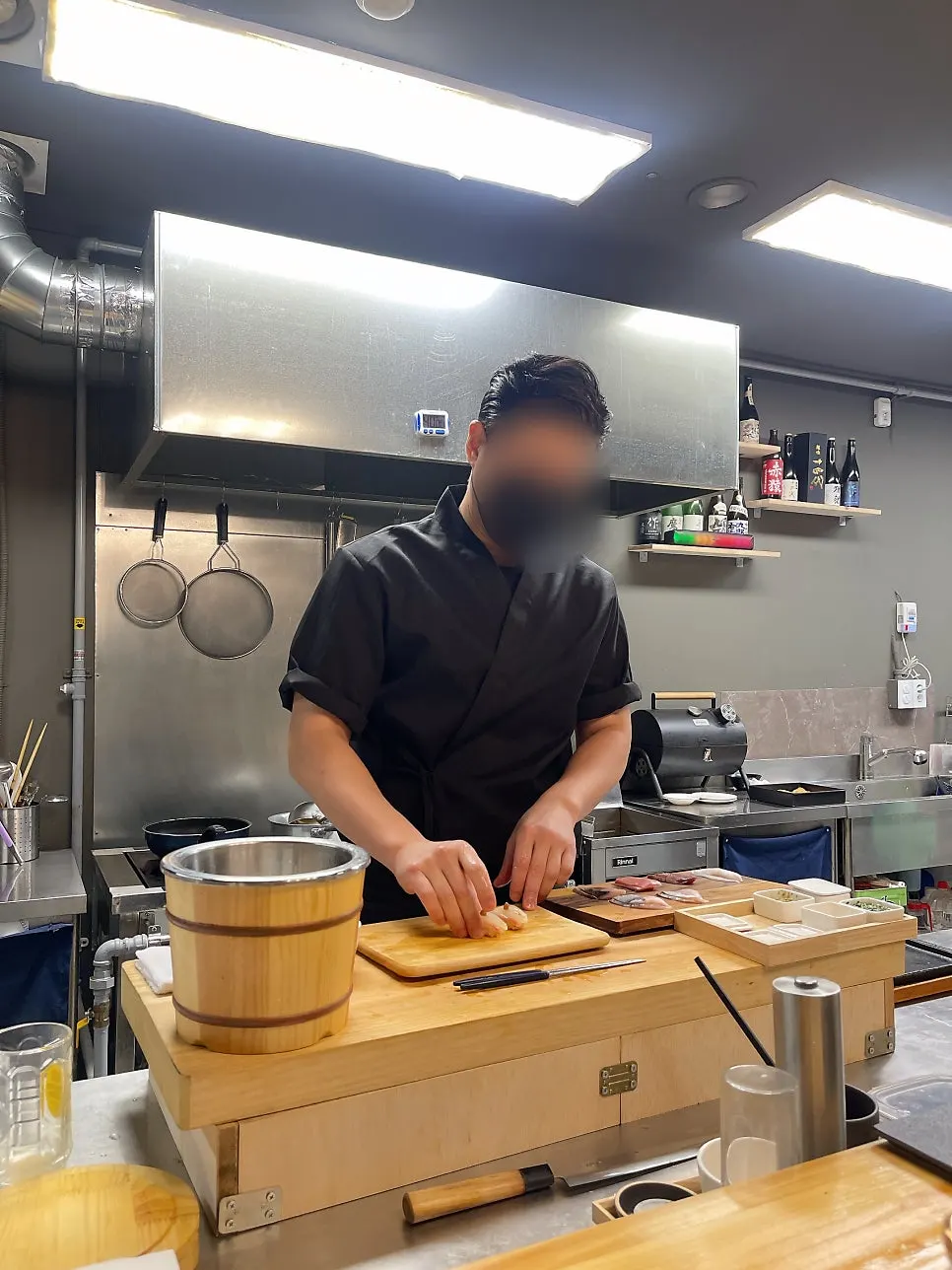
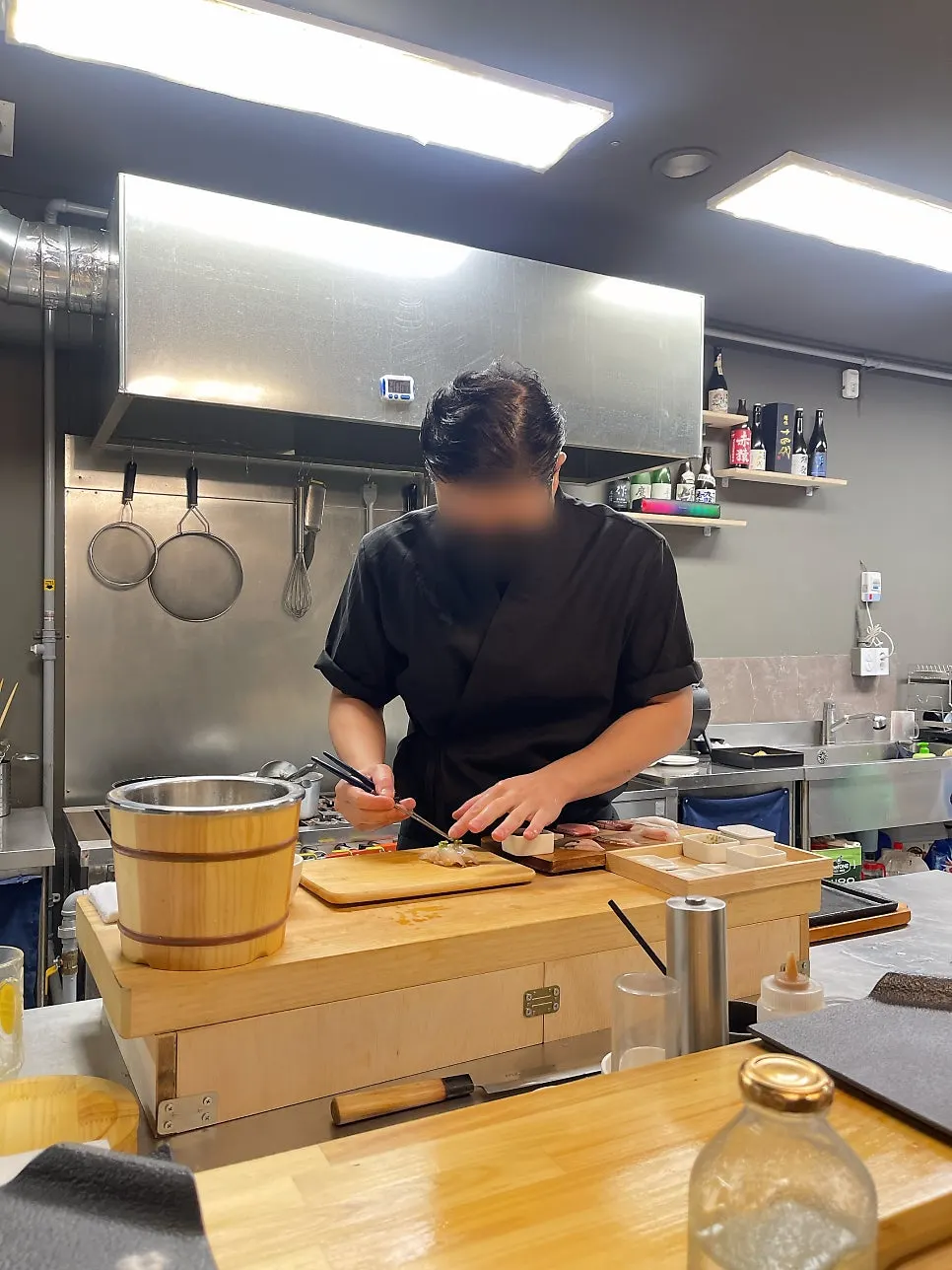
Being at the counter also meant getting an explanation right there as each dish came out, which was nice.
What comes in the ₩45,000 18-course lunch omakase
I'd booked ahead through Catch Table and came for the 1pm second lunch seating. The lunch omakase runs ₩45,000 per person and works like this:
- First seating: 11:40am
- Second seating: 1:00pm
They also sell various drinks like sake, soju, draft beer and highballs, and corkage is allowed too — ₩30,000 per bottle, with no limit on the number of bottles or the type of alcohol. The Japanese course brought out one dish after another, in order — a whopping 18 courses!
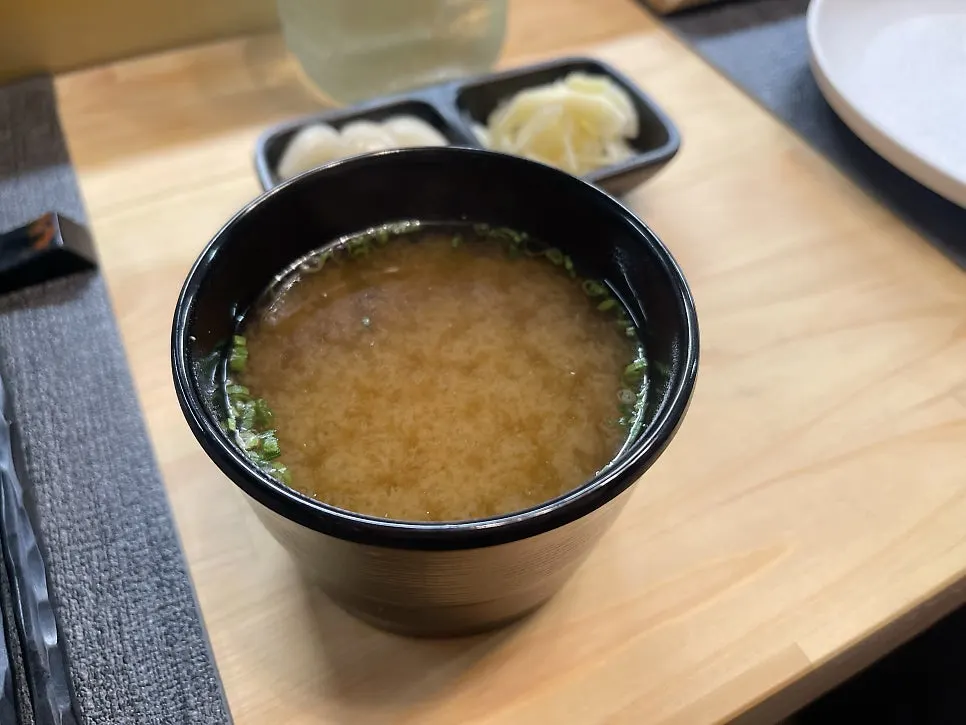
Pickled ginger (rakkyo and shoga) and miso soup came out as the basics, and then the real course began.
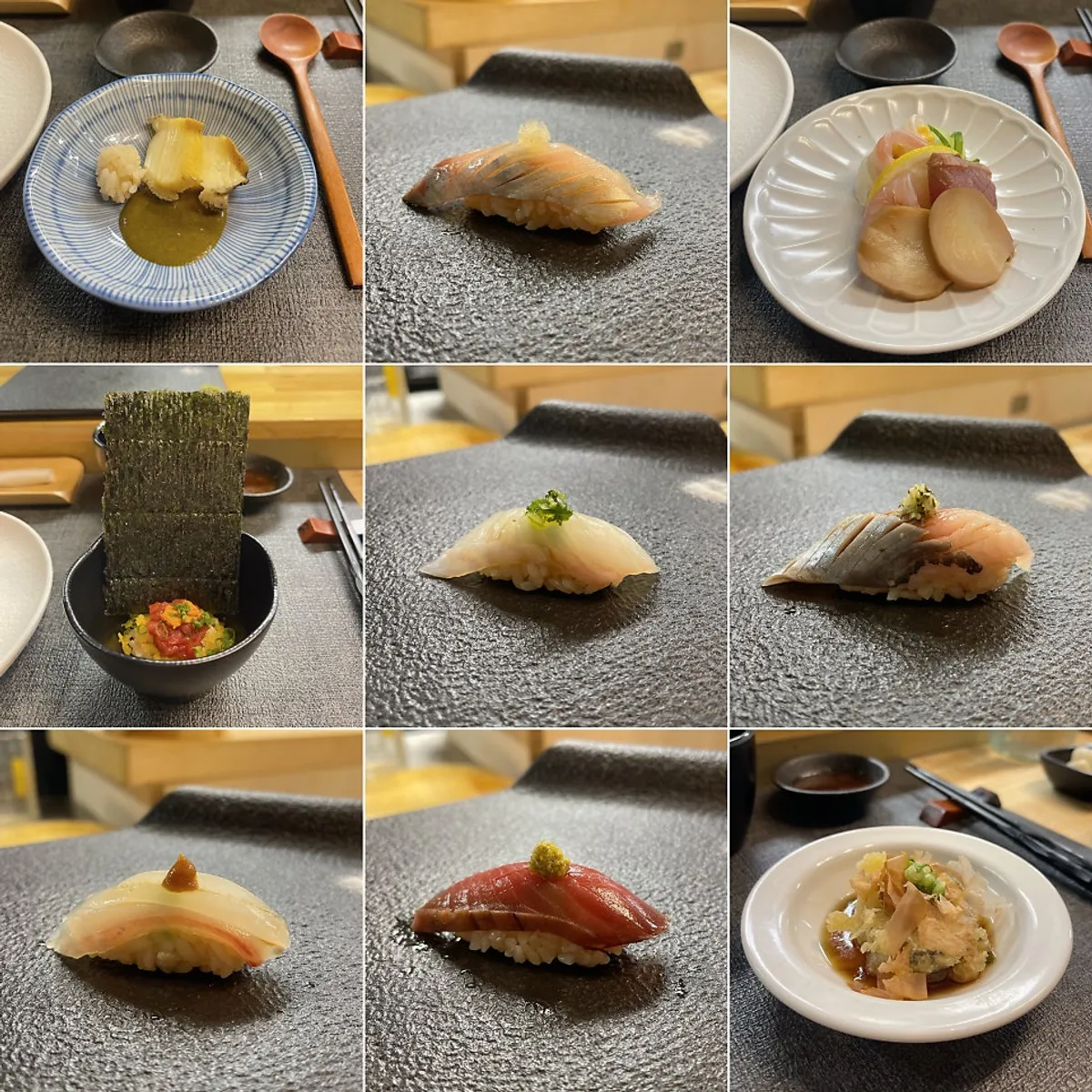
Warm shiitake and gamtae (seaweed) porridge
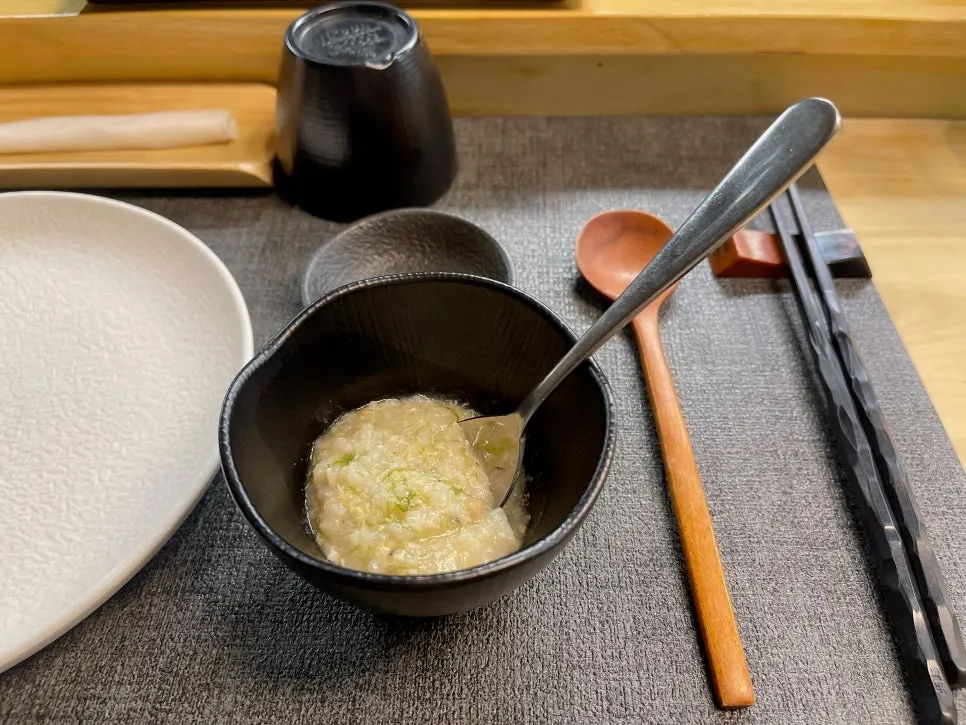
The first dish was warm shiitake gamtae (sea lettuce) porridge.
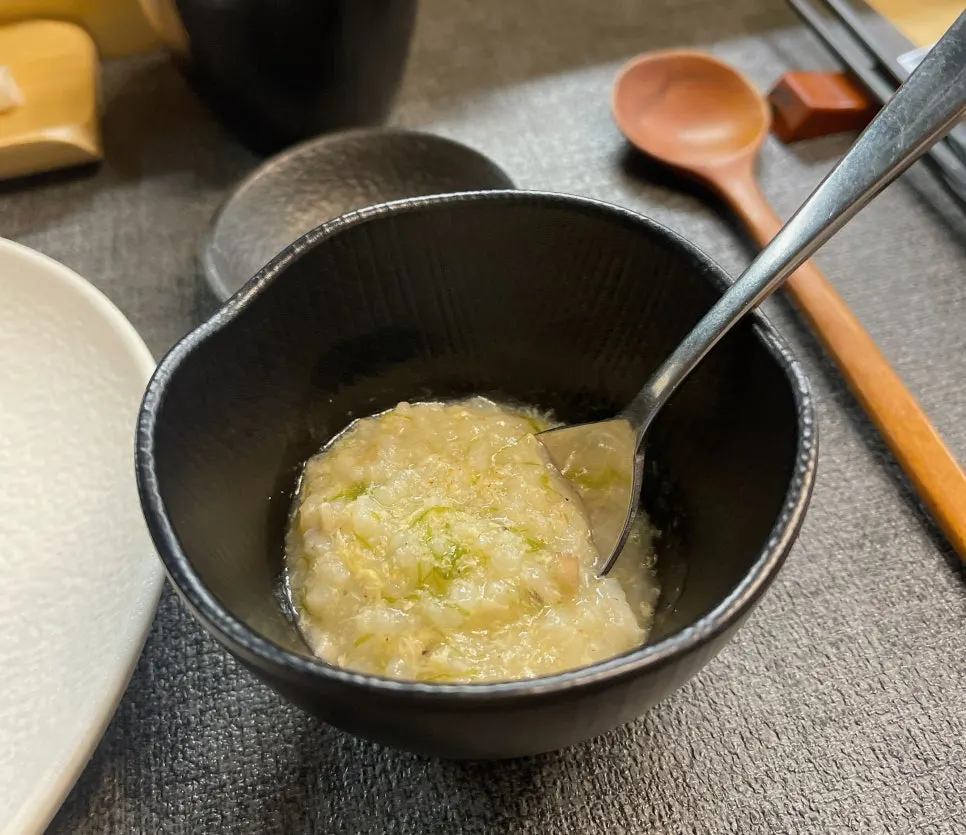
The soft porridge had a mild shiitake scent and the distinctive fragrant sea aroma of gamtae, making it a gentle, low-pressure way to start. The warm, soft texture felt like it was easing my appetite open.
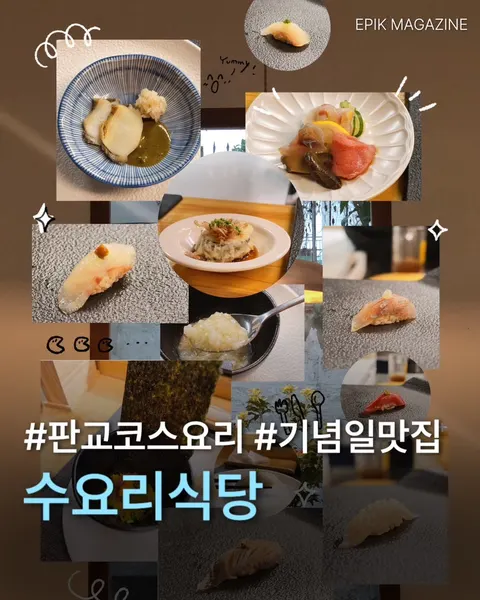
Steamed abalone with abalone-liver sauce
Next up: steamed abalone with abalone-liver sauce (geu-u sauce).
The abalone was chewy without being tough, and the rich, savory intensity of the liver sauce really stood out. The sauce had soaked into the rice grains, making the savoriness even deeper.
Four kinds of sashimi
Halibut, red seabream, amberjack and smoked tuna came out together with mushrooms.
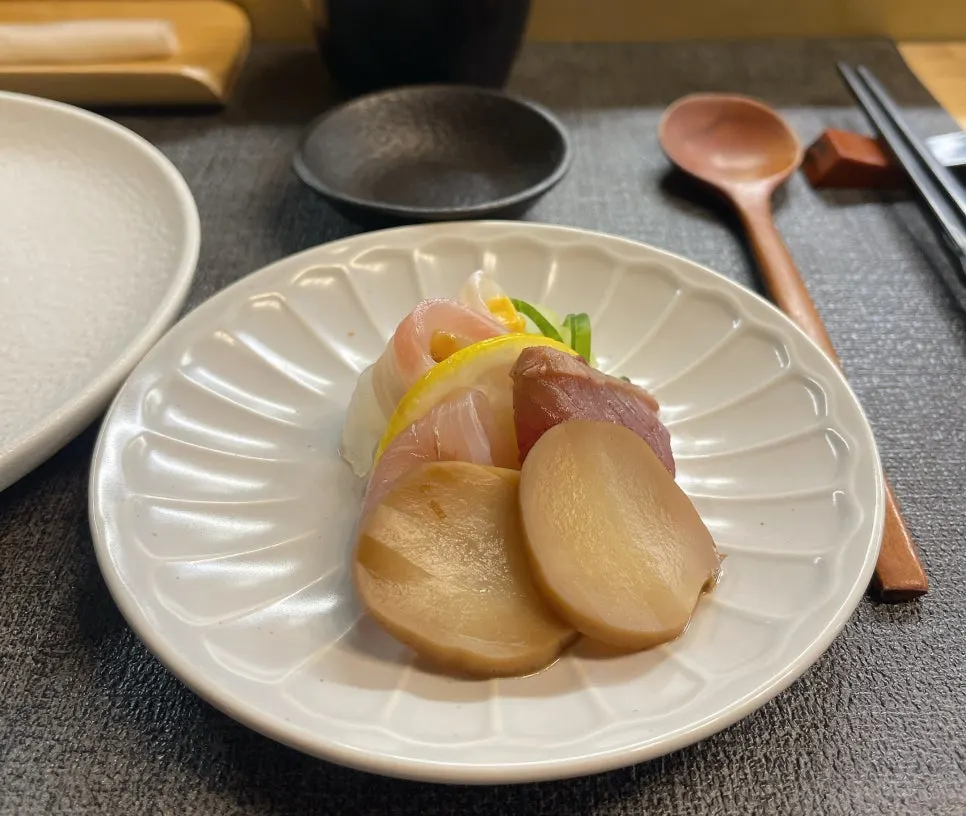
The sashimi slices were thick and had a pleasantly springy bite. It was fun comparing the flavors of each piece, and I liked how each kept the fresh flavor of the ingredient itself while being paired differently. From here on, the parade of varied sushi really began, and anyone looking for Pangyo omakase sushi can expect a solid lineup from this point.
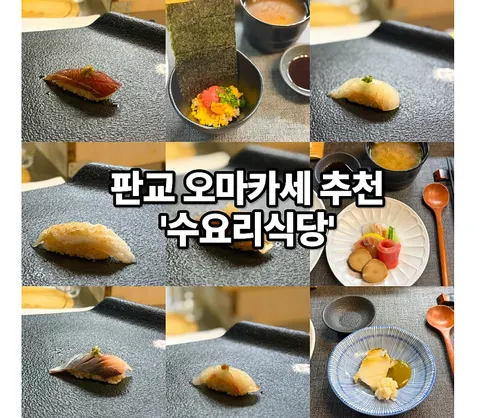
Halibut sushi with truffle and chives
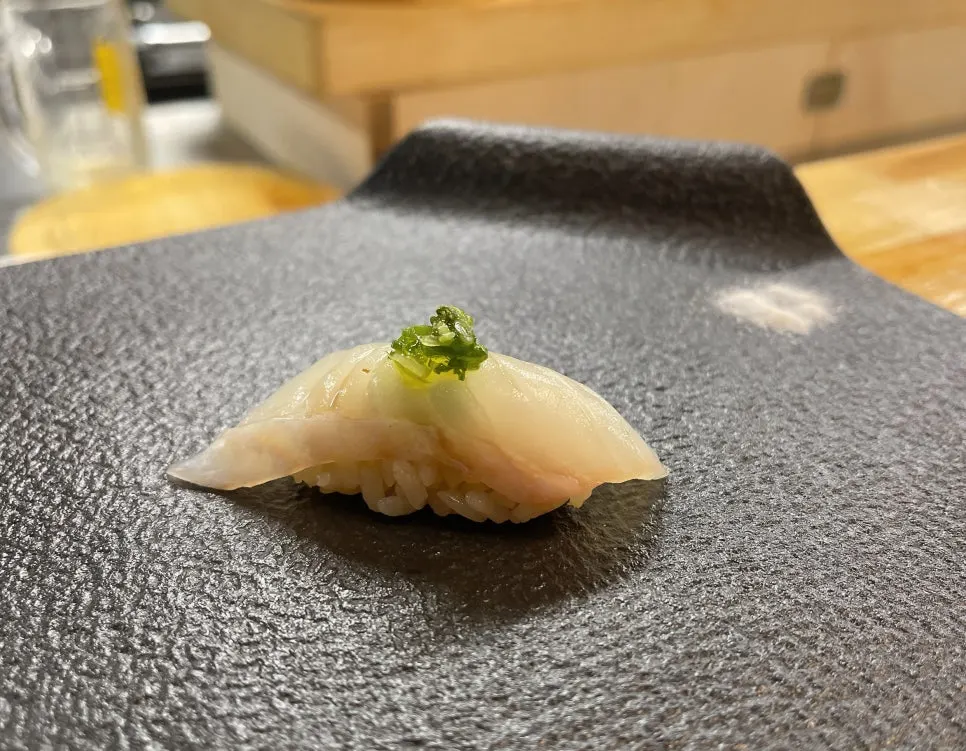
Clean, chewy halibut got a lift from truffle aroma, with chives adding a mild sharpness that balanced it out.
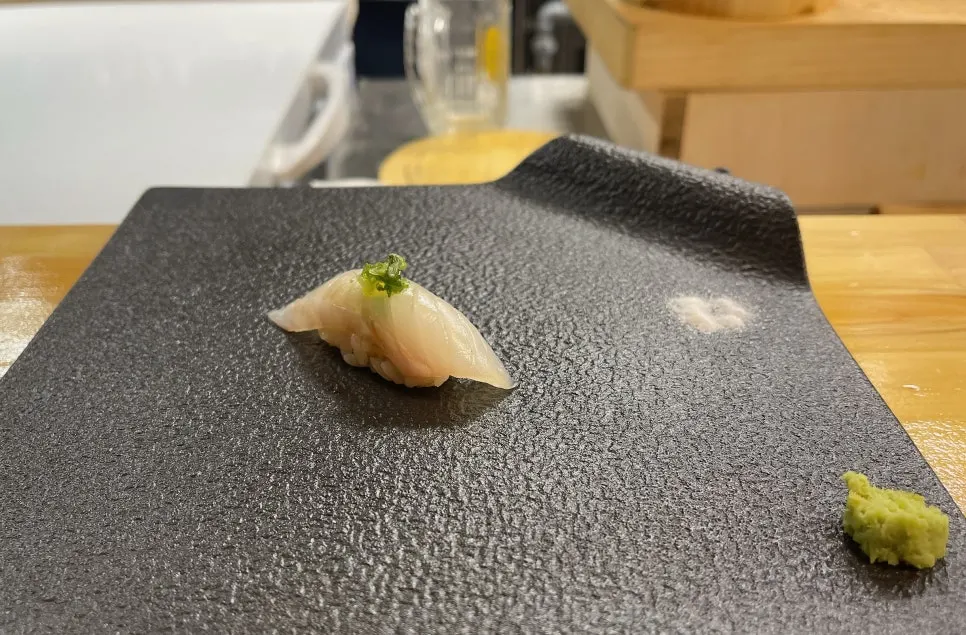
Compared to plain halibut, the aroma was much richer — a genuinely different combination.
Red seabream sushi with sumiso
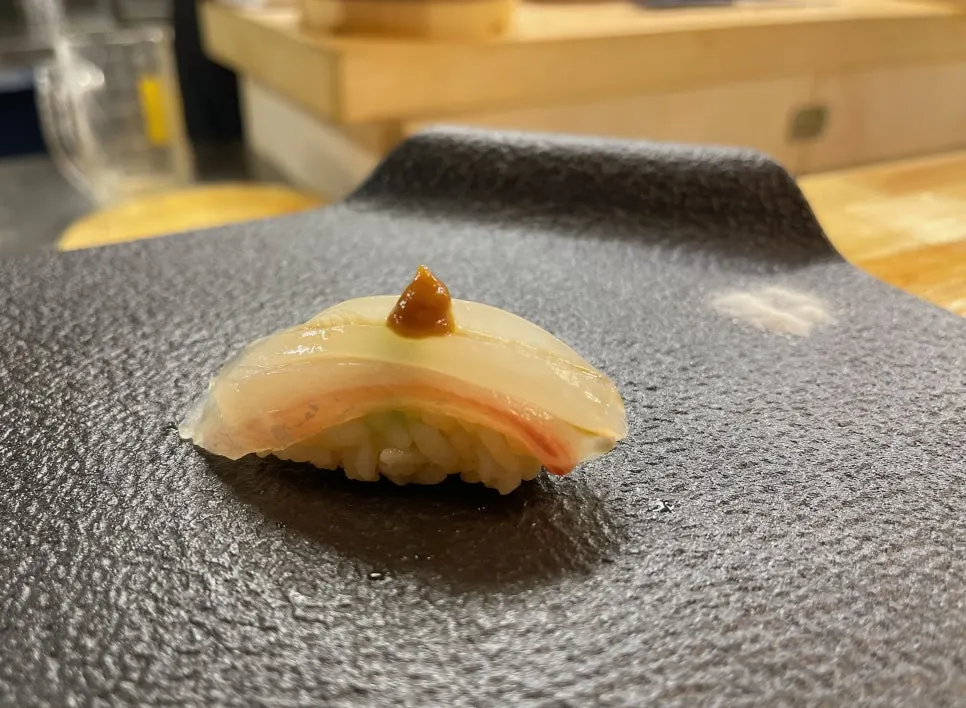
The clean, mild flavor of red seabream was paired with sumiso, a tangy, umami-rich miso sauce.
The fish's mildness and the sauce's bright flavor worked well together.
Amberjack sushi with yuzu onion
The amberjack had a moderately fatty richness, and yuzu aroma made the whole thing feel fresher.
The crunch of onion on top kept it from feeling greasy — clean all the way through.
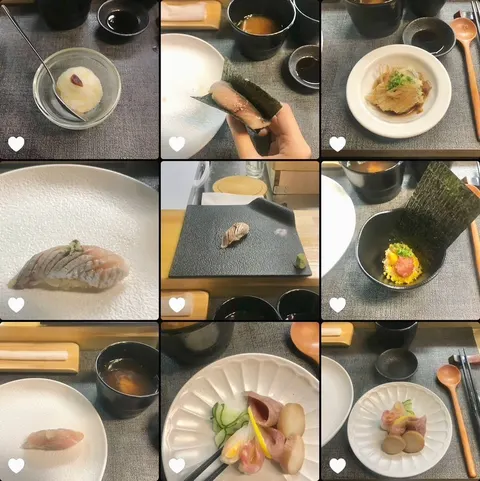
Mini kaisendon (seafood rice bowl)
Seafood, rice and seaweed served together as a mini kaisendon (seafood rice bowl).
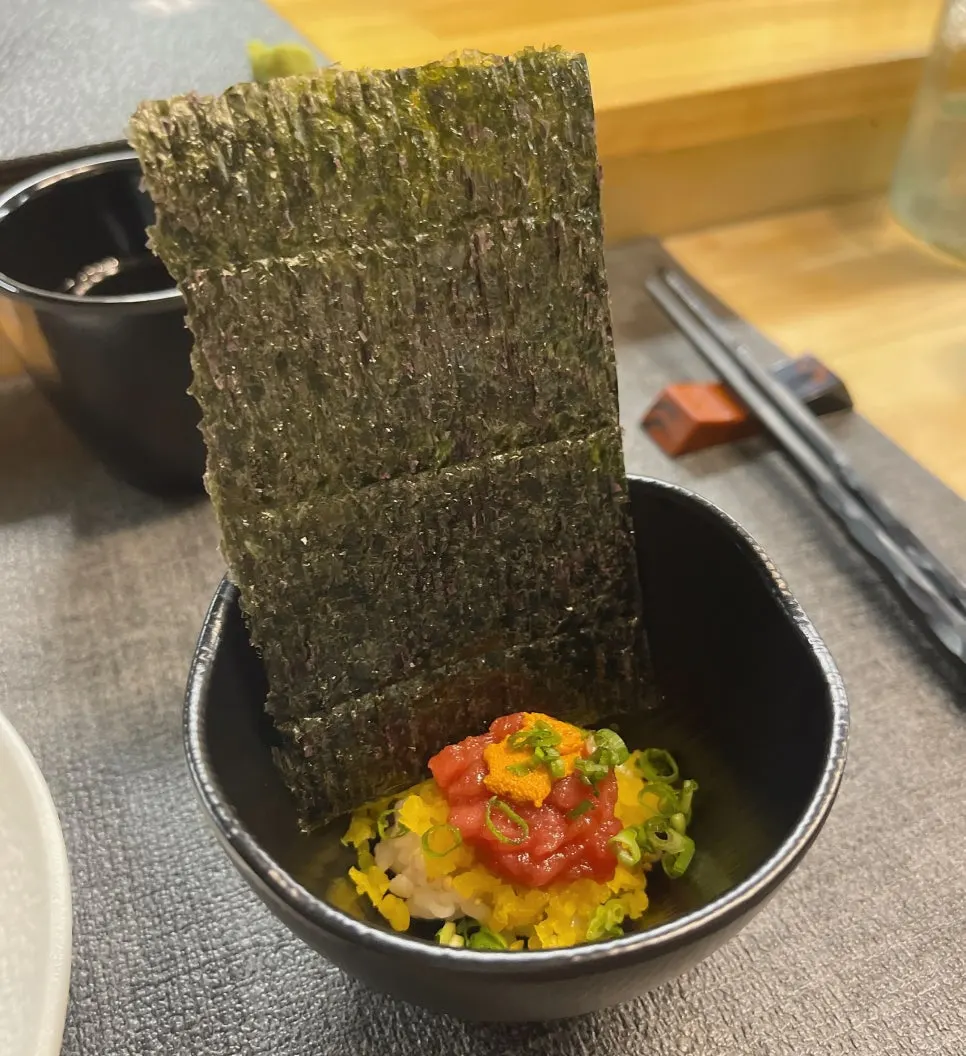
Wrapping the rice and seafood in the seaweed made it much tastier. Small in size, but it packed in a range of ingredients at once — it felt like a palate-cleanser dish, changing the mood mid-course.
Herring sushi with pickled ginger
The herring had its own distinct flavor, and the pickled ginger alongside it cleaned the palate nicely.
The bright, sharp taste of the ginger set things up well for the next piece of sushi.
Spear squid (hantae)
The spear squid had a fun texture — soft with a slight chew. It had a mild sweetness that came through the more you chewed, making it easy to enjoy in a clean, simple way.
Smoked tuna sushi with basil pesto
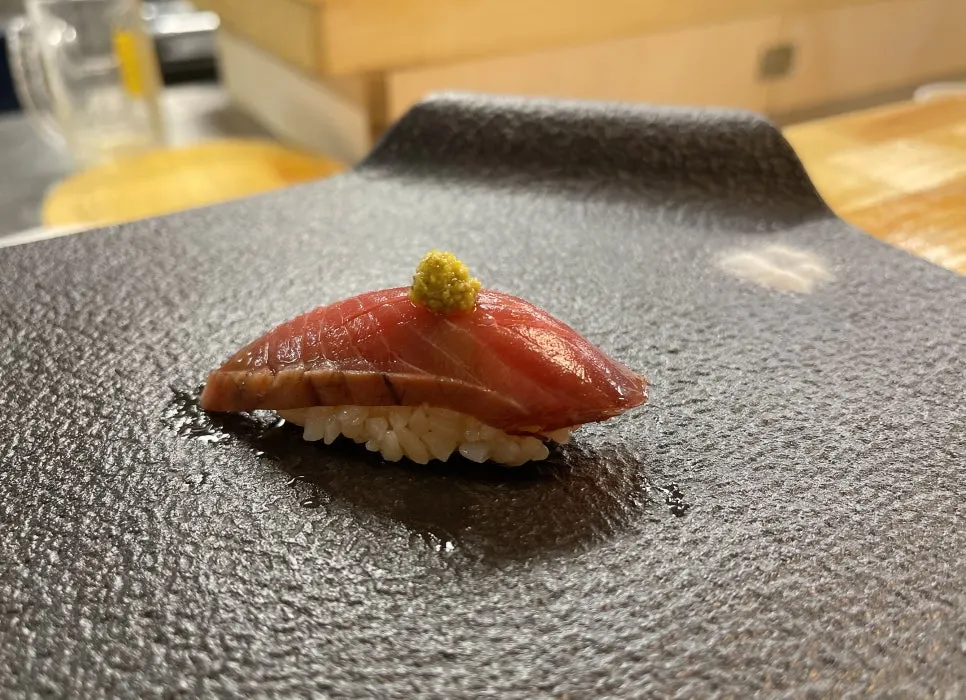
Personally, this was one of the dishes that stood out as different.
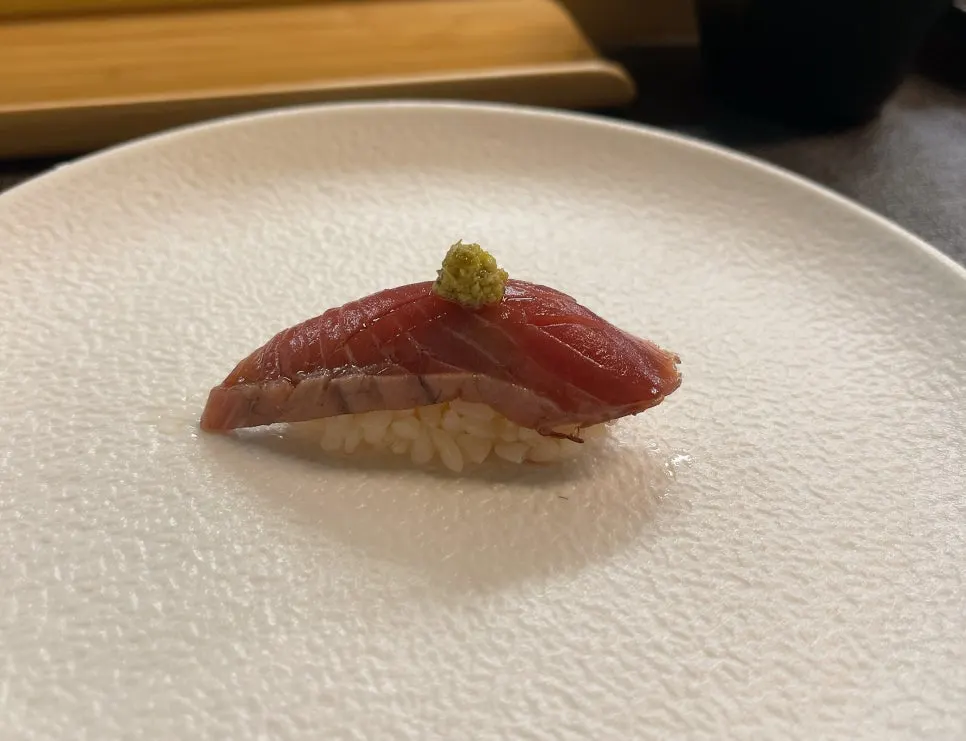
The deep richness of smoked tuna combined with the fragrant, savory basil pesto made it feel distinctly different from ordinary tuna sushi. Pairing each piece of sushi with a different sauce and ingredient seems to be this place's signature.
Fried eggplant
Fried eggplant packed full of shrimp meat inside.
Crispy on the outside, soft inside, with a springy bite of shrimp. Bonito flakes on top added even more savoriness.
Fatty tuna belly sushi
Fatty tuna (toro) sushi with a clearly rich, fatty flavor.
A deeper, more intense taste than the milder fish earlier on, and it upped the satisfaction as the course moved into its later stretch.
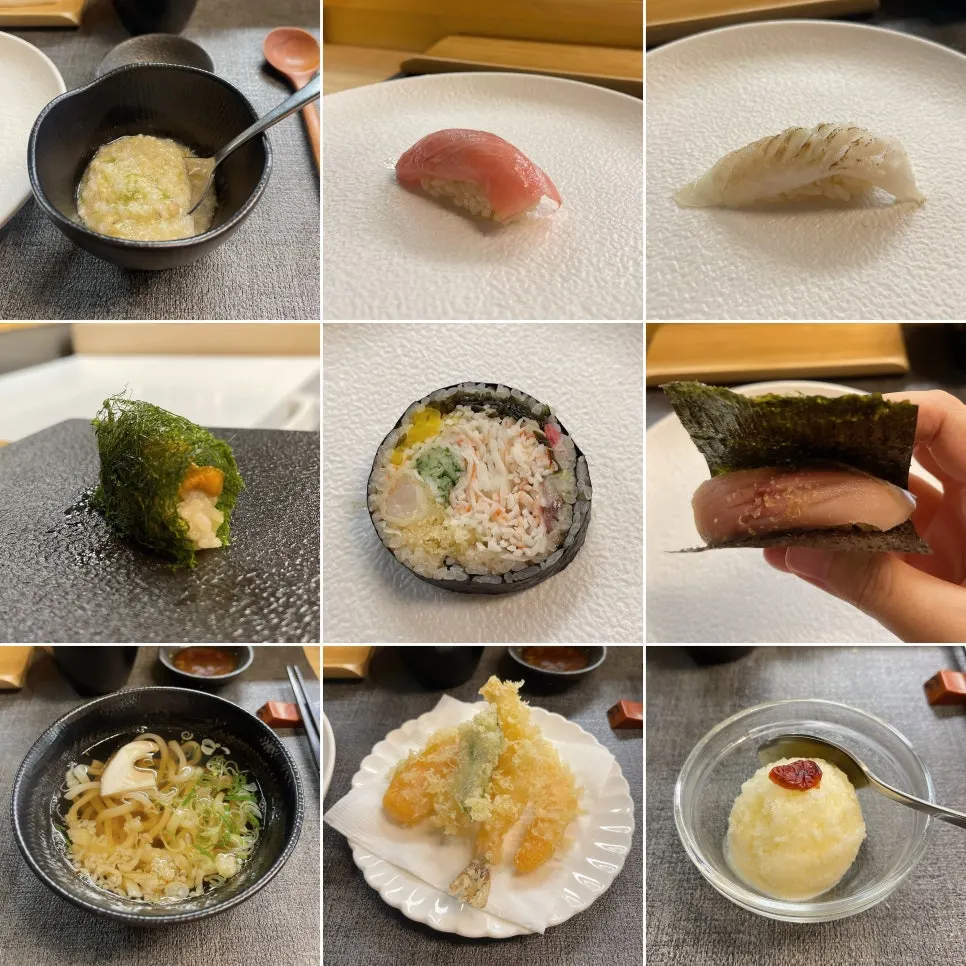
Mackerel sushi
The mackerel was meant to be wrapped in seaweed and eaten by hand. The mackerel's flavor and the crisp, savory seaweed worked well together, and eating it by hand gave it a more relaxed, casual feel.
Sea urchin with gamtae seaweed
The pairing of sea urchin (uni) and gamtae worked beautifully, as always.
The fragrant sea aroma of the gamtae and the soft, rich flavor of the uni blended naturally in the mouth. Not a big portion, but it added a touch of luxury in the middle of the course.
Futomaki (thick sushi roll)
The futomaki (thick sushi roll) had a nice contrast between the soft crab meat and the crunchy cucumber. Even with several ingredients packed in together, each texture came through distinctly, making it fun to chew.
Warm udon
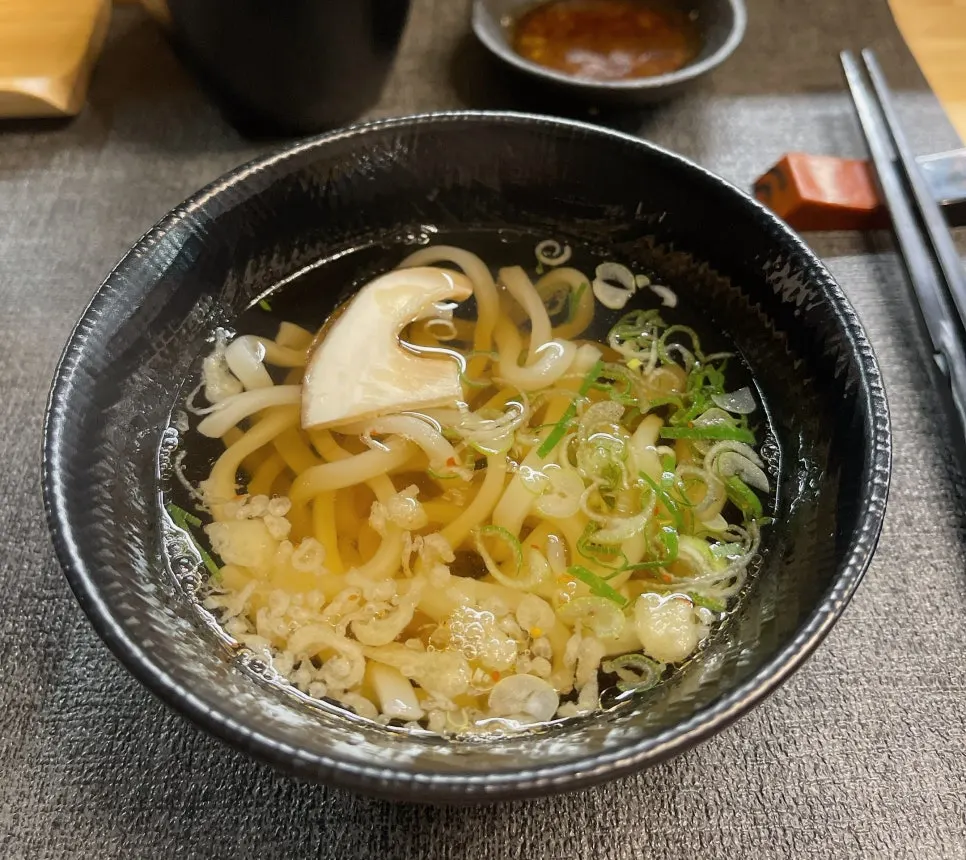
After a long stretch of sushi, the warm udon felt comforting on the stomach. The broth was warm and clean-tasting, fitting well into the later part of the course.
Assorted tempura
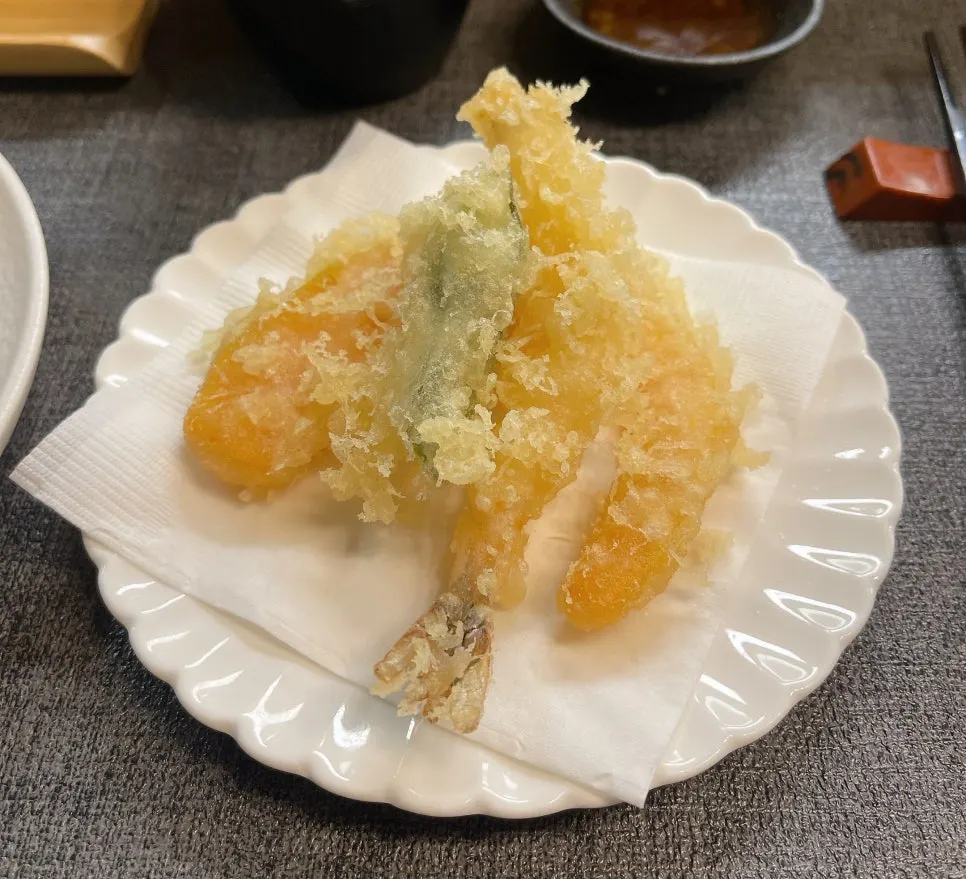
Before the final dish, assorted tempura came out with shrimp, sweet potato and shishito pepper.
The shrimp was springy, the sweet potato was sweet and soft, and the shishito pepper kept its distinctive aroma alive within the savoriness of the frying.
Yuzu sorbet
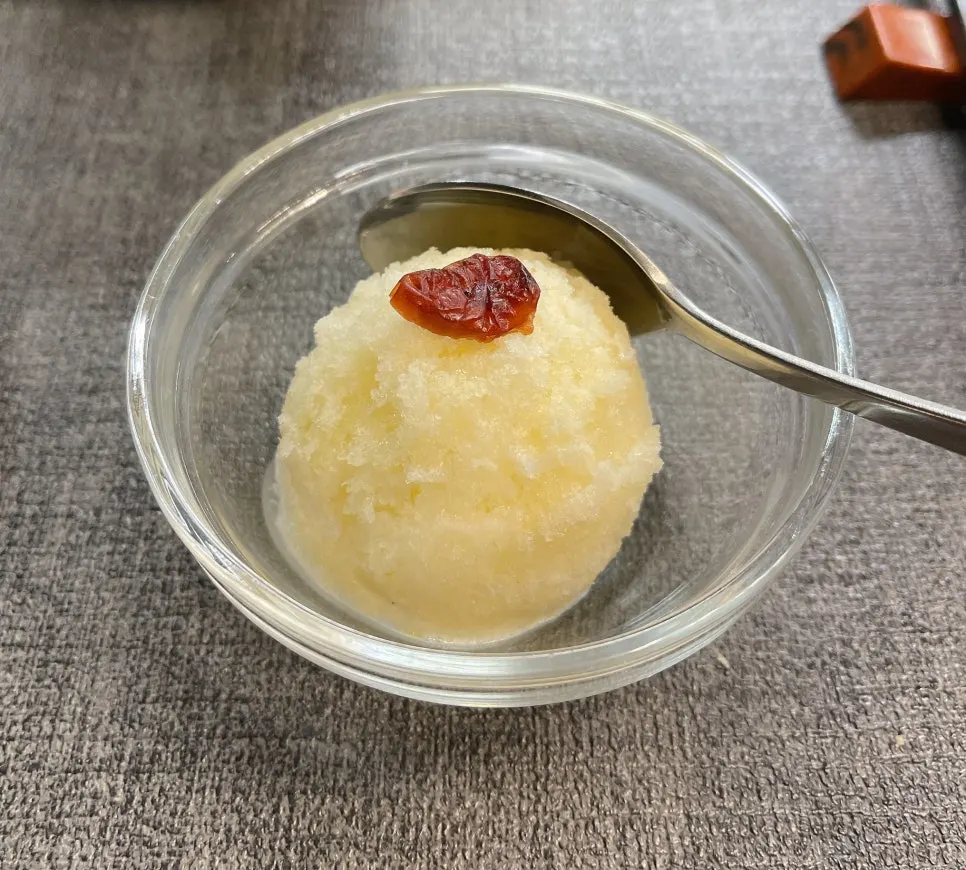
The final dessert was yuzu sorbet. The refreshing, cool yuzu aroma cleared the palate nicely, making it a great way to close out a long course. Apparently the dessert can change with the season, and I liked that seasonal touch to the ending.
A different pairing on every piece of sushi
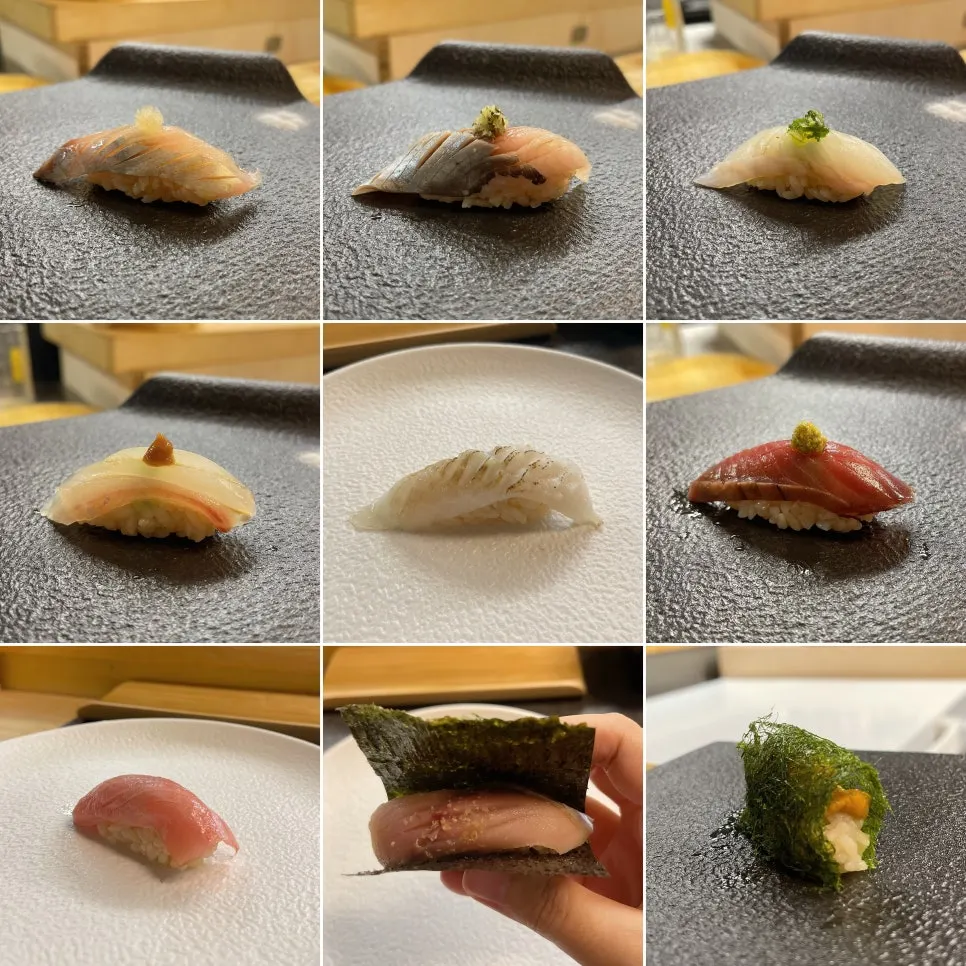
What stood out was how each piece of sushi kept the natural flavor of the fish while being paired with a different ingredient — truffle, yuzu, basil pesto, sumiso, pickled ginger. So instead of the same sushi feeling repetitive, each bite brought a new aroma and flavor to discover.
For anyone trying Pangyo omakase sushi for the first time, getting to taste a range of fish alongside different accompanying ingredients makes it an enjoyable experience. At ₩45,000 per person for 18 courses, it was also relatively easy on the wallet for a special-occasion meal.
Is Suyori Sikdang worth it? Final verdict
Overall, what I liked about Suyori Sikdang was that it's less about just eating sushi and more about enjoying the course itself, watching the chef prepare each dish right in front of you one after another. Menus paired with truffle, yuzu, basil pesto, sumiso and gamtae let me taste something new with every piece, and it wrapped up satisfyingly with warm udon, assorted tempura and refreshing yuzu sorbet across a full 18 courses.
Since it's all counter seating, you can watch the chef's hands up close and hear the stories behind the food, making it a good pick for a date or an anniversary — any day you want a special meal.
If you want to enjoy a meal a bit different from usual without the price feeling like too much, the omakase at Suyori Sikdang seems like a solid choice. For anyone looking for Pangyo omakase sushi, a Bundang omakase course meal, or a Pangyo Japanese course meal at a reasonable price, this place fits especially well.
Where it is
230 Pangyo-yeok-ro, B126, B1F, Samhwan Hi-pex Bldg. B, Bundang-gu, Seongnam-si, Gyeonggi-do, South Korea경기도 성남시 분당구 판교역로 230 B동 B126호 지하1층