Solo-dining jjamppong rice bowl at Hongmigwan, a Busan Chinese
In short
Hongmigwan is a Chinese restaurant in an alley beside Gupo Market, near Deokcheon Station in Buk-gu, Busan, where a Chinese-cuisine chef cooks every dish himself. On a third visit, a solo diner ordered jjamppong-bap (spicy seafood soup with rice) at 10,000 won a bowl, served as fried rice with the seafood-packed broth on the side, plus mini tangsuyuk (sweet and sour pork). The broth simmered with seaweed was deep enough that Hongmigwan could stand among Busan's three best jjamppong spots.
Good to know
- Location
- 93 Nakdong-daero 1780beon-gil, Buk-gu, Busan (near Deokcheon Station on Subway Line 2, in the alley beside Gupo Market)
- Hours
- 11:00–21:00 daily, closed Sundays
- Parking
- Use nearby paid parking lots
- Seating
- About 6 tables, plus a bar counter that works for solo diners
- What was ordered
- Jjamppong-bap (10,000 won a bowl), mini tangsuyuk
- Menu
- Jjamppong, jjajangmyeon, fried rice, japchae-bap, seasonal dishes, two-person lunch set (chili shrimp + tangsuyuk), Chinese liquors including gaoliang and Yantai gaoliang
- Price reference
- ₩10,000 ≈ $7.2 (2026-09-19)
as written by the visitor on Sep 17, 2026
I went for lunch to Hongmigwan, a jjamppong (spicy seafood noodle soup) spot near Gupo Market by Deokcheon Station in Busan. This was already my third visit — the broth is famous in the neighborhood for good reason, and it was just as amazing this time.
Where is Hongmigwan near Deokcheon Station, and what are its hours?
Hongmigwan is located at 93 Nakdong-daero 1780beon-gil, Buk-gu, Busan, in the alley right beside Gupo Market near Deokcheon Station on Line 2. It's open 11:00–21:00 every day except Sunday, and there's paid parking nearby.
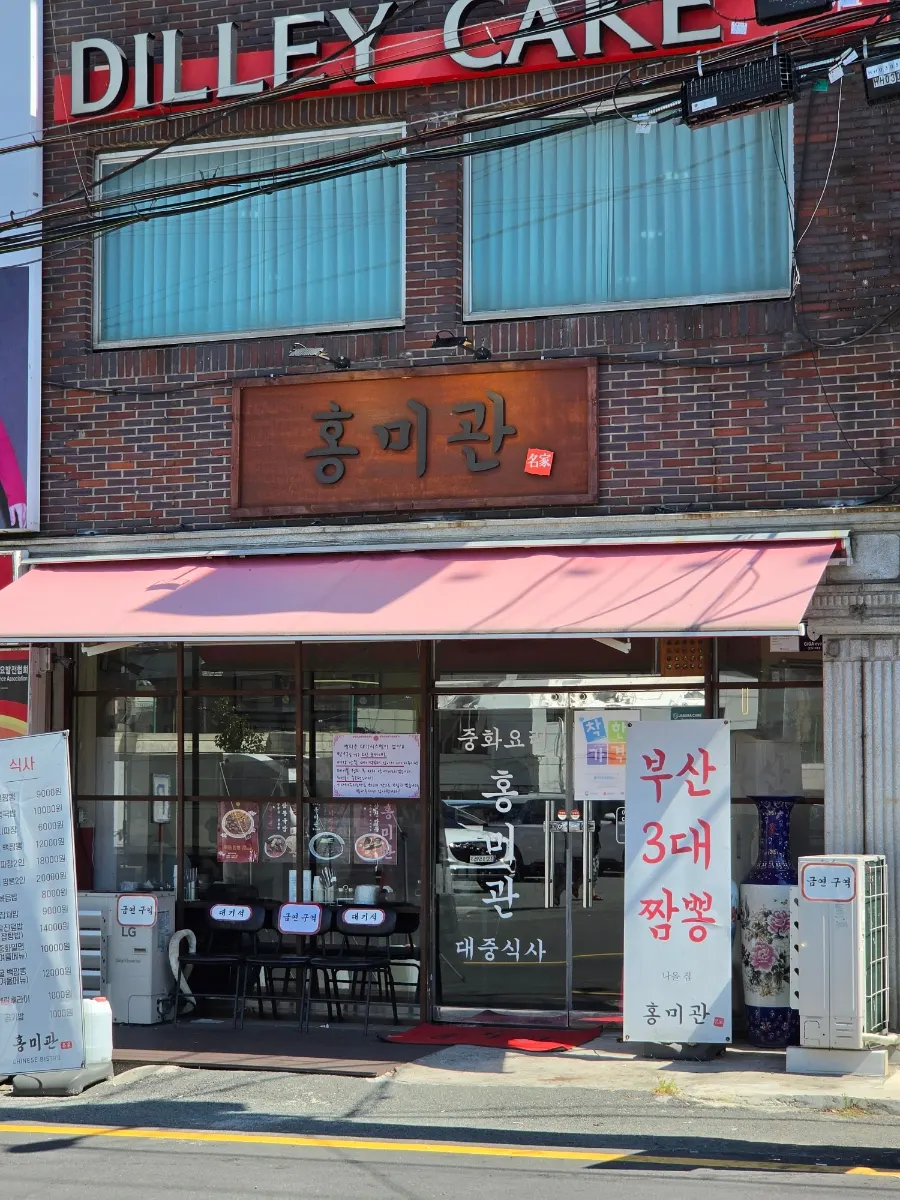
It's a Chinese restaurant near Deokcheon Station on Line 2, tucked into the alley right next to Gupo Market.
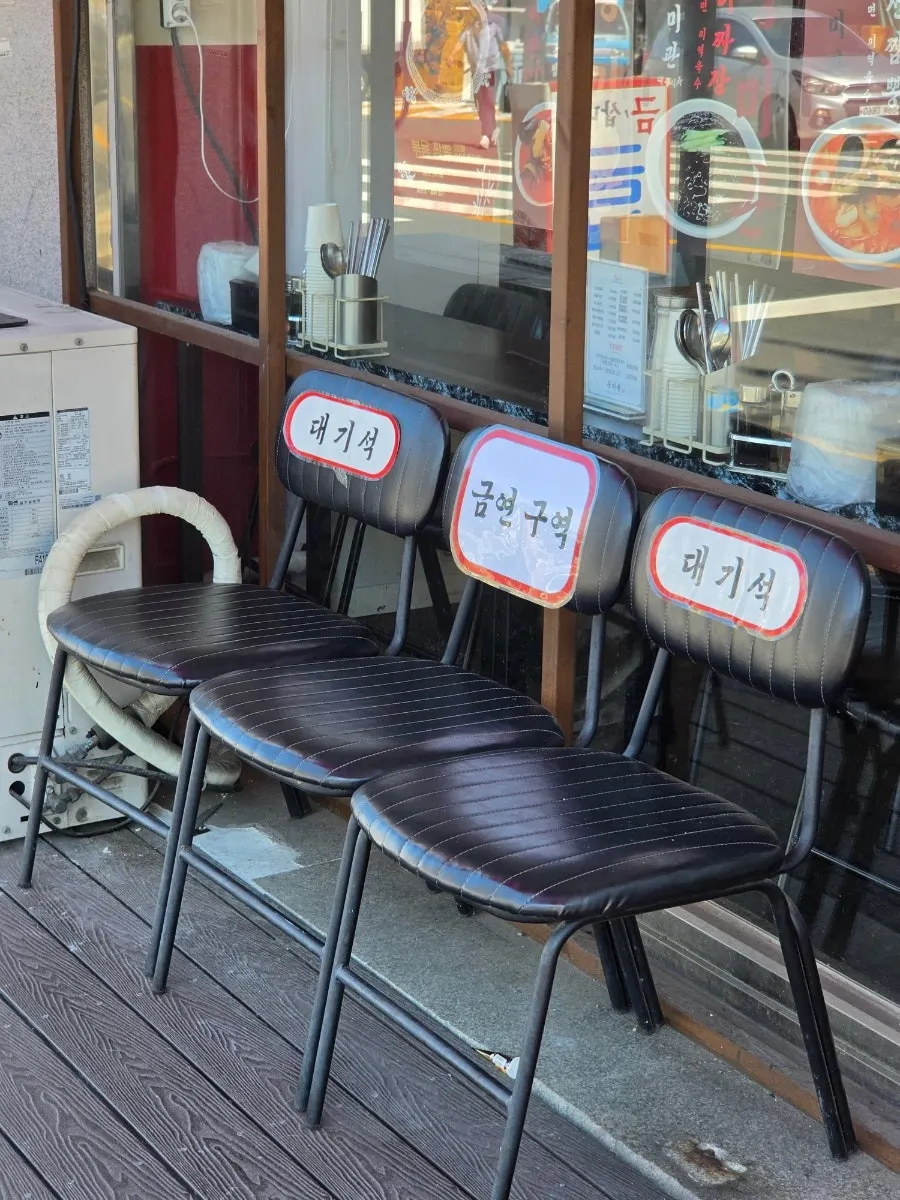
There was quite a crowd on a weekday lunch, and even a bit of a wait.
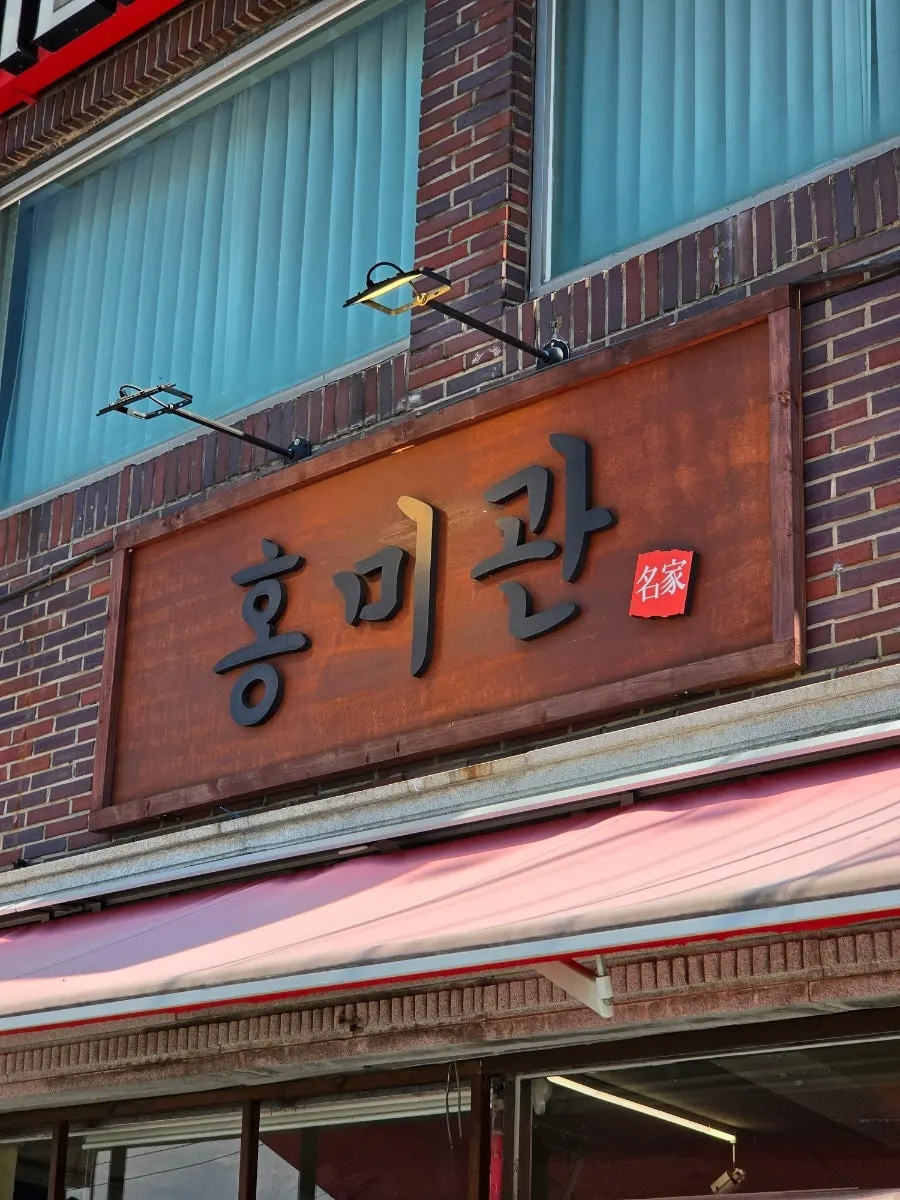
I stumbled onto this place by chance once, and it was so good I keep coming back whenever I'm nearby.
Inside Hongmigwan: can you eat alone here?
Hongmigwan is a small Chinese restaurant with about 6 tables, but it also has a bar-style counter, so it was fine to eat alone. All the broths are made in-house, and even the noodles are hand-kneaded rather than store-bought.
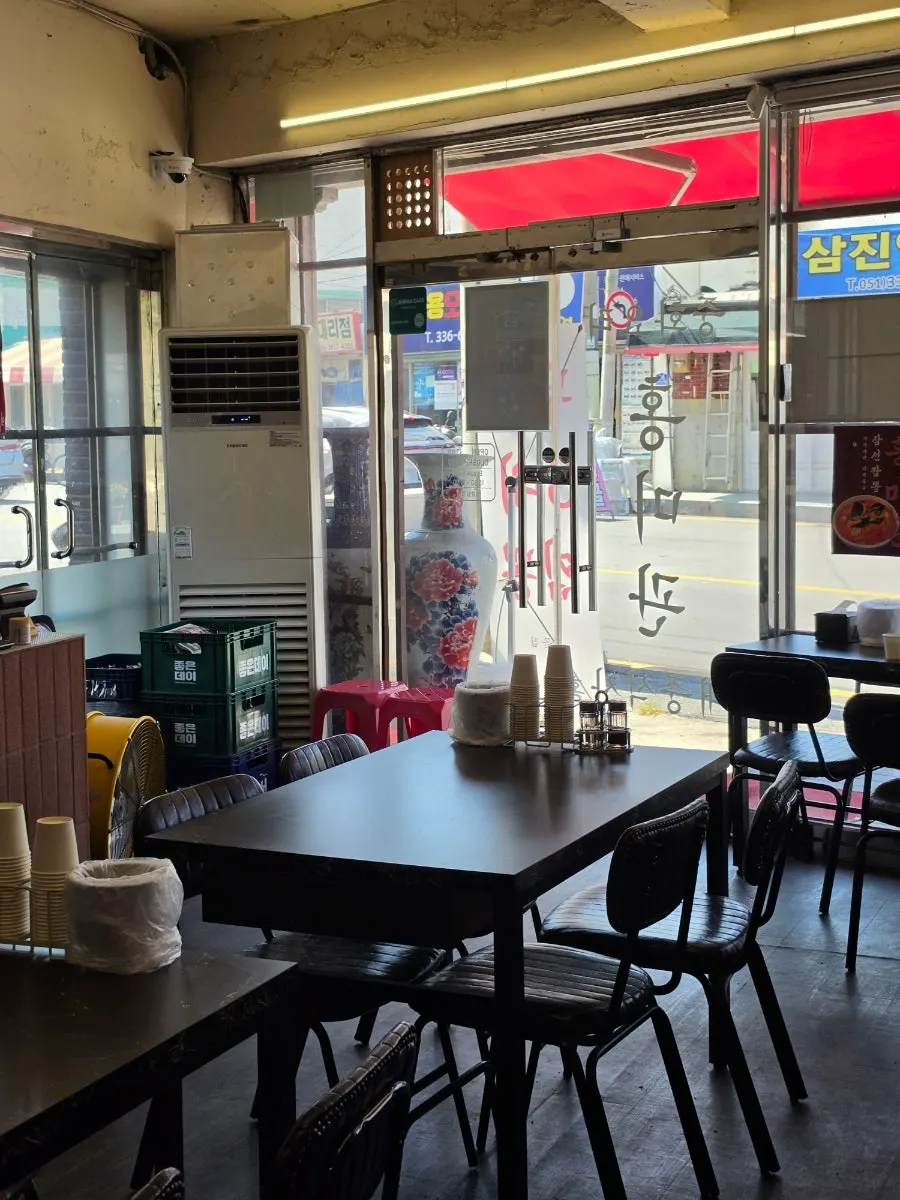
The restaurant was small, with around 6 tables.
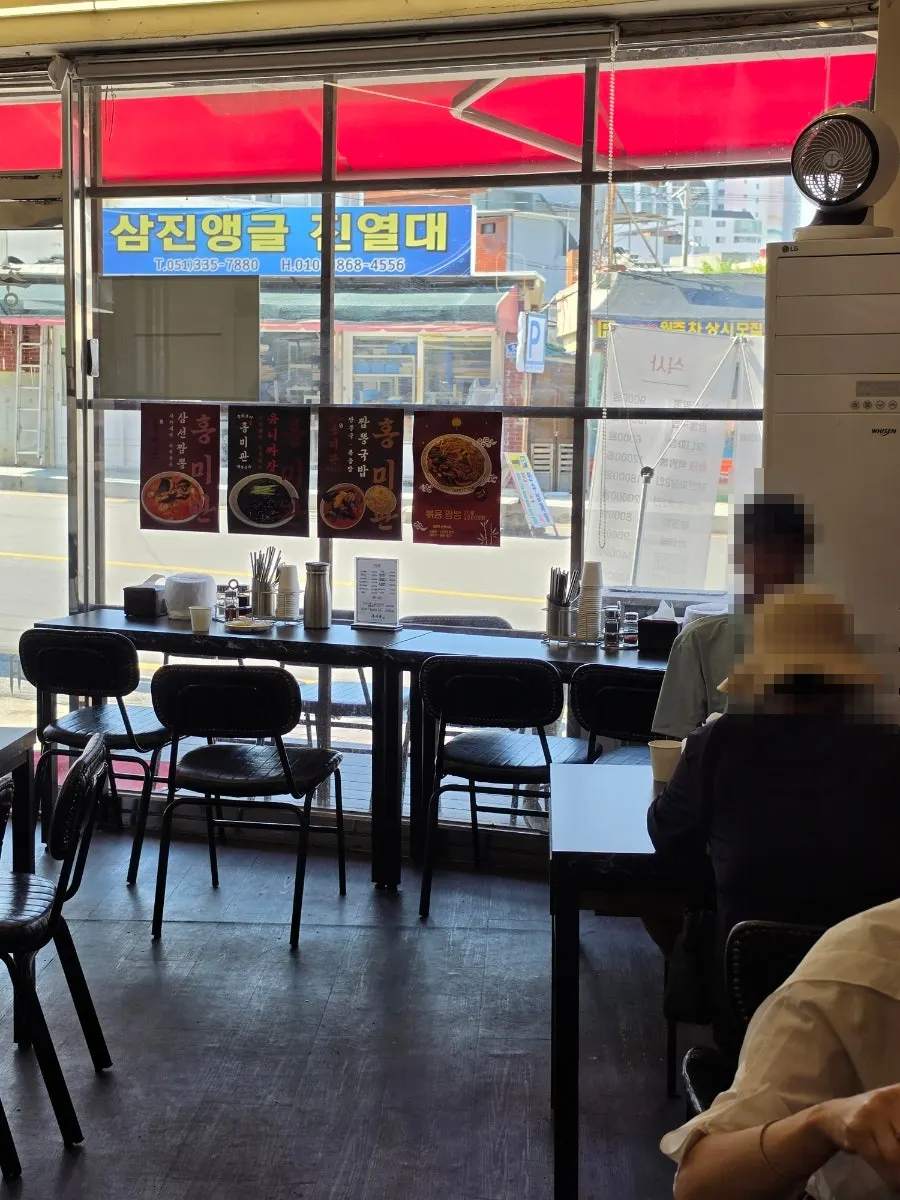
Even well past lunch hour, the place was still about half full. It had a bright, sunny atmosphere.
Hongmigwan makes all its broths in-house, and the noodles are also hand-kneaded rather than store-bought.

This isn't just an ordinary Chinese restaurant — it's run by a Chinese cuisine chef who cooks everything himself. I noticed several cooking competition awards on display.
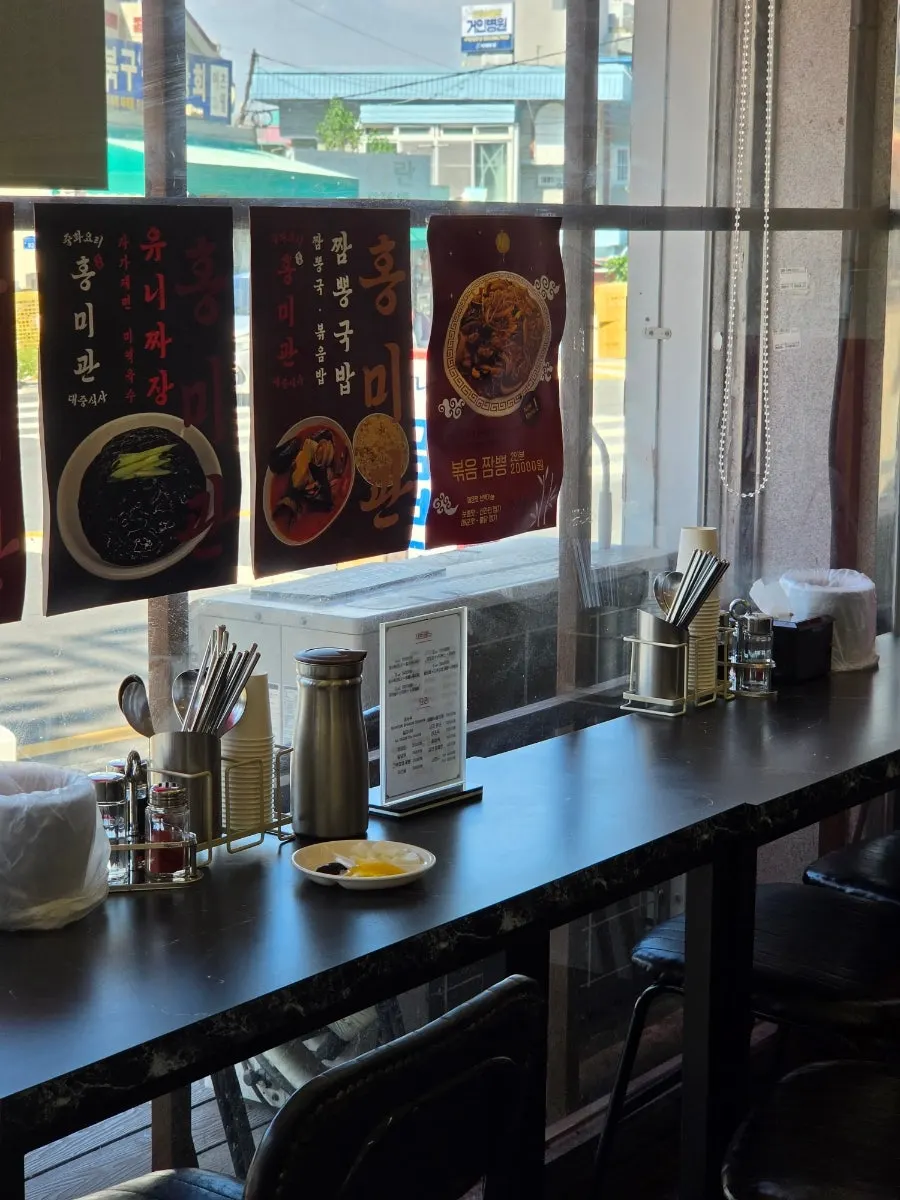
With the bar-style counter, it was a comfortable spot to eat alone.
What's on the menu at Hongmigwan?
Hongmigwan's menu ranges from jjamppong and jjajangmyeon to fried rice, japchae-bap (glass noodle rice), and seasonal dishes. There's also a 2-person lunch set where you can try chili shrimp and tangsuyuk at an affordable price.
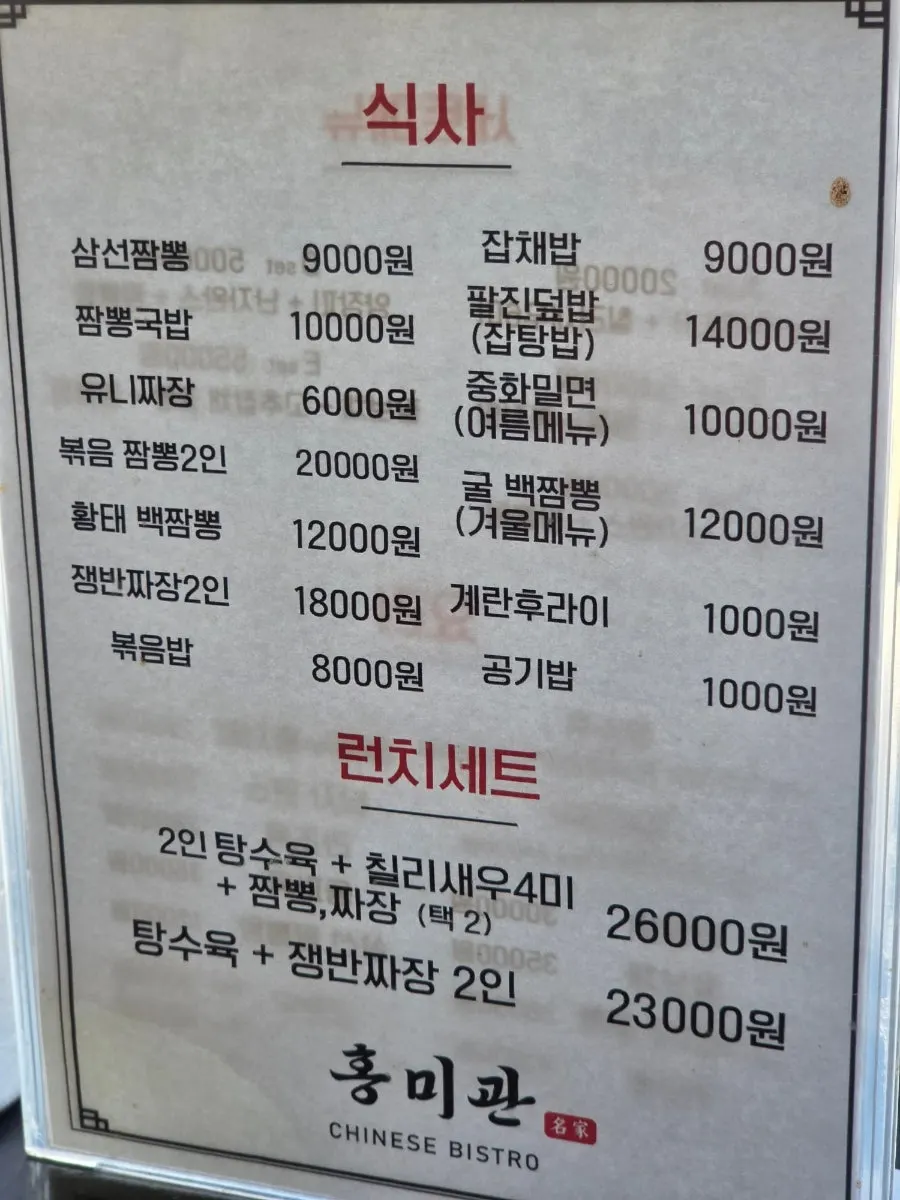
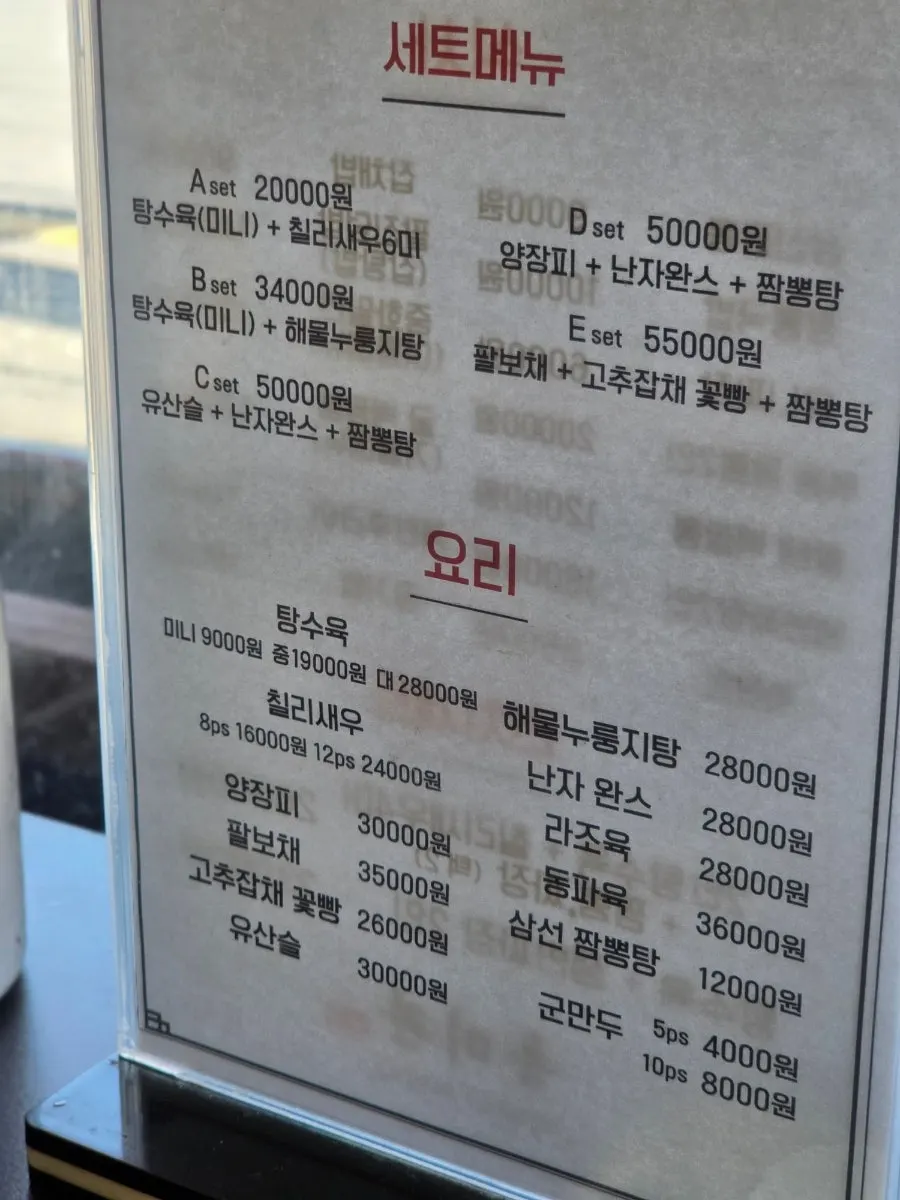
With a variety of cooked dishes on offer too, it seemed like a great spot to come for drinks in the evening.
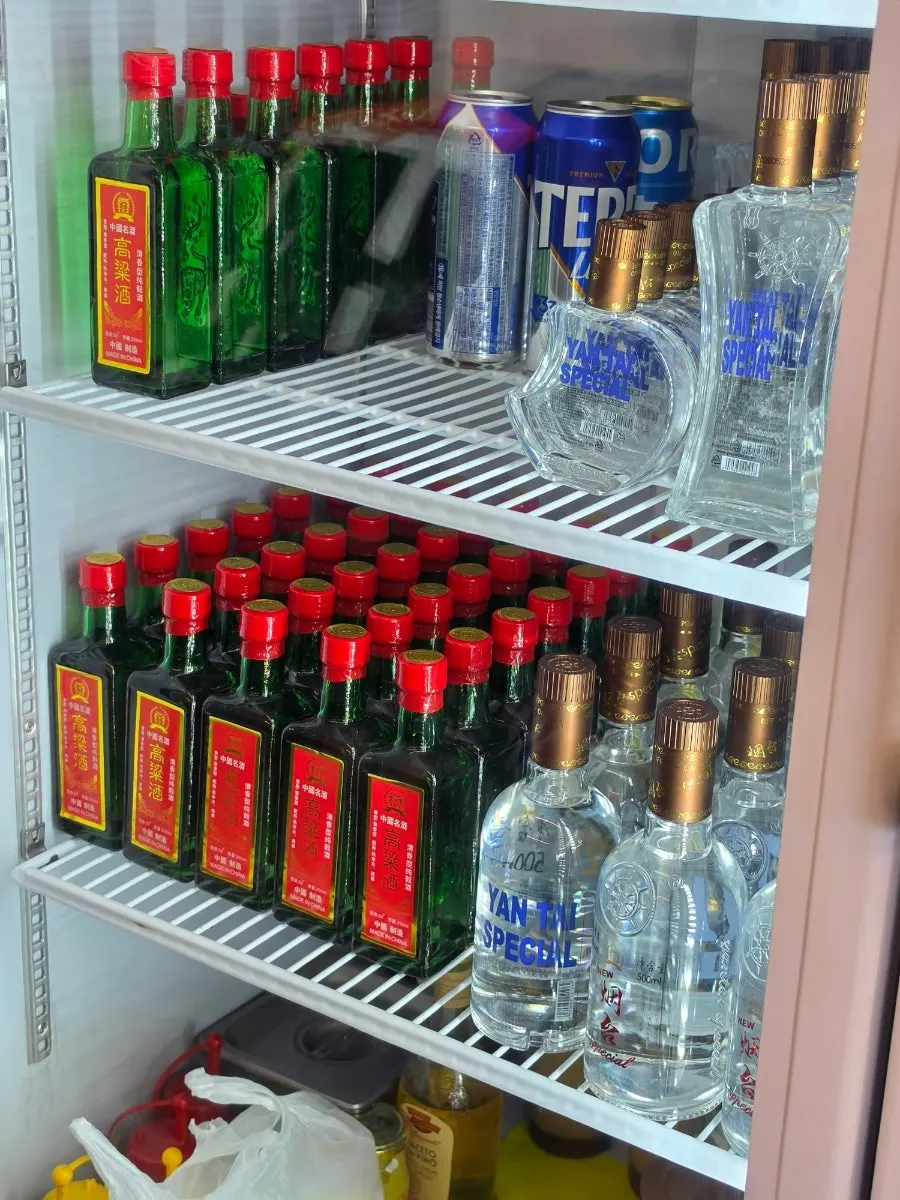
In the fridge, I spotted several kinds of Chinese liquor, including gaoliang and Yantai gaoliang.
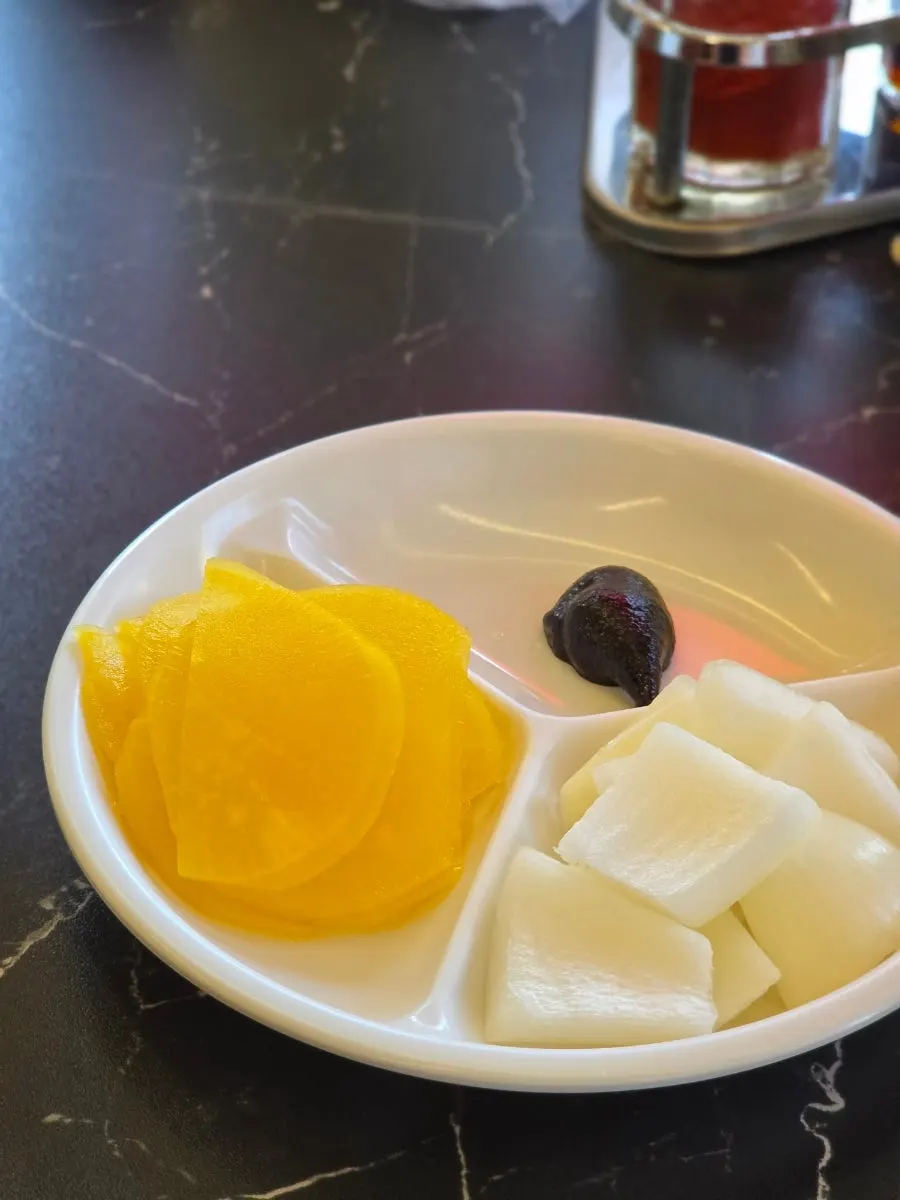
After ordering, they brought out pickled radish and onion as side dishes.
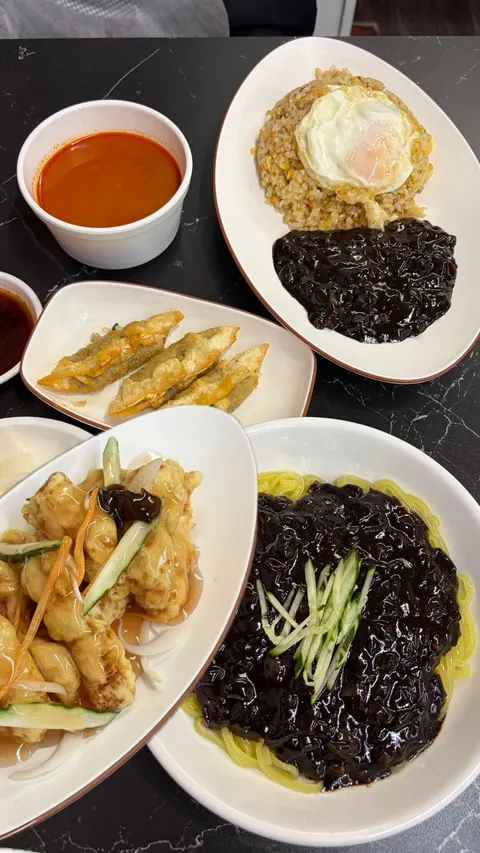
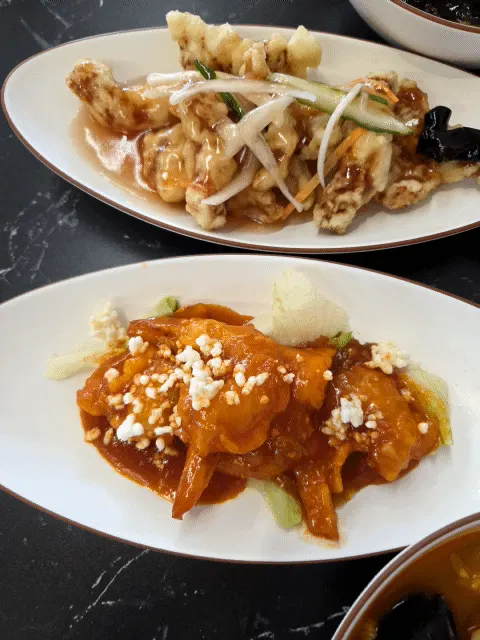
Mini tangsuyuk: the right size for one person
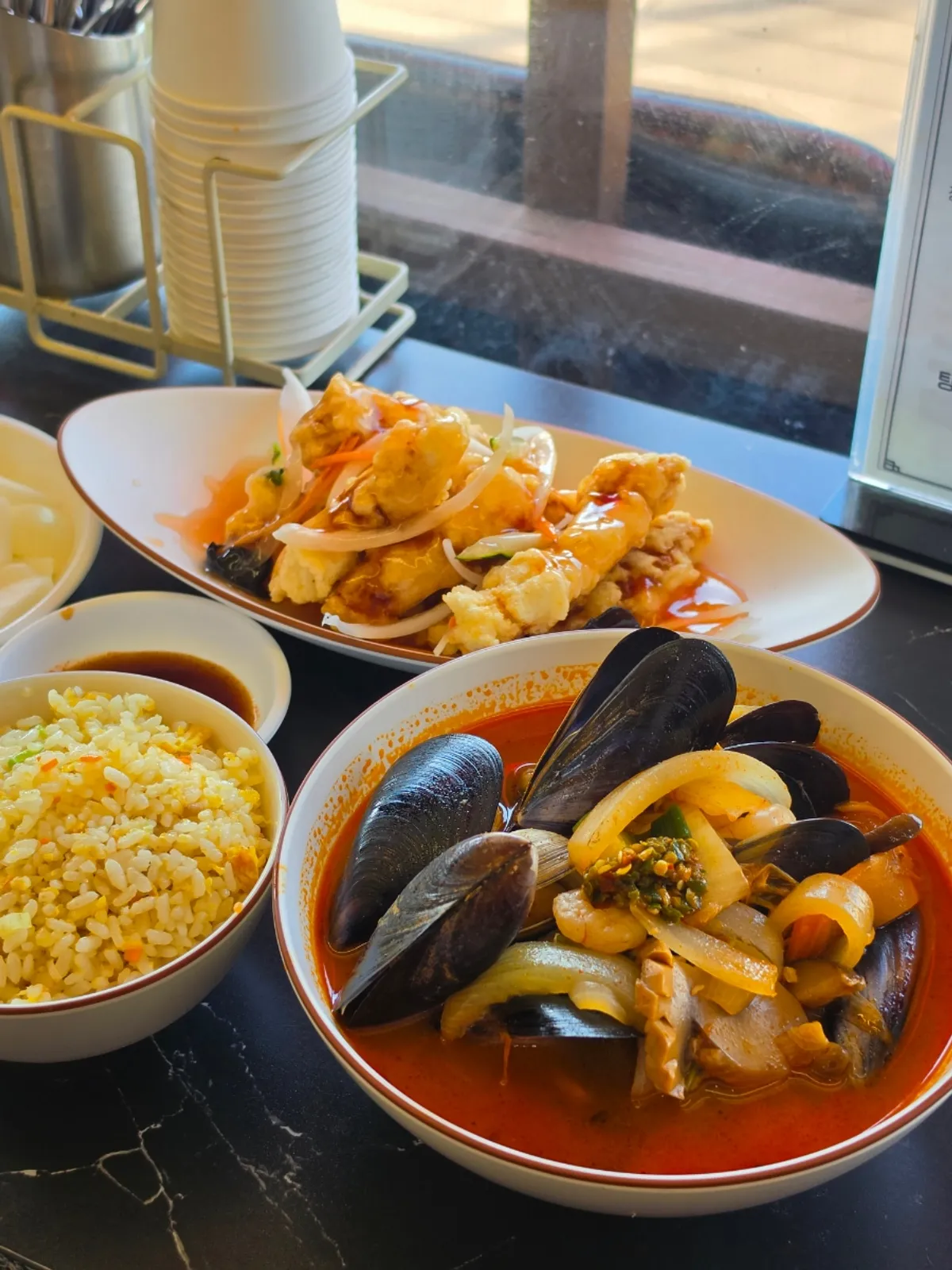
Hongmigwan has an affordable mini tangsuyuk, so I could order one without any guilt even eating alone. The sauce comes poured over the meat — if you want it on the side for dipping, you have to ask separately.
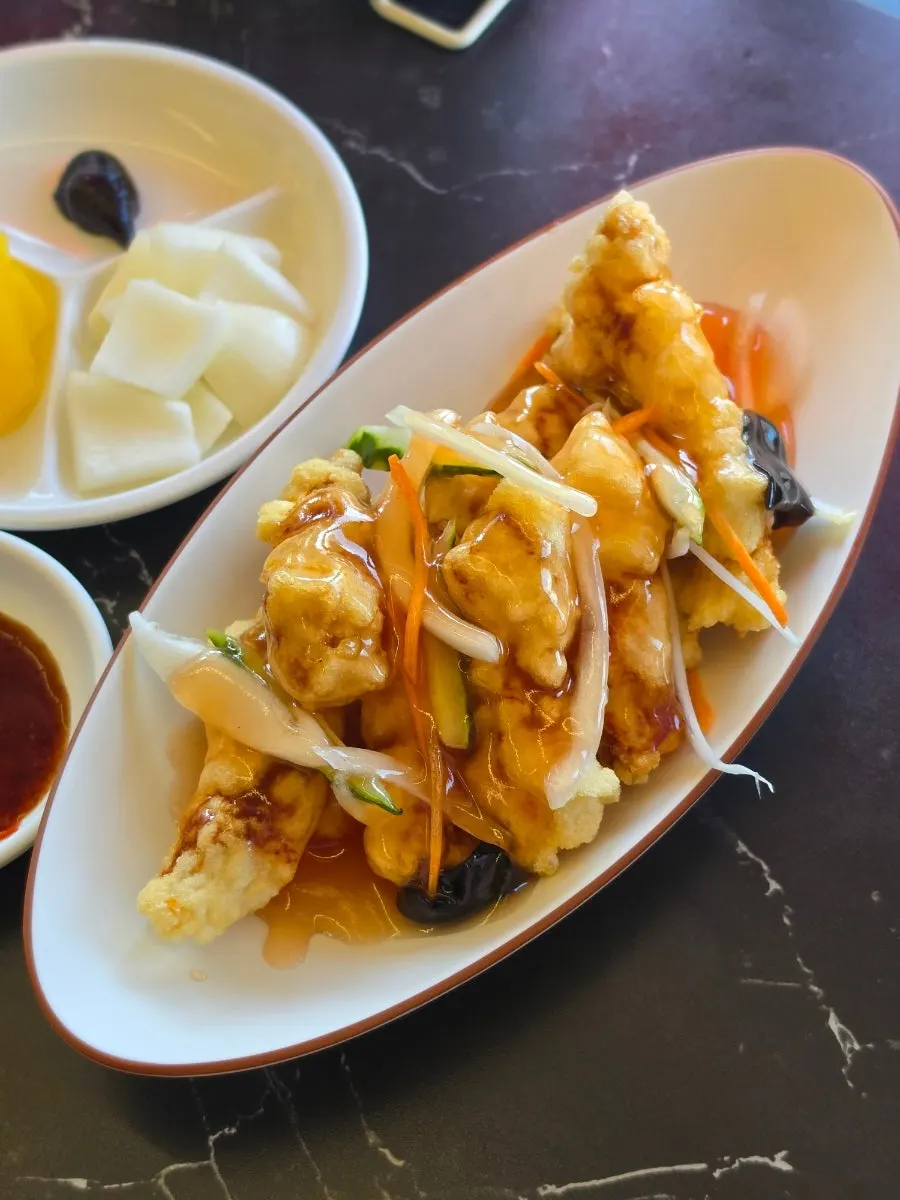
Since I was dining solo, I decided to try the affordable mini tangsuyuk they happened to have.
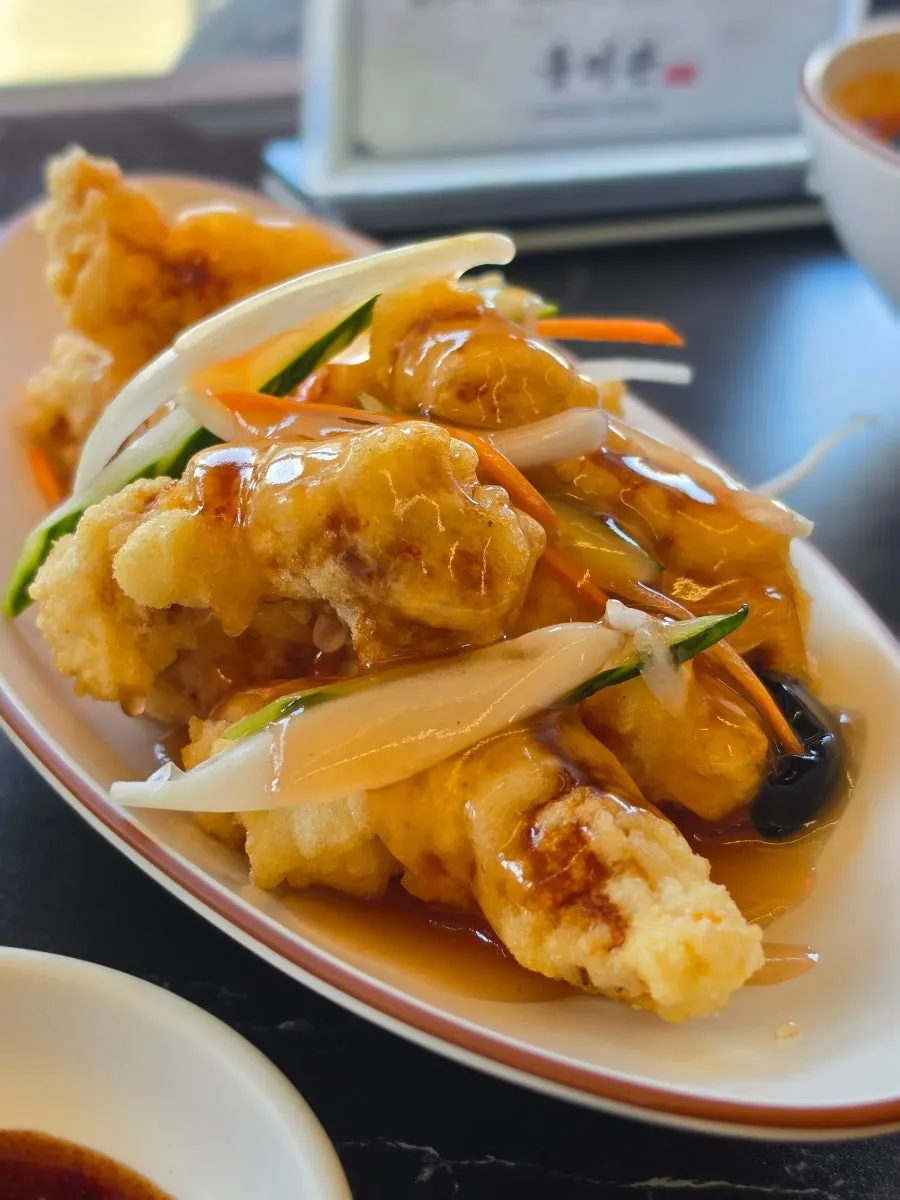
It came fresh out of the fryer — you could tell how crispy the coating was just by looking at it.
The meat was thick and the coating thin, so I could really taste both the meaty flavor and the crunch at the same time.
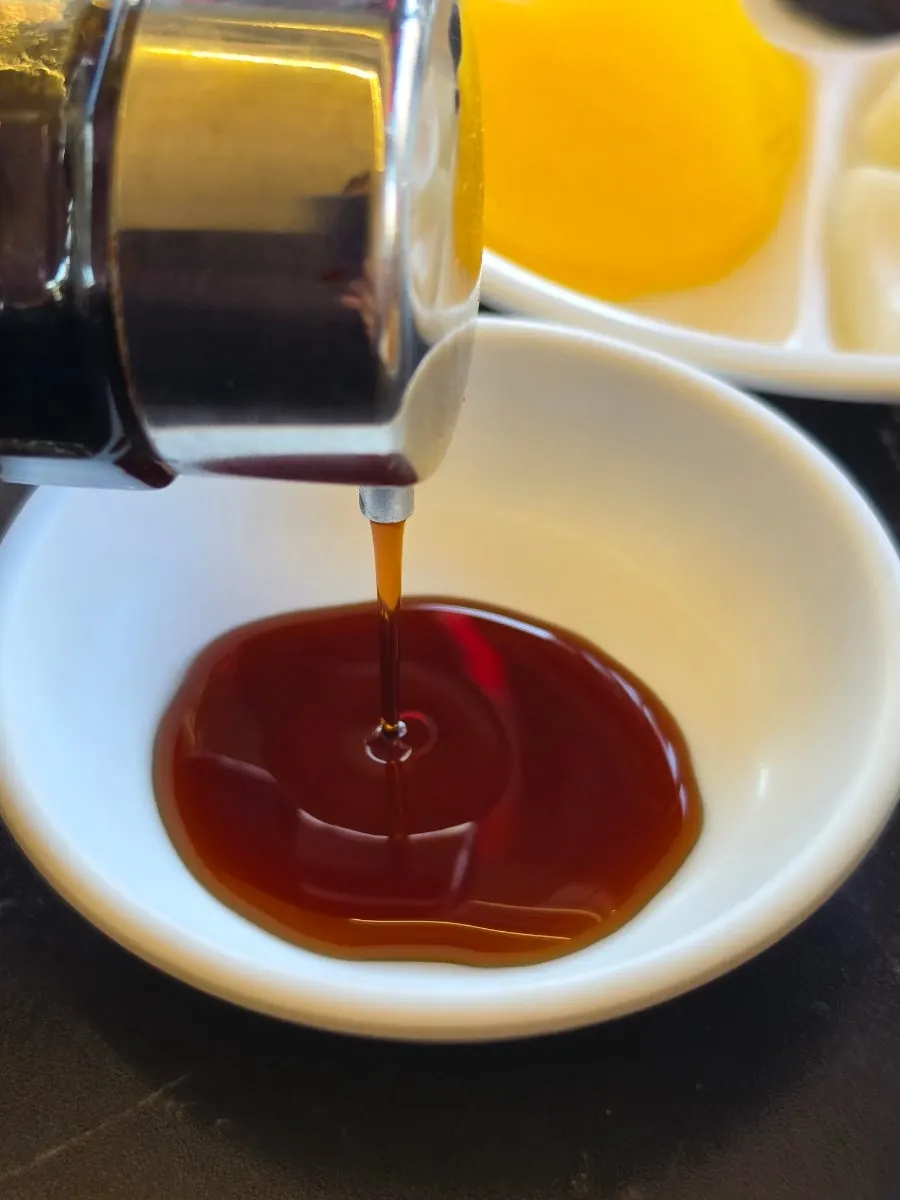
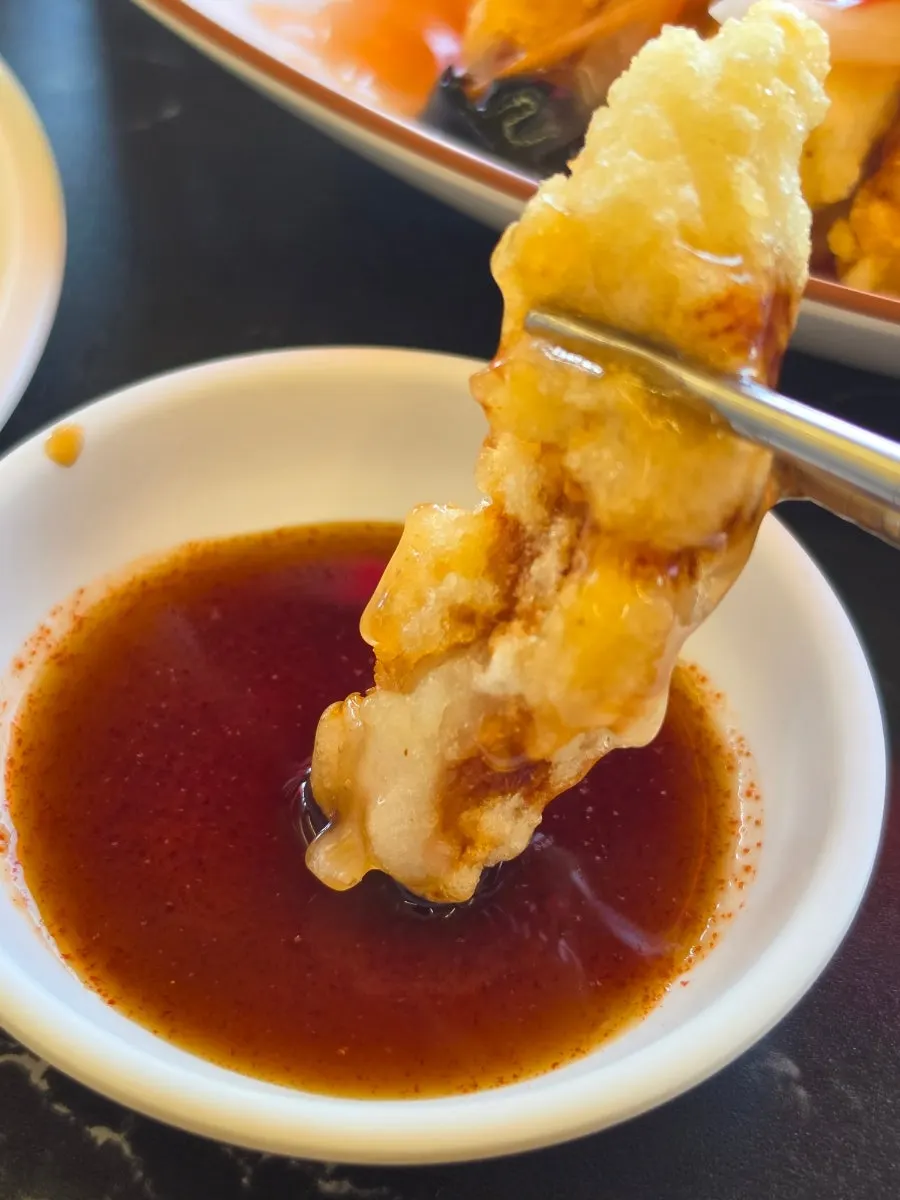
Dipping it in soy sauce gave it a whole different flavor too.
Jjamppong-bap: fried rice with the broth served on the side
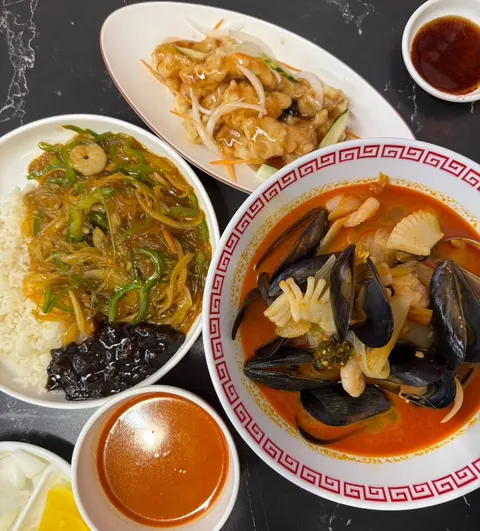
Hongmigwan's jjamppong-bap is served in an unusual way — fried rice and jjamppong broth come together but separately. It's ₩10,000 a bowl, and it's loaded with seafood like mussels, clams, squid, and shrimp, making it very filling.
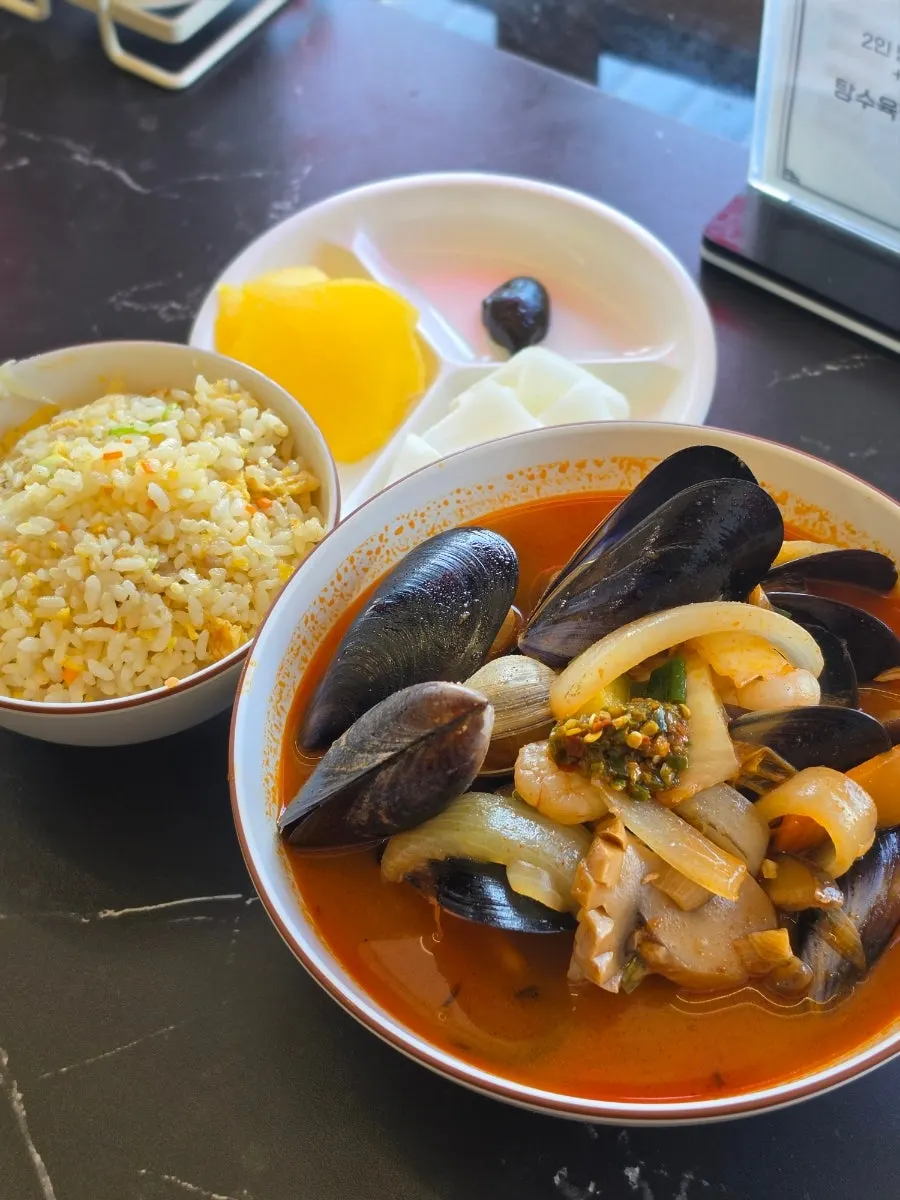
Last time I had the regular jjamppong and loved it, so this time I tried the jjamppong-bap. Unusually, it comes with fried rice served alongside the jjamppong broth.
First off, the jjamppong was loaded with mussels, clams, squid, shrimp, and all kinds of seafood — very generous.
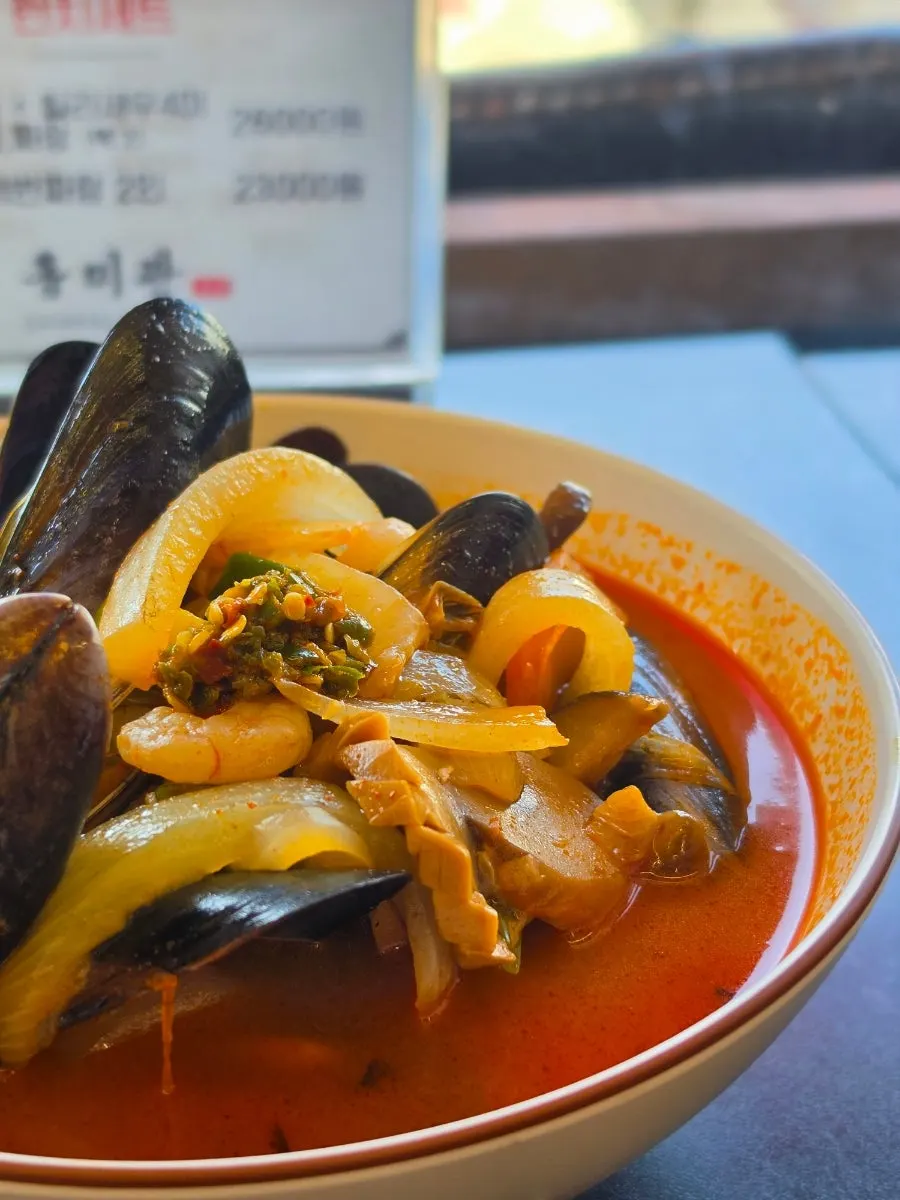
It was packed with truly fresh seafood, and the broth had a deep flavor from being simmered with seaweed. It was also full of mushrooms, and the mushroom aroma paired well with the jjamppong.
The fresh seafood filling the broth seemed endless no matter how much I ate. For ₩10,000 a bowl, it was an incredible deal.
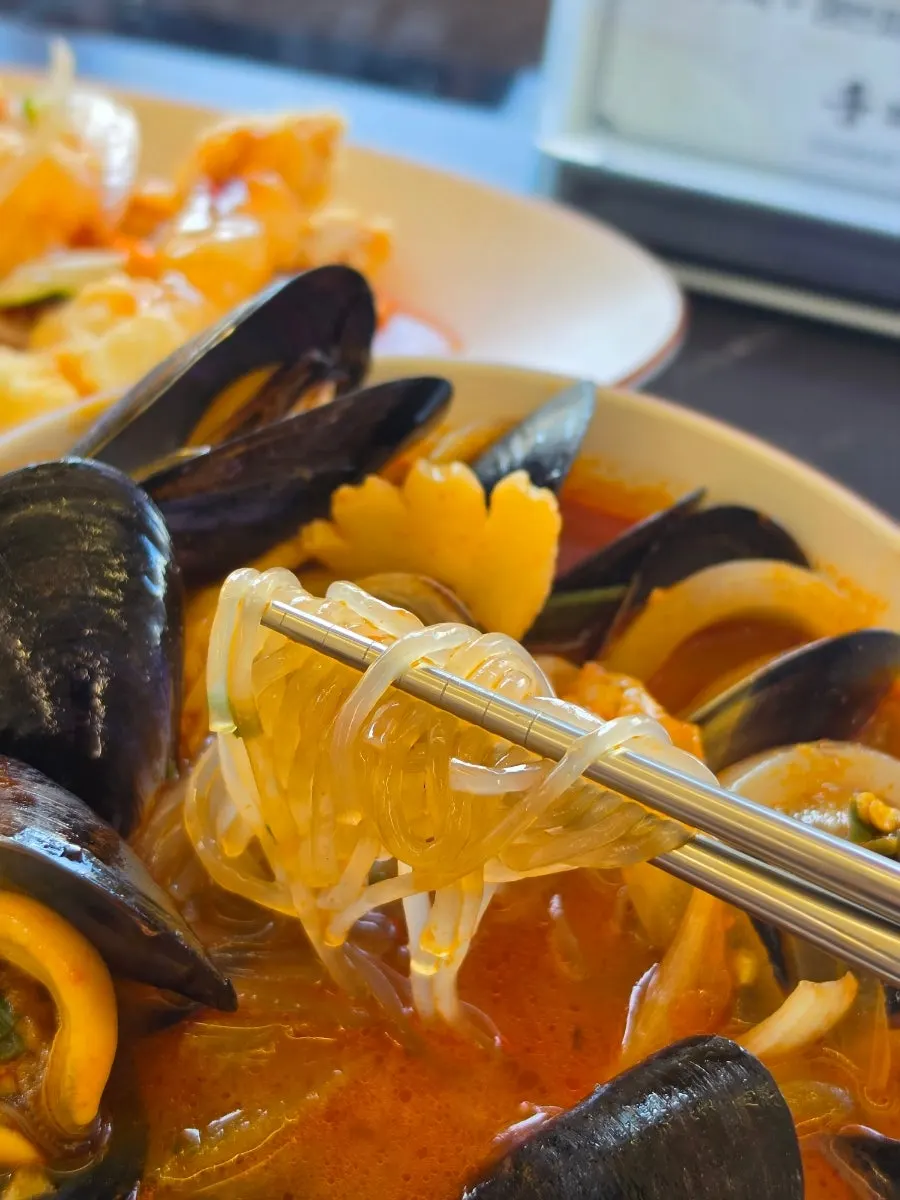
Instead of jjamppong noodles, there's a bit of glass noodles mixed in.
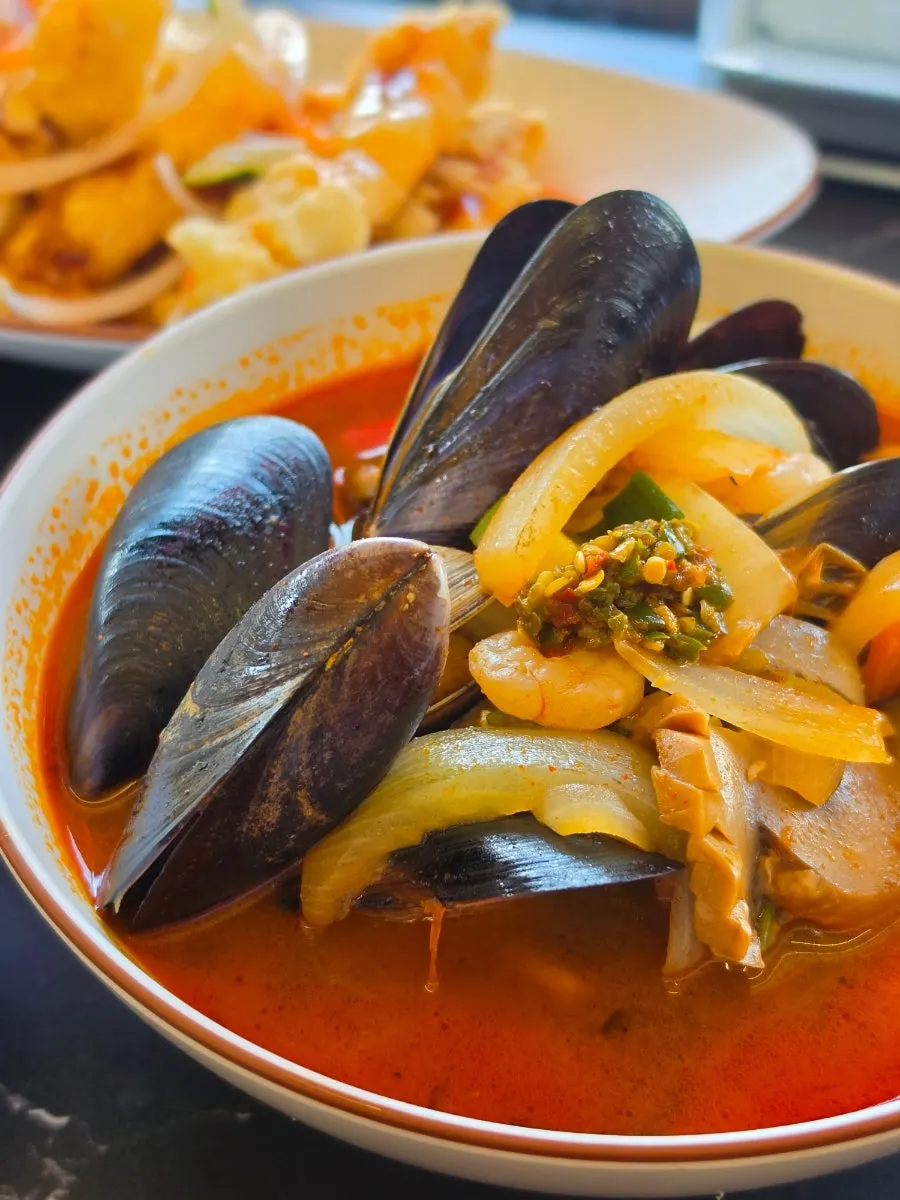
Honestly, this jjamppong could hold its own as one of Busan's top three. It ranks in the top three of every jjamppong I've had in my life.
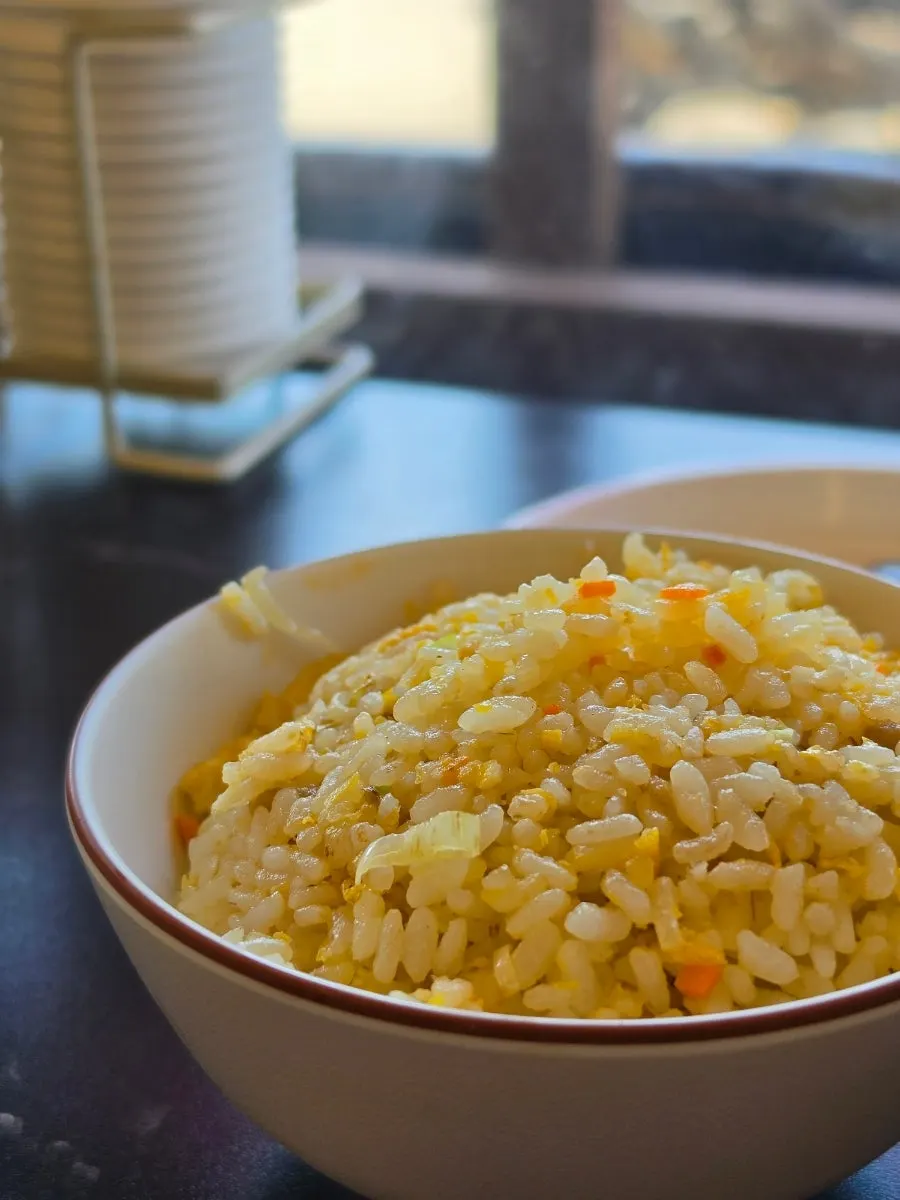
The fried rice served alongside was cooked nice and fluffy — a classic style of Chinese fried rice that anyone would like. Each grain of rice stayed separate from the other ingredients, nice and fluffy.
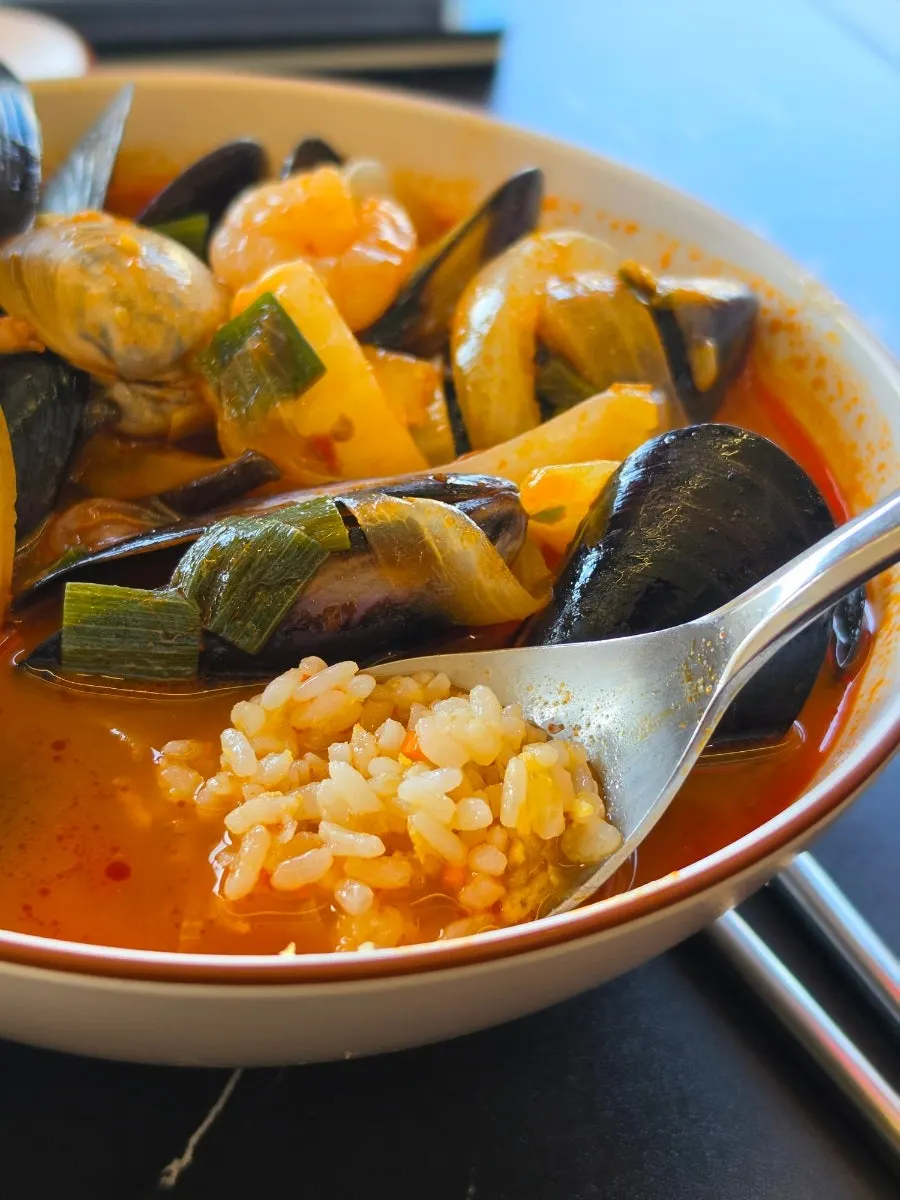
Taking a spoonful with the jjamppong broth, I could taste the savory egg together with the deep flavor of the broth.
Is Hongmigwan worth the trip? Final verdict
Hongmigwan's jjamppong is the kind of flavor that makes you finish the hot broth even on a hot day.
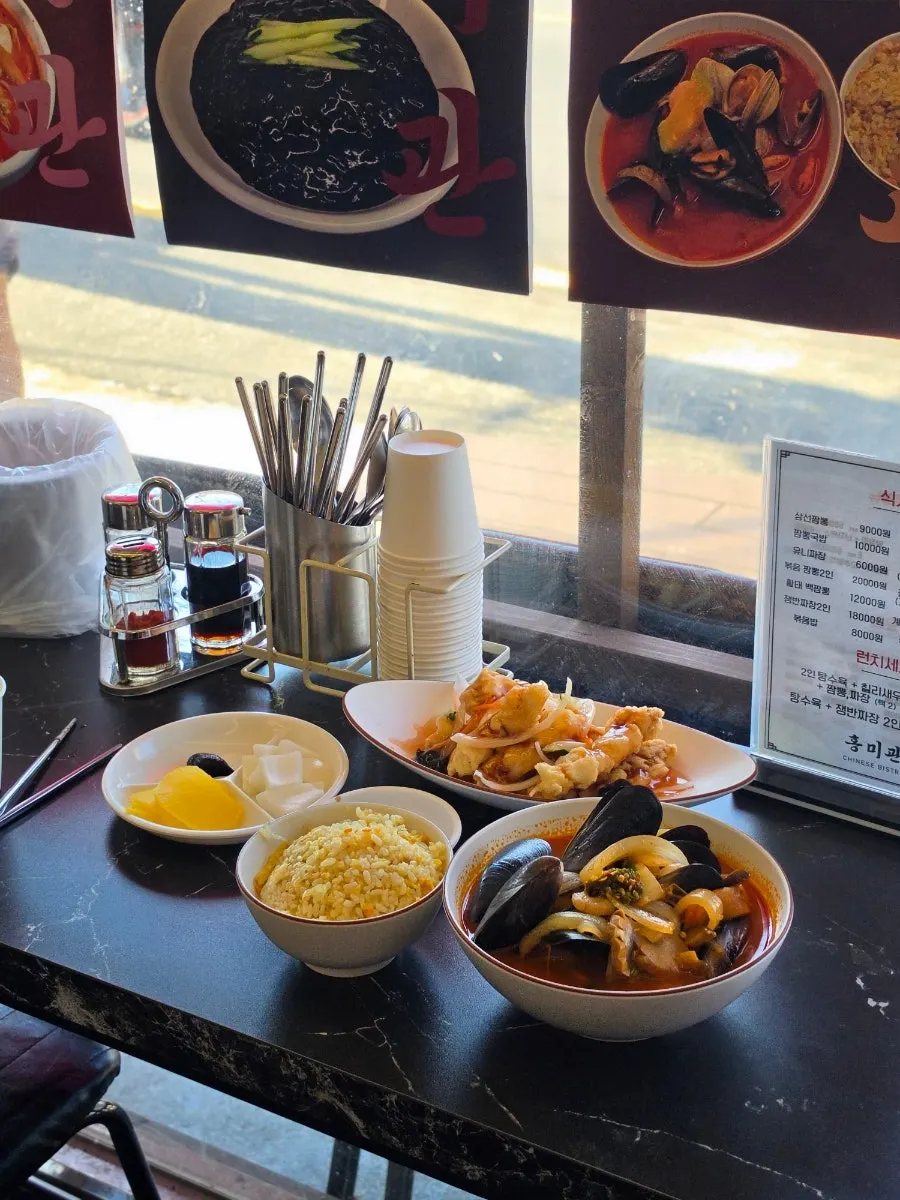
It was hot outside, but Hongmigwan's jjamppong was good enough to eat every last bite anyway.
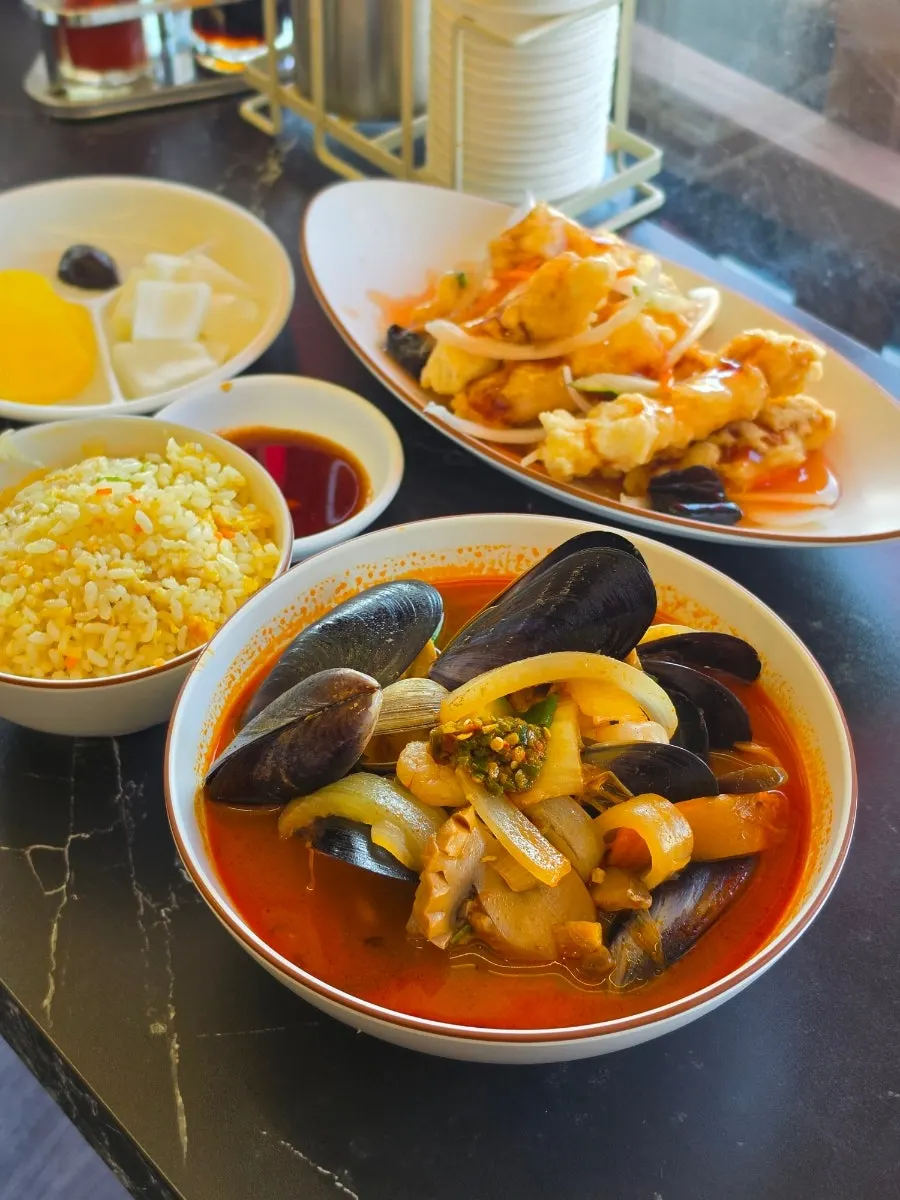
If you're craving a bowl of jjamppong near Deokcheon Station and Gupo Market in Busan, I highly recommend this place!
Where it is
93 Nakdong-daero 1780beon-gil, Buk-gu, Busan, South Korea부산광역시 북구 낙동대로1780번길 93 1층