Uni-jjajang and mini tangsuyuk at a Busan Chinese spot: Hongmigwan
In short
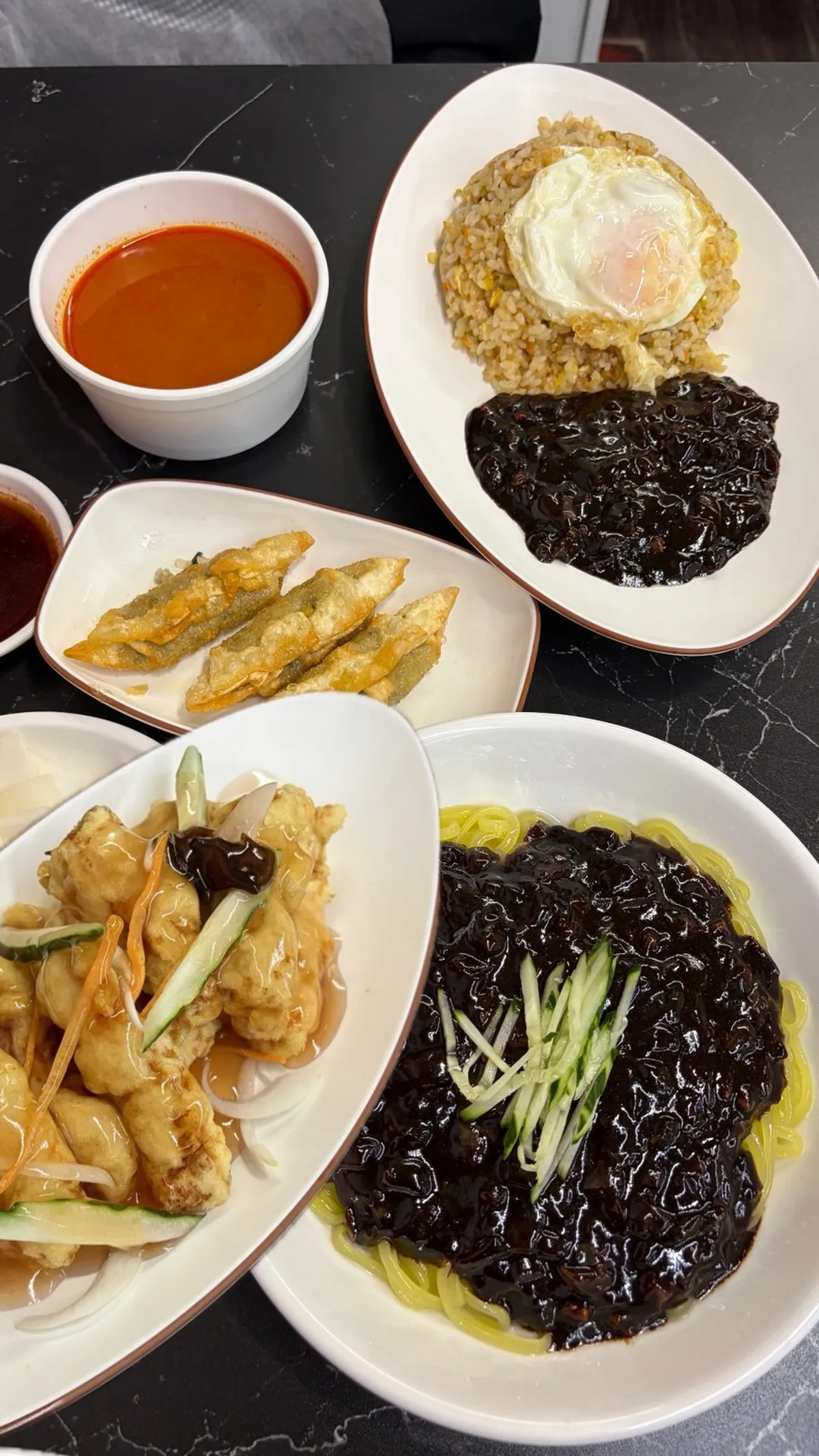
Hongmigwan is a neighborhood Chinese restaurant on Nakdong-daero 1780beon-gil in Buk-gu, Busan. At lunchtime the order was one full spread — uni-jjajang (noodles in finely diced black bean sauce), 5 fried dumplings, mini tangsuyuk (sweet and sour pork) and fried rice — and the jjamppong (spicy seafood soup) broth that came with the fried rice was the most memorable part. Hongmigwan works just as well for a solo lunch as for a group sharing several dishes.
Good to know
- Dishes ordered
- Uni-jjajang, 5-piece fried dumplings, mini tangsuyuk (sweet and sour pork), fried rice
- Self-serve bar
- Pickled radish and onion, help yourself
- Mini tangsuyuk portion
- Roughly 5–6 pieces
- Fried rice
- Served with jjajang sauce on the side and jjamppong broth (extra sauce on request)
- Time of visit
- Lunch hour
as written by the visitor on Sep 15, 2026
There's something about craving Chinese food that makes me want jjajangmyeon, tangsuyuk, and fried rice all at once.
Especially at a Chinese restaurant — I look at the menu meaning to order just one thing, but then I want jjajangmyeon, and tangsuyuk too, and if there are fried dumplings on the menu it feels wrong to skip them.
This time I was in the Buk-gu area and looked up a well-reviewed Chinese restaurant, which led me to Hongmigwan.
I usually order plain jjajangmyeon at Chinese restaurants, but this time I picked something a bit different — uni-jjajang.
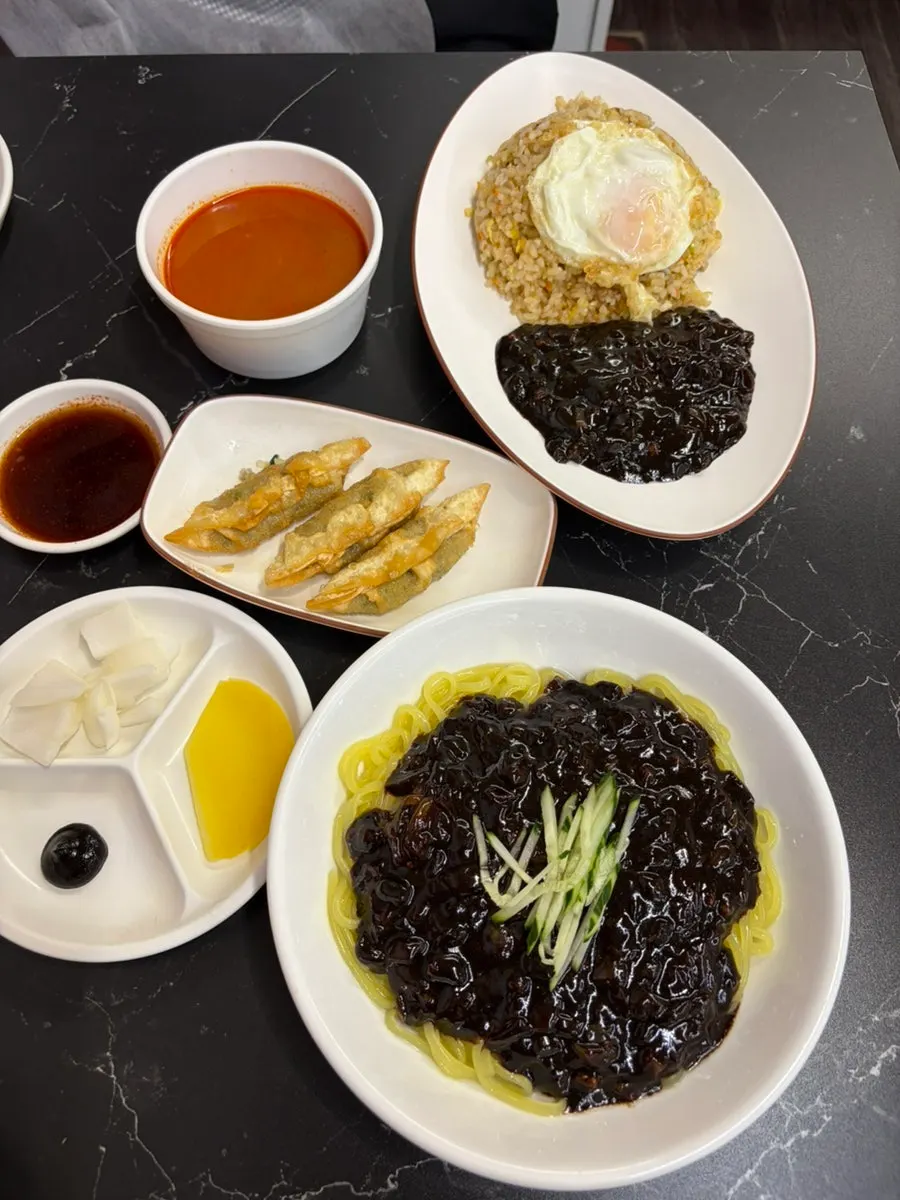
On top of that I ordered 5 pieces of fried dumplings, mini tangsuyuk, and fried rice, putting together a proper full Chinese-food spread.
At first I worried it might be too much food, but once the dishes started arriving one by one, it was actually fun getting to taste a little of everything.
What stood out most was that customers kept streaming in as lunchtime approached — clearly a place the neighborhood relies on.
So let me walk through each dish I tried, one by one.
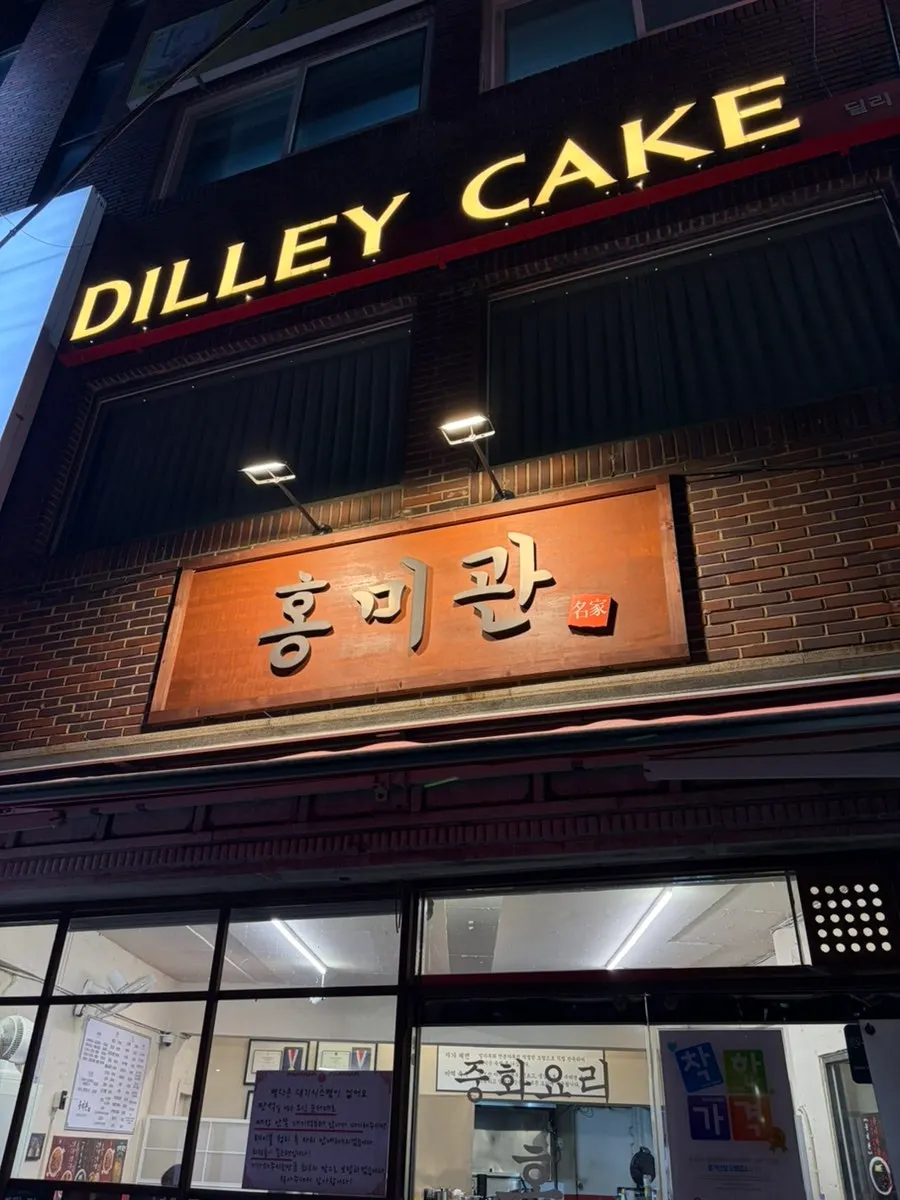
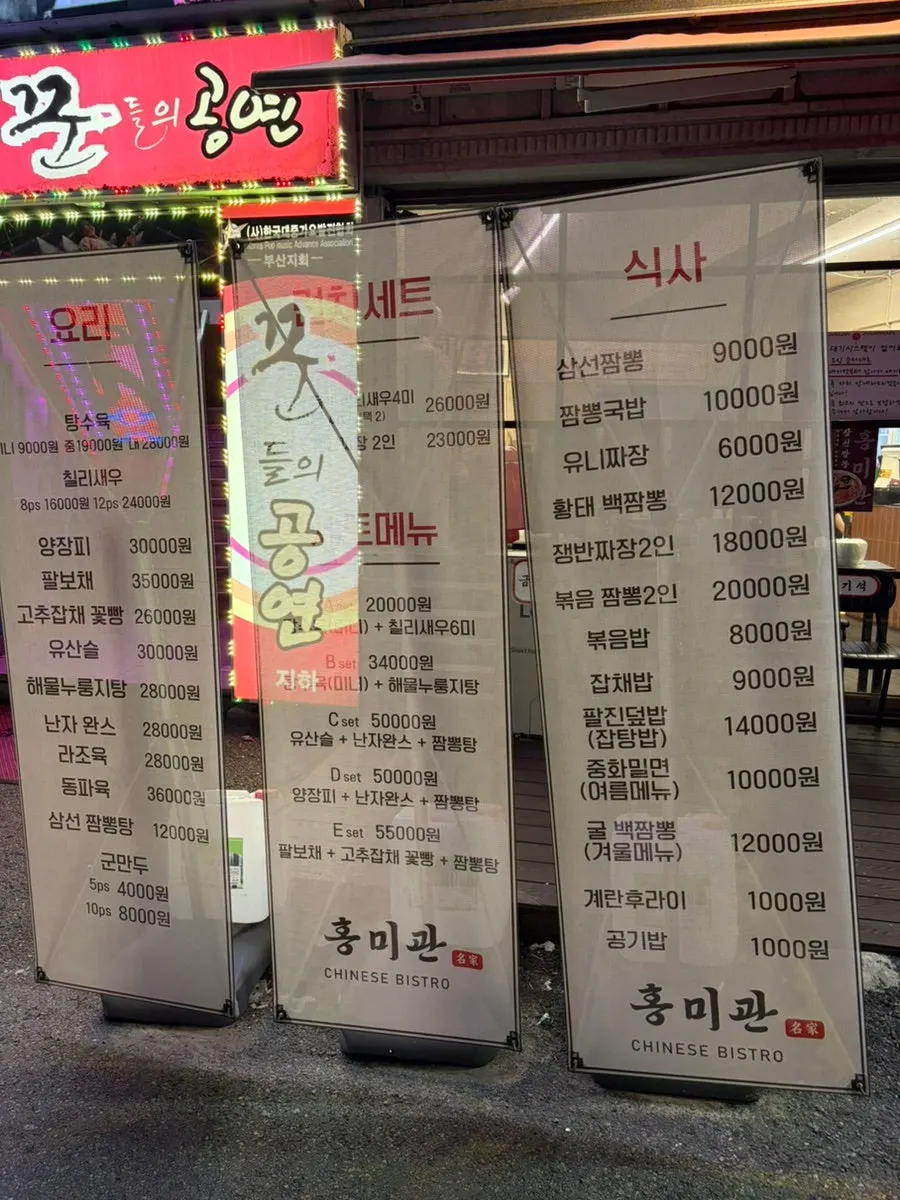
Hongmigwan in Buk-gu, Busan: lunchtime mood and the self-serve bar
I timed my visit to Hongmigwan for lunch hour.
Chinese restaurants tend to get crowded at lunch, so I wondered if I should arrive early — and sure enough, as lunchtime approached, customers started coming in one after another.
Compared to when I first walked in, a lot more customers showed up as time went on.
Some came to eat alone, others arrived in groups ordering a variety of dishes.
Chinese food is great for solo dining and also great for groups splitting several dishes, which seemed to explain the mix of customers I saw.
I, too, wanted to try a bit of everything that day, so I ordered several dishes.
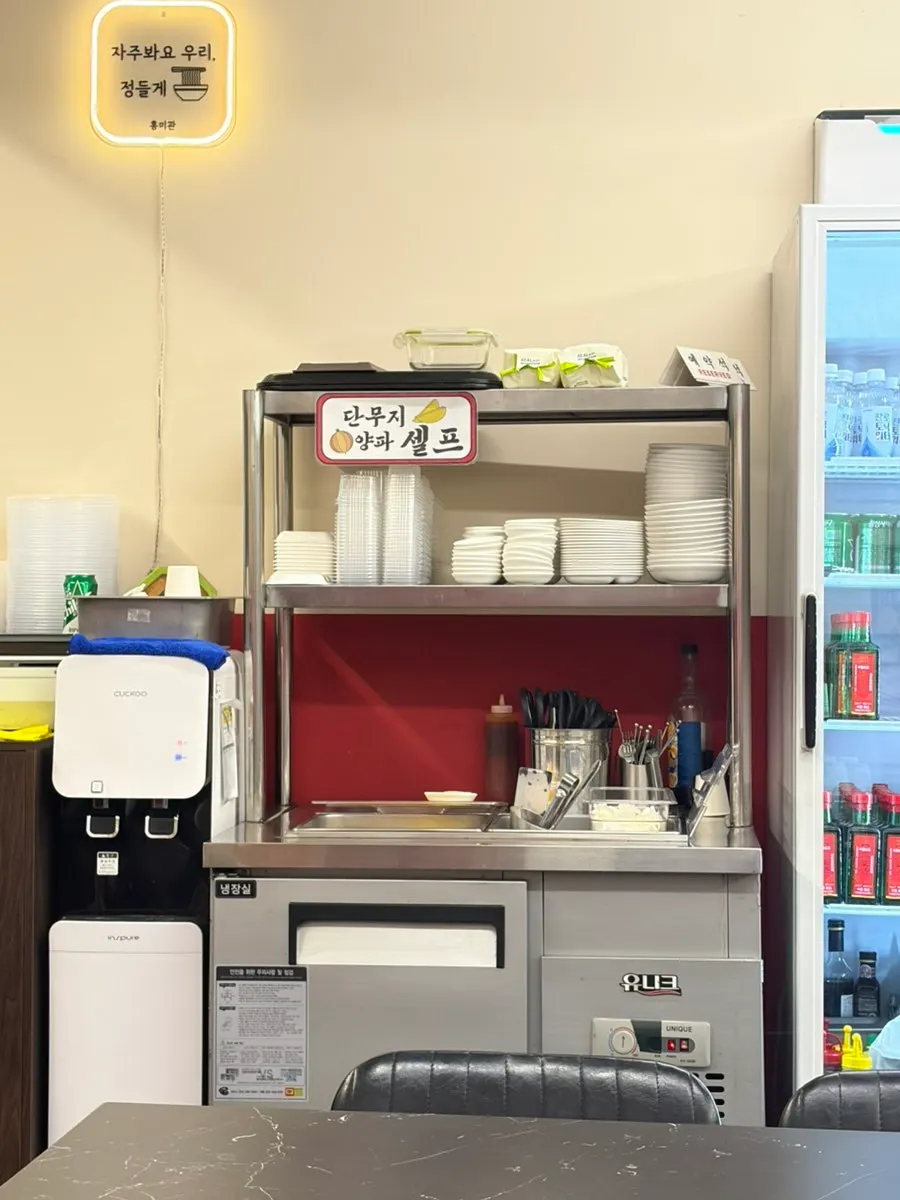
Hongmigwan has a self-serve bar set up.
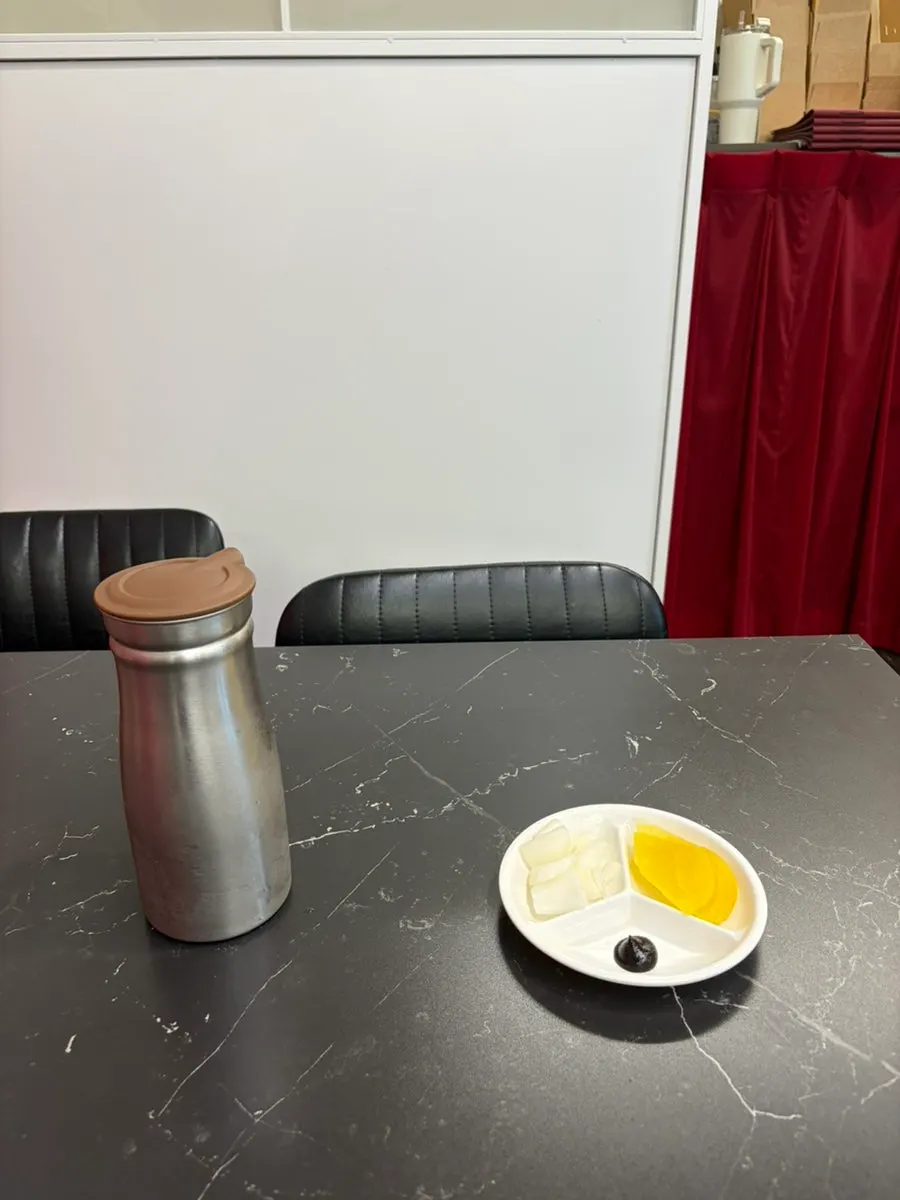
At the self-serve bar were the essentials for any Chinese restaurant — pickled radish and onion.
Pickled radish is really a must when eating Chinese food, isn't it?
Take a bite of jjajangmyeon, then a piece of pickled radish, and your mouth feels refreshed — I always make sure to grab some whenever I go to a Chinese restaurant.
The onion is tasty too, dipped in the black bean sauce.
You can just help yourself to as much as you need, which makes it easy to use.
While waiting for the food, I grabbed some pickled radish and onion from the self-serve bar.
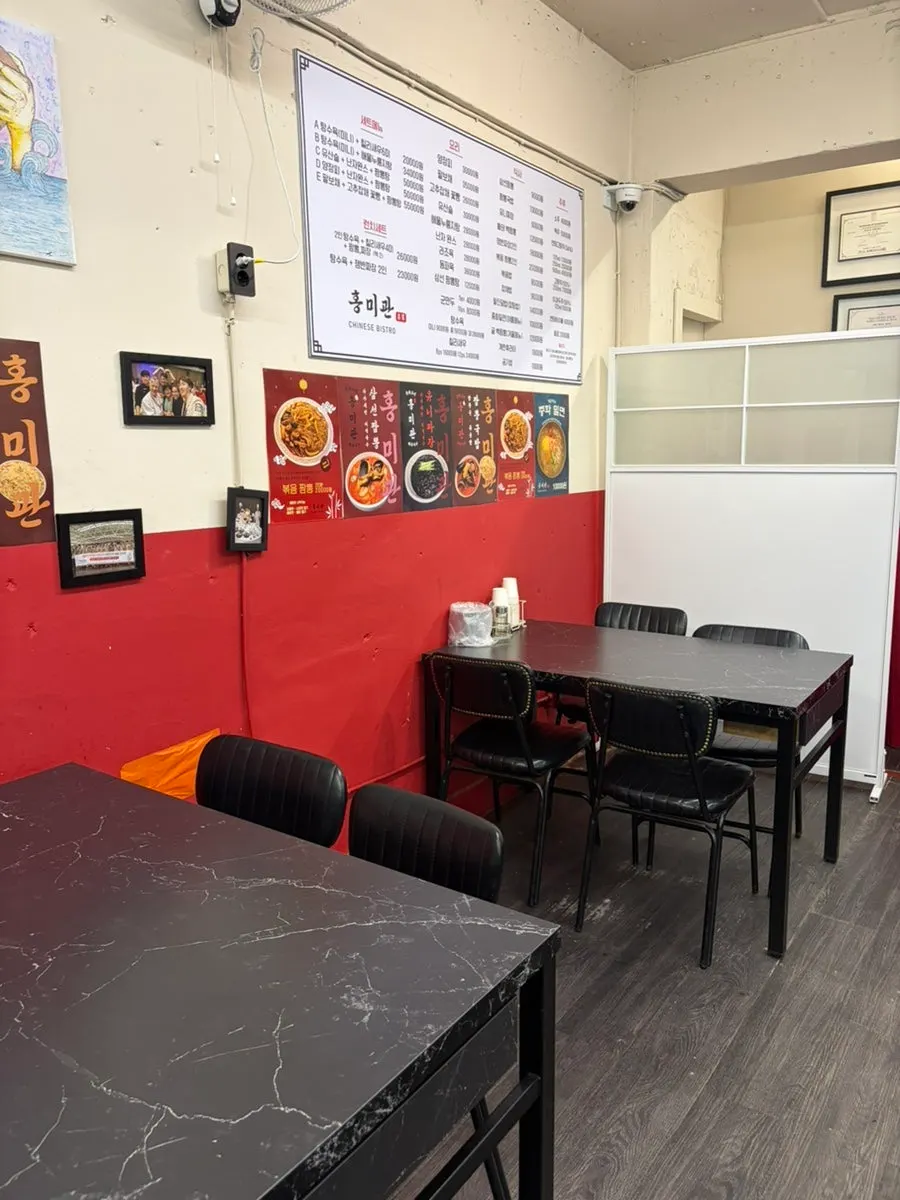
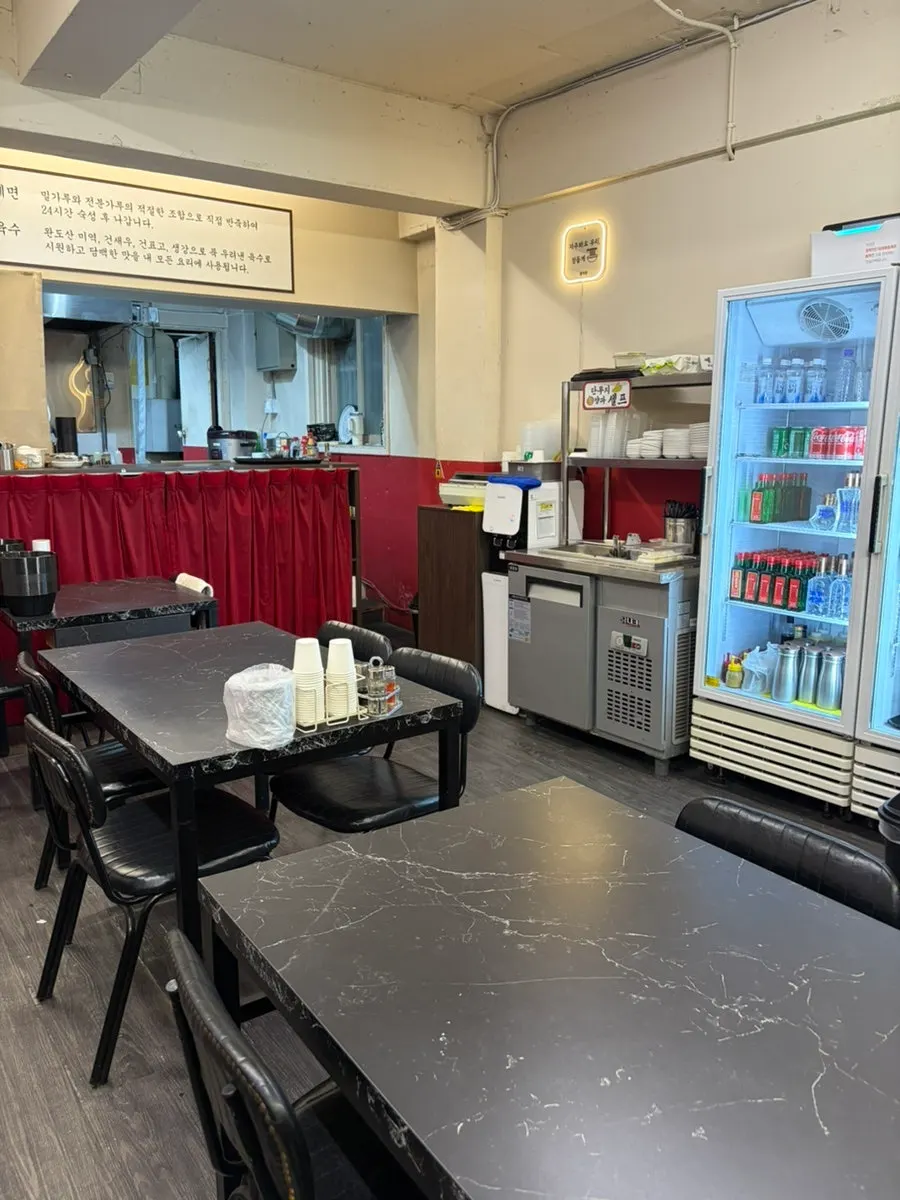
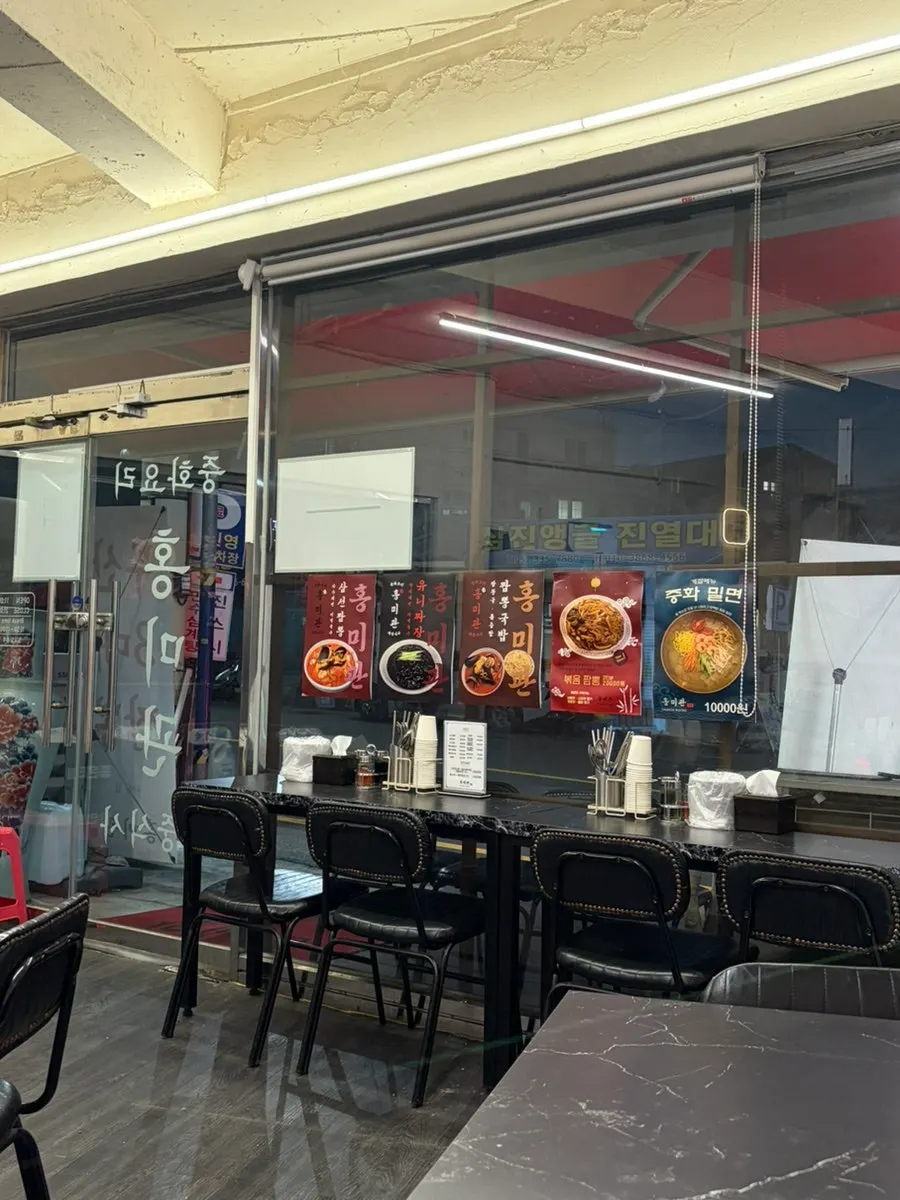
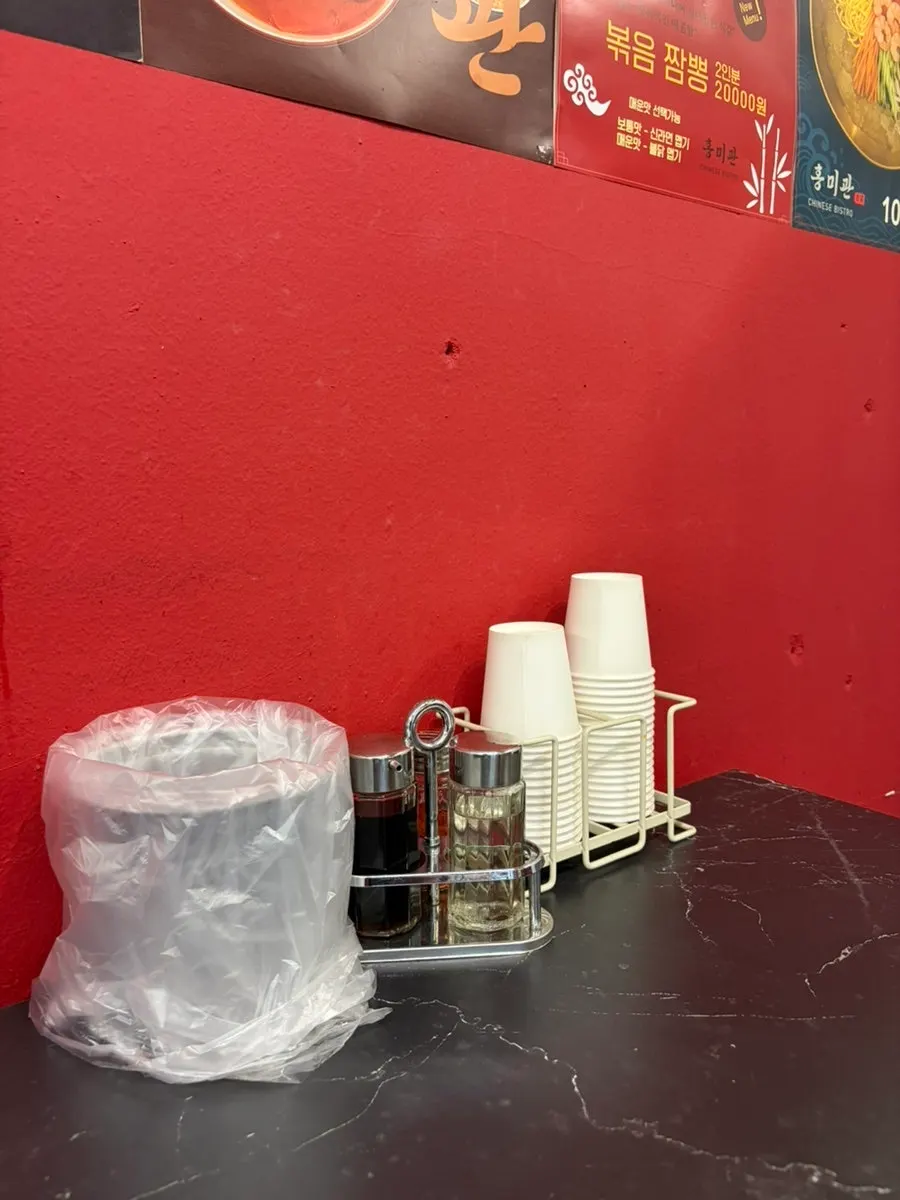
By the time I visited, the closer it got to lunchtime, the more customers kept arriving.
Even while I was eating, I could see more customers walking in.
Chinese restaurants generally see the most foot traffic around lunch and dinner, and Hongmigwan clearly felt like a spot that draws a crowd at mealtimes.
Personally, I prefer restaurants that have a decent number of customers rather than being totally empty, so I liked this atmosphere.
With so many locals clearly stopping by to eat, this seems like a solid pick for anyone in Buk-gu looking for a Chinese restaurant.
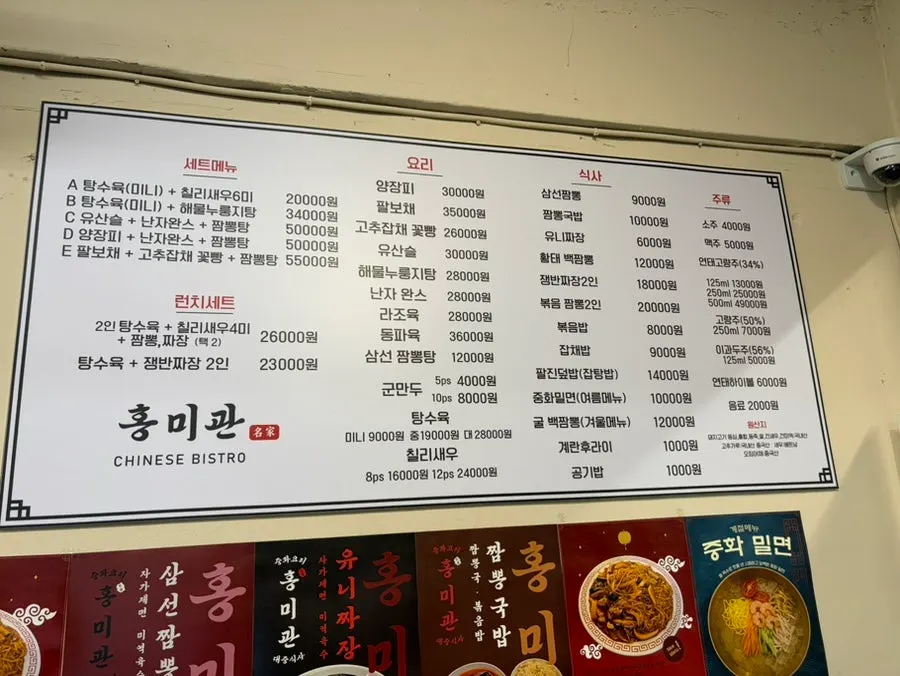
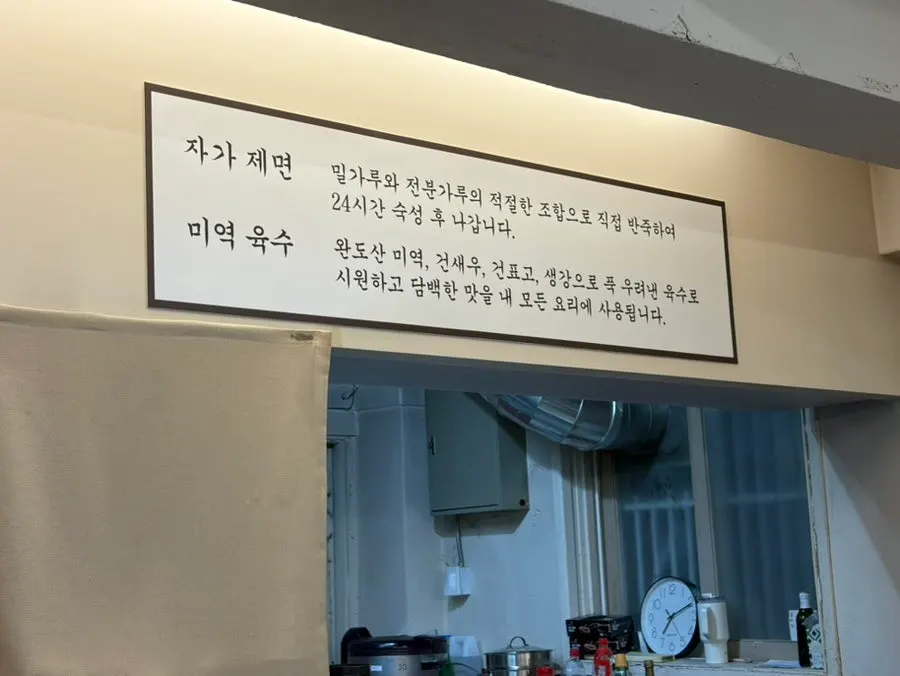
What one full spread at Hongmigwan includes
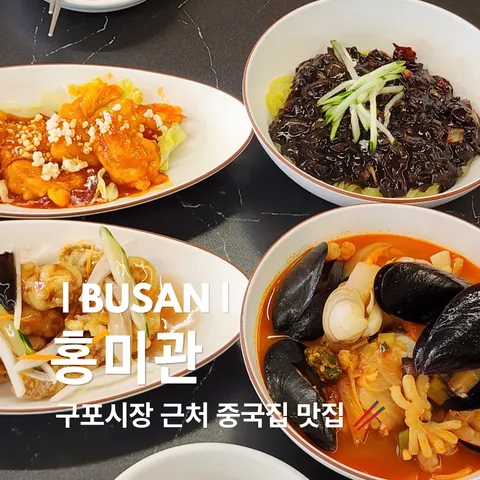
I meant to order just uni-jjajang this time, but ended up adding fried dumplings, tangsuyuk, and fried rice too.
As always, it's not easy to leave a Chinese restaurant having ordered just one thing... haha.
Still, it was great being able to taste a little of everything.
The uni-jjajang noodles paired well with the sauce, and the fried dumplings made a nice side. The mini tangsuyuk wasn't a huge portion, but it was just right for tasting alongside the other dishes. And the fried rice let me adjust the jjajang sauce to my taste.
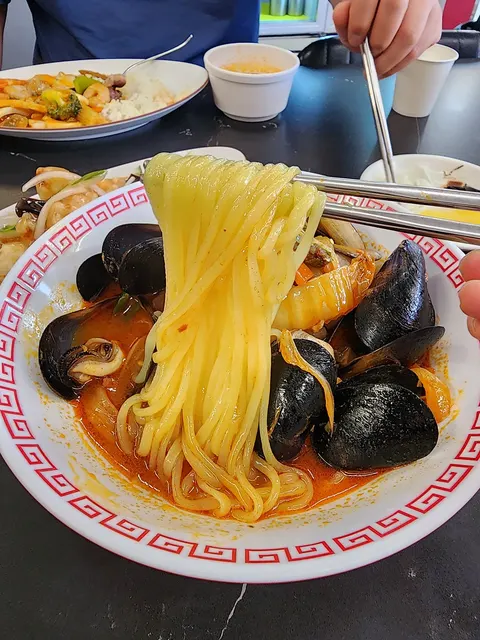
And above all, the jjamppong (spicy seafood noodle soup) broth that came with it was so good it made me think I should order actual jjamppong on my next visit.
What does uni-jjajang taste like?
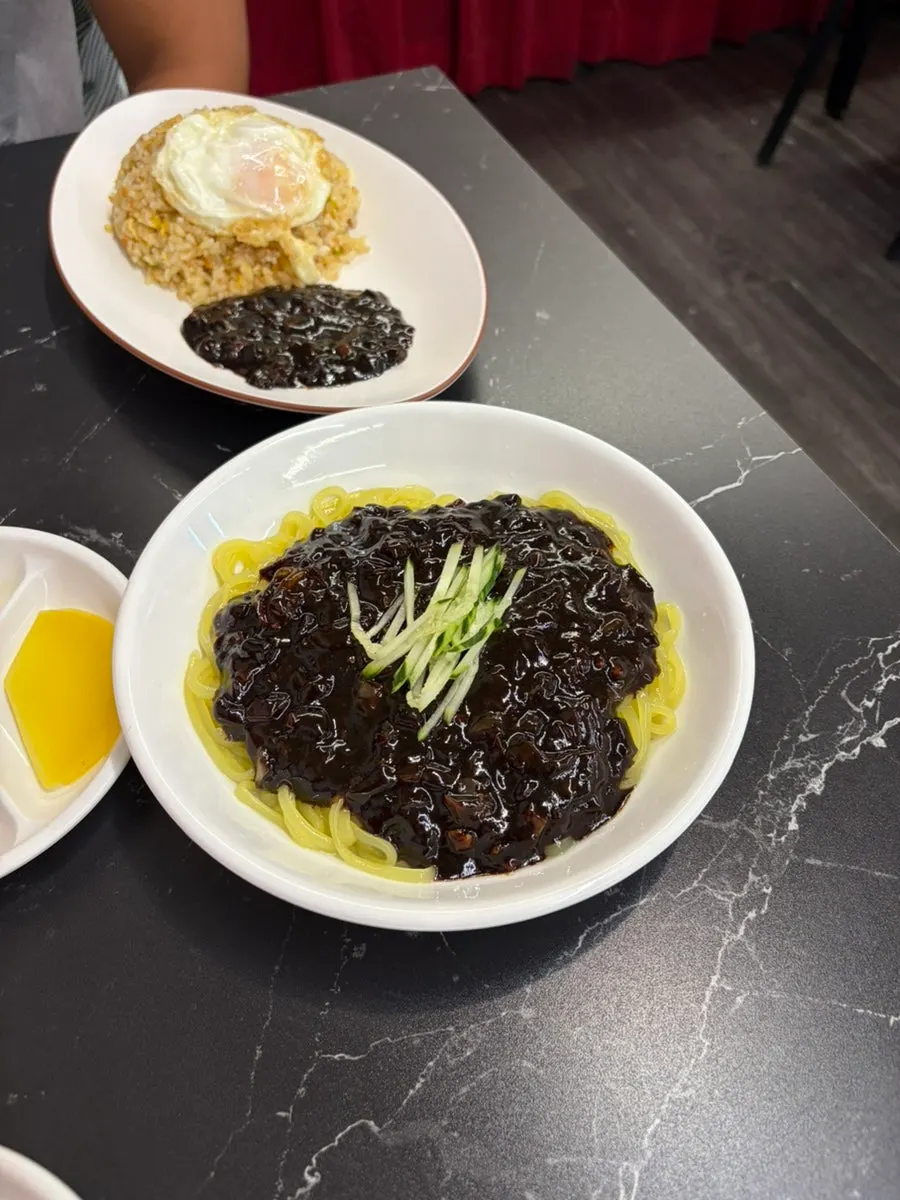
First up was the dish I was most looking forward to — uni-jjajang.
It looks similar to regular jjajangmyeon, but the finely diced ingredients mixed in gave it a nice texture alongside the noodles.
The jjajang sauce was evenly coating the noodles, so I mixed it well with my chopsticks before taking a bite.
Jjajangmyeon really is best eaten hot, right when it arrives.
Once I mixed the noodles well with the sauce, I got that savory, slightly sweet flavor that's so characteristic of jjajang.
I also liked that the finely diced ingredients in the uni-jjajang made it easy to eat the noodles and sauce together.
I prefer noodles that are fully coated in sauce over noodles eaten plain, and here scooping up noodles and sauce together worked really well.
Adding a bite of pickled radish here and there changed things up nicely too.
Five fried dumplings: the right amount for a side
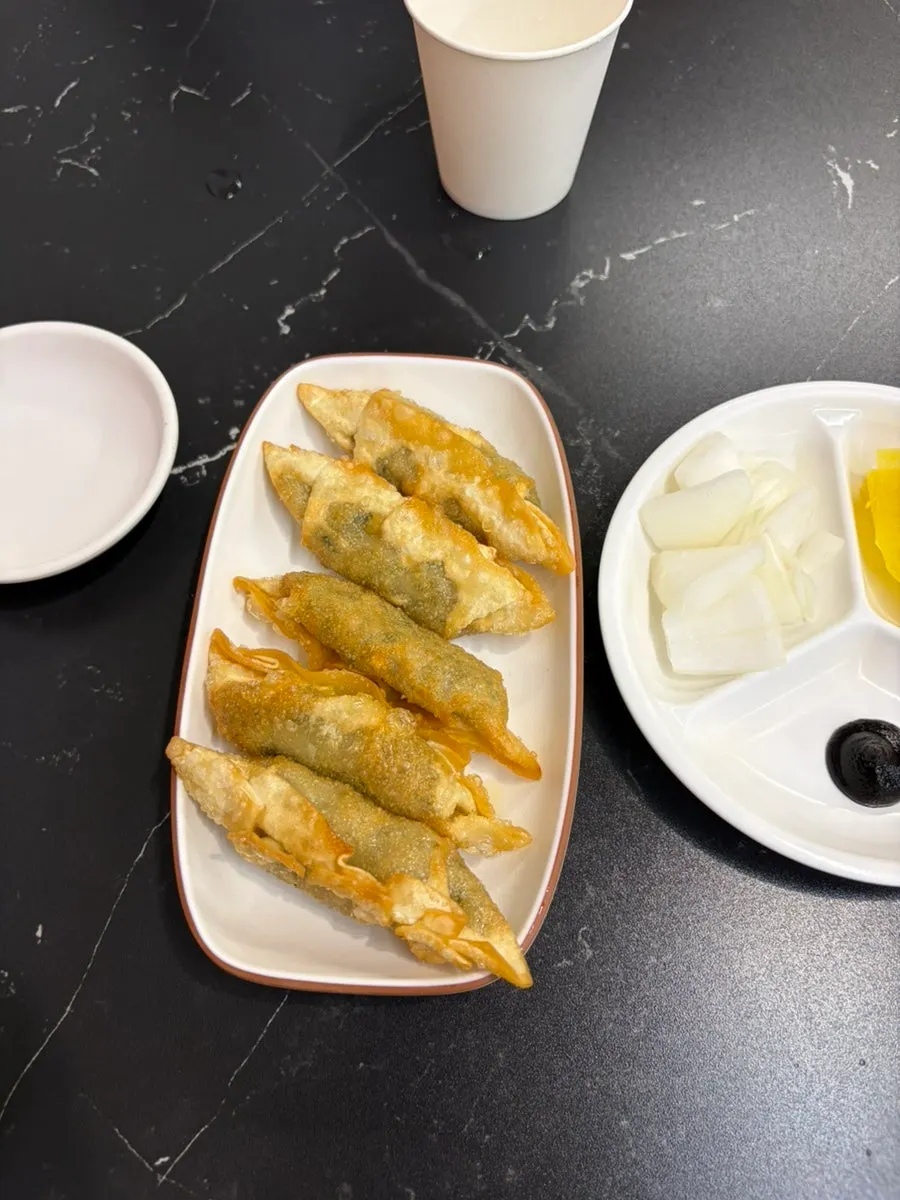
And then the side dish I ordered — five pieces of fried dumplings!
Fried dumplings always taste especially good alongside jjajangmyeon or jjamppong at a Chinese restaurant.
I picked up a crispy fried dumpling — golden brown outside, with filling inside — perfect for eating between bites of jjajangmyeon.
Five pieces was not too much, and a fine amount to order as a side when sharing with others.
Eating jjajangmyeon alone can get a bit monotonous, but adding a dumpling here and there brought in a different texture, which I liked.
I also like dipping fried dumplings lightly in jjajang sauce, so I tried that too — and it worked pretty well.
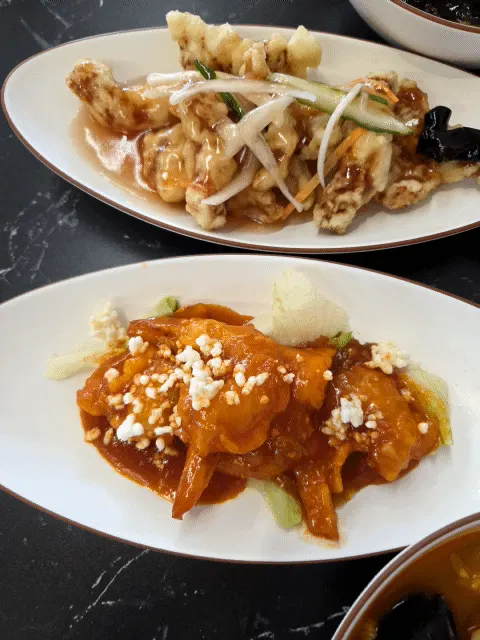
How much pork do you get in mini tangsuyuk?
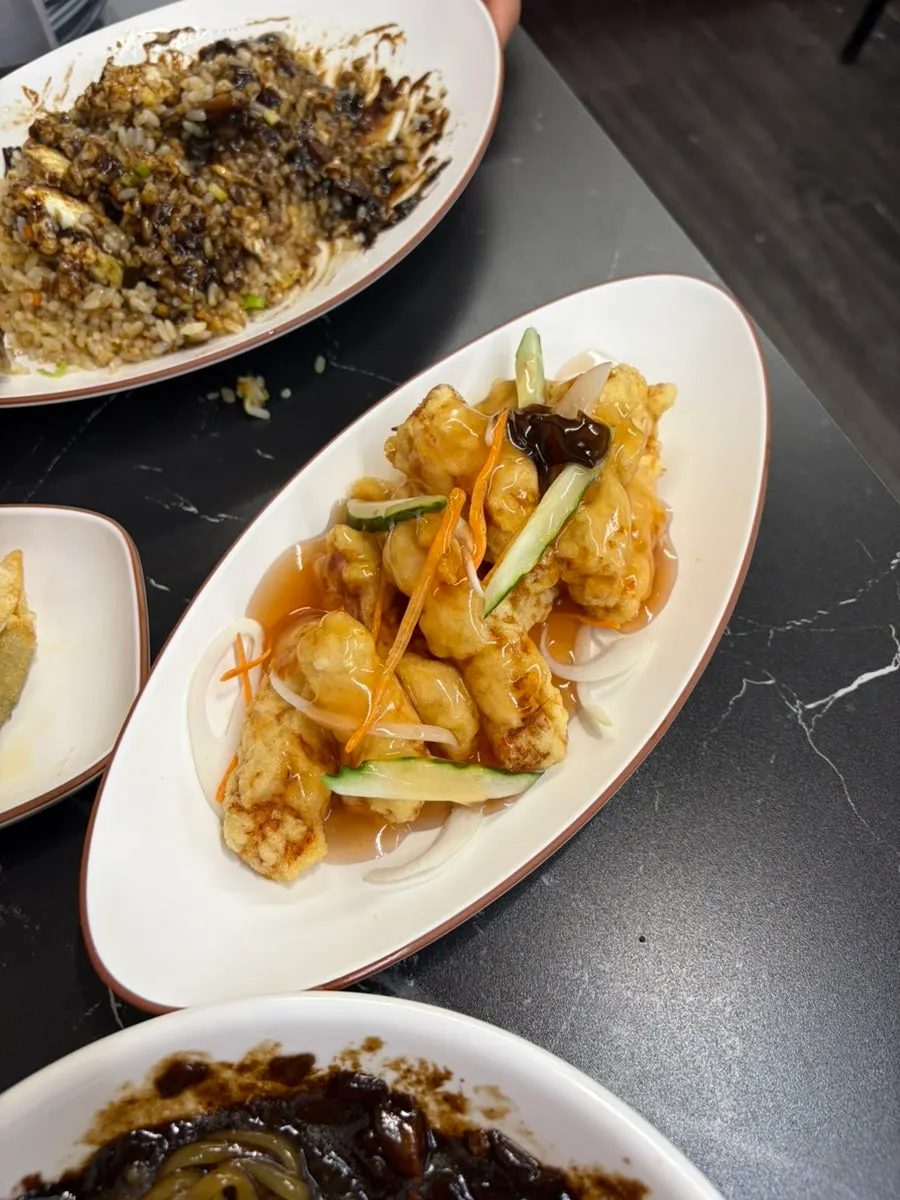
I also couldn't skip tangsuyuk (sweet and sour pork) — that would've felt wrong.
Since a big portion would've made it hard to finish everything else, I ordered the mini size.
It was indeed on the smaller side, being the mini version.
When I ate it, there were roughly 5–6 pieces.
Still, since I'd already ordered jjajangmyeon, fried rice, and dumplings, a smaller tangsuyuk portion worked out well as a side.
Tangsuyuk is nice either dipped in the sauce or, if you like it crispy, with the sauce on the side to dip separately.
I dipped one piece fully in the sauce and lightly coated another.
Even though the mini size meant a small portion overall, it was nice to still be able to try tangsuyuk alongside so many other dishes.
If you're visiting with a group, ordering a larger size than mini to share might be a better call.
But for solo dining, or for two people eating it alongside other dishes, the mini size is a solid option too.
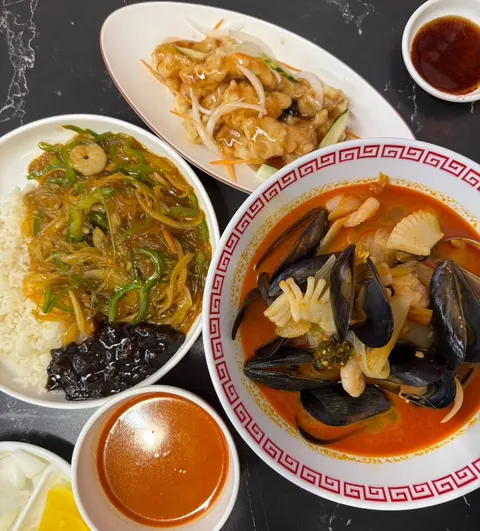
Asking for extra jjajang sauce with the fried rice
This time I didn't just stick to jjajangmyeon — I also ordered fried rice.
Chinese-restaurant fried rice has its own charm when eaten with jjajang sauce.
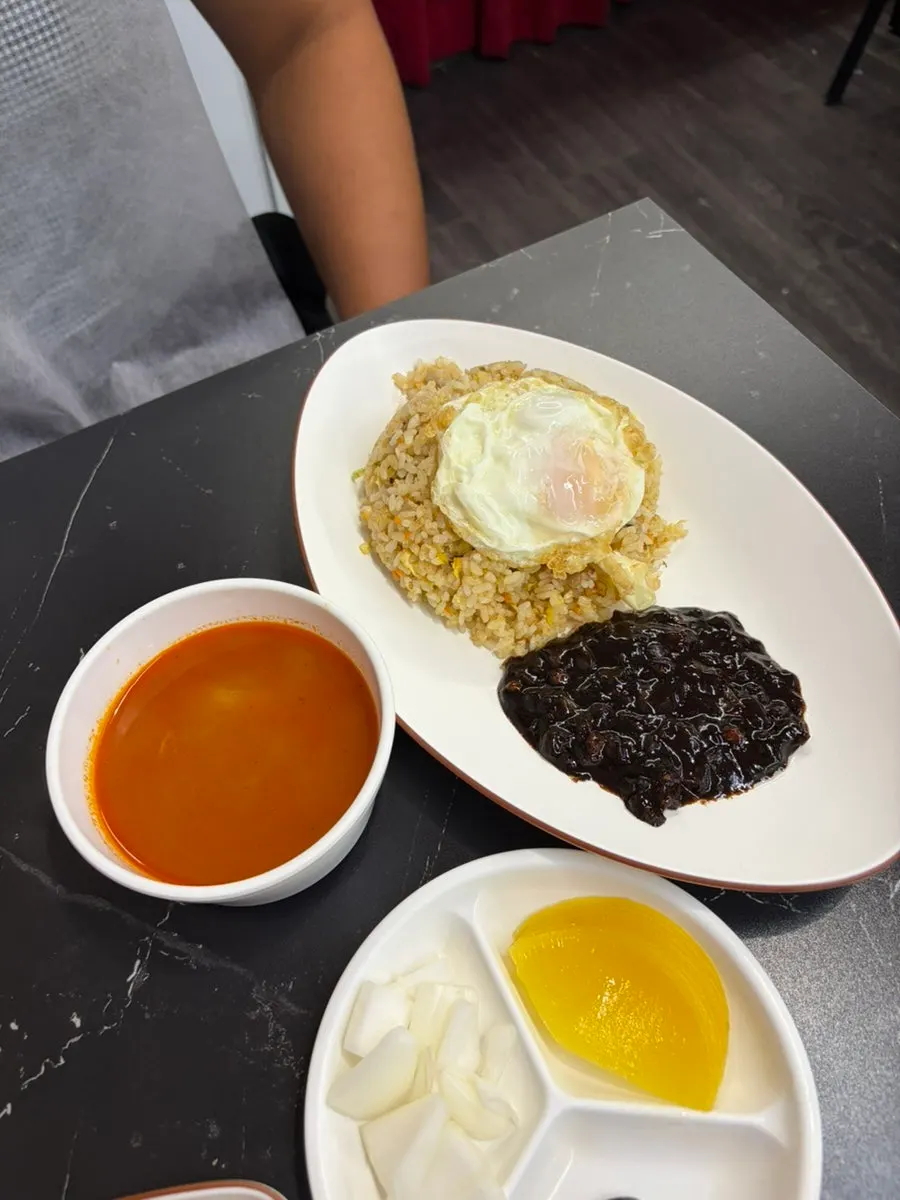
Sure enough, the fried rice came with a bit of jjajang sauce on the side.
But personally I like mixing in a generous amount of jjajang sauce with my fried rice, so the amount given felt a bit short.
So I asked the staff for a little more sauce.
Once I mixed in the extra sauce with the fried rice, it hit exactly the flavor combo I love.
The fried rice itself felt much more familiar and delicious once the jjajang sauce was mixed in, rather than eating it plain.
If you love fried rice, I'd recommend asking for plenty of sauce too.
The jjamppong broth served with the fried rice
And there was one dish I hadn't expected to remember most from this meal.
It was the jjamppong broth that came alongside the fried rice.
Chinese restaurants sometimes serve jjamppong broth with fried rice orders, and honestly, I usually think of that broth as just a minor side.
But after one sip of the jjamppong broth at Hongmigwan, I changed my mind.
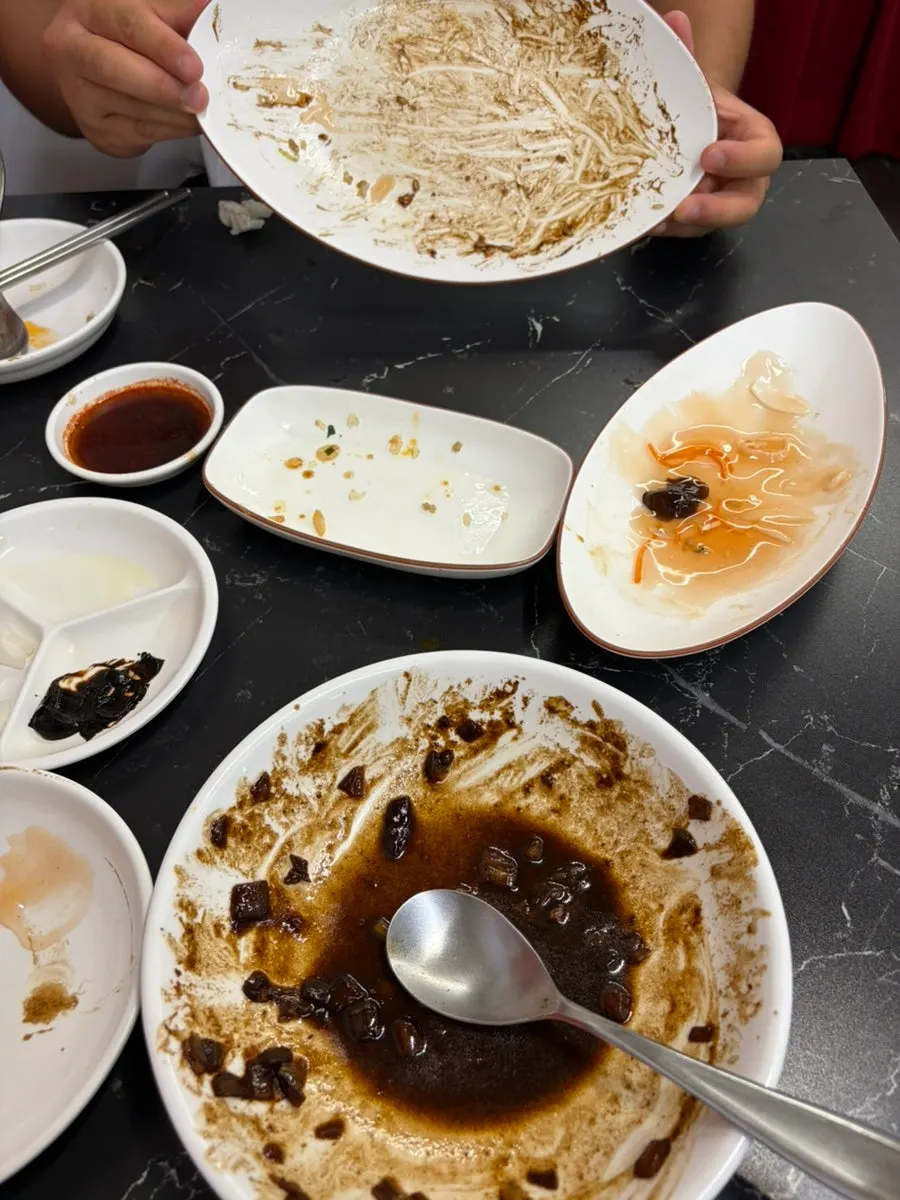
The broth was so good that I kept reaching for it while eating the fried rice.
It had that distinctive spicy, savory jjamppong flavor that paired really well with the fried rice.
After eating something relatively savory and sweet like jjajangmyeon or fried rice, a sip of jjamppong broth felt like it reset my palate.
Above all, drinking the broth suddenly made me crave actual jjamppong.
It made me think I really should just order jjamppong on my next visit.
I originally had zero plans to eat jjamppong that day, but the broth that came along with the meal basically decided my next order.
Next time I go back to Hongmigwan, I'm planning to order jjamppong.
Is Hongmigwan worth a lunch stop in Buk-gu, Busan?
This visit was centered on uni-jjajang, but I got to try a good mix of dishes — fried dumplings, tangsuyuk, fried rice — and ordering several dishes together really brought out the fun of eating at a Chinese restaurant.
What stood out most, though, was the jjamppong broth, which was better than I expected.
Even though it just came alongside the fried rice, I kept going back for more.
So if I go back to Hongmigwan, I'll order jjamppong without a second thought.
This time I went with jjajang-style dishes, so next time I want to switch things up with a spicy bowl of jjamppong.
For anyone in Buk-gu craving the basics — jjajangmyeon, fried rice — or wanting to order several dishes to share, Hongmigwan is a solid pick.
Between the uni-jjajang, fried dumplings, mini tangsuyuk, and fried rice, my next order basically decided itself.
Next visit, I'll make sure to properly try a full bowl of jjamppong and report back.
If you're looking for a Chinese restaurant in Buk-gu, ordering a variety of dishes to share and finding your own favorites sounds like a great plan ^_^
Where it is
93 Nakdong-daero 1780beon-gil, Buk-gu, Busan, South Korea (1st floor)부산광역시 북구 낙동대로1780번길 93 1층